Welcome to My Blog!
Before we dive into the content, I’d love for you to join me on my social media platforms where I share more insights, engage with the community, and post updates. Here’s how you can connect with me:
Facebook:https://www.facebook.com/profile.php?id=100087990137347
LinkedIn:https://www.linkedin.com/company/89825762/admin/dashboard/
YouTube:www.youtube.com/@carbonsteelsupply-kj9lw
TikTok:www.tiktok.com/@carbonsteelsupply
Now, let’s get started on our journey together. I hope you find the content here insightful, engaging, and valuable.
مقدمة
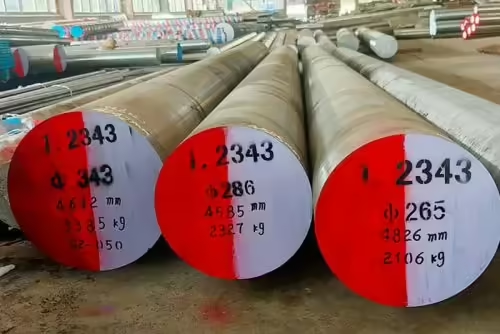
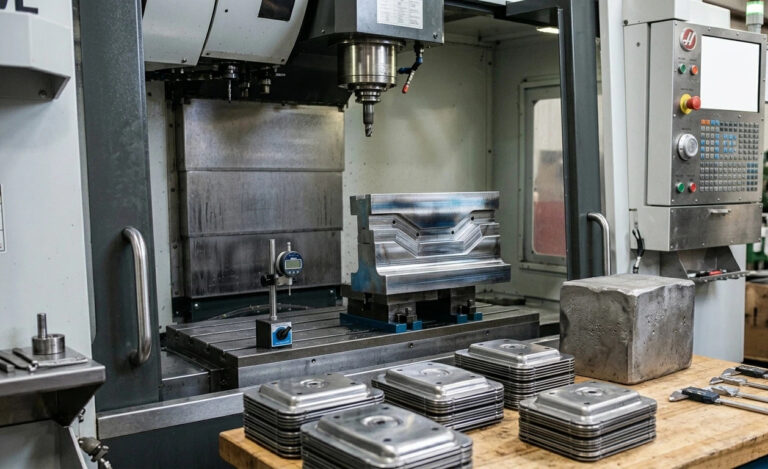
H11 tool steel is one of the most versatile materials used in high-stress applications, especially in environments that involve extreme heat or pressure. Its unique composition and properties make it ideal for tooling, die-casting, and forging operations. However, machining H11 tool steel can be challenging due to its toughness and resistance to wear. In this comprehensive guide, we will explore the machinability of H11 tool steel, highlighting its key characteristics, machining techniques, and best practices for achieving optimal results. Understanding these aspects is crucial for maximizing efficiency and minimizing costs in manufacturing.
What is H11 Tool Steel?
H11 tool steel is part of the chromium-based hot-work steel family, known for its high toughness, thermal fatigue resistance, and ability to withstand thermal shock. It contains a balanced composition of carbon, chromium, molybdenum, and vanadium, which gives it excellent hardening properties. Due to these characteristics, H11 tool steel is commonly used in applications such as:
- Die-casting dies
- Extrusion tooling
- Forging dies
- Aerospace components
Composition of H11 Tool Steel
The chemical composition of H11 tool steel plays a vital role in determining its machinability and overall performance. Here’s a breakdown of its key components:
| Element | Percentage (%) |
|---|---|
| Carbon (C) | 0.35-0.45 |
| Chromium (Cr) | 4.75-5.50 |
| Molybdenum (Mo) | 1.10-1.60 |
| Vanadium (V) | 0.30-0.60 |
| Silicon (Si) | 0.80-1.20 |
| Manganese (Mn) | 0.20-0.50 |
| Phosphorus (P) | Max 0.03 |
| Sulfur (S) | Max 0.03 |
This balanced chemical composition gives H11 tool steel its exceptional heat resistance and toughness, making it ideal for demanding environments but also more difficult to machine compared to lower alloy steels.
The Machinability of H11 Tool Steel


Factors Affecting Machinability
Machinability refers to how easily a material can be cut, shaped, or finished using machine tools. For H11 tool steel, several factors influence its machinability:
- Hardness: H11 tool steel can be heat-treated to achieve a high level of hardness, which makes it more challenging to machine.
- Toughness: While toughness is beneficial for performance in harsh environments, it also increases the wear on cutting tools.
- مقاومة الحرارة: H11’s ability to withstand high temperatures means that it retains its hardness even under machining conditions, further complicating the process.
- Work Hardening: Like other high-alloy steels, H11 has a tendency to work harden, which can make subsequent machining passes more difficult.
Due to these properties, machining H11 tool steel requires careful planning, proper tooling, and optimized cutting parameters to ensure efficiency and prolong tool life.
Best Practices for Machining H11 Tool Steel
1. Use of High-Quality Cutting Tools
One of the most important aspects of machining H11 tool steel is selecting the right cutting tools. Carbide tools are preferred due to their superior hardness and wear resistance. High-speed steel (HSS) tools can also be used, but they wear out more quickly when cutting harder materials like H11.
2. Proper Cooling and Lubrication
Since H11 tool steel retains heat during machining, cooling and lubrication are critical to avoid thermal damage to both the workpiece and cutting tools. Using cutting fluids helps to reduce friction, dissipate heat, and prevent work hardening. It’s essential to maintain continuous fluid flow during machining to ensure optimal temperature control.
3. Optimized Cutting Parameters
Machining H11 tool steel requires careful control of cutting speeds, feeds, and depths to avoid excessive tool wear and maintain surface finish quality. Here are some general guidelines for cutting parameters:
- Cutting Speed: Low to moderate cutting speeds are recommended (50-150 SFM) to minimize heat generation and tool wear.
- Feed Rate: A moderate feed rate should be used to prevent excessive heat buildup while maintaining material removal rates.
- Depth of Cut: Keep the depth of cut within reasonable limits to avoid work hardening and ensure smooth operation.
4. Heat Treatment and Pre-Machining
H11 tool steel can be annealed before machining to reduce its hardness and make it more machinable. After machining, the steel can be heat-treated to achieve the desired hardness and strength for its final application. Annealing is often recommended for complex or high-precision machining operations.
5. Surface Finishing Techniques
Due to its toughness and resistance to wear, achieving a smooth surface finish on H11 tool steel can be challenging. Secondary finishing processes, such as grinding or polishing, may be necessary to achieve the required surface quality. Electro-polishing is also an option for applications requiring extremely smooth surfaces.
Applications of H11 Tool Steel in Machining

H11 tool steel is widely used in industries that require parts to withstand high temperatures, repeated thermal cycles, and mechanical stresses. Here are some common applications of machined H11 tool steel:
1. Die Casting Molds
H11 tool steel is an excellent material for die-casting molds due to its ability to resist thermal fatigue and cracking. The molds experience extreme temperature fluctuations, and H11 can handle this without degrading.
2. Forging Dies
In forging operations, the dies need to withstand the constant impact and high temperatures associated with hot forging. H11 tool steel’s toughness and heat resistance make it an ideal choice for this application.
3. Aerospace Components
The aerospace industry frequently uses H11 tool steel for parts that require high strength and durability under extreme conditions. Examples include turbine blades, valves, and other components exposed to high-stress environments.
Table: Recommended Machining Parameters for H11 Tool Steel
| Operation | Cutting Tool | Speed (SFM) | Feed (IPR) | Depth of Cut (in) |
|---|---|---|---|---|
| Turning | Carbide Inserts | 50-100 | 0.004-0.010 | 0.020-0.080 |
| Milling | Carbide End Mills | 75-125 | 0.003-0.006 | 0.015-0.040 |
| Drilling | HSS/Carbide Drills | 30-70 | 0.001-0.003 | 0.080-0.200 |
| Grinding | Grinding Wheels | N/A | N/A | 0.001-0.005 |
The table above provides recommended machining parameters for various operations when working with H11 tool steel. These parameters are general guidelines and should be adjusted based on specific machining conditions and requirements.
الخاتمة
Machining H11 tool steel requires careful consideration of its unique properties, including hardness, toughness, and heat resistance. By selecting the right cutting tools, optimizing machining parameters, and employing proper cooling techniques, you can achieve efficient machining results while prolonging tool life. The challenges posed by H11 tool steel’s machinability are outweighed by its exceptional performance in demanding applications, making it an ideal material for high-stress industries such as die-casting, forging, and aerospace.
الأسئلة الشائعة
Is H11 tool steel difficult to machine?
Yes, due to its hardness and toughness, H11 tool steel can be challenging to machine. However, with the right tools and machining techniques, it can be successfully processed.
What cutting tools are best for machining H11 tool steel?
Carbide tools are the most effective for machining H11 tool steel due to their wear resistance and ability to handle high temperatures.
Can H11 tool steel be heat-treated after machining?
Yes, H11 tool steel can be heat-treated after machining to achieve the desired hardness and performance characteristics for its final application.
What industries commonly use machined H11 tool steel?
Industries such as die-casting, aerospace, and forging commonly use machined H11 tool steel for high-stress applications.
How does cooling affect the machining of H11 tool steel?
Proper cooling is critical when machining H11 tool steel to prevent work hardening, tool wear, and thermal damage to the workpiece.