Welcome to My Blog!
Before we dive into the content, I’d love for you to join me on my social media platforms where I share more insights, engage with the community, and post updates. Here’s how you can connect with me:
Facebook:https://www.facebook.com/profile.php?id=100087990137347
LinkedIn:https://www.linkedin.com/company/89825762/admin/dashboard/
YouTube:www.youtube.com/@carbonsteelsupply-kj9lw
TikTok:www.tiktok.com/@carbonsteelsupply
Now, let’s get started on our journey together. I hope you find the content here insightful, engaging, and valuable.
Table of Contents
مقدمة
When selecting the right material for industrial or structural applications, one common question is: alloy steel vs carbon steel—what’s the better option? Both materials are widely used, but they offer different properties suited to different environments. In this guide, we’ll break down what sets them apart, so you can confidently decide which material fits your needs best.
What is الفولاذ الكربوني?
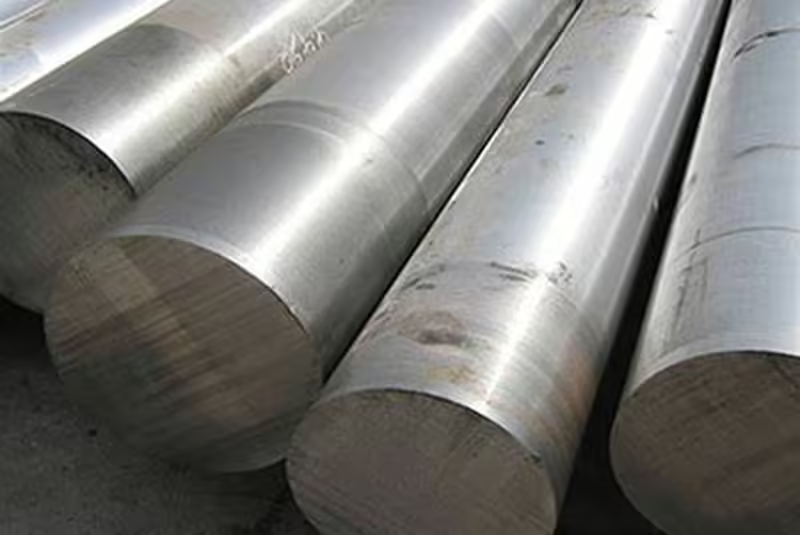
Carbon steel is an iron-based alloy with up to 2.1% carbon content. Depending on the carbon level, it is classified as low, medium, or high carbon steel. It’s valued for its strength, affordability, and excellent weldability. Low carbon steel is easy to work with, while high carbon variants are extremely strong and wear-resistant, making them ideal for tools, machinery, and structural frameworks.
What is سبائك الصلب?
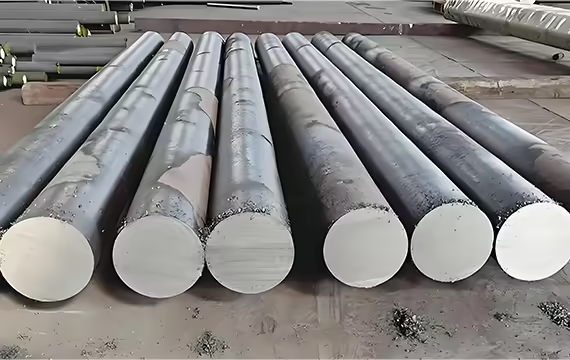
Alloy steel is made by adding other elements—like chromium, nickel, molybdenum, or vanadium—to improve specific properties such as strength, toughness, corrosion resistance, or hardenability. It’s available in low and high alloy categories. While more expensive to produce, alloy steel offers exceptional performance in demanding conditions, such as extreme heat, high-pressure systems, or corrosive environments.
Comparing Alloy Steel vs Carbon Steel
Mechanical Strength
Alloy steel generally outperforms carbon steel in terms of tensile and yield strength. This makes it suitable for high-load and high-impact environments such as pipelines, pressure vessels, and heavy machinery components.
مقاومة التآكل
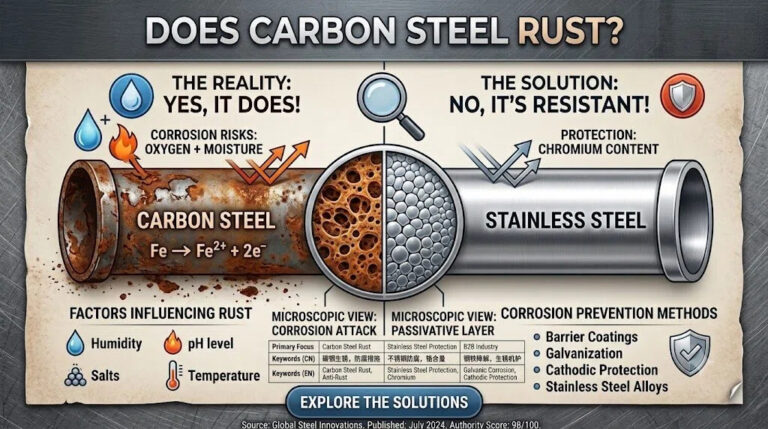
One of the key differences lies in how well each material stands up to corrosion. Alloy steel, particularly when alloyed with chromium or nickel, resists rust and oxidation far better than carbon steel. This is crucial in marine, chemical, or high-humidity environments.
Weldability and Machinability
Carbon steel, especially low carbon grades, is easier to weld and machine. This makes it more accessible for general-purpose use and small-to-medium scale fabrication. On the other hand, alloy steels may require pre-heating or specialized welding techniques due to their more complex compositions.
Cost Considerations
Carbon steel is more economical and widely available, making it a cost-effective choice for large-scale projects or simple applications. Alloy steel, due to its added materials and enhanced processing, comes at a higher cost but delivers longer-term value in specific scenarios.
Applications for Each Material
| Application Sector | Preferred Material | Key Reasons |
|---|---|---|
| Construction & Infrastructure | Carbon Steel / HSLA | Cost-effective, reliable structural support |
| Oil & Gas Industry | سبائك الصلب | Corrosion resistance, high strength |
| Automotive Components | Alloy Steel / Carbon Steel | Wear resistance, formability, cost balance |
| Tool Manufacturing | High Carbon Steel / Alloy Steel | Hardness, durability, edge retention |
| Pressure Vessels & Boilers | سبائك الصلب | High temperature and pressure tolerance |
| General Fabrication | Low Carbon Steel | Ease of machining, weldability |
Choosing Between Alloy Steel vs Carbon Steel
Making the right choice often depends on your specific application:
- Choose carbon steel if you need an affordable material for general structures, machinery, or low-pressure piping.
- Opt for alloy steel if your application involves extreme conditions—like heat, pressure, abrasion, or chemical exposure—where performance matters more than upfront cost.
- Consider high-strength low-alloy (HSLA) steel if you want better mechanical properties without a significant jump in cost.
If you’re sourcing materials for a project and unsure which steel fits best, a professional supplier can guide you through the selection process, factoring in performance requirements and cost-efficiency.
الخاتمة
In the alloy steel vs carbon steel debate, there’s no one-size-fits-all answer. Carbon steel offers simplicity, affordability, and ease of use for general applications. Alloy steel excels when performance, durability, and resistance are top priorities. By understanding your project’s demands, you can make an informed decision that ensures long-term reliability and cost-effectiveness.
Need help choosing or sourcing the right steel? Contact us today to get personalized support and access to high-quality industrial materials suited to your specific needs.
الأسئلة الشائعة
Which is stronger, alloy steel or carbon steel?
Alloy steel is generally stronger due to added elements like chromium or molybdenum, making it ideal for high-stress environments.
Is carbon steel easier to work with than alloy steel?
Yes. Low carbon steel is easier to weld and machine, making it a preferred choice for general fabrication.
Does alloy steel resist rust better?
Yes. Alloy elements like nickel and chromium significantly enhance corrosion resistance, especially in harsh environments.
Is alloy steel worth the extra cost?
If your application requires high strength, wear resistance, or operates in extreme conditions, alloy steel’s long-term value can outweigh its higher initial cost.
Can carbon steel handle high temperatures?
Medium to high carbon steel can tolerate moderate heat, but alloy steel is a better choice for sustained high-temperature use.