
Welcome to My Blog!
Before we dive into the content, I’d love for you to join me on my social media platforms where I share more insights, engage with the community, and post updates. Here’s how you can connect with me:
Facebook:https://www.facebook.com/profile.php?id=100087990137347
LinkedIn:https://www.linkedin.com/company/89825762/admin/dashboard/
YouTube:www.youtube.com/@carbonsteelsupply-kj9lw
TikTok:www.tiktok.com/@carbonsteelsupply
Now, let’s get started on our journey together. I hope you find the content here insightful, engaging, and valuable.
Table of Contents
مقدمة
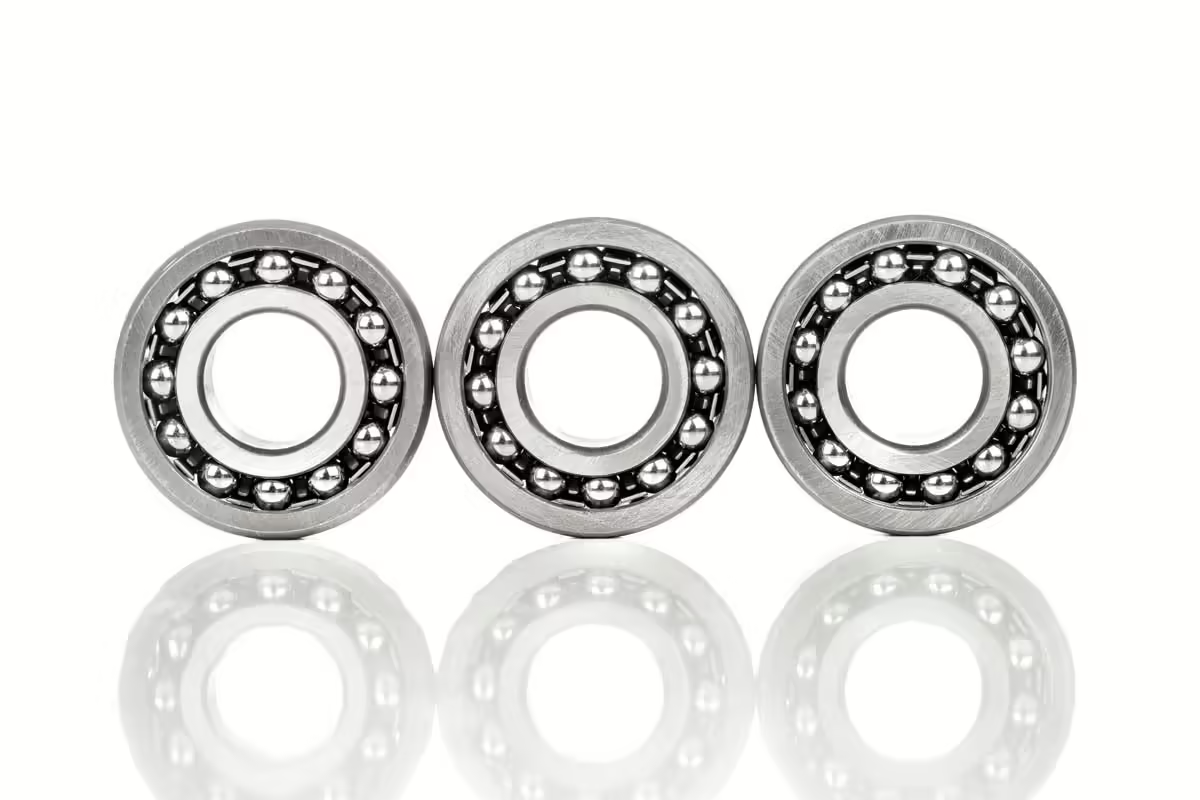
Bearing steel is a specialized type of steel used in the manufacturing of bearings, which are essential components in machinery, automotive systems, aerospace applications, and industrial equipment. Bearings reduce friction between moving parts, enabling smooth operation and prolonging the lifespan of mechanical systems.
The choice of bearing steel types significantly impacts the performance, durability, and wear resistance of bearings. Different types of bearing steel are designed to withstand various loads, speeds, and environmental conditions. This guide provides an in-depth overview of the most common bearing steel types, their properties, applications, and how to choose the right material for your specific needs.
Key Properties of Bearing Steel
Bearing steel must meet several critical requirements to ensure optimal performance. The most important properties include:
- High hardness to resist wear and deformation under heavy loads
- High fatigue strength to withstand repeated stress and dynamic loads
- Excellent wear resistance to minimize material loss due to friction
- Good corrosion resistance to protect bearings in harsh environments
- Clean microstructure to reduce inclusions and defects for better mechanical properties
Common Bearing Steel Types
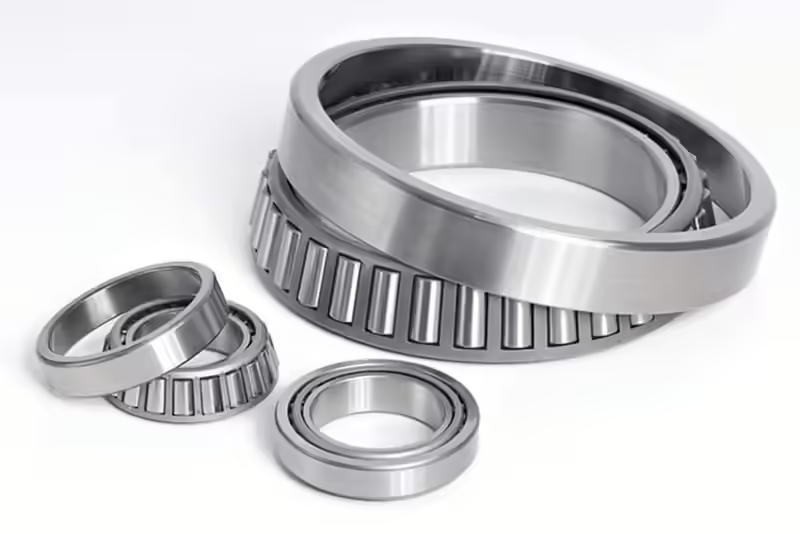
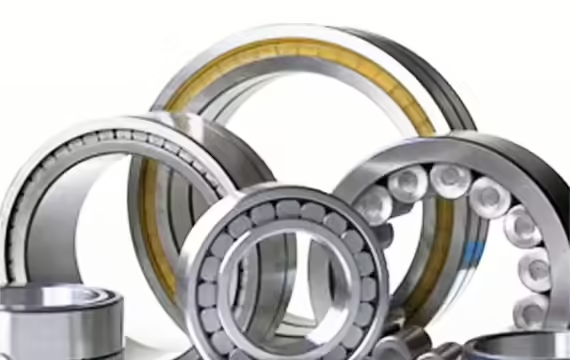
High-carbon chromium bearing steel
One of the most widely used bearing steels, 52100 steel (GCr15 in China, SUJ2 in Japan) is a high-carbon, high-chromium steel known for its excellent hardness, wear resistance, and fatigue strength.
Key features:
- High hardness, typically 60-65 HRC after heat treatment
- Excellent wear resistance
- Good fatigue life and load-carrying capacity
Applications:
- Rolling element bearings
- Automotive and industrial bearings
- High-precision instruments and tools
Case-hardened bearing steel
Case-hardened bearing steels, such as 8620, 3310, and 4320, are low-carbon steels that undergo carburization to create a hard outer surface while maintaining a tough core. This combination provides both wear resistance and impact strength.
Key features:
- Hard outer surface with a tough core
- High impact resistance
- Good shock absorption capability
Applications:
- Heavy machinery and construction equipment bearings
- Automotive transmission and differential bearings
- Aerospace components requiring high toughness
Stainless bearing steel
Stainless bearing steel, including 440C, 304, and 316, is used in applications where corrosion resistance is critical. It contains high amounts of chromium and nickel, making it resistant to rust and oxidation.
Key features:
- Excellent corrosion resistance
- High hardness and wear resistance
- Good performance in high-moisture or chemical environments
Applications:
- Food processing and pharmaceutical machinery bearings
- Marine and chemical industry bearings
- Medical and aerospace applications
M50 high-speed bearing steel
M50 is a molybdenum-based high-speed steel used in high-temperature and aerospace applications. It offers superior thermal stability and oxidation resistance compared to traditional bearing steels.
Key features:
- High-temperature resistance
- Excellent rolling fatigue life
- Superior wear resistance
Applications:
- Aerospace and turbine engine bearings
- High-speed spindle bearings
- High-performance industrial applications
Vacuum degassed bearing steel
Vacuum degassed steel undergoes an advanced refining process to remove impurities, enhancing its fatigue strength and reliability. This type of bearing steel is commonly used in precision applications.
Key features:
- Extremely low inclusion levels
- Improved fatigue resistance
- High purity for precision applications
Applications:
- Aircraft and spacecraft bearings
- High-performance automotive and industrial bearings
- Precision engineering and robotics
Comparison of Bearing Steel Types
| Bearing Steel Type | Hardness (HRC) | مقاومة التآكل | Wear Resistance | Common Applications |
|---|---|---|---|---|
| High-carbon chromium steel (52100) | 60-65 | Moderate | High | Rolling bearings, automotive parts |
| Case-hardened steel (8620, 4320) | 55-62 | Low | Moderate | Heavy machinery, aerospace bearings |
| Stainless steel (440C, 304) | 58-62 | High | Moderate | Food industry, marine applications |
| M50 high-speed steel | 60-66 | Moderate | Very High | Aerospace, high-speed bearings |
| Vacuum degassed bearing steel | 58-64 | Low | High | Precision instruments, robotics |
How to Choose the Right Bearing Steel
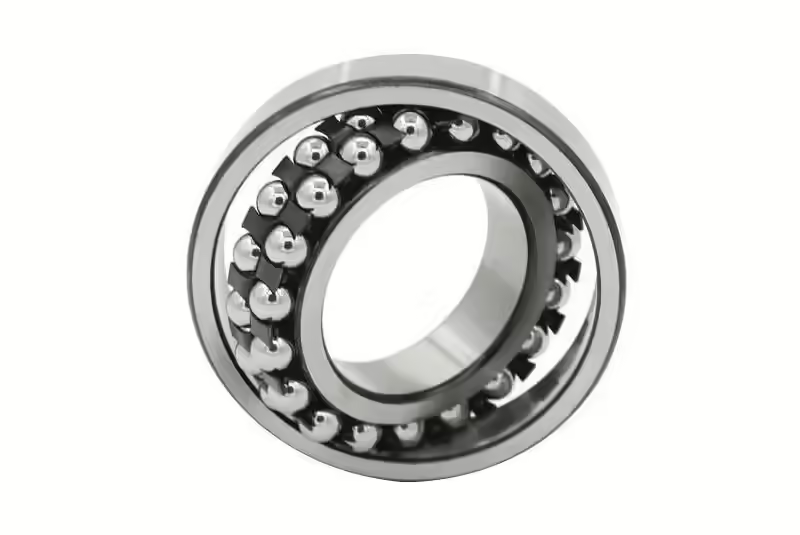
Load and stress requirements
If the bearing will be subjected to heavy loads and high pressures, high-carbon chromium steel or case-hardened steel may be the best option due to their superior load-bearing capacity.
Environmental conditions
For applications exposed to moisture, chemicals, or extreme temperatures, stainless steel or high-speed steel provides better resistance to corrosion and oxidation.
Wear and fatigue resistance
If prolonged operation and durability are critical, vacuum degassed steel offers enhanced fatigue strength and reduced inclusion levels, making it ideal for high-precision applications.
Cost considerations
While high-performance steels like M50 and vacuum degassed steel provide exceptional durability, they are more expensive than standard high-carbon chromium steel. Evaluating the cost versus performance ratio is essential for choosing the most economical option.
الخاتمة
Choosing the right bearing steel types is crucial for ensuring the longevity, efficiency, and reliability of bearings in industrial, automotive, and aerospace applications. Each type of bearing steel has its unique properties, advantages, and limitations, making it important to select the best material based on application-specific requirements.
By understanding the properties of different bearing steel types, manufacturers and engineers can optimize bearing performance and extend equipment lifespan. If you want to consult bearing steel products, please feel free to اتصل بنا.
الأسئلة الشائعة
What is the most commonly used bearing steel?
High-carbon chromium steel, such as 52100, is the most widely used bearing steel due to its excellent wear resistance, high hardness, and fatigue strength.
Which bearing steel type is best for corrosion resistance?
Stainless steel, particularly 440C, offers superior corrosion resistance, making it ideal for food processing, marine, and chemical applications.
What is the advantage of case-hardened bearing steel?
Case-hardened steel has a tough core and a hard outer surface, providing a combination of impact resistance and wear resistance, making it suitable for heavy-duty applications.
When should I use vacuum degassed bearing steel?
Vacuum degassed steel is ideal for high-precision applications such as aerospace, robotics, and advanced manufacturing, where purity and fatigue resistance are critical.
How do I choose the right bearing steel for my application?
Consider factors such as load capacity, environmental exposure, wear resistance, and budget. For general applications, high-carbon chromium steel is a cost-effective choice, while stainless steel is best for corrosive environments.