Welcome to My Blog!
Before we dive into the content, I’d love for you to join me on my social media platforms where I share more insights, engage with the community, and post updates. Here’s how you can connect with me:
Facebook:https://www.facebook.com/profile.php?id=100087990137347
LinkedIn:https://www.linkedin.com/company/89825762/admin/dashboard/
YouTube:www.youtube.com/@carbonsteelsupply-kj9lw
TikTok:www.tiktok.com/@carbonsteelsupply
Now, let’s get started on our journey together. I hope you find the content here insightful, engaging, and valuable.
Table of Contents
مقدمة
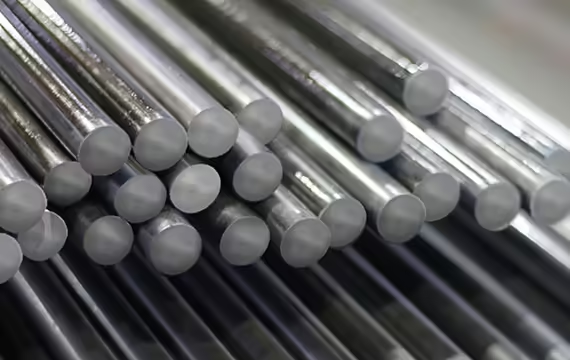
Carbon forged steel stands as a testament to the enduring strength and versatility of this material. Combining the inherent properties of carbon steel with the transformative power of forging, this material has found its way into countless applications, from the everyday tools we use to the critical components in heavy machinery. Its remarkable adaptability makes it a staple in industries ranging from automotive to aerospace. In this comprehensive guide, we’ll delve into the world of carbon forged steel, exploring its unique characteristics, diverse applications, and the reasons behind its enduring popularity.
What is Carbon Forged Steel?
At its core, carbon forged steel is a type of steel that contains carbon as its primary alloying element. The carbon content typically ranges from 0.05% to 2.0%, influencing the steel’s hardness, strength, and weldability. Higher carbon content generally increases hardness but can reduce ductility. What sets carbon forging steel apart is the forging process. Forging involves shaping the heated steel using compressive forces, typically with hammers or presses. This process refines the grain structure of the steel, eliminating internal voids and imparting superior mechanical properties. This results in a material significantly stronger and more reliable than its cast or rolled counterparts.
The Benefits of Carbon Forged Steel
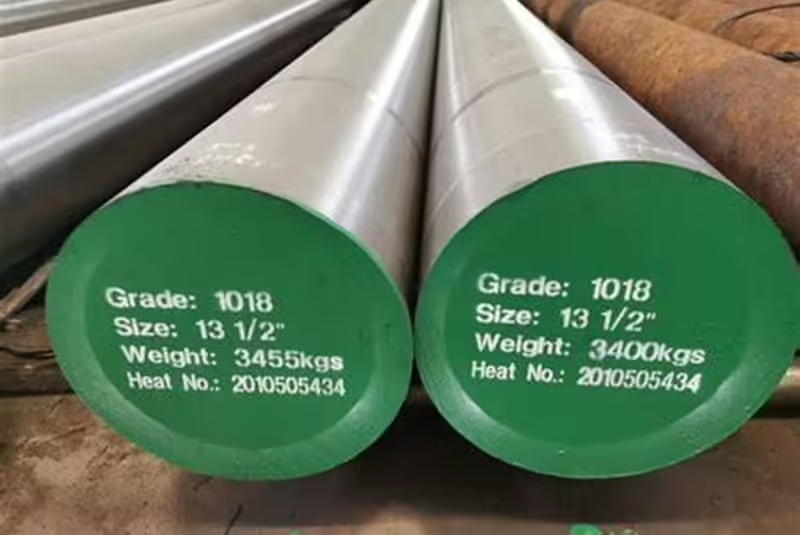
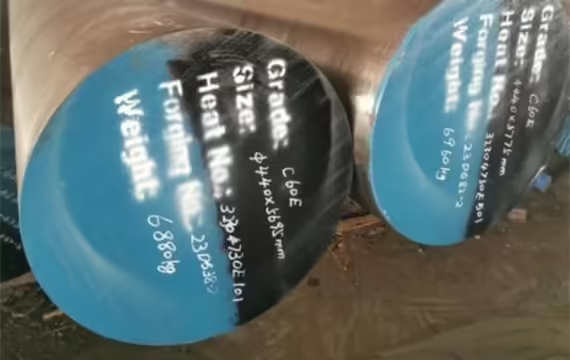
Carbon forged steel offers a compelling combination of advantages that make it a preferred material in various industries:
- Exceptional Strength and Durability: The forging process enhances the steel’s strength and toughness, making it capable of withstanding extreme stress and impact. This makes it ideal for parts subjected to high loads and harsh conditions.
- Superior Grain Structure: Forging refines the grain structure, resulting in a more uniform and dense material with improved fatigue resistance. This refined structure also contributes to better impact strength.
- Enhanced Reliability: The absence of internal voids and discontinuities ensures greater reliability and consistency in performance. This is crucial for critical applications where failure is not an option.
- Versatility in Shaping: Carbon forging steel can be formed into complex shapes and sizes, catering to diverse design requirements. This allows manufacturers to create highly specialized parts.
- Cost-Effectiveness: Compared to other high-strength materials, carbon forging steel offers a cost-effective solution for demanding applications. This makes it an attractive option for large-scale production.
Applications of Carbon Forging Steel
Related Products


The remarkable properties of carbon forged steel have led to its widespread use in a multitude of applications:
- Automotive Industry: Components such as crankshafts, connecting rods, gears, and axles rely on the strength and durability of carbon forging steel. These parts are essential for the smooth and reliable operation of vehicles.
- Aerospace Engineering: Landing gear components, engine parts, and structural elements benefit from the high strength-to-weight ratio of carbon forging steel. This is critical for aircraft performance and safety.
- Construction Equipment: Heavy-duty machinery like excavators, bulldozers, and cranes utilize carbon forging steel for critical structural parts. These machines operate under immense stress, demanding robust materials.
- Hand Tools: Wrenches, hammers, pliers, and other hand tools are often made from carbon forging steel to ensure durability and longevity. Users rely on these tools to perform tough tasks.
- Cutting Tools: Knives, axes, and saw blades take advantage of the hardness and wear resistance of carbon forged steel. This allows them to maintain a sharp edge for extended use.
Carbon Forging Steel vs. Other Steel Types
While carbon forged steel excels in certain areas, it’s essential to understand how it compares to other steel types:
| Feature | Carbon Forged Steel | Cast Steel | سبائك الصلب |
|---|---|---|---|
| Manufacturing | Forging | Casting | Alloying |
| Strength | High | Moderate | Very High |
| Toughness | High | Moderate | High |
| Cost | Moderate | Low | High |
| Applications | High-stress parts | General parts | Specialized parts |
Working with Carbon Forged Steel
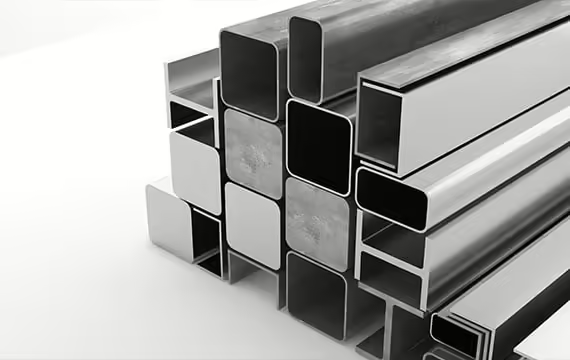
Carbon forged steel can be further processed to enhance its properties or tailor it to specific needs:
- Heat Treatment: Techniques like annealing, normalizing, quenching, and tempering can modify the steel’s microstructure and mechanical properties. This allows engineers to fine-tune the material’s characteristics.
- Machining: Carbon forging steel can be easily machined to achieve precise dimensions and surface finishes. This is important for creating components that fit together accurately.
- Welding: Many carbon forging steel grades can be welded using appropriate techniques. However, pre-heating and post-welding heat treatments may be necessary in some cases.
- Surface Treatment: Coatings or treatments can be applied to improve corrosion resistance or wear resistance. This extends the lifespan of the components and enhances their performance.
الخاتمة
Carbon forged steel has proven its mettle as a reliable and versatile material across a wide spectrum of applications. Its exceptional strength, durability, and cost-effectiveness make it a preferred choice for demanding industries. From the smallest hand tool to the largest industrial machine, carbon forged steel plays a crucial role. As technology advances, carbon forged steel continues to evolve, adapting to new challenges and solidifying its position as a cornerstone of modern engineering.
الأسئلة الشائعة
Q: Is carbon forged steel the same as stainless steel?
A: No, carbon forged steel is distinct from stainless steel. Stainless steel contains chromium, which imparts corrosion resistance, while carbon forged steel primarily relies on carbon as its alloying element. These two materials have very different properties and applications.
Q: How can I identify carbon forging steel?
A: Carbon forging steel often exhibits a distinct grain pattern due to the forging process. It may also have a higher hardness compared to other steel types. Visual inspection and hardness testing can help in identification.
Q: Can carbon forged steel be heat treated?
A: Yes, carbon forged steel can be heat treated to modify its properties, such as hardness, strength, or toughness. This is a common practice to optimize the material for specific applications.
Q: What are the limitations of carbon forged steel?
A: While strong, carbon forged steel may not be suitable for extremely corrosive environments. It may also require specialized welding techniques for certain grades. Careful consideration of the application environment is essential.