Welcome to My Blog!
Before we dive into the content, I’d love for you to join me on my social media platforms where I share more insights, engage with the community, and post updates. Here’s how you can connect with me:
Facebook:https://www.facebook.com/profile.php?id=100087990137347
LinkedIn:https://www.linkedin.com/company/89825762/admin/dashboard/
YouTube:www.youtube.com/@carbonsteelsupply-kj9lw
TikTok:www.tiktok.com/@carbonsteelsupply
Now, let’s get started on our journey together. I hope you find the content here insightful, engaging, and valuable.
Table of Contents
مقدمة

Alloy steel is a crucial material in various industries, offering enhanced mechanical properties, corrosion resistance, and durability compared to carbon steel. By adding elements such as chromium, nickel, molybdenum, and vanadium, alloy steel can be customized for specific applications, from construction to aerospace engineering.
Understanding the types of alloy steel helps industries choose the right material for their needs. This guide explores the different categories of alloy steel, their properties, applications, and how to select the best alloy steel for specific industrial uses.
What Is Alloy Steel?
Alloy steel is steel that contains additional elements besides carbon and iron to improve mechanical strength, hardness, and wear resistance. The percentage of alloying elements determines whether it is classified as low-alloy or high-alloy steel.
- Low-alloy steel: Contains less than 8% alloying elements
- High-alloy steel: Contains more than 8% alloying elements, with stainless steel being a common example
By adjusting the composition, alloy steel can be tailored for strength, heat resistance, corrosion resistance, or wear resistance.
Types of Alloy Steel
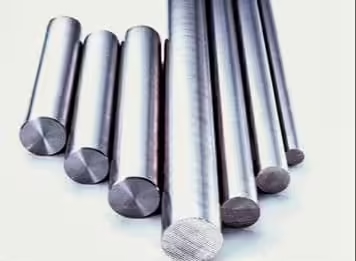
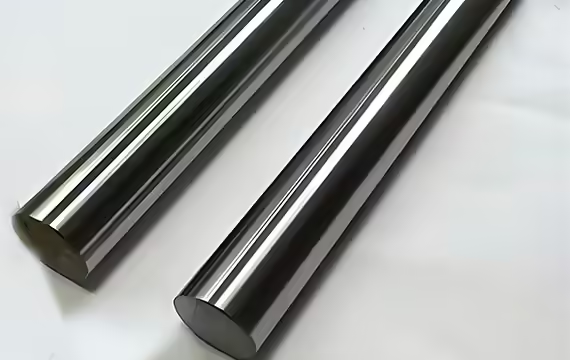
Low-Alloy Steel
Low-alloy steel is known for its balance of strength, ductility, and weldability, making it widely used in construction and manufacturing.
Common elements in low-alloy steel:
- Chromium: Increases hardness and corrosion resistance
- Nickel: Improves toughness and impact resistance
- Molybdenum: Enhances strength and heat resistance
Applications:
- Structural components in bridges and buildings
- Automotive and truck frames
- Pipelines and pressure vessels
High-Alloy Steel
High-alloy steel contains a higher percentage of alloying elements, making it suitable for extreme conditions such as high heat or corrosion-prone environments.
Common types of high-alloy steel:
- Stainless steel: Contains at least 10.5% chromium, providing excellent corrosion resistance
- Tool steel: Contains tungsten, molybdenum, and vanadium for enhanced hardness and wear resistance
Applications:
- Medical instruments and surgical tools
- Aerospace components
- High-temperature industrial machinery
الفولاذ المقاوم للصدأ
Stainless steel is a widely used high-alloy steel due to its exceptional resistance to rust and corrosion. It is classified into several types:
- Austenitic stainless steel: Non-magnetic, highly corrosion-resistant, commonly used in kitchenware and chemical plants
- Ferritic stainless steel: Magnetic, offers good corrosion resistance, often used in automotive applications
- Martensitic stainless steel: Hard and strong, ideal for cutlery and turbine blades
Applications:
- Food processing and medical equipment
- Chemical and petrochemical industries
- Marine and coastal construction
فولاذ الأدوات
Tool steel is designed for high hardness and resistance to abrasion. It is categorized based on its specific properties:
- Water-hardening (W-Series): Basic tool steel with moderate wear resistance
- Shock-resistant (S-Series): Used in impact tools like chisels and hammers
- Hot-work (H-Series): Withstands high temperatures, used in forging dies
- Cold-work (D-Series): High carbon content for wear resistance in cutting tools
Applications:
- Cutting tools and drills
- Injection molds and dies
- Mechanical gears and bearings
HSLA Steel (High-Strength Low-Alloy)
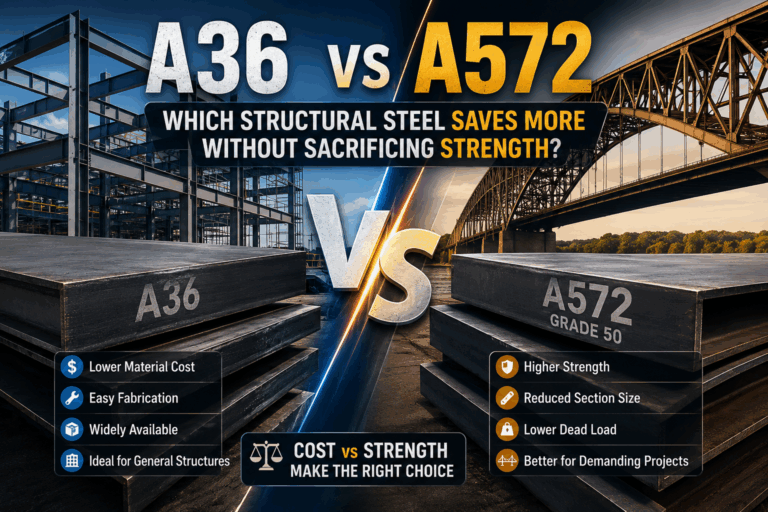
HSLA steel is engineered to provide high strength with reduced weight, making it ideal for structural applications.
Key features:
- Higher strength-to-weight ratio than regular steel
- Good weldability and formability
- Improved toughness and impact resistance
Applications:
- Construction of bridges, buildings, and ships
- Automotive and truck frames
- Pressure vessels and pipelines
Comparison of Different Types of Alloy Steel
| Type of Alloy Steel | Key Elements | Main Properties | Common Applications |
|---|---|---|---|
| Low-Alloy Steel | Chromium, Nickel, Molybdenum | High strength, good weldability | Construction, pipelines, automotive |
| High-Alloy Steel | High Chromium, Nickel | Excellent corrosion resistance, high strength | Aerospace, medical, industrial equipment |
| الفولاذ المقاوم للصدأ | Chromium (10.5% or more) | Corrosion-resistant, durable | Food processing, chemical industries, medical tools |
| فولاذ الأدوات | Tungsten, Molybdenum, Vanadium | High hardness, wear resistance | Cutting tools, dies, mechanical gears |
| HSLA Steel | Vanadium, Titanium, Copper | High strength-to-weight ratio, impact-resistant | Structural frameworks, bridges, heavy vehicles |
How to Choose the Right Alloy Steel
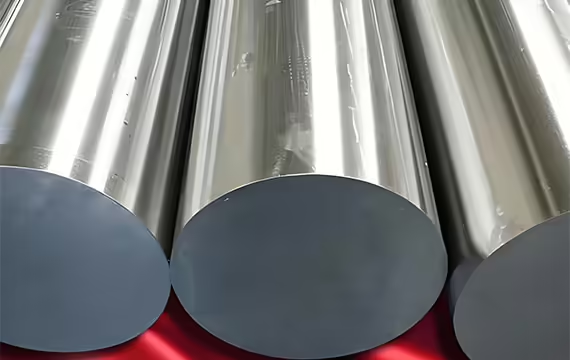
Consider Strength and Durability Needs
For construction or heavy-load applications, low-alloy steel or HSLA steel is ideal due to its high strength and toughness.
Evaluate Corrosion Resistance Requirements
For applications exposed to moisture or chemicals, stainless steel is the best choice due to its chromium content, which prevents rust formation.
Assess Heat and Wear Resistance
If the steel will be used in high-temperature or high-friction environments, tool steel or high-alloy steel with added tungsten or molybdenum is recommended.
Cost and Availability
Different alloy steels vary in price depending on their composition. Low-alloy steel is generally more affordable than high-alloy or stainless steel, making it a budget-friendly choice for structural applications.
الخاتمة
Alloy steel is a versatile material used in industries ranging from construction to aerospace. By understanding the types of alloy steel, manufacturers can select the right material based on strength, corrosion resistance, and cost-effectiveness.
Whether you need high-strength low-alloy steel for construction, stainless steel for corrosion-resistant applications, or tool steel for heavy-duty machining, selecting the appropriate alloy ensures longevity and efficiency in your projects.
الأسئلة الشائعة
What is the difference between low-alloy and high-alloy steel?
Low-alloy steel contains less than 8% alloying elements, providing good strength and weldability. High-alloy steel has more than 8% alloying elements, offering enhanced corrosion and heat resistance.
Why is stainless steel considered an alloy steel?
Stainless steel is a type of high-alloy steel containing chromium, which provides excellent corrosion resistance, making it ideal for medical, food processing, and industrial applications.
What is tool steel used for?
Tool steel is used for manufacturing cutting tools, dies, and molds due to its hardness, wear resistance, and ability to retain sharp edges under high stress.
How does HSLA steel compare to carbon steel?
HSLA steel has a higher strength-to-weight ratio, better impact resistance, and improved corrosion resistance compared to regular carbon steel, making it ideal for structural applications.
What industries commonly use alloy steel?
Alloy steel is widely used in construction, automotive, aerospace, tool manufacturing, and heavy machinery industries due to its enhanced strength, durability, and resistance to environmental factors.