
Willkommen auf Mein Blog!
Bevor wir uns mit den Inhalten befassen, würde ich mich freuen, wenn Sie mich auf meinen Social-Media-Plattformen begleiten, wo ich weitere Erkenntnisse teile, mich mit der Community auseinandersetze und Updates poste. So können Sie mit mir in Kontakt treten:
Facebook:https://www.facebook.com/profile.php?id=100087990137347
LinkedIn:https://www.linkedin.com/company/89825762/admin/dashboard/
YouTube:www.youtube.com/@carbonsteelsupply-kj9lw
TikTok:www.tiktok.com/@carbonsteelsupply
Jetzt geht es los auf unsere gemeinsame Reise Ich hoffe, dass Sie die Inhalte hier aufschlussreich, ansprechend und wertvoll finden.
Einführung

Aerospace components are subject to extreme operating conditions—high stress, temperatures, and aggressive environments. As such, materials used in aerospace manufacturing must not only be durable and resilient but also capable of withstanding these rigorous demands. 4150 alloy steel has emerged as one of the top choices for such applications due to its unique combination of strength, toughness, and heat treatment potential. This blog will explore why 4150 alloy steel is perfect for aerospace components, examining its properties, benefits, and the various ways it is used in this critical industry.
What is 4150 Alloy Steel?
Before diving into its suitability for aerospace applications, it’s important to understand what 4150 steel is. It is a chromium-molybdenum steel that offers a great balance of strength, toughness, and wear resistance. It contains approximately 0.50% carbon, 0.90-1.20% chromium, and 0.15-0.25% molybdenum. This alloy is known for its versatility and is widely used in industries requiring high-performance steel for heavy-duty components.
Properties of 4150 Alloy Steel
The exceptional properties of 4150 alloy steel make it an ideal choice for aerospace components. Here are some of its key properties:
| Eigentum | Value |
|---|---|
| Zugfestigkeit | 850-1000 MPa |
| Hardness | 28-34 HRC |
| Streckgrenze | 655 MPa |
| Schlagzähigkeit | Hoch |
| Korrosionsbeständigkeit | Moderate (with proper coatings) |
| Machinability | Good |
These properties allow 4150 alloy steel to withstand the mechanical and environmental stresses often encountered in aerospace environments.
The Importance of Strength and Toughness
Aerospace components must exhibit high strength to handle the immense forces they encounter during flight, such as aerodynamic loads and vibration stresses. At the same time, toughness is equally important to prevent catastrophic failure from sudden impacts or fatigue. 4150 alloy steel provides an excellent balance of both. Its tensile strength and yield strength are high enough to ensure that components made from this material can endure these stresses without permanent deformation or failure.
Moreover, the alloy’s impact toughness enables it to absorb energy during unexpected stress events without fracturing. This makes it particularly suitable for aerospace components such as landing gear, shafts, and other load-bearing parts.
How Heat Treatment Enhances 4150 Alloy Steel
One of the reasons alloy steel 4150 is favored for aerospace components is its response to heat treatment. The alloy is designed to be heat-treated to achieve different levels of hardness and strength, making it adaptable for various applications.
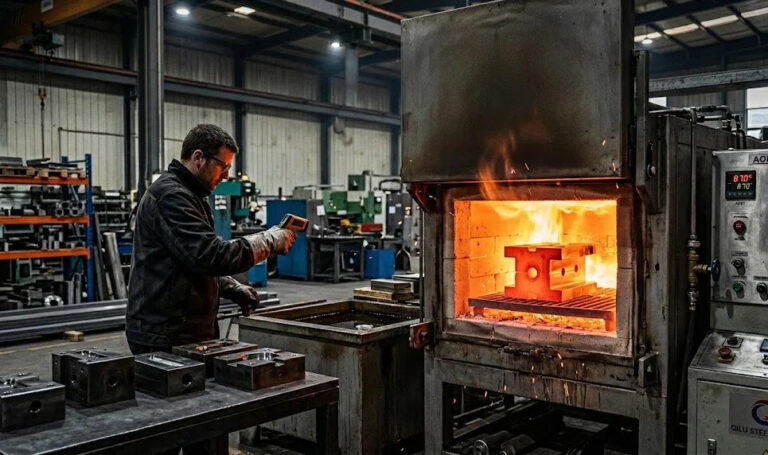
Through heat treatment processes such as quenching and tempering, alloy steel 4150 can be tailored to meet specific strength and toughness requirements. For example, when heat-treated to 28-34 HRC hardness, the steel maintains its strength and is capable of enduring the high-stress environment found in aerospace operations.
Applications of 4150 Alloy Steel in Aerospace
In the aerospace industry, alloy steel 4150 is used in a variety of critical applications where its high strength, toughness, and resistance to wear and fatigue are necessary. Some of the key uses include:
- Landing Gear: The landing gear of aircraft is subjected to extreme stresses during takeoff and landing. 4150 alloy steel is often used due to its durability and ability to withstand shock loading.
- Aircraft Shafts: Shafts, which are integral to aircraft engines and other systems, need to be both strong and resistant to fatigue. 4150 alloy steel’s excellent fatigue resistance makes it a top choice for this application.
- Aircraft Components: Various parts like structural beams, brackets, and even gears in the propulsion system benefit from the strength and machinability of 4150 alloy steel.
- Engine Components: Components such as crankshafts and connecting rods in aerospace engines require a material that can withstand high rotational forces without failure. 4150’s tensile strength makes it ideal for these high-performance engine components.
Vorteile von 4150 Alloy Steel for Aerospace Manufacturing
The aerospace industry demands materials that can deliver consistent performance under extreme conditions. Here are some of the key advantages of using 4150 alloy steel for aerospace components:
- High Strength and Durability: 4150 alloy steel’s excellent tensile and yield strength make it well-suited for the high-stress environments found in aerospace applications.
- Toughness: This steel is resistant to impact and fracture, an essential quality for parts exposed to rapid changes in forces, such as landing gear or structural supports.
- Fatigue Resistance: Aerospace components undergo repeated stress cycles, which can lead to material fatigue. The high fatigue resistance of 4150 alloy steel ensures the longevity of components.
- Heat Treatment Flexibility: The material can be heat-treated to achieve the desired hardness and strength, providing engineers with flexibility in designing and manufacturing components.
- Korrosionsbeständigkeit: While not as resistant to corrosion as stainless steel, 4150 alloy steel can be coated or treated to enhance its resistance to rust and other forms of corrosion that may be encountered in harsh aerospace environments.
Challenges of Using 4150 Alloy Steel in Aerospace
While 4150 alloy steel is an excellent choice for many aerospace components, it does come with some challenges. For instance:
- Korrosionsbeständigkeit: While it can be improved with coatings, 4150 does not inherently offer the same level of corrosion resistance as some other alloys like stainless steel or titanium. This is particularly concerning in environments where exposure to moisture and chemicals is frequent.
- Weight: 4150 alloy steel is denser than some alternative materials, such as aluminum or titanium. In weight-sensitive aerospace applications, this could be a disadvantage. However, this is often mitigated by using specific components that don’t need to prioritize weight reduction.
- Cost: The cost of producing high-quality 4150 alloy steel, along with the necessary heat treatments and coatings, can be higher than some other alloys. However, the benefits it offers in terms of strength and toughness often justify the added cost.
FAQs About 4150 Alloy Steel in Aerospace Applications
Q1: Is 4150 alloy steel corrosion-resistant enough for aerospace use?
While 4150 alloy steel is moderately resistant to corrosion, it is typically coated with materials like zinc or chrome to enhance its corrosion resistance in aerospace applications.
Q2: Can 4150 alloy steel be used for all aerospace components?
No, 4150 alloy steel is best suited for applications that require high strength and toughness, such as landing gear, shafts, and structural components. For parts that require lighter weight or more specialized properties, materials like aluminum or titanium may be better suited.
Q3: What makes 4150 alloy steel better than other steels for aerospace use?
The combination of high strength, toughness, and heat treatment flexibility makes alloy steel 4150 one of the best choices for aerospace applications. It can withstand extreme stresses, resist impact, and be tailored to meet specific mechanical property requirements.
Q4: Can 4150 alloy steel be used in extreme temperature conditions?
Yes, 4150 alloy steel is capable of performing well in a wide range of temperatures, though it should be noted that its performance at very high or very low temperatures may be impacted unless properly heat-treated.
Schlussfolgerung

4150 alloy steel is an exceptional material for aerospace components, offering an excellent balance of strength, toughness, and fatigue resistance. Its adaptability to heat treatment allows for customization of properties, making it suitable for a wide variety of aerospace applications, from landing gear to engine components. Despite its challenges, such as its corrosion resistance and weight, the overall advantages of alloy steel 4150 make it a top choice for manufacturers in the aerospace industry. With the continuous development of new technologies and treatments, 4150 alloy steel will likely remain a critical material in the aerospace sector for years to come.