Willkommen auf Mein Blog!
Bevor wir uns mit den Inhalten befassen, würde ich mich freuen, wenn Sie mich auf meinen Social-Media-Plattformen begleiten, wo ich weitere Erkenntnisse teile, mich mit der Community auseinandersetze und Updates poste. So können Sie mit mir in Kontakt treten:
Facebook:https://www.facebook.com/profile.php?id=100087990137347
LinkedIn:https://www.linkedin.com/company/89825762/admin/dashboard/
YouTube:www.youtube.com/@carbonsteelsupply-kj9lw
TikTok:www.tiktok.com/@carbonsteelsupply
Jetzt geht es los auf unsere gemeinsame Reise Ich hoffe, dass Sie die Inhalte hier aufschlussreich, ansprechend und wertvoll finden.
Inhaltsverzeichnis
Einführung
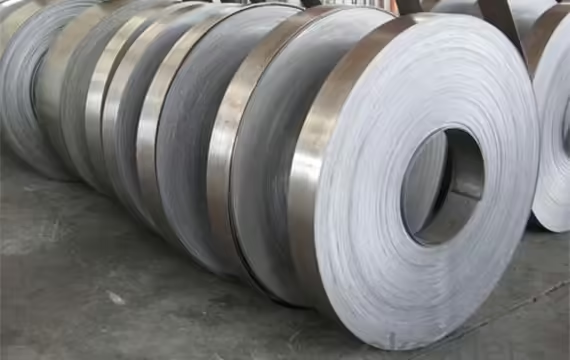
Spring steel is a widely used material in various industries, valued for its exceptional strength, flexibility, and durability. It is a type of high-carbon steel known for its ability to return to its original shape after deformation, making it an ideal choice for applications requiring high resistance to stress and fatigue. The unique spring steel properties contribute significantly to its longevity, making it suitable for manufacturing automotive parts, industrial tools, and even precision instruments.
Understanding how spring steel properties impact durability can help manufacturers and engineers choose the right material for their applications. In this article, we will explore the key characteristics of spring steel, its benefits, applications, and how these properties contribute to its long-term performance.
Key Federstahl Properties That Affect Durability
Spring steel properties play a crucial role in determining its performance and longevity. Below are some of the most important characteristics that impact its durability.
High Tensile Strength
Spring steel is known for its high tensile strength, which allows it to withstand significant force without breaking. This property is essential for applications where the material is subjected to repeated loading and unloading cycles.
Excellent Elasticity
One of the defining characteristics of spring steel is its elasticity. It can deform under stress and return to its original shape once the stress is removed. This property is particularly important in applications such as suspension systems, springs, and cutting tools.
Hardness and Wear Resistance
Spring steel exhibits excellent hardness, which contributes to its wear resistance. This makes it suitable for applications involving continuous friction and mechanical stress, such as industrial blades and saws.
Korrosionsbeständigkeit
While not as corrosion-resistant as stainless steel, certain grades of spring steel are treated to improve their resistance to rust and environmental damage. Proper coatings and treatments can enhance its longevity in harsh conditions.
Fatigue Resistance
Spring steel is designed to withstand repeated bending and stress cycles without significant wear. This property makes it ideal for applications requiring long-term performance and reliability, such as automotive suspension systems and machinery components.
Applications of Spring Steel in Various Industries
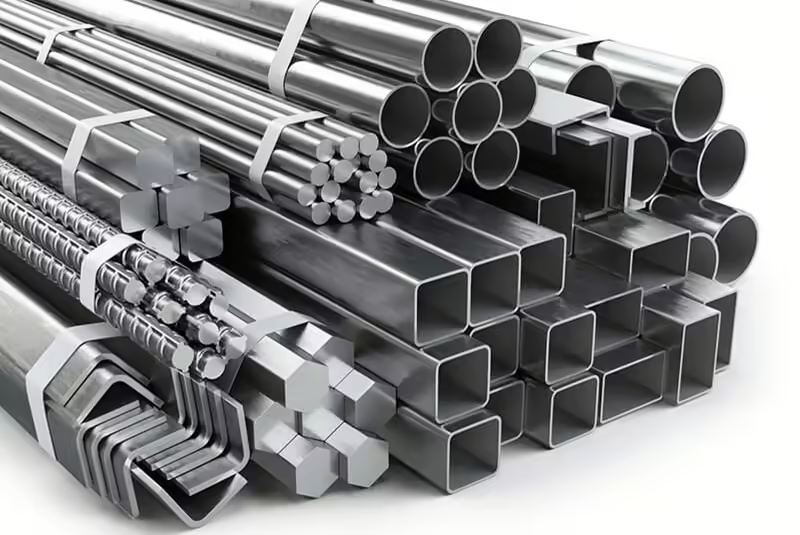
Spring steel is used across multiple industries due to its combination of strength, elasticity, and durability. Below are some of the most common applications.
Autoindustrie
- Suspension springs
- Clutch plates
- Seat belt retractors
- Valve springs
Manufacturing and Engineering
- Industrial blades and saws
- Cutting tools
- Measuring tapes
- Machinery components
Construction and Infrastructure
- Reinforcement materials
- Structural supports
- Fasteners and bolts
Luft- und Raumfahrtindustrie
- Aircraft landing gear components
- High-stress connectors
- Precision instruments
Consumer Goods
- Knife blades
- Locks and security components
- Musical instruments (e.g., piano wire)
Comparison of Different Grades of Spring Steel
Spring steel is available in various grades, each with its own unique properties that impact durability. The table below provides a comparison of some commonly used spring steel grades.
| Eigentum | 1075 Spring Steel | 1095 Spring Steel | 5160 Spring Steel | 301 Stainless Spring Steel |
|---|---|---|---|---|
| Carbon Content | 0.70-0.80% | 0.90-1.00% | 0.56-0.64% | 0.15% |
| Hardness | Hoch | Very High | Medium | Medium |
| Elasticity | Excellent | Good | Excellent | Very Good |
| Wear Resistance | Mäßig | Hoch | Hoch | Mäßig |
| Korrosionsbeständigkeit | Niedrig | Niedrig | Mäßig | Hoch |
| Best Used For | Springs, blades | High-performance tools, knives | Automotive springs, swords | Medical instruments, food-grade applications |
The right choice of spring steel grade depends on the specific application, required durability, and environmental conditions in which it will be used.
How Spring Steel Properties Enhance Durability
Resistance to Repeated Stress Cycles
Spring steel’s high fatigue resistance allows it to endure repeated stress without losing its shape or breaking. This makes it ideal for applications such as vehicle suspension systems and industrial springs, where consistent performance is required over long periods.
Ability to Maintain Structural Integrity
Due to its excellent elasticity, spring steel can absorb shocks and impacts without permanent deformation. This enhances its durability in high-stress applications like mechanical tools and fasteners.
Protection Against Environmental Factors
Although raw spring steel is prone to rust, modern treatment methods such as galvanization, oil coatings, and heat treatments improve its corrosion resistance. This ensures longevity, even in harsh environments.
Enhanced Performance in High-Temperature Conditions
Some spring steel alloys are designed to withstand high temperatures without losing their mechanical properties. This is particularly useful in industrial machinery, where components are exposed to heat and friction.
Best Practices for Maintaining Spring Steel Components
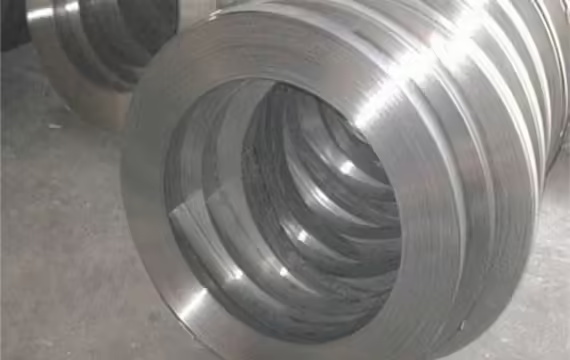
To maximize the durability of spring steel components, proper maintenance and handling are essential. Here are some best practices:
Regular Inspection
Periodically check for signs of wear, cracks, or deformation to prevent failures in critical applications.
Proper Lubrication
Using the right lubricants can reduce friction and wear, especially for moving parts like springs and cutting tools.
Protective Coatings
Applying oil, paint, or other protective coatings can prevent rust and corrosion, extending the lifespan of the material.
Avoid Overloading
Ensure that spring steel components are used within their designed load limits to prevent premature failure.
Controlled Storage Conditions
Store spring steel components in dry and temperature-controlled environments to minimize exposure to moisture and extreme temperatures.
Schlussfolgerung
The unique spring steel properties make it one of the most durable and versatile materials used in various industries. Its combination of high tensile strength, elasticity, hardness, and fatigue resistance ensures long-lasting performance in demanding applications. Whether used in automotive suspension, industrial tools, or construction materials, spring steel’s durability is a key factor in its widespread adoption.
By selecting the appropriate grade, applying proper maintenance techniques, and utilizing protective coatings, manufacturers can maximize the lifespan of spring steel components. Understanding these properties and their impact on durability allows engineers and designers to make informed decisions for their projects.
FAQ
What makes spring steel more durable than other types of steel?
Spring steel’s high tensile strength, excellent elasticity, and fatigue resistance allow it to withstand repeated stress cycles without permanent deformation, making it more durable than standard carbon steel.
Is spring steel corrosion-resistant?
While spring steel is not naturally corrosion-resistant, applying protective coatings such as oil, zinc plating, or heat treatment can enhance its resistance to rust and environmental factors.
Can spring steel be used in high-temperature applications?
Yes, certain grades of spring steel, such as 5160 and specialized stainless steel variants, can withstand high temperatures without losing their mechanical properties.
What is the best spring steel for making knives?
1095 spring steel is commonly used for making knives due to its high carbon content, excellent edge retention, and hardness. However, it requires proper maintenance to prevent rust.
How does heat treatment affect spring steel durability?
Heat treatment processes such as quenching and tempering improve the hardness, elasticity, and wear resistance of spring steel, making it more durable for demanding applications.
Can spring steel be welded?
While spring steel can be welded, it requires specialized techniques and post-weld heat treatment to prevent brittleness and ensure structural integrity.