Willkommen auf Mein Blog!
Bevor wir uns mit den Inhalten befassen, würde ich mich freuen, wenn Sie mich auf meinen Social-Media-Plattformen begleiten, wo ich weitere Erkenntnisse teile, mich mit der Community auseinandersetze und Updates poste. So können Sie mit mir in Kontakt treten:
Facebook:https://www.facebook.com/profile.php?id=100087990137347
LinkedIn:https://www.linkedin.com/company/89825762/admin/dashboard/
YouTube:www.youtube.com/@carbonsteelsupply-kj9lw
TikTok:www.tiktok.com/@carbonsteelsupply
Jetzt geht es los auf unsere gemeinsame Reise Ich hoffe, dass Sie die Inhalte hier aufschlussreich, ansprechend und wertvoll finden.
Inhaltsverzeichnis
Einführung
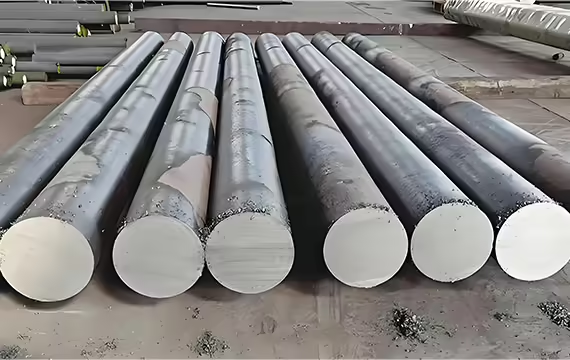
Alloy steel is a type of steel blended with elements like chromium, nickel, molybdenum, or vanadium to enhance its mechanical properties, with alloy steel strength being a primary focus. Strength ratings, typically measured in terms of tensile strength, yield strength, and hardness, indicate the material’s ability to withstand forces without deforming or breaking. The question of what alloy steel strength entails covers its composition, heat treatment, and testing methods, which collectively determine its suitability for specific applications.
The versatility of alloy steel strength makes it indispensable for components like gears, shafts, and structural beams, where durability and load-bearing capacity are paramount. This guide provides an in-depth look at alloy steel strength ratings, explaining how they are determined, the factors that influence them, and their practical implications across industries.
Why Legierter Stahl Strength Ratings Matter
Ensuring Structural Integrity
Alloy steel strength is critical for ensuring the structural integrity of components under high stress, such as in bridges, aircraft, or heavy machinery. Accurate strength ratings help engineers design parts that resist failure, enhancing safety and reliability, a key aspect of why alloy steel strength matters.
Optimizing Performance in Harsh Conditions
The ability of alloy steel to maintain strength in extreme temperatures, corrosive environments, or abrasive conditions is a hallmark of alloy steel strength. Understanding strength ratings allows professionals to select materials that perform consistently in challenging settings, such as chemical plants or offshore platforms.
Balancing Strength with Other Properties
While alloy steel strength is a primary consideration, it must be balanced with properties like ductility, toughness, and machinability. Knowledge of strength ratings guides material selection to achieve the optimal combination of properties for specific applications, ensuring efficiency and functionality.
Key Factors Influencing Alloy Steel Strength
Alloying Elements and Their Impact on Alloy Steel Strength
The addition of alloying elements significantly enhances alloy steel strength. For example:
- Chrom increases hardness and tensile strength.
- Nickel improves toughness and strength at low temperatures.
- Molybdän enhances high-temperature strength and creep resistance.
- Vanadium boosts yield strength and wear resistance.
These elements, carefully proportioned, define alloy steel strength, allowing customization for applications like tool manufacturing or structural engineering.
Heat Treatment Processes for Alloy Steel Strength
Heat treatment is a critical determinant of alloy steel strength. Processes like quenching, tempering, and annealing modify the steel’s microstructure to enhance specific strength properties:
- Abschrecken increases hardness and tensile strength by rapid cooling.
- Anlassen balances strength with toughness by controlled reheating.
- Annealing improves ductility while maintaining adequate strength.
Understanding how heat treatment affects alloy steel strength is essential for tailoring materials to meet precise performance criteria.
Manufacturing Techniques Affecting Alloy Steel Strength
The production method, such as forging, casting, or rolling, influences alloy steel strength. Forged alloy steel typically exhibits superior grain structure and strength due to mechanical working, while cast steel may have slightly lower consistency. Advanced techniques like powder metallurgy can further enhance alloy steel strength for precision components.
Measuring Alloy Steel Strength Ratings
Tensile Strength and Yield Strength
Tensile strength, the maximum stress a material can withstand before breaking, and yield strength, the stress at which permanent deformation begins, are core metrics of alloy steel strength. These are measured using standardized tests, such as ASTM E8, where a sample is pulled until failure, providing data in megapascals (MPa) or pounds per square inch (psi).
Hardness Testing for Alloy Steel Strength
Hardness, closely related to alloy steel strength, measures resistance to indentation or wear. Tests like Rockwell, Brinell, or Vickers quantify hardness, offering insights into the material’s ability to resist surface damage, critical for tools and wear-resistant components.
Fatigue and Impact Strength
Fatigue strength, the ability to withstand repeated loading, and impact strength, resistance to sudden forces, are additional aspects of alloy steel strength. These are evaluated through cyclic loading tests and Charpy or Izod impact tests, ensuring suitability for dynamic applications like automotive parts or machinery.
Comparison Table of Alloy Steel Strength Metrics
| Strength Metric | Measurement Method | Typical Range (MPa) | Anwendungen | Key Considerations |
|---|---|---|---|---|
| Zugfestigkeit | ASTM E8 tensile test | 500–2000 | Gears, shafts, structural beams | Balance with ductility |
| Streckgrenze | ASTM E8 tensile test | 350–1800 | Pressure vessels, axles | Determines load-bearing capacity |
| Hardness | Rockwell, Brinell, Vickers tests | 150–600 HB | Cutting tools, wear plates | Surface durability vs. brittleness |
| Fatigue Strength | Cyclic loading tests | 200–1000 | Crankshafts, turbine blades | Resistance to repetitive stress |
| Impact Strength | Charpy/Izod impact tests | 50–200 J | Automotive frames, heavy machinery | Performance under sudden loads |
This table summarizes the key metrics of alloy steel strength, their measurement methods, typical ranges, applications, and considerations. It serves as a reference for professionals evaluating alloy steel for specific projects.
Types of Legierter Stahl and Their Strength Ratings


Low-Alloy Steel Strength
Low-alloy steel, containing less than 8% alloying elements, offers moderate alloy steel strength with good weldability and formability. Grades like AISI 4140 provide tensile strengths of 850–1000 MPa, suitable for structural components in construction and pipelines.
High-Alloy Steel Strength
High-alloy steel, such as stainless steel with over 10% alloying elements, delivers superior alloy steel strength and corrosion resistance. Grades like 17-4 PH achieve tensile strengths up to 1300 MPa, ideal for aerospace and medical applications requiring high performance.
Tool Steel Strength
Tool steel, engineered for extreme hardness and wear resistance, exhibits high alloy steel strength, often exceeding 1500 MPa in grades like D2 or M2. These are used for cutting tools, dies, and molds, where durability under abrasive conditions is critical.
Applications of Alloy Steel Strength
Automotive Industry and Alloy Steel Strength
In automotive manufacturing, alloy steel strength is leveraged for components like crankshafts, axles, and suspension systems, which require high tensile and fatigue strength to endure repetitive loads. Grades like 4340 ensure reliability and safety in vehicle performance.
Aerospace and Defense Applications
Aerospace relies on alloy steel strength for lightweight, high-strength components like landing gear, turbine blades, and fasteners. High-alloy steels with tensile strengths above 1200 MPa provide the durability needed for extreme conditions, a key aspect of alloy steel strength in this sector.
Construction and Infrastructure
Alloy steel strength supports construction through structural beams, rebar, and bridge components. Low-alloy steels with yield strengths of 500–700 MPa offer the load-bearing capacity required for large-scale infrastructure, ensuring stability and longevity.
Manufacturing and Tooling
In manufacturing, alloy steel strength is critical for tools, dies, and machinery parts that endure high wear and stress. Tool steels with hardness ratings above 50 HRC provide the durability needed for precision cutting and forming processes.
Factors to Consider When Selecting Alloy Steel Based on Strength
Matching Alloy Steel Strength to Application
Choosing alloy steel with appropriate strength ratings is crucial for performance. High-strength grades are ideal for load-bearing components, while moderate-strength steels suit applications requiring weldability, ensuring alloy steel strength aligns with project demands.
Environmental and Operational Conditions
Alloy steel strength must be evaluated in the context of environmental factors, such as temperature, corrosion, or abrasion. For example, high-temperature applications may require molybdenum-enhanced steels to maintain alloy steel strength under heat.
Compliance with Industry Standards
Standards like ASTM, SAE, or ISO define alloy steel strength requirements for specific applications. Ensuring compliance with these standards guarantees safety and performance, a critical consideration when selecting materials based on alloy steel strength.
Maintenance and Testing for Alloy Steel Strength
Preventing Strength Degradation
To maintain alloy steel strength, protect components from corrosion through coatings or proper storage. Regular maintenance, such as cleaning and lubrication, prevents surface damage that could compromise strength in high-stress applications.
Non-Destructive Testing
Non-destructive testing (NDT) methods, like ultrasonic or magnetic particle testing, verify alloy steel strength without damaging components. These tests detect internal flaws or fatigue, ensuring the material retains its rated strength over time.
Periodic Strength Reassessment
For critical applications, periodic strength reassessment through tensile or hardness tests confirms that alloy steel strength remains within specifications. This is particularly important for components subject to wear or environmental exposure.
Advancements in Alloy Steel Strength
Alloy Development for Enhanced Strength
Ongoing research into alloying elements and compositions is improving alloy steel strength. New high-strength low-alloy (HSLA) steels offer tensile strengths above 1000 MPa with improved weldability, expanding their use in lightweight structures.
Advanced Heat Treatment Techniques
Innovations in heat treatment, such as induction hardening or cryogenic processing, are enhancing alloy steel strength by optimizing microstructure. These techniques allow precise control over hardness and toughness, tailoring materials for specific needs.
Computational Modeling for Strength Prediction
Computational tools, like finite element analysis, predict alloy steel strength under various conditions, aiding material selection and design. These advancements ensure that alloy steel strength is maximized for complex applications like aerospace or automotive components.
Schlussfolgerung
Understanding alloy steel strength ratings is essential for selecting materials that deliver durability, safety, and performance in demanding industrial applications. From tensile and yield strength to hardness and fatigue resistance, these ratings provide a roadmap for choosing the right alloy steel grade, whether for automotive parts, aerospace components, or construction frameworks. By considering alloying elements, heat treatment, and environmental factors, professionals can optimize alloy steel strength to meet project requirements.
As advancements in alloy development and testing continue to evolve, alloy steel strength will remain a cornerstone of engineering innovation, supporting robust and efficient solutions across industries.
FAQ
What is alloy steel strength?
Alloy steel strength refers to the material’s ability to withstand forces, measured through metrics like tensile strength, yield strength, hardness, and fatigue strength, enhanced by alloying elements and heat treatment.
How is alloy steel strength measured?
Alloy steel strength is measured using standardized tests, such as ASTM E8 for tensile and yield strength, Rockwell or Vickers for hardness, and Charpy/Izod for impact strength, providing data in MPa or psi.
What factors enhance alloy steel strength?
Alloying elements (e.g., chromium, molybdenum), heat treatments (e.g., quenching, tempering), and manufacturing techniques (e.g., forging) enhance alloy steel strength, tailoring it for specific applications.
What industries rely on alloy steel strength?
Automotive, aerospace, construction, and manufacturing depend on alloy steel strength for components like gears, turbine blades, structural beams, and tools, where high load-bearing capacity is critical.
How does heat treatment affect alloy steel strength?
Heat treatments like quenching increase hardness and tensile strength, tempering balances strength with toughness, and annealing improves ductility, shaping alloy steel strength for diverse needs.