
Inhaltsverzeichnis
Einführung
Mining equipment operates in some of the harshest conditions known to industry. Heavy loads, abrasive environments, high-impact forces, and extreme temperature fluctuations all place enormous demands on the materials used to build critical components. Forged steel remains one of the most reliable materials for mining equipment because of its superior strength, toughness, and durability. But choosing the right forged steel grade is not as simple as picking the hardest or the most durable material. It requires an understanding of mechanical properties, operational environments, cost-performance balance, and long-term reliability.
This article provides a step-by-step guide to selecting the correct forged steel grade for mining equipment. It combines technical analysis, industry insights, and practical recommendations to help manufacturers, engineers, and procurement specialists make the best choice. As a global supplier of forged steels, Qilu Steel provides industry-leading expertise and solutions tailored to mining applications.

Understanding the Role of Forged Steel in Mining Equipment
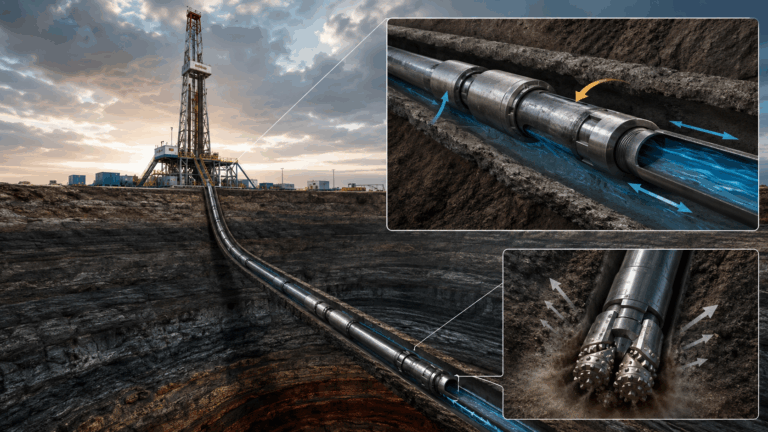
Mining equipment such as drilling machines, excavators, loaders, crushers, and grinding mills must handle constant stress. Forged steel is preferred over cast steel or fabricated alternatives because the forging process refines the grain structure, removes internal voids, and aligns the grain flow with the component’s geometry. This results in superior strength and impact resistance compared to other steel production methods.
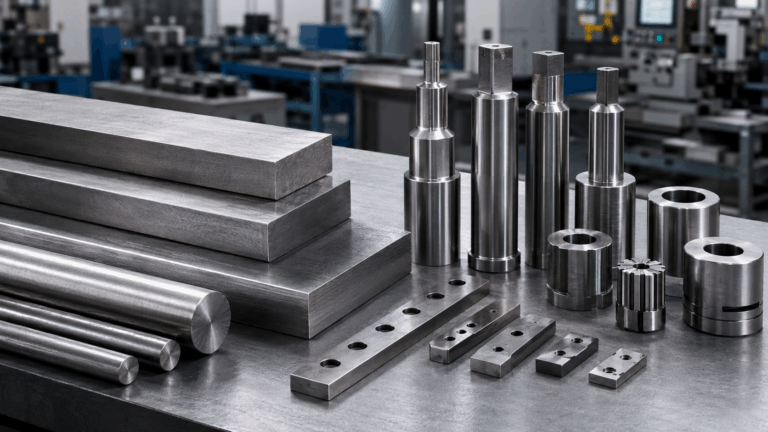
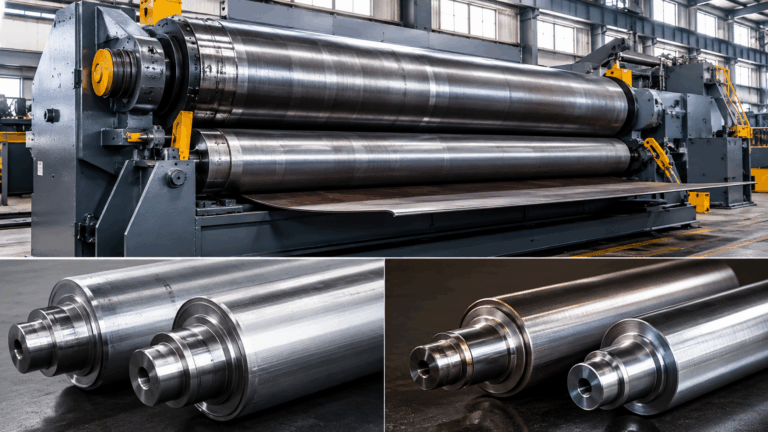
In mining, forged steel components are widely used in gears, shafts, axles, drill rods, crusher parts, and ground-engaging tools. The choice of grade determines whether these components can withstand the combination of wear, impact, and fatigue loading that mining operations demand.
Key Mechanical Properties of Forged Steel Grades for Mining
When selecting a forged steel grade, several mechanical properties must be evaluated carefully:
- Tensile strength: Determines how much load the material can withstand before breaking.
- Yield strength: Indicates the stress level at which the steel begins to deform permanently.
- Toughness: Critical for impact resistance, especially in rock crushing and drilling.
- Hardness: Determines wear resistance, essential in abrasive mining conditions.
- Fatigue resistance: Ensures durability under cyclic loading, common in rotating equipment.
- Ductility: Provides the ability to absorb energy without cracking.
Selecting the right forged steel grade requires balancing these properties rather than maximizing just one. For example, a grade with excellent hardness may lack toughness, leading to brittle failure.
Comparing Popular Forged Steel Grades in Mining Applications
Different steel grades are used depending on the equipment and environment. The following table compares common forged steel grades used in mining:
| Steel Grade | Key Properties | Typical Mining Applications |
|---|---|---|
| 34CrNiMo6 | High toughness, fatigue resistance, good hardenability | Shafts, gears, drill rods |
| 42CrMo4 | Excellent strength, wear resistance, and cost-effectiveness | Crusher parts, heavy axles |
| AISI 4140 | Versatile, balance of strength and toughness | General mining machinery components |
| AISI 4340 | Superior fatigue resistance, withstands shock loads | Excavator booms, high-stress parts |
| AISI 8620 | Good case hardening properties, wear resistance | Gears and bearings |
This table shows that no single steel grade is universally superior. Instead, the choice depends on operational requirements, budget, and maintenance strategy.
Heat Treatment and Its Impact on Forged Steel Performance
Heat treatment is often as important as the steel grade itself. Through processes like quenching, tempering, and case hardening, the microstructure of forged steel can be optimized for specific mining applications.
For example:
- Quenched and tempered 34CrNiMo6 achieves an excellent combination of toughness and fatigue resistance, making it ideal for shafts and gears.
- Carburized AISI 8620 produces a hard surface with a tough core, perfect for gears exposed to both wear and impact.
- Tempered 42CrMo4 balances hardness and toughness, preventing cracks in heavy-duty crusher parts.
According to industry testing data, heat treatment can increase fatigue life by over 40% in mining components compared to untreated forged steel. This makes heat treatment an essential consideration in grade selection.
Wear Resistance and Toughness: Finding the Right Balance
Mining environments expose steel to constant wear from abrasive rocks, dust, and slurry. At the same time, impact loads from drilling or rock crushing demand high toughness. Selecting a forged steel grade is about finding the balance between these two competing needs.
For example:
- High hardness grades (e.g., 42CrMo4) resist wear effectively but risk cracking if toughness is inadequate.
- High toughness grades (e.g., 34CrNiMo6) absorb shocks well but may require additional surface treatments for wear resistance.
Engineers often use surface hardening techniques, such as induction hardening or carburizing, to enhance wear resistance without sacrificing toughness.
Cost vs. Performance: Choosing the Most Efficient Steel Grade
Cost efficiency is a major factor in mining operations, where downtime is extremely expensive. While higher-alloy steels may cost more initially, their longer service life and reduced maintenance requirements often deliver better lifecycle value.
A practical approach is to evaluate Total Cost of Ownership (TCO):
- Initial Material Cost: Price per ton of steel grade.
- Machining Cost: Higher hardness may increase tooling costs.
- Service Life: Longer-lasting steel reduces downtime.
- Maintenance Frequency: Durable steels minimize replacements.
For example, AISI 4340 may cost more than AISI 4140 upfront, but in high-impact applications, its longer lifespan often makes it more economical overall.
Common Failures in Mining Equipment and How Steel Selection Helps Prevent Them
Mining equipment failures are often linked to inappropriate steel selection. Common failures include:
- Cracking: Caused by inadequate toughness or improper heat treatment.
- Wear and abrasion: Occurs when the hardness is insufficient for abrasive environments.
- Fatigue fractures: Result from poor fatigue resistance under cyclic loads.
- Plastic deformation: Happens when the yield strength is too low for heavy loads.
Selecting the right forged steel grade and heat treatment reduces these risks. For instance, 34CrNiMo6’s high fatigue resistance makes it less likely to fail under cyclic loading compared to lower-alloy steels.

The Role of Standards and Certifications in Forged Steel Selection
Global standards and certifications provide assurance of steel quality. Mining companies should always seek materials compliant with international benchmarks, such as:
- ASTM (American Society for Testing and Materials)
- EN (European Norms)
- ISO (International Organization for Standardization)
Compliance ensures consistency, safety, and reliability. Qilu Steel adheres to these standards, providing mining customers with forged steels that meet or exceed global requirements.
Environmental and Safety Considerations in Mining Steel Materials
Mining operations are increasingly focused on sustainability and safety. Forged steel grades with longer service life reduce material consumption, minimize downtime, and lower environmental impact. Additionally, steels that perform reliably under extreme conditions reduce the risk of catastrophic equipment failures, enhancing worker safety.
The recyclability of forged steel also contributes to sustainability, as most grades can be remelted and reused without performance loss.
Why Partnering with Qilu Steel Ensures the Best Forged Steel for Mining
With decades of expertise in producing forged steels, Qilu Steel is a trusted partner for mining operations worldwide. The company offers:
- Tailored Solutions: Customized steel grades and treatments for specific mining applications.
- Quality Assurance: Compliance with ASTM, EN, and ISO standards.
- Advanced Processing: State-of-the-art forging and heat treatment facilities.
- Global Reach: Supply capabilities in over 30 regions.
By partnering with Qilu Steel, mining companies gain access to expertise that ensures the right forged steel grade is chosen for maximum performance and cost efficiency.
Schlussfolgerung
Choosing the right forged steel grade for mining equipment is a complex decision involving material properties, operational conditions, heat treatment, cost considerations, and sustainability. By understanding the unique demands of mining and balancing properties like wear resistance and toughness, manufacturers can significantly extend equipment lifespan, reduce failures, and optimize total costs.
Qilu-Stahl combines technical expertise, advanced production capabilities, and a deep understanding of mining industry challenges. If you are seeking forged steel solutions for your mining equipment, Qilu Steel is ready to deliver tailored, high-performance materials designed to keep your operations running efficiently and safely.
FAQ
What is the most commonly used forged steel grade in mining equipment?
Grades like 34CrNiMo6 and 42CrMo4 are widely used due to their balance of toughness and wear resistance.
How important is heat treatment in forged steel selection?
Heat treatment is crucial, as it enhances fatigue life, toughness, and wear resistance, making it as important as the grade itself.
Which forged steel grade offers the best fatigue resistance?
AISI 4340 and 34CrNiMo6 are known for their exceptional fatigue resistance, making them ideal for high-impact mining applications.
Can forged steel be recycled?
Yes, forged steel is fully recyclable and retains its properties when reprocessed, contributing to sustainability in mining.
Why should mining companies choose Qilu Steel?
Qilu Steel provides tailored forged steel solutions, global quality compliance, and advanced processing to ensure long-lasting, reliable performance in mining equipment.