In the world of metallurgy and industrial manufacturing, few materials hold as much significance as the T-300 series standard austenitic grade. Often referred to as the “workhorse” of the stainless steel industry, SS 304 is the default choice for everything from kitchen appliances to high-pressure chemical piping.
Understanding the technical nuances of this specific metal is critical for engineers and procurement specialists. Whether you are calculating load-bearing capacities or evaluating environmental durability, the following deep dive covers every technical facet of this ubiquitous material.
Inhaltsverzeichnis
What is SS 304 Material? An Introduction to the Industry Standard
To answer the fundamental question—defining the core identity of this metal—we must look at its crystalline structure. This specific grade is an austenitic stainless steel, meaning it possesses a face-centered cubic structure of iron and chromium.
This atomic arrangement gives the material its signature ductility and non-magnetic properties in its annealed state. According to the ASM International Handbook, SS 304 accounts for roughly 50% of all stainless steel produced globally due to its incredibly balanced cost-to-performance ratio.
SS 304 Material Composition: Decoding the 304 SS vs 18-8 Relationship
The secret to its enduring performance lies entirely in the chemical formula. While primarily composed of Iron (Fe), the “stainless” characteristic is unlocked by a high concentration of specific alloying elements.
Understanding 304 SS vs 18-8 Nomenclature
In many older catalogs or hardware contexts, you will frequently encounter the term “18-8.” When comparing the two, they are essentially referring to the exact same chemical family. The “18” represents an 18% Chromium content, while the “8” represents 8% Nickel. Modern manufacturing standards (such as ASTM A240) allow for slight variations—typically 18-20% Cr and 8-10.5% Ni—but 18-8 remains the universally understood shorthand for this formulation.
Detailed Breakdown of the Chemical Makeup
Beyond chromium and nickel, the alloy contains carefully controlled trace elements. Carbon is kept to a maximum of 0.08% to prevent excessive brittleness, while Manganese (max 2.0%) and Silicon (max 0.75%) act as deoxidizers during the melting process, refining the grain structure for better workability.
Mechanical Performance: 304 SS Yield Strength, Tensile Strength, and Hardness
For structural integrity, design engineers rely heavily on established mechanical limits to ensure safety and durability.
304 SS Yield Strength vs. Tensile Strength
- Yield Point: This indicates the exact stress level at which the material begins to deform plastically (permanently). For standard annealed sheets, the yield point typically sits around 215 MPa (31,200 psi).
- Ultimate Tensile Limit: This represents the absolute maximum stress the metal can withstand before fracturing. It generally ranges from 505 to 720 MPa (73,200 to 104,400 psi), heavily dependent on the specific heat treatment and cold-working history.
304 SS Hardness Levels
Hardness is typically measured on the Rockwell B scale. A standard mill sheet usually scores around 70-90 HRB. While this austenitic grade cannot be hardened through heat treatment, its hardness can be significantly amplified through cold working (such as cold rolling or drawing), which artificially compresses its internal grain structure.
SS 304 Material Density and Thermal Conductivity
Precision engineering requires exact physical constants for accurate weight logistics and heat transfer calculations.
SS 304 Material Density and Weight Calculations
The standard density is accepted as 7.93 g/cm³ (0.286 lb/in³). This value is slightly higher than standard carbon steel but serves as the global constant used by CAD software and procurement teams for calculating shipping weights and volume requirements for large-scale architectural projects.
Thermal Conductivity of SS 304 and Its Melting Point
Heat management is another crucial application area.
- Thermal Efficiency: The alloy features a relatively low thermal conductivity compared to aluminum or copper, measured at approximately 16.2 W/m·K at 100°C. This slow heat transfer rate makes it an excellent choice for applications requiring thermal stability and insulation.
- High-Heat Tolerance: The material begins to liquefy between 1400°C and 1450°C (2550°F – 2650°F). This elevated melting threshold allows SS 304 structural components to maintain integrity in moderately high-temperature environments, such as commercial ovens and exhaust systems.
Is SS 304 Magnetic? Understanding the Magnetism Myth
A widespread misconception across the industry is that all stainless steel strictly repels magnets. In its fully annealed (heat-treated) baseline state, the metal is indeed virtually non-magnetic due to its austenitic phase.
However, during heavy manufacturing processes like stamping, deep drawing, or cold rolling, the internal structure can partially transform into martensite (a ferromagnetic phase). This micro-structural shift can cause a finished SS 304 component to exhibit a noticeable, albeit weak, magnetic pull. This physical reaction is completely normal and does not indicate that the material is “fake” or contaminated.
304 SS Corrosion Resistance: Where It Excels and Where It Fails
The primary motivation for specifying this alloy is its long-term environmental durability. The resistance mechanism relies entirely on a microscopic, self-healing chromium oxide layer that instantly forms upon exposure to oxygen, sealing the underlying iron away from moisture.
It performs exceptionally well in freshwater systems, standard atmospheric conditions, and environments exposed to organic food acids.
Pitting and Crevice Corrosion in Chloride Environments
Despite its robust nature, the material has an Achilles’ heel: chlorides. In high-chloride environments—such as marine docks, coastal architectural claddings, or areas subjected to heavy road de-icing salts—the protective oxide layer breaks down faster than it can repair itself, leading to localized pitting and crevice corrosion.
Grade Comparisons: 304 vs 316 SS and SS 430 vs 304
No material exists in a vacuum. Proper engineering requires benchmarking against alternative metallurgical options.
304 vs 316 SS: When is the Extra Cost Justified?
The debate between these two giants is usually settled by geographic location. While our primary subject is the industry standard, grade 316 contains an additional 2% Molybdenum. This single elemental addition provides 316 with superior chemical resistance to chlorides. If your installation is within 5 miles of an ocean, 316 is the mandatory standard; for all indoor or inland projects, the standard 18-8 formulation offers much better economic value.
SS 430 vs 304: Ferritic vs. Austenitic Stainless Steel
When evaluating these two options, the structural differences are stark. Grade 430 is a ferritic stainless steel, meaning it contains zero nickel and is inherently strongly magnetic. While 430 is significantly cheaper to procure, it offers drastically lower corrosion resistance and is notoriously difficult to weld compared to its austenitic counterpart.
Factors Affecting the Price of SS 304
If you are tracking market fluctuations, you aren’t just watching standard steel prices; you are analyzing the global nickel market. Because SS 304 relies on an 8-10% nickel content, its commercial value is heavily tied to raw material volatility.
While daily figures shift constantly, procurement costs are generally driven by three factors:
1.Raw Material Surcharges: Specifically tied to LME (London Metal Exchange) nickel inventories.
2.Processing Methods: Cold-rolled sheets demand a premium over standard hot-rolled plates due to the extra manufacturing steps.
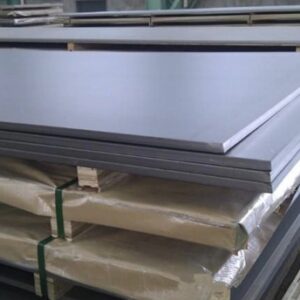
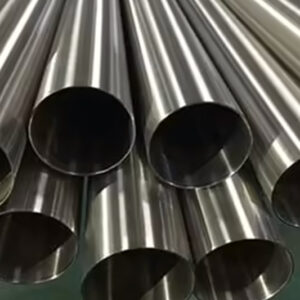
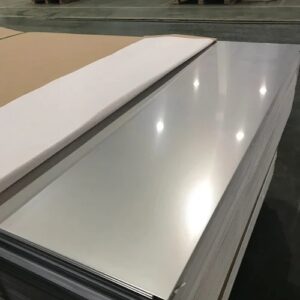
3.Surface Finishing: Upgrading from a standard mill finish to a polished “No. 8 Mirror” or brushed hairline finish will drastically increase the final invoice.
Products by Category

Summary for Engineering Procurement
Balancing impressive structural integrity with excellent thermal stability, this specific alloy remains unsurpassed in general-purpose utility. When you evaluate the physical limits for your next custom fabrication or architectural project, remember that SS 304 is a metallurgical formula with over a century of proven reliability. For the latest code compliance and testing standards, always consult the technical database provided by the British Stainless Steel Association (BSSA).
FAQ
Does this material rust?
It can under the wrong conditions. While highly resistant, the metal will oxidize if exposed to prolonged high concentrations of salt, harsh industrial acids (like hydrochloric), or if stray iron particles from carbon steel tools embed themselves into its surface during installation.
Is it considered food grade?
Absolutely. Because of its excellent resistance to natural food acids and its non-porous, easy-to-sanitize surface, SS 304 is the most specified material for commercial kitchens, dairy processing tanks, and brewing equipment worldwide.
Can I weld this alloy easily?
Yes, it is highly weldable using standard TIG or MIG methods. However, for welding components thicker than 6mm, engineers often recommend the “L” variant (low carbon) to prevent sensitization—a heat-induced condition that temporarily lowers the corrosion defense at the weld seam.