Willkommen auf Mein Blog!
What are the mechanical properties of AISI 1045 steel? Before we dive into the content, I’d love for you to join me on my social media platforms where I share more insights, engage with the community, and post updates. Here’s how you can connect with me:
Facebook:https://www.facebook.com/profile.php?id=100087990137347
LinkedIn:https://www.linkedin.com/company/89825762/admin/dashboard/
YouTube:www.youtube.com/@carbonsteelsupply-kj9lw
TikTok:www.tiktok.com/@carbonsteelsupply
Jetzt geht es los auf unsere gemeinsame Reise Ich hoffe, dass Sie die Inhalte hier aufschlussreich, ansprechend und wertvoll finden.
Inhaltsverzeichnis
Einführung
AISI 1045 steel is a medium carbon steel known for its strength, toughness, and machinability. This versatile material is widely used in various industries, including automotive, construction, and manufacturing. In this comprehensive guide, we will explore the mechanical properties of AISI 1045 steel, its applications, heat treatment processes, and how it compares to other carbon steels. By the end of this article, you will have a thorough understanding of why AISI 1045 steel is a popular choice for many engineering applications.
What is AISI 1045 Steel?

AISI 1045 steel is a high-strength medium carbon steel that contains approximately 0.45% carbon, 0.60% to 0.90% manganese, and trace amounts of other elements like phosphorus and sulfur. The composition of AISI 1045 steel gives it excellent mechanical properties, making it suitable for various applications where strength and wear resistance are critical. Here’s a breakdown of its chemical composition:
| Element | Percentage (%) |
|---|---|
| Carbon (C) | 0.43 – 0.50 |
| Manganese (Mn) | 0.60 – 0.90 |
| Phosphorus (P) | ≤ 0.040 |
| Sulfur (S) | ≤ 0.050 |
| Iron (Fe) | Balance |
Mechanical Properties of AISI 1045 Steel
Understanding the mechanical properties of AISI 1045 steel is crucial for selecting the right material for your projects. The key mechanical properties include tensile strength, yield strength, hardness, and elongation. Here’s a detailed look at each of these properties:
Zugfestigkeit
Tensile strength refers to the maximum stress that AISI 1045 steel can withstand while being stretched or pulled before breaking, making it a crucial indicator of the material’s structural integrity. This property is essential in assessing the material’s resistance to deformation and failure under load. The typical tensile strength of AISI 1045 steel ranges from 570 to 700 MPa (megapascals), highlighting its suitability for a variety of engineering applications. Known for its medium carbon content, AISI 1045 steel can be heat-treated to enhance its mechanical properties, allowing for improved hardness and strength while maintaining good ductility. These characteristics make AISI 1045 steel an ideal choice for components like shafts, gears, and other high-stress parts where reliable performance is essential.
Streckgrenze
Yield strength is the stress at which a material begins to deform plastically, marking the transition from elastic behavior to permanent deformation. For AISI 1045 steel, the yield strength is approximately 310 MPa, highlighting its capacity to withstand substantial loads without undergoing permanent changes in shape. This property is critical in applications where materials are subjected to high-stress conditions, ensuring structural integrity and performance over time.
AISI 1045 steel, known for its medium carbon content, exhibits favorable yield strength characteristics that can be further enhanced through heat treatment methods such as normalizing or hardening. These traits make AISI 1045 steel an ideal choice for manufacturing components like shafts, gears, and various structural parts, where maintaining dimensional stability under load is essential for operational efficiency and safety.
Hardness
Hardness measures the resistance of AISI 1045 steel to surface indentation or abrasion, providing insight into its wear resistance and durability. This property is often assessed using various methods, including the Brinell, Rockwell, or Vickers hardness tests, each offering valuable information on material performance under different conditions. The Brinell hardness of AISI 1045 steel typically falls within the range of 170-210 HB (Brinell Hardness Number), indicating a moderate level of hardness suitable for many engineering applications.
This level of hardness, combined with its good tensile strength and ductility, makes AISI 1045 steel particularly effective in applications requiring a balance of toughness and wear resistance. By applying appropriate heat treatment processes, such as quenching and tempering, the hardness of AISI 1045 steel can be further optimized, making it a popular choice for manufacturing components like gears, axles, and tooling where resistance to wear and deformation is critical for long-term performance.
Elongation
Elongation is the measure of a material’s ability to stretch before breaking and is expressed as a percentage of its original length. AISI 1045 steel typically exhibits an elongation of around 16-20%, indicating good ductility and the ability to absorb significant amounts of energy before fracturing. This property is essential in applications where the material may experience dynamic loads or impacts, allowing it to deform without immediate failure.
The relatively high elongation of AISI 1045 steel reflects its favorable microstructure, which can be further enhanced through heat treatment processes like quenching and tempering. Such characteristics make AISI 1045 steel particularly suitable for manufacturing components like shafts, brackets, and tooling, where both strength and ductility are crucial for performance and reliability in demanding environments.
Impact Strength
Impact strength measures the material’s ability to resist shock loading. AISI 1045 steel has moderate impact strength, making it suitable for applications where sudden forces or impacts may occur.
Heat Treatment of AISI 1045 Steel
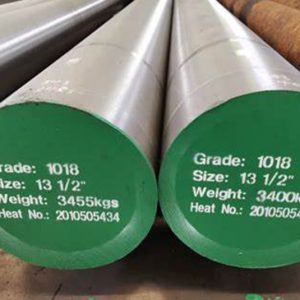
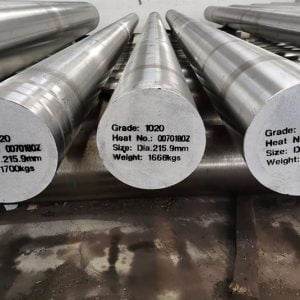


Heat treatment is a crucial process to enhance the mechanical properties of AISI 1045 steel. The heat treatment processes include annealing, normalizing, quenching, and tempering. Each process affects the steel’s properties differently.
Annealing
Annealing involves heating 1045 steel to a specific temperature and then slowly cooling it. This process softens the steel, making it easier to machine and improving its ductility. The typical annealing temperature for AISI 1045 steel is around 800-850°C.
Normalizing
Normalizing involves heating the steel to a temperature above its critical point, followed by air cooling. This process refines the grain structure, enhances the steel’s strength and toughness, and improves its machinability. The normalizing temperature for AISI 1045 steel is usually around 870-900°C.
Abschrecken
Quenching involves heating the steel to a high temperature and then rapidly cooling it in water or oil. This process increases the hardness and strength of AISI 1045 steel. The quenching temperature for AISI 1045 steel is typically around 820-860°C.
Anlassen
Tempering follows quenching and involves reheating the steel to a lower temperature, then cooling it. This process reduces brittleness and enhances the toughness of 1045 steel. The tempering temperature varies depending on the desired mechanical properties but generally ranges from 150-650°C.
Applications of 1045 Steel
AISI 1045 steel’s excellent mechanical properties make it suitable for a wide range of applications. Some common uses include:
Automotive Components: AISI 1045 steel is commonly used to manufacture crankshafts, gears, axles, and other critical automotive parts due to its strength and wear resistance, which ensure reliable performance under the high-stress conditions typical of vehicle operation. Additionally, its ability to be heat-treated enhances its mechanical properties, making it even more suitable for components that require both durability and precision.
Machinery Parts: The steel is employed for making machinery components such as shafts, couplings, and pins, where high strength and toughness are essential for maintaining operational efficiency and longevity. Its excellent machinability allows for precise fabrication of these parts, ensuring they meet stringent engineering specifications and performance standards.
Bauwesen: In the construction industry, AISI 1045 steel is used for making structural parts, bolts, and nuts, providing durability and reliability that are crucial for the integrity of buildings and infrastructure. The steel’s combination of strength and resistance to deformation makes it ideal for applications where safety and structural stability are paramount.
Tools and Dies: The steel’s hardness and machinability make it ideal for producing various tools and dies, enabling the manufacturing of high-quality, precision-engineered components. Its wear resistance ensures that tools made from AISI 1045 steel maintain their performance over extended periods, reducing the need for frequent replacements.
Industrial Equipment: AISI 1045 steel is widely used in manufacturing industrial equipment that requires high strength and resistance to wear and tear, making it suitable for heavy-duty applications. Its properties allow for the production of reliable machinery that can withstand harsh operational conditions, contributing to improved efficiency and productivity in various industries.
Comparing AISI 1045 Steel to Other Carbon Steels
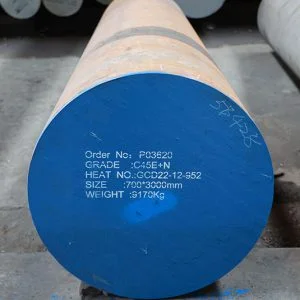
1045 steel is often compared to other carbon steels to understand its advantages and limitations. Here’s a comparison with AISI 1018 and AISI 1060 steels:
| Eigentum | AISI 1018 | AISI 1045 | AISI 1060 |
|---|---|---|---|
| Kohlenstoffgehalt (%) | 0.18 | 0.43 – 0.50 | 0.55 – 0.65 |
| Zugfestigkeit (MPa) | 440 – 470 | 570 – 700 | 750 – 900 |
| Yield Strength (MPa) | 370 | 310 | 350 |
| Hardness (HB) | 126 | 170 – 210 | 180 – 230 |
| Elongation (%) | 15 – 20 | 16 – 20 | 12 – 16 |
Schlussfolgerung
AISI 1045 steel is a versatile medium carbon steel with excellent mechanical properties, making it suitable for a wide range of applications in various industries. Its strength, toughness, and machinability, combined with the ability to enhance these properties through heat treatment, make it a popular choice for engineers and manufacturers. Understanding the mechanical properties, heat treatment processes, and applications of AISI 1045 steel is essential for selecting the right material for your project needs.
FAQ
Q: What are the key mechanical properties of 1045 steel?
A: The key mechanical properties of 1045 steel include tensile strength (570-700 MPa), yield strength (310 MPa), hardness (170-210 HB), and elongation (16-20%).
Q: How does heat treatment affect AISI steel?
A: Heat treatment processes such as annealing, normalizing, quenching, and tempering can enhance the mechanical properties of 1045 steel, including its strength, hardness, and toughness.
Q: What are the common applications of 1045 steel?
A: Common applications of 1045 steel include automotive components, machinery parts, construction materials, tools and dies, and industrial equipment.
Q: How does 1045 steel compare to other carbon steels?
A: Compared to 1018 and AISI 1060 steels, AISI 1045 steel offers a balanced combination of strength, hardness, and ductility, making it suitable for a variety of applications.
Q: Can 1045 steel geschweißt werden?
A: Yes,1045 steel can be welded, but preheating and post-weld heat treatment are recommended to prevent cracking and ensure the integrity of the weld.