A36 steel is one of the most widely used structural carbon steels because it combines strength, weldability, and affordability. In this guide, you will find its composition, mechanical properties, common uses, and how it compares with similar grades such as Q235B and A572.
Inhaltsverzeichnis
What Exactly is A36 Steel?
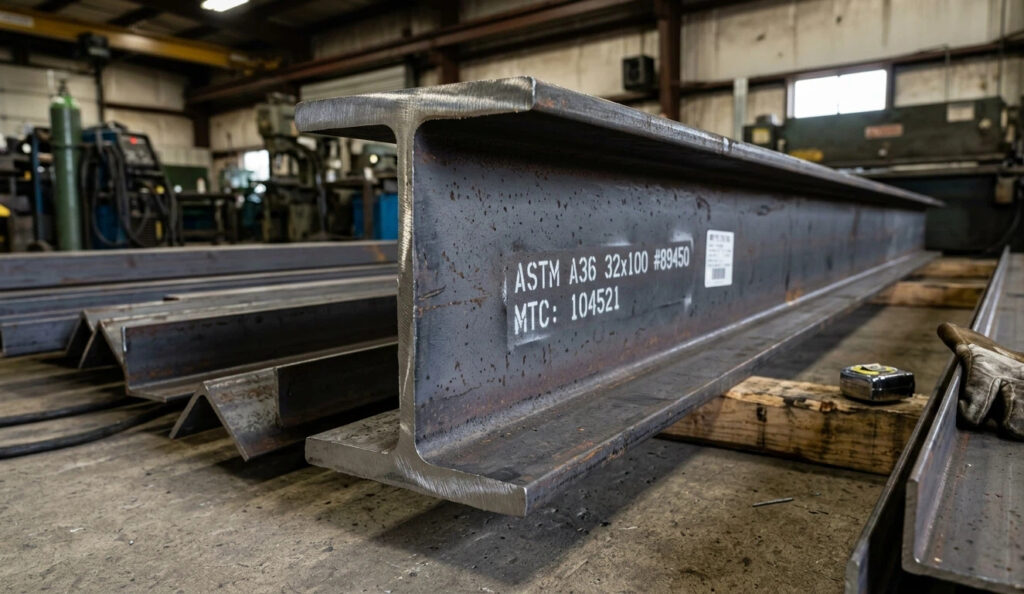
Before diving into the technical specifics, we need to define it accurately. What is A36 steel? Simply put, it is one of the most basic and widely used hot-rolled carbon structural steels, standardized by the American Society for Testing and Materials (ASTM).
When you see the term ASTM A36 carbon steel, three labels should immediately come to mind: low carbon, hot-rolled, and extremely versatile. It is not a specialty alloy developed for extreme environments like jet engines or deep-sea exploration. Instead, it is the “all-rounder” designed to meet 80% of everyday engineering needs. Because it does not contain expensive alloying elements like chromium, nickel, or molybdenum, its production cost is very low, making it the backbone of global construction and manufacturing.
Chemical Composition Analysis of A36 Steel
The physical performance of a material is always dictated by its chemical DNA. The secret behind why A36 steel balances strength and toughness so well lies in its precisely balanced elemental ratio.
As a low-carbon steel, its carbon content is strictly limited. Below is the core composition table based on official ASTM standards.
A36 Structural Steel Standard Chemical Composition (For plate thickness ≤ 20mm)
| Element | Symbol | Percentage (%) | Core Function |
| Kohlenstoff | C | ≤ 0.26% | Provides baseline strength; low content ensures excellent weldability |
| Mangan | Mn | No min requirement | Removes harmful effects of sulfur; slightly increases hardness |
| Phosphorus | P | ≤ 0.04% | Impurity; must be strictly controlled to prevent brittleness |
| Sulfur | S | ≤ 0.05% | Impurity; high levels cause “hot shortness” during welding |
| Silizium | Si | ≤ 0.40% | Used as a deoxidizer to purify the molten steel |
| Copper | Cu | ≥ 0.20% (if specified) | Provides basic atmospheric corrosion resistance |
Authoritative Reference: For detailed chemical composition and thickness tolerance standards, please refer to the official ASTM A36/A36M-19 Standard Specification for Carbon Structural Steel.
Key Characteristics of A36 Steel
Purchasing materials isn’t just about price; it’s about whether the material can withstand the design load. Understanding A36 mild steel properties is the first step in avoiding engineering failures.
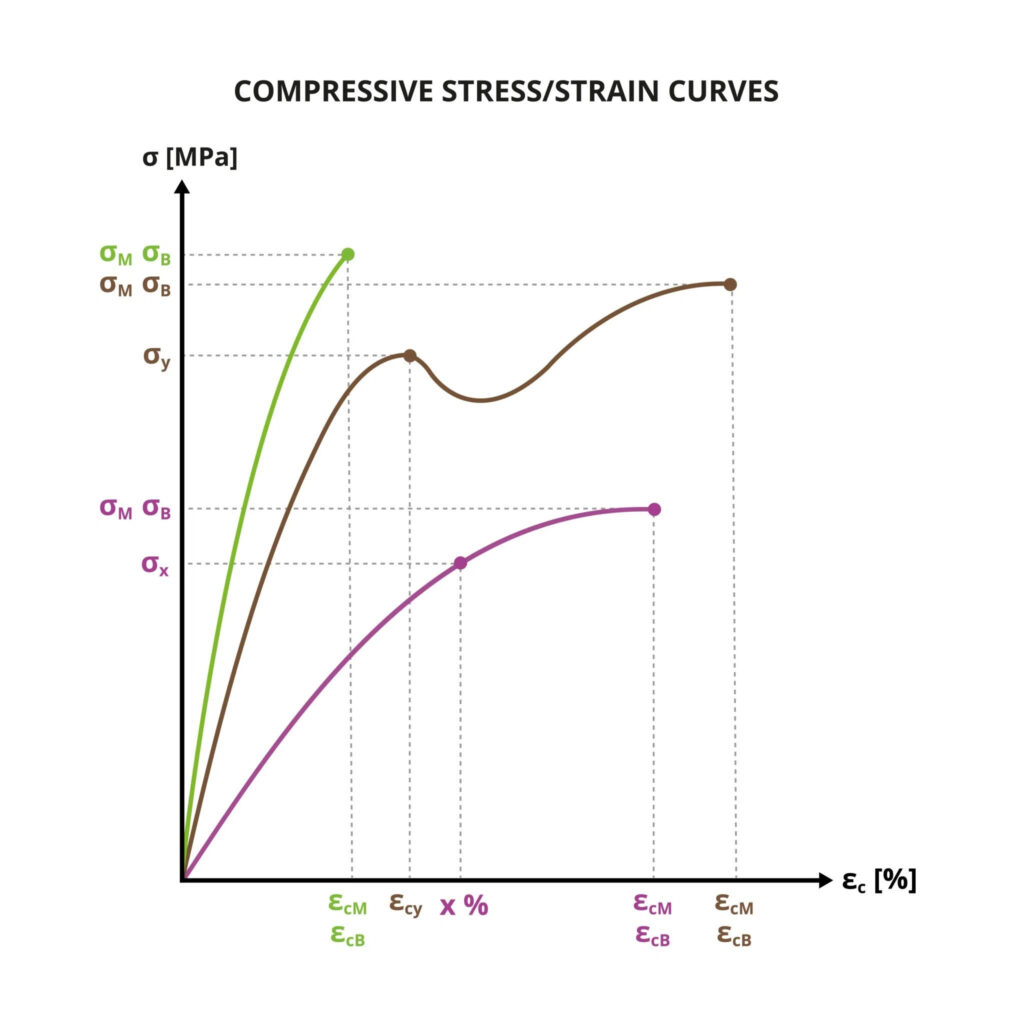
A common question asked by junior engineers is: what is the yield strength of A36 steel? The answer is actually in the name. The number “36” represents the material’s minimum yield strength of 36,000 psi (pounds per square inch), which converts to approximately 250 MPa in metric units.
What does this mean? It means that A36 steel will maintain its original shape until a force of about 25kg per square millimeter is applied. Once this limit is exceeded, it undergoes irreversible plastic deformation, but it won’t shatter like glass. This excellent “ductility” (with an elongation of about 20%) allows it to absorb energy through deformation during earthquakes or heavy pressure, protecting the integrity of the building.
A36 Steel Key Properties (Quick View)
A quick reference for the most important mechanical properties of A36 steel:
Mechanical Strength
- Yield Strength: 36,000 psi (≈ 250 MPa)
- Tensile Strength: 58,000–80,000 psi (≈ 400–550 MPa)
Physical Properties
- Density: 7.85 g/cm³
- Elastic Modulus: ~200 GPa
Ductility & Formability
- Elongation at Break: ~20%
- Indicates good ductility for forming and structural use
Processing Performance
- Weldability: Excellent
- Suitable for most welding processes without preheating
- Machinability: Moderate
- Compatible with standard machining methods
ASTM A36 Specification
Understanding the ASTM A36 specification is the first step in ensuring project safety and legal compliance. This standard, maintained by ASTM International, dictates the precise chemical and mechanical requirements that a steel product must meet to be officially classified as “A36.”
The ASTM A36 structural steel designation covers a wide range of hot-rolled shapes, including plates, bars, and structural sections. Key compliance factors within the specification include:
- Scope of Application: It specifically governs carbon steel shapes of structural quality for use in riveted, bolted, or welded construction of bridges and buildings.
- Testing Protocols: The specification requires specific heat analysis and tension tests to verify that the A36 steel strength and ductility meet the minimum thresholds.
- Dimensional Tolerances: It aligns with ASTM A6/A6M standards, which define the allowable variations in thickness, width, and weight for delivered steel products.
A36 Steel Equivalent Grades
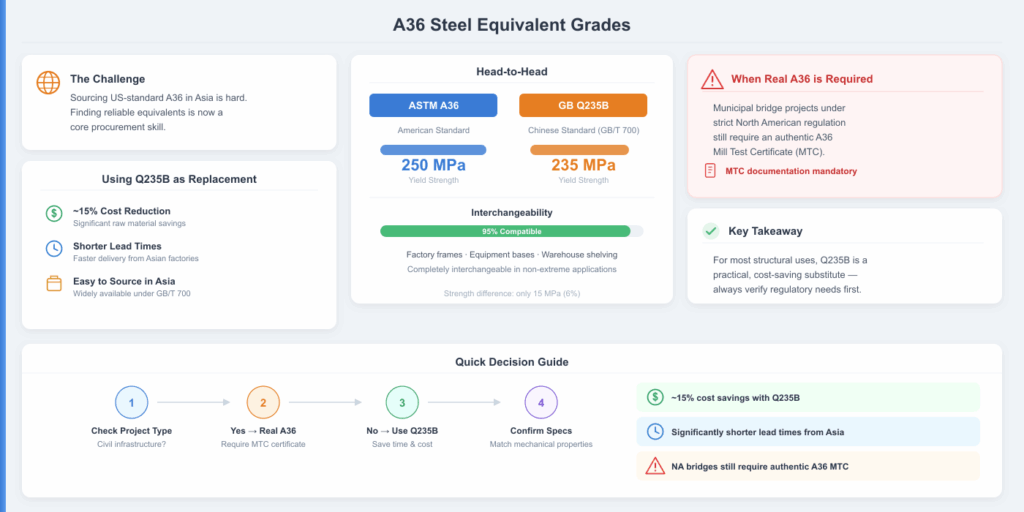
In today’s globalized procurement landscape, you might find it difficult to buy original US-standard steel in Asia. This is where finding A36 steel equivalents becomes a core skill for procurement managers.
The most searched and discussed comparison is the A36 steel vs Q235B comparison. Q235B is the common carbon structural steel in the Chinese National Standard (GB/T 700). Its yield strength is 235 MPa, very close to A36’s 250 MPa.
To be honest, in 95% of non-extreme structural applications (such as ordinary factory steel frames, equipment bases, and warehouse shelving), Q235B and A36 steel are completely interchangeable. If you are customizing machinery from Asian factories, using Q235B as a “flat replacement” for A36 can significantly shorten lead times and reduce raw material costs by about 15%. Of course, for municipal bridge projects strictly regulated in North America, you must still provide an authentic A36 Mill Test Certificate (MTC).
What is the Yield Strength of A36 Steel?
The yield strength of A36 steel is officially rated at 36,000 psi (approximately 250 MPa). In practical terms, this is the “point of no return.” As long as the stress applied to the steel stays below this threshold, the material remains in its elastic region, meaning it will return to its original shape once the load is removed.
However, once you push past this 36k psi limit, the steel enters the plastic deformation zone. It will stretch or bend permanently but—and this is crucial—it won’t immediately snap. This high ductility is exactly why ASTM A36 carbon steel is the preferred choice for seismic zones and heavy-load infrastructure.
A36 Steel Tensile Limits
It is important to distinguish between “Yield” and “Ultimate Tensile Strength” (UTS). While the yield point is 36,000 psi, the ultimate tensile strength of A36 steel ranges between 58,000 and 80,000 psi (400–550 MPa). This gap between yielding and breaking provides a vital safety buffer for buildings and bridges.
Technical Note: According to the American Institute of Steel Construction (AISC), the predictable behavior of A36’s yield point allows for precise safety factor calculations in structural design.
Primary Applications of A36 Steel
Due to its excellent balance, A36 structural steel has permeated almost every corner of the industry. Think of it as the “LEGO brick” of the steel world.
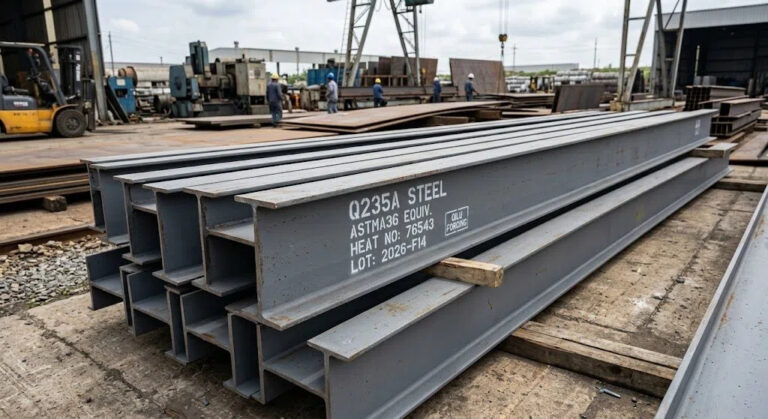
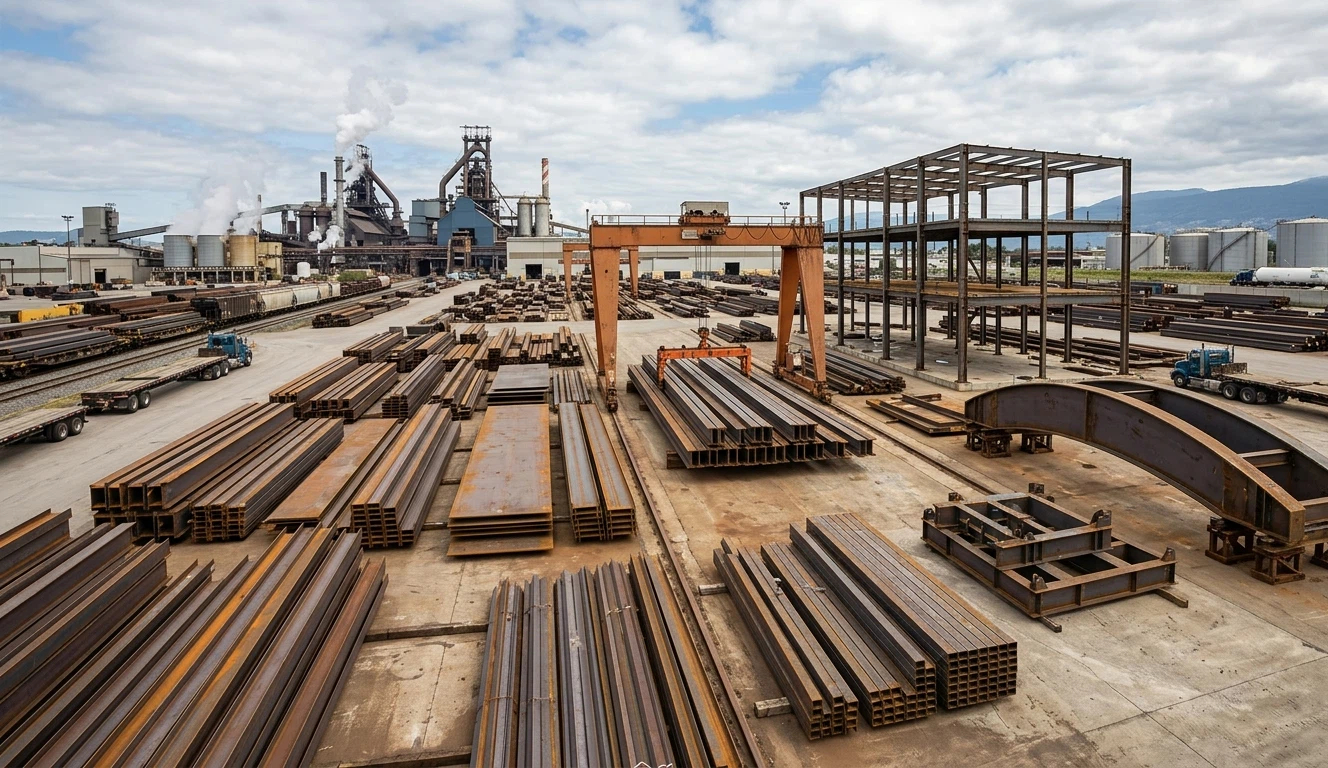
- Buildings and Bridges: H-beams, I-beams, angles, and channels. Almost every modern high-rise skeleton you see uses it.
- Heavy Machinery Manufacturing: Excavator arms and heavy-duty press bases. In these cases, weight and rigidity are more important than extreme hardness.
- Shipbuilding and Offshore: While not as common as specialized grade-A shipbuilding steel, many non-critical structural parts of inland vessels still use it.
- Storage Facilities: Industrial floor mats, heavy-duty pallet racks, and external supports for large storage tanks.

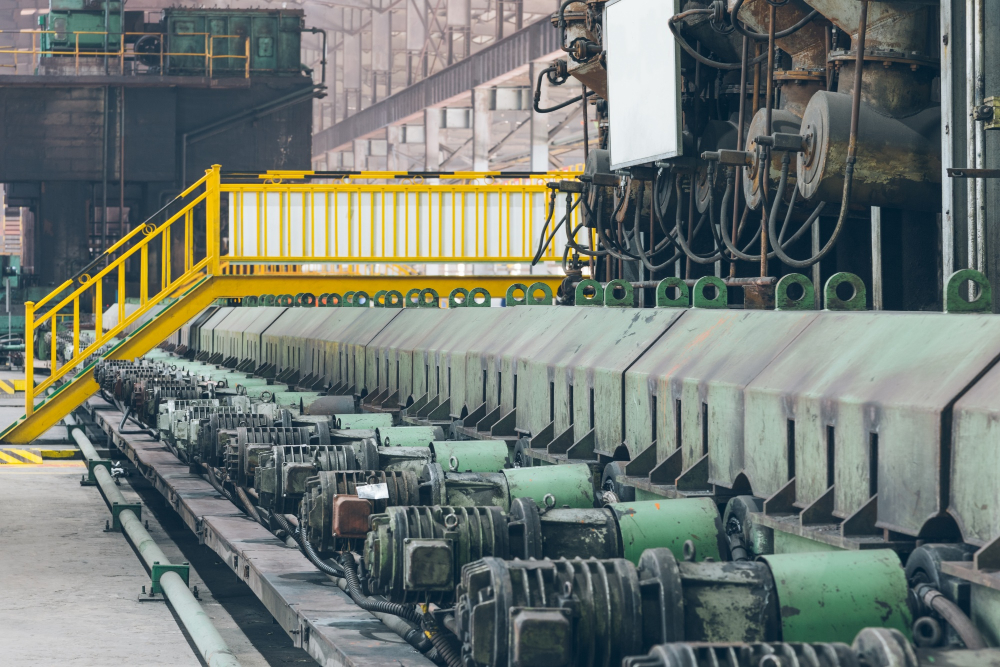
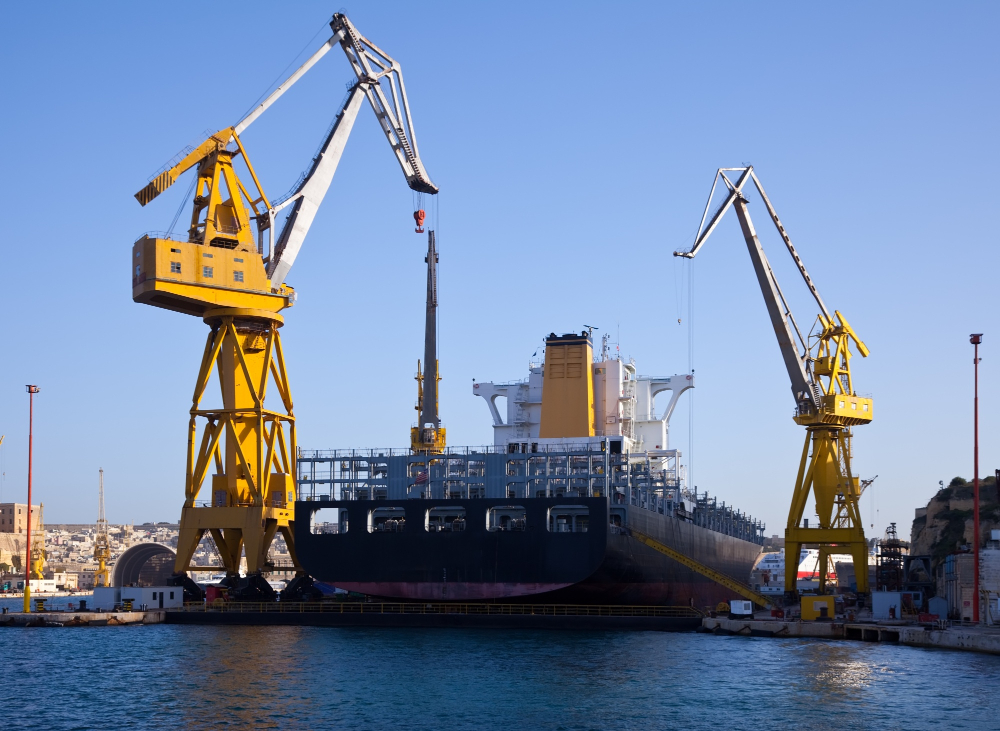
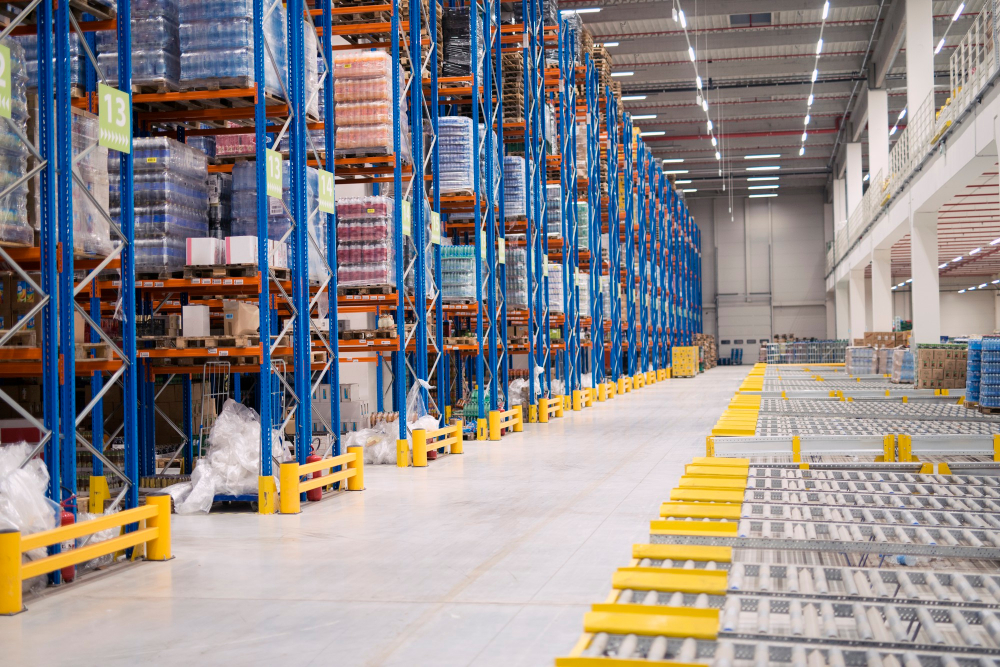
The versatility of A36 in these high-stakes applications is a direct result of its specific stress-strain behavior and ductility. You can explore the technical breakdown of the A36 elastic modulus and tensile strength range in our latest engineering analysis.
Core A36 Steel Mechanical Properties
While yield strength is the most cited figure, a complete understanding of A36 steel mechanical properties is essential for precise engineering calculations. This material is defined by its predictable behavior under various loads.
Beyond its 36,000 psi yield point, ASTM A36 carbon steel exhibits the following key physical characteristics:
- Ultimate Tensile Strength: 58,000 – 80,000 psi (400–550 MPa).
- Modulus of Elasticity: Approximately 29,000 ksi (200 GPa), indicating how much it will deform under tension.
- Ductility: A high elongation rate of about 20% in an 8-inch specimen, allowing for significant bending before failure.
- Density: 0.284 lb/in³ (7,850 kg/m³), the standard for carbon steel weight calculations.
- Poisson’s Ratio: 0.26, which is critical for 3D stress analysis in structural software.
Pro Tip: These A36 steel properties make it one of the most stable materials for welding and machining, as its consistent grain structure minimizes internal stresses during the fabrication process.
A36 Steel Comparison with Other Grades
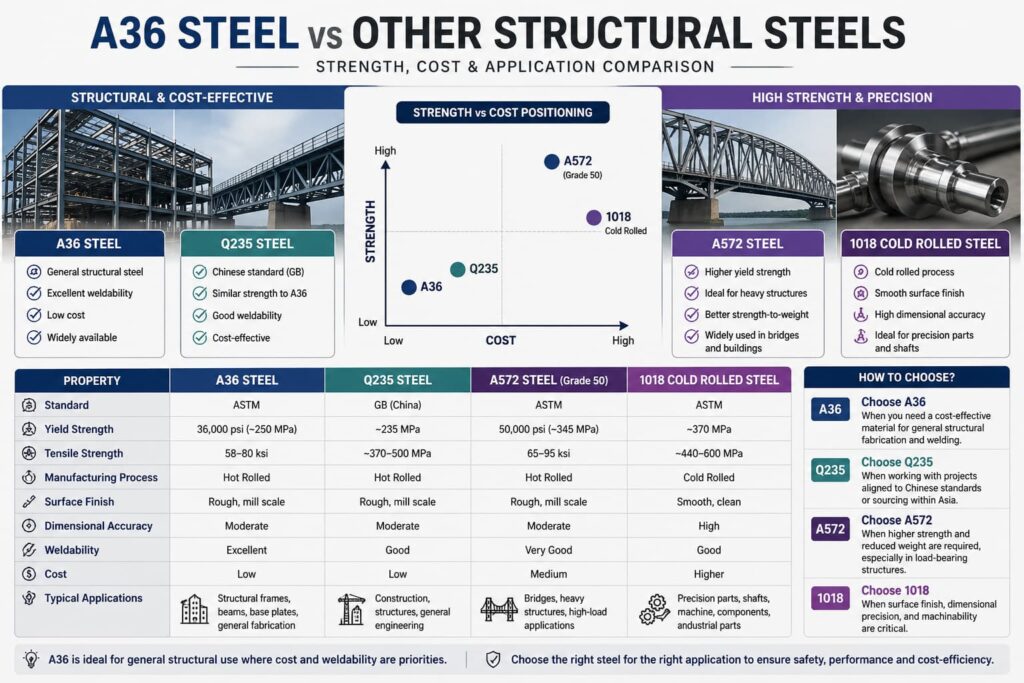
A36 steel vs 1018 cold rolled
To give you a better sense of its positioning, let’s look at a classic industrial comparison: A36 steel vs 1018 cold rolled.
Both are low-carbon steels, but their production processes are worlds apart. A36 steel is hot-rolled, featuring a rough, blue-black mill scale on the surface and larger dimensional tolerances. Its advantage is that it is cheap and comes in large sizes. In contrast, 1018 cold-rolled steel is processed at room temperature, giving it an extremely smooth surface and high dimensional accuracy. If you need a precision-fit mechanical drive shaft, choose 1018; if you just need to weld a thick machine base, choose A36. Using 1018 for a base is simply a waste of money.
A36 vs A572 Steel
A36 and A572 are both widely used structural steels, but they differ significantly in strength and application focus.
- Strength:A572 (especially Grade 50) offers much higher yield strength (50,000 psi vs 36,000 psi), making it more suitable for high-load structures.
- Weight Efficiency:Because of its higher strength, A572 allows for thinner sections, reducing overall structural weight.
- Weldability:Both steels have good weldability, though A36 is often considered slightly easier to work with in general fabrication.
- Cost Consideration:A36 is usually more cost-effective for projects where high strength is not required.
Choose A36 for general structural applications with moderate strength requirements.
Choose A572 when higher strength and weight reduction are critical.
A36 and Q235 are often considered equivalent materials, but there are subtle differences in standards and performance.
- Standard System:A36 follows ASTM standards, while Q235 is defined under Chinese GB standards.
- Strength:Both have similar yield strength (~235–250 MPa), though actual values may vary slightly depending on production and certification.
- Chemical Composition:Minor differences exist in carbon and alloying elements, which can affect weldability and performance consistency.
- Application:A36 is more commonly used in international projects, while Q235 is widely used in China and Asia.
A36 and Q235 can often be used as substitutes, but certification standards and project requirements should always be verified.
| Property / Feature | A36 Steel | A572 Steel (Grade 50) | Q235 Steel | 1018 Cold Rolled Steel |
|---|---|---|---|---|
| Standard | ASTM | ASTM | GB (China) | ASTM |
| Streckgrenze | 36,000 psi (~250 MPa) | 50,000 psi (~345 MPa) | ~235 MPa | ~370 MPa |
| Zugfestigkeit | 58–80 ksi | 65–95 ksi | ~370–500 MPa | ~440–600 MPa |
| Manufacturing Process | Hot Rolled | Hot Rolled | Hot Rolled | Cold Rolled |
| Surface Finish | Rough, mill scale | Rough | Rough | Smooth, clean |
| Dimensional Accuracy | Mäßig | Mäßig | Mäßig | Hoch |
| Weldability | Excellent | Very good | Good | Good |
| Cost | Niedrig | Medium | Niedrig | Higher |
| Typische Anwendungen | Structural, frames | Bridges, heavy structures | General construction | Precision parts, shafts |
How to Choose Between Them
Choose A36
When you need a cost-effective material for general structural fabrication and welding.
Choose A572
When higher strength and reduced weight are required, especially in load-bearing structures.
Choose Q235
When working with projects aligned to Chinese standards or sourcing within Asia.
Choose 1018 Cold Rolled Steel
When surface finish, dimensional precision, and machinability are critical.
Advantages of A36 Steel
Why does everyone love using it? The reason is simple.
First is the excellent A36 steel machinability. Its machinability rating is typically around 72%. This means that whether you are cutting it on a CNC lathe or using a plasma cutter, it won’t wear down your tools too quickly. Second, its weldability is near perfect. Due to its low Carbon Equivalent Value (CEV), welders do not need to perform tedious preheating, and it is less prone to cold cracking.
The disadvantages of A36 Steel
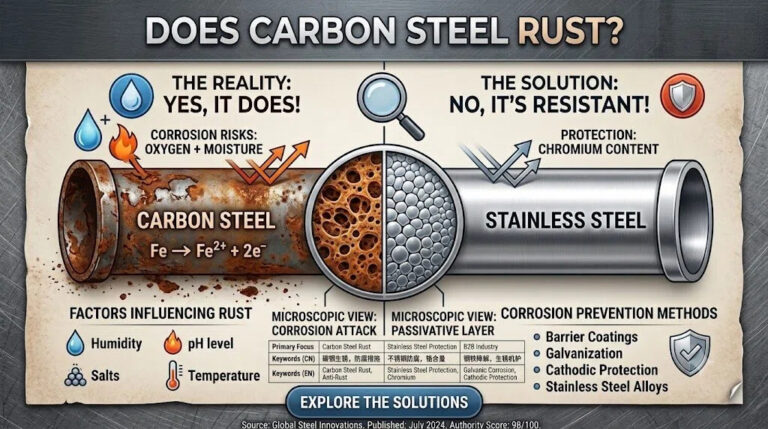
No material is perfect, and the fatal flaw of A36 steel is that it rusts very easily. Since it contains almost no anti-corrosive alloying elements, red-brown rust will appear on the surface almost immediately upon exposure to humid air or rain. Therefore, in any outdoor application, you must include an extra budget for corrosion protection: such as hot-dip galvanizing, anti-rust primers, or powder coatings.
Surface Treatment & Corrosion Protection for A36 Steel
While ASTM A36 is favored for its cost-effectiveness, it has a significant drawback: low atmospheric corrosion resistance. Due to its lack of alloying elements like chromium or nickel, A36 will develop iron oxide (rust) quickly when exposed to moisture, salt spray, or outdoor environments.
To extend the service life of your projects and reduce long-term maintenance costs, we recommend the following industrial surface treatment solutions:
1.Hot-Dip Galvanizing (HDG)
This is the most reliable protection for outdoor A36 structural steel (complying with ASTM A123).
- Process: The steel is submerged in a bath of molten zinc at approximately 450°C (842°F).
- Advantage: It provides both a physical barrier and sacrificial (cathodic) protection. Even if the coating is scratched, the zinc will corrode first to protect the underlying steel.
- Lifespan: Provides 20 to 50 years of maintenance-free protection in most industrial environments.
2.Industrial Coating Systems (Painting)
Best for indoor machinery, components with specific color requirements, or oversized structures not suitable for galvanizing baths.
- Surface Preparation: Prior to painting, the steel must undergo Shot Blasting to Sa 2.5 (Near-White Metal) to remove the mill scale. Failure to do so will lead to premature coating delamination.
- Standard System: A high-performance system typically involves a Zinc-rich Primer, followed by an Epoxy intermediate coat and a Polyurethane topcoat for UV resistance.
3.Powder Coating
Commonly used for A36 precision parts, brackets, or architectural features.
- Features: Provides a hard, abrasion-resistant finish with a wide range of RAL colors. It is more environmentally friendly than traditional wet painting due to zero VOC emissions.
Comparison of Anti-Corrosion Methods for A36
| Method | Initial Cost | Maintenance Interval | Best Application |
| Hot-Dip Galvanizing | Mid/High | Very Long (20+ years) | Bridges, Solar Racks, Gratings |
| Zinc-Rich Painting | Mid | Medium (5-10 years) | Machine Bases, Storage Tanks |
| Powder Coating | Mid | Long (Indoor) | Equipment Enclosures, Racking |
| Anti-Rust Oil | Niedrig | Very Short (Shipping) | Temporary storage & Raw Billets |
Pro Tip for Procurement: > If your A36 order is destined for high-humidity or coastal environments, always specify “Surface Treatment Required” in your RFQ. At Qilu Steel, we offer one-stop processing services—from shot blasting to final galvanizing—ensuring your materials are site-ready upon delivery.
When Should You Definitely Choose A36 Steel?
It should be your first choice when your project faces the following conditions:
1.Tight Budget: It is one of the most economical steels on the market.
2.Static Load-Bearing Structures: Such as factory columns and support frames.
3.Heavy Field Welding Required: Its high welding tolerance can significantly speed up construction.
When Should You NOT Choose A36 Steel?
This is where many junior designers stumble. We must answer a high-frequency question here:
can A36 steel be hardened?
The answer is: almost never. Because its carbon content is too low, it cannot form a hard martensitic structure through conventional heating and quenching.
Therefore, when you need to manufacture high-wear gears, springs that withstand high-frequency impact, or sharp industrial blades, never choose A36. You should turn to 4140 alloy steel or tool steel. Additionally, for chemical storage tanks involving strong acids or alkalis, please spend the money on 316 stainless steel; A36 won’t last a few months in that environment.
Reference Source: Mechanical and processing performance data cited from the authoritative material database MatWeb: AISI A36 Steel Properties.
Schlussfolgerung
In the forest of steel materials, A36 steel is like a plain but extremely reliable workhorse. It doesn’t have the shiny anti-corrosive exterior of stainless steel, nor the insane specific strength of aerospace titanium alloys.
But it is precisely this “just right” yield strength, extremely friendly welding and processing performance, and unrivaled low price that build the solid skeleton of our modern industrial society. Understanding its physical boundaries and flexibly using its equivalent grades in the global supply chain is a mandatory course for every excellent engineer and procurement expert.
If you want to know more about how this material fits your specific industrial project, please [click here] to consult with our technical specialists.
FAQ
Is ASTM A36 good for welding?
Extremely good. In fact, it is one of the easiest steels to weld. Its low carbon content means you don’t need preheating, and whether you use MIG, TIG, or traditional stick welding, you can easily achieve strong, crack-free welds.
Is A36 steel magnetic?
Yes. As a typical ferritic/pearlitic carbon steel, it is strongly magnetic. This makes it ideal for manufacturing tool stands or industrial fixture bases that require magnetic suction.
f A36 cannot be quenched, how can I harden its surface?
If you must increase its surface wear resistance, the only way is “Case Hardening.” This adds a thin, high-carbon layer to the surface to make it hard while the interior remains tough. However, from a cost perspective, buying 1045 steel with a higher carbon content is usually a smarter choice.
What documents should I ask for when buying A36 steel?
Always remember to ask for the MTC (Material Test Certificate). This document must be issued by the steel mill and will clearly list the actual chemical composition analysis and physical data from tensile testing for that batch of A36 steel, which is your bottom-line evidence for project acceptance.