
Table of Contents
What is Galvanized Coil?
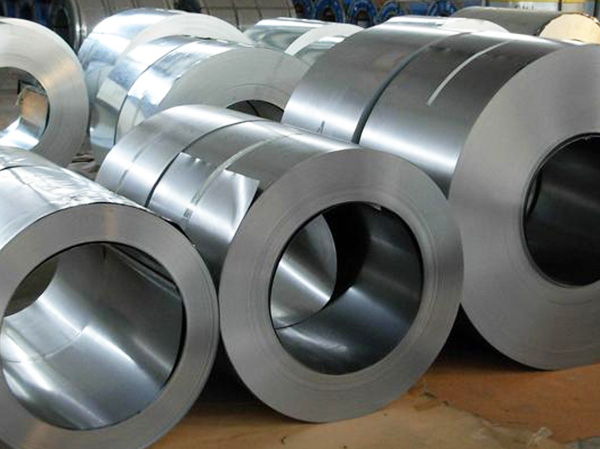
Galvalume coil is a steel product coated with an alloy consisting of 55% aluminum, 43.4% zinc, and 1.6% silicon via a continuous hot-dip coating process. It combines the corrosion resistance of aluminum and the sacrificial anode protection properties of zinc, has excellent weather resistance, heat resistance (can withstand high temperatures of 300℃), and processing performance, and the surface usually presents a unique silver-white zinc flower texture.
Its typical thickness ranges from 0.12mm to 2.0mm, and its width can reach 1500mm. It is mainly supplied in roll form and is widely used in construction, home appliances, automobiles, packaging, and other fields.
Classification of Galvanized Coil
Classified by coating composition
Standard galvalume coil: The coating contains 55% aluminum,43.4% zinc, and 1.6% silicon. This is the most common type, combining the sacrificial protection of zinc.
Other special ratios: The aluminum-zinc ratio can be adjusted based on specific requirements. For example, a high zinc content coating emphasizes enhanced sacrificial anodic protection.
Classified by application
Construction: Used for roofs, walls, and other surfaces, requiring strong weather resistance and often combined with coating (such as color coating).
Industrial: Suitable for home applications, automotive parts, and other applications, requiring formability and weldability.
Classified by surface condition
Glossy: A smooth surface suitable for direct use or subsequent painting.
Matte: A slightly roughened surface that reduces light reflection and is commonly used for architectural exteriors.
Printed/coated: A surface with further processing for both decorative and functional properties.
Advantages of Galvanized Steel Coil
Strong corrosion resistance: The aluminum in the coating forms a dense oxide film, while the zinc provides sacrificial protection. Its corrosion resistance is 26 times that of galvanized steel.
Excellent heat resistance: It can be used in higher temperature environments, with superior resistance to high-temperature oxidation compared to galvanized products.
Excellent processability: Excellent bending, stamping, and other formability, meeting a variety of processing requirements.
Excellent Appearance: The surface is smooth and uniform, and can be processed to create different textures, providing decorative effects.
Long service life: Slow degradation in various environments significantly extends the service life of related products.
Cost-effective: Taking into account corrosion resistance and lifespan, the long-term cost of use is lower than some alternative materials.
Limitations
Poor welding performance: Porosity and cracks are easily generated during welding, requiring special processing techniques.
High processing difficulty: The coating is prone to cracking during deep drawing and bending, requiring high processing equipment and technology requirements.
Relatively high cost: The raw materials and production process result in a higher initial purchase cost than ordinary galvanized sheet.
Inadequate acid resistance: Corrodes rapidly in acidic environments, limiting its applicability.
Repair difficulty: Damaged plating is difficult to repair and requires professional treatment to prevent the spread of rust.
Limited color options: The surface color is monotonous in its natural state, and customized decorative needs require additional coating.

Application Scenario
Construction: Used in roofs, walls, downspouts, and other applications, its weather resistance allows it to adapt to outdoor environments.
Home appliance manufacturing: Used as exterior casings or internal components for refrigerators and air conditioners, it balances corrosion resistance with aesthetics.
Automotive Industry: Used in automobile chassis and body components to enhance corrosion resistance.
Warehousing: Used in warehouse shelving and containers to meet long-term load-bearing and rust-resistance requirements.
Electrical equipment: Serves as the base material for distribution boxes and cable trays, ensuring stable operation in complex environments.
Agricultural equipment: Used in agricultural machinery housing and irrigation equipment, protecting against field moisture and acid, and alkali corrosion.
Заключение
Alu-zinc coiled sheet has an aluminum-zinc-silicon coating as its core, and has outstanding corrosion resistance and heat resistance, a long service life, and a good appearance. It is suitable for long-term outdoor use, but it is challenging to weld and has limited acid resistance, and its cost is higher than that of ordinary galvanized sheet.
It is used in various fields, including construction, home appliances, automobiles, warehousing, electrical, and agriculture, and must be reasonably selected based on the characteristics of the specific application to balance its advantages and limitations.
ЧАСТО ЗАДАВАЕМЫЕ ВОПРОСЫ
What is the specific coating composition of galvanized coil?
The standard coating consists of 55% aluminum,43.4% zinc, and 1.6% silicon. This ratio allows the coating to simultaneously utilize the antioxidant properties of aluminum and the sacrificial protection of zinc, forming a highly effective corrosion protection system.
What’s the difference in corrosion resistance between galvanized coil and regular galvanized steel coil?
Galvanized steel coil’s corrosion resistance is significantly superior to regular galvanized steel coil, typically 2-6 times that of regular galvanized steel coil. This performance is particularly pronounced in humid and rainy outdoor environments, significantly extending the material’s service life.
Can galvanized coil be used in high-temperature environments for long periods of time?
Its excellent heat resistance allows for long-term stable use in high-temperature environments. Its resistance to high-temperature oxidation is significantly stronger than that of galvanized products, making it suitable for industrial applications with high temperature requirements.