Welcome to My Blog!
Before we dive into the content, I’d love for you to join me on my social media platforms, where I share more insights, engage with the community, and post updates. Here’s how you can connect with me:
Facebook:https://www.facebook.com/profile.php?id=100087990137347
LinkedIn:https://www.linkedin.com/company/89825762/admin/dashboard/
YouTube:www.youtube.com/@carbonsteelsupply-kj9lw
TikTok:www.tiktok.com/@carbonsteelsupply
Now, let’s get started on our journey together. I hope you find the content here insightful, engaging, and valuable.
Table of Contents
What is a Q235 Steel Coil?
A Q235 coil is a coiled or ring-shaped steel product made from Q235 low-carbon structural steel through processes like rolling and continuous winding. Q235 indicates that the steel has a yield strength of no less than 235 MPA. Due to its relatively low carbon content (approx. 0.14%–0.22%), this type of steel offers good plasticity, toughness, and weldability. It contains no expensive alloying elements, making it highly cost-effective.
The coil form is what distinguishes it from ready-to-use steel products like steel plates or angle bars. It serves as an intermediate product in steel distribution and processing, mainly supplied to industrial manufacturers and construction companies. These buyers further process it through leveling, cutting, stamping, bending, welding, and other techniques to produce end products or semi-finished goods such as switchboard enclosures, structural steel components, machinery bases, and automotive auxiliary parts. It is a fundamental industrial raw material that balances essential performance needs with cost efficiency.
Main Applications of Q235 Steel Coils
As an intermediate steel product made from Q235 low-carbon steel, Q235 coils are widely used in industrial manufacturing, construction, and related supporting sectors due to their low cost, ease of processing, good plasticity, and weldability. Key applications include:
- Metal product processing: Used to make enclosures for switchboards and cabinets, storage rack uprights and beams, hardware brackets, agricultural machinery parts, and metal frames for furniture through leveling, cutting, stamping, and bending.
- Machinery and equipment manufacturing: Used as raw material for non-critical load-bearing parts such as fan and pump housings and bases, frames for packaging and printing machinery, and protective guards and cabin structures for engineering machinery like excavators and loaders.
- Automotive and motorcycle parts manufacturing: Used to produce non-load-bearing body parts (e.g., reinforcing plates), minor chassis brackets, auxiliary motorcycle frame components, and exhaust pipe guards.
- Construction and steel structure engineering: After leveling, it is used to produce support beams for light steel structure factories and warehouses, auxiliary steel structures for large venues, and components for municipal facilities such as base plates for streetlight poles, traffic guardrail frames, auxiliary supports for underground utility tunnels, and housings for wastewater treatment equipment.
Also, these coils are distributed by steel traders to small processing workshops or exported via cross-border trade to regions like Southeast Asia and the Middle East to meet local processing and construction needs.
Advantages of Q235 Coils
| Advantage | Description |
|---|---|
| Low Cost | Contains no expensive alloys; the production process is mature and economical. |
| Easy Processing | Low carbon content ensures good plasticity, allowing easy shaping and welding. |
| Convenient Storage & Transport | Coiled form saves space, simplifies handling, and reduces surface damage. |
| Adequate Performance | Yield strength of 235 MPa meets requirements for non-critical structural applications. |
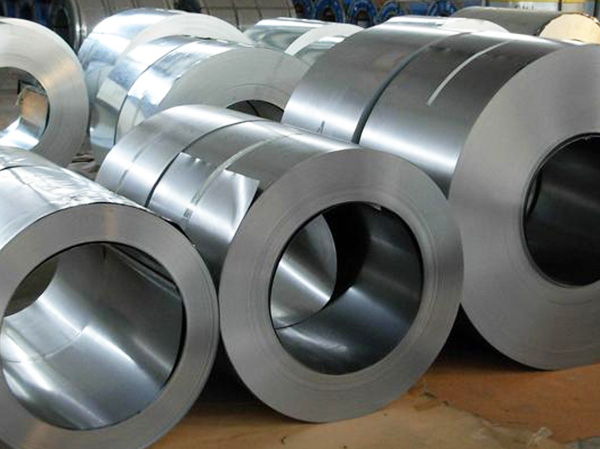
- Low cost: Q235 steel contains no expensive alloys, and its production process is well-established, making it far more affordable than specialty steels and ideal for bulk applications.
- Easy processing: Its low carbon content provides good plasticity, allowing easy leveling, stamping, welding, and other processing without cracking, which reduces manufacturing complexity.
- Convenient storage and transport: The coiled form saves space, concentrates weight, and simplifies loading, unloading, and warehousing while reducing the risk of scratches and corrosion.
- Adequate performance for basic needs: With a yield strength of 235 MPA, it sufficiently meets requirements for non-critical load-bearing applications like equipment housings and light steel structures, delivering reliable performance at a low cost.
ЧАСТО ЗАДАВАЕМЫЕ ВОПРОСЫ
What material is the Q235 coil made of?
The Q235 coil is made from Q235 carbon structural steel. Based on metallurgical quality, Q235 steel is classified into four grades: A, B, C, and D. Its main elements include carbon, manganese, silicon, sulfur, and phosphorus. The carbon content varies slightly by grade, generally ranging between 0.12% and 0.22%. This steel offers good strength, plasticity, toughness, and weldability.
Is Q235 coil easy to weld?
Yes, Q235 coil is easy to weld. Q235 is a medium-strength steel with moderate carbon content, offering good weldability. It meets welding process requirements well and is commonly used in structures and products that require welding.
Does Q235 coil rust?
Yes, Q235 coil can rust. Since its main component is iron, it reacts with oxygen and moisture in damp, aerobic environments, forming rust. To prevent rust, protective measures such as painting, oiling, or galvanizing can be applied.