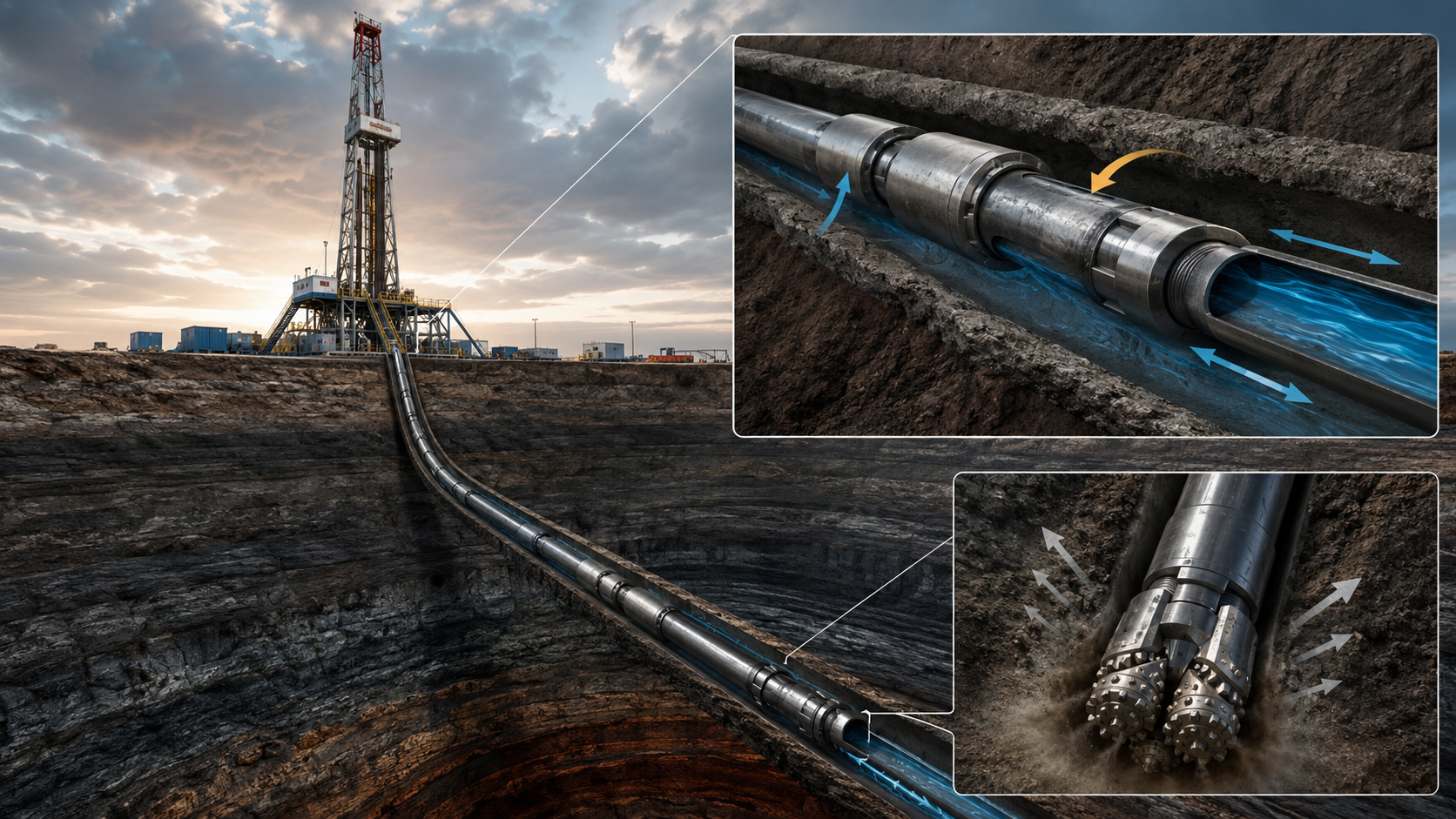
Drill Pipe is one of the most important components in oil and gas drilling because it connects the surface equipment to the drill bit deep underground. It transmits torque, circulates drilling fluid, and handles tension, compression, torsion, fatigue, heat, pressure, and corrosion during real drilling operations. This guide explains what drill pipe does, which steel grades are commonly used, where different grades fit, and why choosing the right pipe can prevent costly downhole failures
Table of Contents
What Does a Drill Pipe Actually Do?
The drill pipe is basically the backbone of the whole drill string. It does three main jobs: transmit torque to the bit, circulate drilling fluid downhole, and survive all kinds of mechanical loads thousands of feet underground.
A typical drill pipe consists of a steel tube with two connectors (called tool joints)—one on each end. You screw them together to build a continuous drill string.
Now, during real drilling, the pipe has to handle tension, compression, and torsion at the same time. And it does that in high-temperature, high-pressure, often corrosive conditions. That’s why design and manufacturing must follow strict industry standards—especially API specs. According to API 5DP-related drill pipe references, drill pipes for petroleum and natural gas drilling are commonly specified by grades such as E75, X95, G105, and S135, with requirements linked to yield strength, impact performance, and product specification levels.Otherwise, you’re asking for trouble downhole.

Common Steel Grades
Not just any steel works here. These are the grades you’ll see most often:
Grade E (E75)—Moderate strength, good for medium-depth wells and normal conditions. Usually the cheapest option.
Grade X (X95)—Stronger than E75. Use it for deeper wells or tougher formations.
Grade G (G105)—A good balance of strength and toughness. One of the most commonly used grades in the field.
Grade S (S135)—High-strength stuff. Designed for deep wells, ultra-deep wells, and really difficult drilling environments.
If the downhole environment is very corrosive, some drill pipes use chromium-alloy steel or get surface treatments like phosphating or special coatings.
Pros and Cons
Advantages:
High strength and toughness—can handle complex downhole conditions
Reliable sealing—keeps drilling fluid circulating properly
Modular connections—easy to assemble, disassemble, and maintain in the field
Flexible—different grades and specs for different well conditions
Limitations:
Expensive, especially high-grade or specially treated pipes
Fatigue is a real problem—cracks can develop after repeated cyclic loading
Corrosion risk—especially in sour gas or acidic environments
High maintenance—regular inspection and periodic replacement are a must
Where Are They Used?
Conventional oil & gas drilling—Onshore and offshore, standard wells.
Deep and ultra-deep wells—You’ll need high-strength grades like S135 to survive extreme temperatures and pressures.
Horizontal and directional wells—The drill pipe must be flexible enough and resist bending fatigue.
Unconventional resources—Shale gas, tight oil, etc. These push drill pipe performance to the limit.
Offshore drilling platforms—Marine environment means you need better corrosion resistance against seawater and salt spray.

Sonuç
Choosing the right Drill Pipe is not only about price or steel grade. It depends on well depth, formation difficulty, drilling parameters, corrosion risk, fatigue life, and inspection practices. E75 and X95 may be enough for conventional wells, while G105 and S135 are better suited for deeper or more demanding drilling environments. For any drilling project, the safest choice is to match the pipe grade and protection method to the actual downhole conditions, because one failed pipe can cost far more than a better specification upfront.
SSS
Why do drill pipes break?
Normally, it’s fatigue, overload, or corrosion. Fatigue is the sneaky one—repeated stress cycles create tiny micro-cracks over time. If routine inspection misses them, they grow fast, and then suddenly the pipe fails. On the rig, we call that “a bad day.”
Do regular non-destructive testing—ultrasonic inspection works well.
Optimize drilling parameters. Don’t beat on the pipe harder than you have to.
In corrosive environments, use internal coatings or corrosion inhibitors. Seriously.
Do regular non-destructive testing—ultrasonic inspection works well.
For shallow wells, E75 or X95 is fine.
For deep wells or complex conditions, go with G105 or S135.
And don’t just look at the price—one downhole failure costs way more than the pipe itself.