Welcome to My Blog!
Before we dive into the content, I’d love for you to join me on my social media platforms where I share more insights, engage with the community, and post updates. Here’s how you can connect with me:
Facebook:https://www.facebook.com/profile.php?id=100087990137347
LinkedIn:https://www.linkedin.com/company/89825762/admin/dashboard/
YouTube:www.youtube.com/@carbonsteelsupply-kj9lw
TikTok:www.tiktok.com/@carbonsteelsupply
Now, let’s get started on our journey together. I hope you find the content here insightful, engaging, and valuable.
Table of Contents
Introduction
Steel is a highly versatile material that plays a pivotal role in manufacturing, construction, automotive industries, and toolmaking due to its exceptional strength and durability. Among the various types of steel, 1080 steel stands out because of its high carbon content and the unique properties it offers. One of the main factors that influence the performance of 1080 steel is its carbon content. Understanding the 1080 steel carbon content and how it affects the steel’s characteristics is essential for choosing the right steel for specific applications.
In this blog post, we will dive into the composition of 1080 steel carbon content, explore its effects on its properties, discuss its ideal uses, and examine why it’s one of the most popular choices in manufacturing tools, automotive parts, and more.
What is 1080 Steel?
Composition and Carbon Content of 1080 Steel
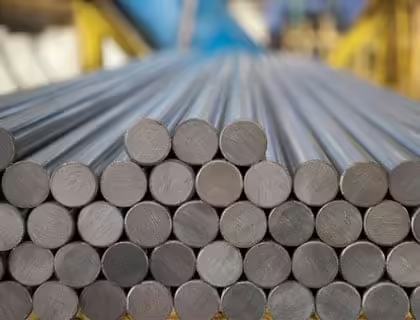
1080 steel is a high-carbon steel alloy with approximately 0.80% carbon content. The higher the carbon content in steel, the harder and stronger it becomes. However, this also makes it more prone to brittleness. The 1080 steel carbon content is one of the primary reasons it is suited for specific applications, particularly those requiring high hardness and wear resistance.
In addition to carbon, 1080 steel also contains small amounts of manganese (about 0.30%), which contributes to improving the hardness, tensile strength, and toughness of the steel. The presence of small impurities such as silicon, sulfur, and phosphorus from the steel-making process also affects its performance but is less significant than the carbon content. The balance of these elements in 1080 steel makes it durable and able to withstand substantial wear, making it an excellent choice for cutting tools, blades, and springs.
Key Properties of 1080 Steel
Hardness and Strength: The Effect of 1080 Steel Carbon Content
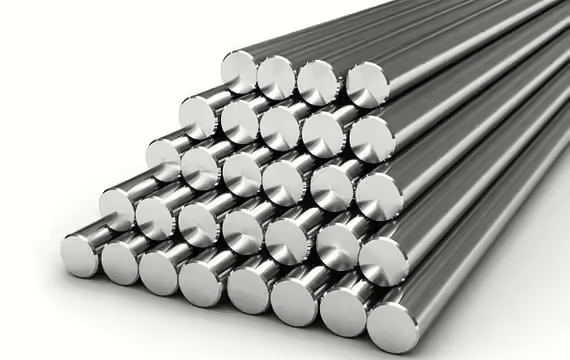
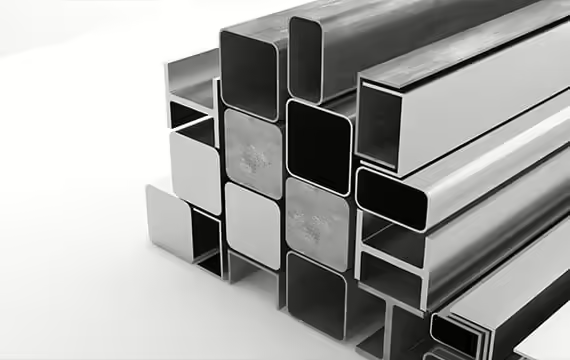
The carbon content in 1080 steel is crucial to its hardness and overall strength. With 0.80% carbon, 1080 steel is much harder compared to lower-carbon steels like 1045 or 1060. This high carbon content makes 1080 steel an excellent choice for applications requiring excellent edge retention, wear resistance, and strength.
The hardness of 1080 steel makes it ideal for manufacturing cutting tools, blades, and knives, which must maintain sharp edges over time. Additionally, the 1080 steel carbon content allows for better performance in industrial machinery that requires high levels of strength and resistance to abrasion.
Toughness and Brittleness
While 1080 steel has excellent hardness, the high carbon content also makes it more prone to brittleness. Higher carbon steels, like 1080 steel, can break or crack under high-impact stress, making them unsuitable for some applications where toughness and resilience to shock are required.
This brittleness can be mitigated by properly heat treating the 1080 steel, which helps reduce brittleness while still preserving its high hardness. Heat treatment processes such as quenching and tempering play an essential role in balancing the steel’s hardness and toughness, making it suitable for a wide range of applications.
Applications of 1080 Steel
Knives and Blades: The Ideal Steel for Cutting Tools
One of the most popular uses for 1080 steel is in the manufacturing of knives and blades. The high 1080 steel carbon content allows it to maintain a sharp edge for long periods, even under rough conditions. For this reason, 1080 steel is commonly used in the production of hunting knives, survival knives, kitchen knives, and other cutting tools.
Due to its ability to hold an edge longer than many other types of steel, 1080 steel is the preferred choice for knife makers who demand precision and durability. In addition to knives, 1080 steel is also used for making razors and other fine cutting tools that require the combination of sharpness and hardness.
Springs and Automotive Components
1080 steel is also used in the production of springs and other components in the automotive industry. Its high carbon content allows it to be manufactured into springs that can withstand significant mechanical stress. This includes parts like leaf springs, suspension springs, and coil springs, which need to return to their original shape after compression.
In addition to springs, 1080 steel is used for making other automotive components, such as gears, shafts, and fasteners. The material’s strength and ability to resist wear and tear make it ideal for parts that endure constant friction and high pressures in automotive systems.
Industrial Tools and Dies
Another significant application of 1080 steel is in industrial tools and dies. Tools such as punches, stamps, dies, and molds require a steel that can withstand high levels of wear and maintain sharpness and precision over long periods. The high 1080 steel carbon content ensures that these tools can perform under heavy use without losing their effectiveness.
This steel is ideal for industries such as metalworking, plastics molding, and any other industry that relies on tools that need to endure substantial wear while keeping their precise dimensions intact.
Heat Treatment of 1080 Steel
Hardening 1080 Steel: The Role of Carbon Content
To fully harness the potential of 1080 steel, it needs to undergo heat treatment. The heat treatment process involves heating the steel to a high temperature, followed by rapid cooling and tempering to achieve the desired balance of hardness, strength, and toughness.
- Quenching: The first step in hardening 1080 steel is to heat the steel to a temperature between 800-900°C (1470-1650°F) until it becomes red-hot. After the steel reaches the desired temperature, it is rapidly cooled by plunging it into oil or water. This rapid cooling process hardens the steel and locks in its hardness.
- Tempering: After quenching, 1080 steel becomes quite brittle. To reduce the brittleness, the steel is reheated to a lower temperature (typically 200-400°C or 400-750°F). The steel is then held at this temperature for a set amount of time to relieve internal stresses and make it less prone to cracking, while still retaining much of its hardness.
By heat treating 1080 steel properly, manufacturers can ensure it maintains the desired performance characteristics for various applications.
Table: Comparison of 1080 Steel and Other Carbon Steels
| Steel Grade | Carbon Content | Hardness | Applications | Heat Treatment Requirements |
|---|---|---|---|---|
| 1080 Steel | 0.80% | High | Knives, blades, springs, industrial tools | Quenching and tempering |
| 1060 Steel | 0.60% | Medium | General tools, parts requiring moderate hardness | Quenching and tempering |
| 1095 Steel | 0.95% | Very High | High-end knives, razor blades | Quenching and tempering |
| 1045 Steel | 0.45% | Medium | Automotive components, shafts, gears | Quenching and tempering |
Why Choose 1080 Steel for Your Projects?
Benefits of 1080 Steel
- Superior Hardness: The 1080 steel carbon content of 0.80% provides excellent hardness, which makes it ideal for wear-resistant applications such as knives, industrial tools, and springs.
- Precision Manufacturing: 1080 steel can be precisely machined to meet exact specifications, making it an excellent choice for applications that require a high level of precision.
- Cost-Effective: While 1080 steel provides excellent performance, it remains affordable compared to other high-carbon steels. This balance of cost and performance makes it a popular choice in various industries.
Considerations Before Choosing 1080 Steel
- Brittleness: The high carbon content in 1080 steel leads to increased brittleness, making it prone to breaking or cracking under high-impact conditions. Proper heat treatment can mitigate this issue and provide an ideal balance between hardness and toughness.
- Not Suitable for All Applications: While 1080 steel excels in applications requiring wear resistance and hardness, it may not be suitable for applications that involve high-impact stresses or require higher toughness. In such cases, choosing a lower-carbon steel might be more appropriate.
Conclusion: 1080 Steel Carbon Content
In conclusion, 1080 steel carbon content plays a critical role in the performance of this high-carbon steel. With its superior hardness and strength, 1080 steel is ideal for applications like knives, blades, springs, and industrial tools. However, its brittleness must be carefully managed through heat treatment processes to ensure its toughness. Understanding the properties and applications of 1080 steel will help you make informed decisions when selecting this material for your projects.
If you are in need of 1080 steel for your next project, make sure to source it from trusted suppliers who offer high-quality, heat-treated steel that will meet your performance expectations. With its impressive hardness and versatility, 1080 steel is an excellent investment for manufacturers, toolmakers, and industries seeking durable and high-performance materials.
FAQ
What makes 1080 steel carbon content different from other carbon steels?
1080 steel carbon content of 0.80% gives it greater hardness and wear resistance compared to lower-carbon steels like 1045 or 1060. This makes 1080 steel ideal for applications such as knives, blades, and springs.
How does 1080 steel carbon content affect its brittleness?
The higher the carbon content, the harder the steel becomes. However, 1080 steel carbon content makes it more brittle than lower-carbon steels. This brittleness can be reduced by heat treatment processes such as tempering.
Can 1080 steel be used for high-impact applications?
No, 1080 steel is not ideal for high-impact applications because its high carbon content makes it more brittle. For applications that require resistance to impact, a lower-carbon steel such as 1045 may be more suitable.
What are the best applications for 1080 steel?
1080 steel is best suited for applications such as knives, blades, springs, industrial tools, and dies that require hardness and wear resistance. It is commonly used in manufacturing high-precision cutting tools and automotive components.
How should 1080 steel be heat-treated?
1080 steel should undergo a heat treatment process that involves quenching and tempering. Quenching hardens the steel, while tempering reduces brittleness and improves toughness, making it suitable for high-performance applications.