Welcome to My Blog!
Before we dive into the content, I’d love for you to join me on my social media platforms where I share more insights, engage with the community, and post updates. Here’s how you can connect with me:
Facebook:https://www.facebook.com/profile.php?id=100087990137347
LinkedIn:https://www.linkedin.com/company/89825762/admin/dashboard/
YouTube:www.youtube.com/@carbonsteelsupply-kj9lw
TikTok:www.tiktok.com/@carbonsteelsupply
Now, let’s get started on our journey together. I hope you find the content here insightful, engaging, and valuable.
Table of Contents
Introduction
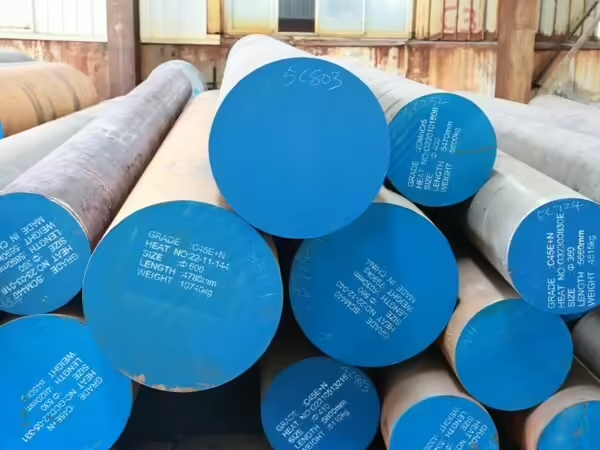
Steel is one of the most commonly used materials in engineering and manufacturing, with different types of steel having varying properties suited for specific applications. One such steel grade is 1045 carbon steel, which is often chosen for its balance of strength, hardness, and durability. Understanding the 1045 carbon steel strength is essential for industries such as automotive, construction, and machinery, as it directly impacts the material’s ability to perform in challenging environments.
In this blog post, we will explore the composition, mechanical properties, uses, and factors that affect the strength of 1045 carbon steel. We will also discuss how this steel compares to other grades of carbon steel and its suitability for various industrial applications.
By the end of this guide, you will have a comprehensive understanding of 1045 carbon steel, its strength characteristics, and why it’s a go-to material for many engineering applications.
What is 1045 Carbon Steel?
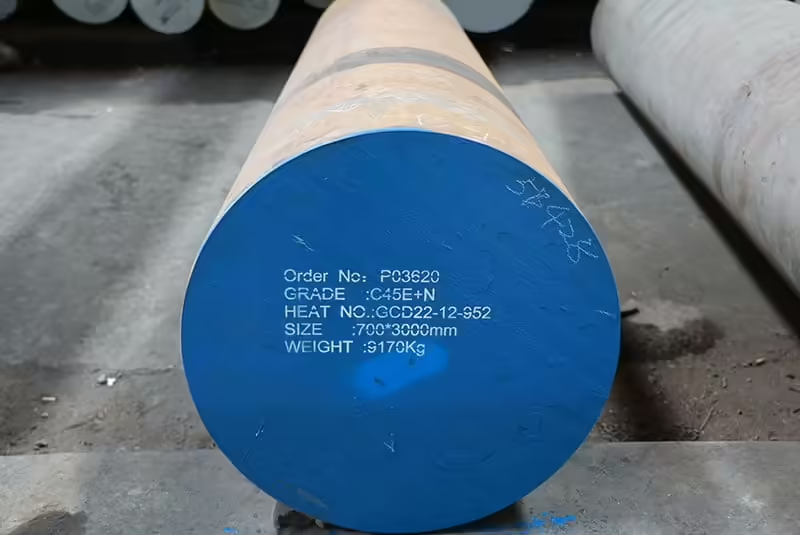
1045 carbon steel is a medium-carbon steel, often used in applications where strength and toughness are required. The steel is primarily composed of iron, with a carbon content of approximately 0.45%. This composition gives 1045 steel its unique properties, making it suitable for use in a variety of industries.
Composition of 1045 Carbon Steel
The composition of 1045 carbon steel includes:
- Carbon (0.43 – 0.50%): The primary element influencing hardness and tensile strength.
- Manganese (0.60 – 0.90%): Improves toughness and hardenability.
- Phosphorus (≤ 0.04%): Adds strength and hardness but too much can make steel brittle.
- Sulfur (≤ 0.05%): Generally, sulfur is avoided as it decreases the steel’s toughness.
- Iron (remaining percentage): The bulk material, acting as the base metal.
This composition ensures that 1045 carbon steel is versatile, offering a solid foundation of strength while remaining malleable enough for different manufacturing processes.
The Strength of 1045 Carbon Steel
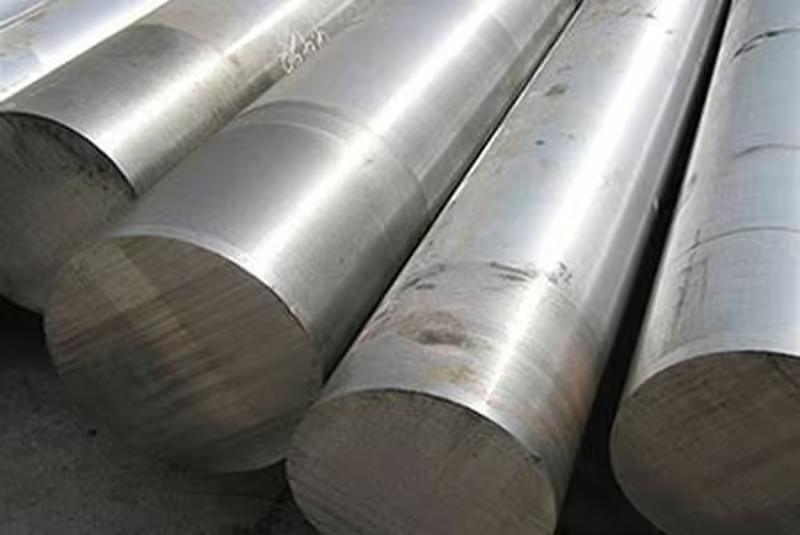
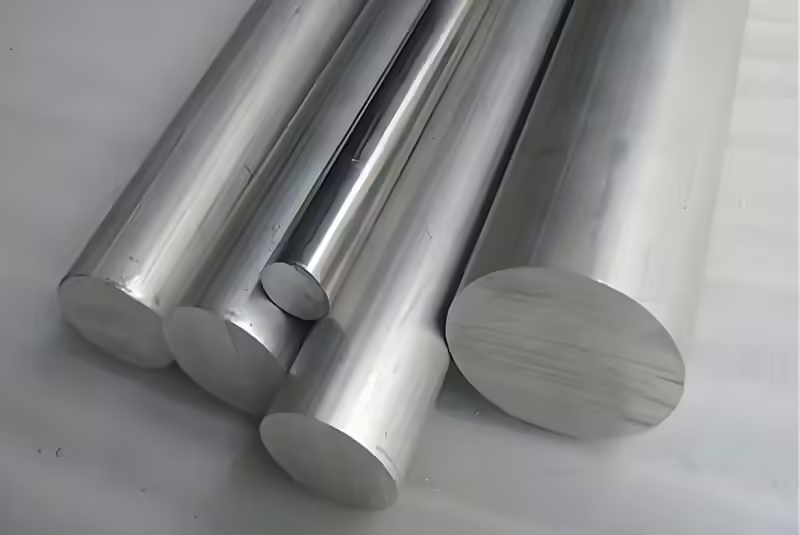
The strength of 1045 carbon steel is one of its defining characteristics. Its balance of tensile strength, yield strength, and hardness makes it suitable for a range of structural applications. Let’s break down these properties.
Tensile Strength
Tensile strength is the maximum stress that 1045 carbon steel can withstand while being stretched or pulled before breaking. The tensile strength of 1045 carbon steel typically ranges from 570 to 700 MPa (megapascals), making it strong enough for many industrial applications. This range provides a good balance of durability without making the material too rigid or brittle.
Yield Strength
Yield strength refers to the point at which the material will begin to deform plastically. The yield strength of 1045 carbon steel generally falls between 310 to 440 MPa. This means that the material can handle a fair amount of force before it undergoes permanent deformation, ensuring that it can be used in situations where load-bearing capacity is essential.
Hardness
Hardness measures the material’s resistance to localized plastic deformation. In the case of 1045 carbon steel, hardness is typically tested using the Brinell scale or Rockwell scale. Depending on the heat treatment process, the hardness of 1045 carbon steel can range from 170 to 210 HB (Brinell hardness). This hardness makes the material ideal for parts that need to withstand wear and tear, such as shafts, gears, and bolts.
Impact Resistance
The toughness of 1045 carbon steel is an important consideration for applications that require resistance to impact. This material tends to have good impact resistance at room temperature, which makes it useful for applications in the automotive and construction sectors.
Heat Treatment and Its Effect on 1045 Carbon Steel Strength
Heat treatment plays a significant role in enhancing the strength and hardness of 1045 carbon steel. The steel can undergo different heat treatments, including annealing, quenching, and tempering, to achieve the desired mechanical properties.
Annealing
Annealing involves heating the steel to a specific temperature and then cooling it slowly to improve its machinability and ductility. After annealing, 1045 carbon steel has a lower hardness but is easier to shape and work with. This treatment reduces internal stresses and makes the steel more uniform in structure.
Quenching and Tempering
Quenching involves heating the steel to a high temperature and then rapidly cooling it, usually by immersion in water or oil. This process increases the hardness of 1045 carbon steel. Tempering follows quenching, where the steel is reheated to a lower temperature to relieve stresses and improve toughness. Together, these processes make 1045 carbon steel stronger and more resistant to wear, although at the cost of reducing its ductility.
Applications of 1045 Carbon Steel
Given its favorable strength characteristics, 1045 carbon steel is used across various industries. Below are some of the most common applications:
Automotive Industry
1045 carbon steel is used in the automotive industry for manufacturing components such as crankshafts, axles, gears, and shafts. These parts require high strength, wear resistance, and impact toughness, all of which 1045 carbon steel provides.
Construction and Infrastructure
The strength of 1045 carbon steel makes it an excellent choice for structural applications in construction. It is commonly used for beams, columns, and reinforcements, providing solid support to buildings and infrastructure.
Industrial Machinery
In industrial machinery, 1045 carbon steel is used for making parts that undergo frequent mechanical stress, including gears, bolts, and shafts. These parts require strength to handle the constant load and abrasion during operation.
Tools and Dies
Due to its ability to be heat-treated to achieve high hardness, 1045 carbon steel is used in the manufacturing of tools and dies. It is especially useful for making parts that need to withstand significant force or pressure without breaking.
General Manufacturing
From fasteners to valves, 1045 carbon steel is also widely used in general manufacturing for components that require a balance of strength and machinability.
Table: Mechanical Properties of 1045 Carbon Steel
Here is a breakdown of the mechanical properties of 1045 carbon steel, showing its strength and other important factors that contribute to its performance:
| Property | Value |
|---|---|
| Tensile Strength | 570 – 700 MPa |
| Yield Strength | 310 – 440 MPa |
| Hardness | 170 – 210 HB |
| Impact Toughness | Moderate to High (at room temp) |
| Modulus of Elasticity | 210 GPa |
| Poisson’s Ratio | 0.29 |
This table highlights the balanced properties that make 1045 carbon steel suitable for a variety of applications where both strength and toughness are required.
Conclusion
In summary, 1045 carbon steel stands out as an excellent choice for applications requiring a balance of strength, hardness, and machinability. Its medium carbon content allows for both heat treatability and ease of manufacturing, making it versatile for use in industries ranging from automotive to construction. The material’s strength characteristics, such as its tensile strength, yield strength, and hardness, contribute to its wide-ranging applications in parts that need to withstand high levels of stress.
When choosing materials for specific applications, understanding the 1045 carbon steel strength and how it can be modified through heat treatment can help engineers and manufacturers select the right material for their needs. With its combination of durability, performance, and cost-effectiveness, 1045 carbon steel remains a reliable material for a wide range of industrial uses.
FAQ
What is the main strength of 1045 carbon steel?
The main strength of 1045 carbon steel lies in its balance of tensile strength (570-700 MPa) and hardness (170-210 HB), making it suitable for applications that require both strength and toughness.
Can 1045 carbon steel be heat treated?
Yes, 1045 carbon steel can be heat treated to improve its strength and hardness. Common heat treatments for this steel include annealing, quenching, and tempering.
What are the common applications of 1045 carbon steel?
1045 carbon steel is commonly used in automotive parts (like gears and axles), construction applications (beams and reinforcements), industrial machinery, tools, and dies.
How does the strength of 1045 carbon steel compare to other carbon steels?
1045 carbon steel offers a good balance between strength and machinability compared to other carbon steels. It is stronger than low-carbon steels but not as strong as higher-carbon steels, making it ideal for medium-strength applications.
Is 1045 carbon steel corrosion resistant?
1045 carbon steel is not highly resistant to corrosion on its own. It can be coated or treated with other materials to improve its resistance to corrosion, depending on the application.