
Welcome to My Blog!
Before we dive into the content, I’d love for you to join me on my social media platforms where I share more insights, engage with the community, and post updates. Here’s how you can connect with me:
Facebook:https://www.facebook.com/profile.php?id=100087990137347
LinkedIn:https://www.linkedin.com/company/89825762/admin/dashboard/
YouTube:www.youtube.com/@carbonsteelsupply-kj9lw
TikTok:www.tiktok.com/@carbonsteelsupply
Now, let’s get started on our journey together. I hope you find the content here insightful, engaging, and valuable.
Table of Contents
Introduction
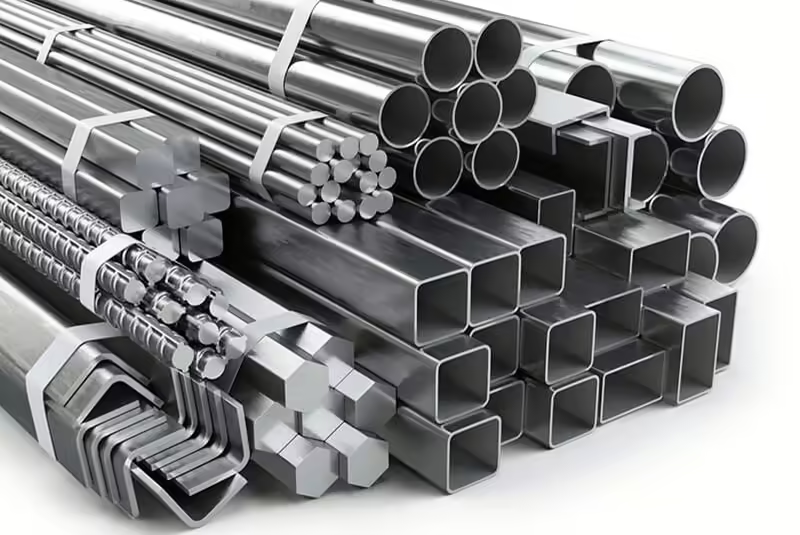
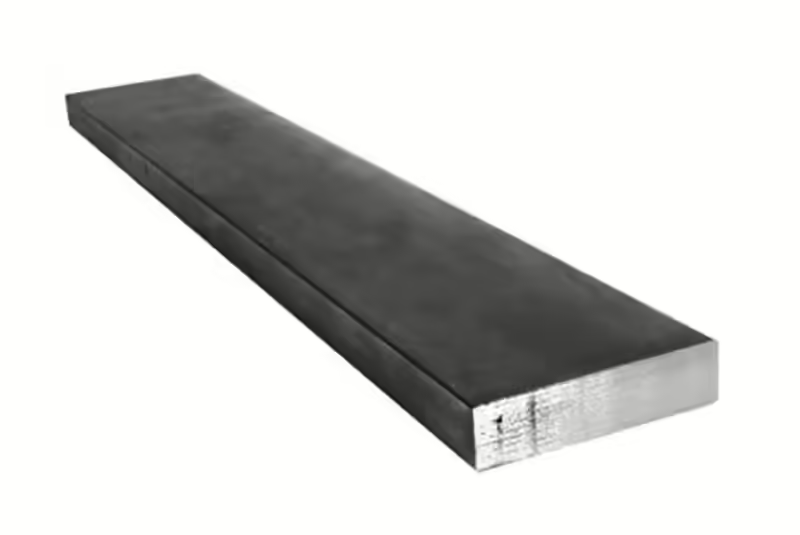
Spring steel is a versatile and widely used material known for its high strength, elasticity, and durability. It is primarily utilized in applications that require excellent resistance to deformation, such as automotive suspension systems, industrial machinery, construction tools, and agricultural equipment. The unique characteristics of spring steel are largely determined by its chemical composition, which influences its hardness, toughness, and fatigue resistance.
Understanding spring steel chemical composition is essential for selecting the right grade for specific applications. The combination of carbon, manganese, silicon, chromium, vanadium, and other alloying elements plays a crucial role in defining its mechanical properties. This article provides an in-depth look into the chemical makeup of spring steel, its key properties, and its wide range of applications across industries.
The Importance of Spring Steel Chemical Composition
Spring steel derives its superior mechanical properties from a well-balanced chemical composition. The elements used in its formulation contribute to its hardness, flexibility, wear resistance, and ability to return to its original shape after deformation.
Key Elements in Spring Steel
- Carbon (C): The most crucial element in spring steel, carbon increases hardness and tensile strength. A higher carbon content enhances wear resistance but may reduce ductility.
- Manganese (Mn): Improves hardenability and toughness while helping to counteract brittleness caused by high carbon content.
- Silicon (Si): A critical element that enhances elasticity, enabling spring steel to recover its shape after being stretched or compressed.
- Chromium (Cr): Enhances corrosion resistance, wear resistance, and overall strength. Some high-grade spring steels contain chromium for added durability.
- Vanadium (V): Improves grain structure, making the steel tougher and more resistant to shock loads.
- Nickel (Ni): Increases toughness and impact resistance, making the steel less prone to cracking under stress.
- Molybdenum (Mo): Improves high-temperature strength and corrosion resistance.
These elements work together to give spring steel its unique properties, making it one of the most reliable materials in engineering and industrial applications.
Variations in Spring Steel Chemical Composition
Different grades of spring steel have slightly varying chemical compositions to suit specific applications. Below is a table outlining the chemical composition of common spring steel grades:
Spring Steel Chemical Composition Table
| Element | 65Mn | 60Si2Mn | 50CrV4 | SUP9 | SUP10 |
|---|---|---|---|---|---|
| Carbon (C) | 0.62-0.70% | 0.56-0.64% | 0.47-0.55% | 0.52-0.60% | 0.47-0.55% |
| Manganese (Mn) | 0.90-1.20% | 1.30-1.60% | 0.70-1.10% | 0.65-0.95% | 0.65-0.95% |
| Silicon (Si) | 0.17-0.37% | 1.50-2.00% | 0.15-0.35% | 0.15-0.35% | 0.15-0.35% |
| Chromium (Cr) | – | – | 0.90-1.20% | 0.60-0.90% | 0.80-1.10% |
| Vanadium (V) | – | – | 0.10-0.25% | – | 0.10-0.25% |
Each grade of spring steel has unique characteristics that make it suitable for specific industrial uses. The right selection depends on the required mechanical properties for a given application.
Mechanical Properties of Spring Steel
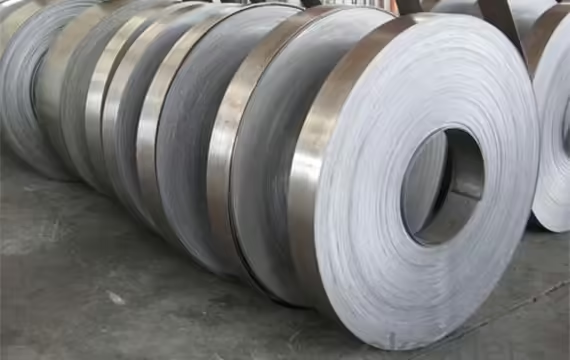
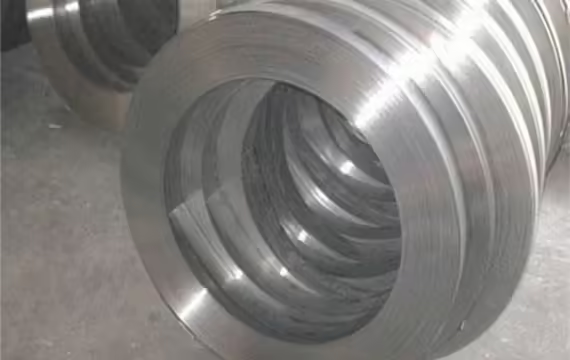
The spring steel chemical composition directly impacts its mechanical properties, which determine how well it performs in different environments.
Hardness and Strength
Spring steel is known for its high Rockwell hardness rating, making it ideal for applications where durability is critical. The carbon content influences its hardness, while additional alloying elements enhance wear resistance.
Elasticity and Fatigue Resistance
Spring steel’s ability to return to its original shape after deformation is one of its defining features. The presence of silicon significantly enhances elasticity, allowing components made from spring steel to withstand repeated stress cycles without permanent deformation.
Corrosion Resistance
While standard spring steel is not inherently corrosion-resistant, grades containing chromium and nickel offer improved protection against rust and oxidation. Additional surface treatments, such as galvanizing or black oxide coating, can further enhance corrosion resistance.
Toughness and Impact Resistance
Spring steel has a high impact resistance, making it an excellent choice for shock-absorbing applications such as suspension components and industrial tools. The presence of manganese and vanadium helps to maintain structural integrity under dynamic loads.
Applications of Spring Steel
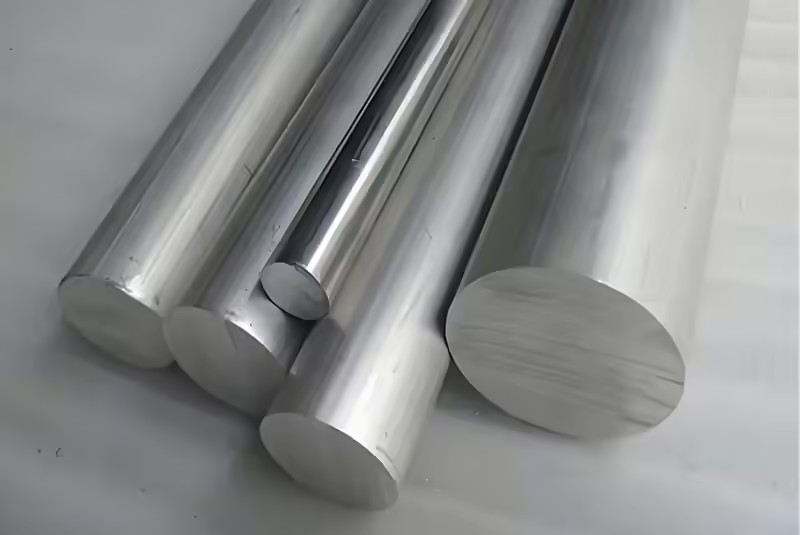
Due to its exceptional mechanical properties, spring steel is widely used across various industries.
Automotive Industry
Spring steel is extensively used in the automotive sector for manufacturing:
- Suspension springs that require high fatigue resistance.
- Clutch plates that endure repeated stress.
- Valve springs that maintain performance under extreme conditions.
Construction and Engineering
Spring steel plays a vital role in construction and engineering for:
- Structural reinforcements that require high tensile strength.
- Fasteners and bolts that must withstand heavy loads.
- Machine components that endure repetitive motion and stress.
Industrial Machinery
Many industrial machines rely on spring steel for:
- Cutting tools like saw blades, chisels, and drill bits.
- Gears and shafts used in heavy-duty machinery.
- Mechanical springs in hydraulic and pneumatic systems.
Agricultural Equipment
Spring steel is essential in agricultural machinery, including:
- Plow blades that require high wear resistance.
- Harvesting tools that must endure repetitive impact.
- Tension springs used in farm machinery.
Aerospace Industry
Spring steel is also found in aerospace applications that require a balance of strength and weight, such as:
- Landing gear components that endure extreme stress.
- Springs in control mechanisms for precision engineering.
- High-performance fasteners for lightweight structures.
Conclusion
The spring steel chemical composition is fundamental in defining its properties and applications. With a carefully balanced mix of carbon, manganese, silicon, chromium, and vanadium, spring steel exhibits exceptional strength, elasticity, and durability.
Selecting the right grade of spring steel is essential for ensuring optimal performance in specific applications. Whether in automotive, industrial machinery, construction, or aerospace, spring steel remains an indispensable material for high-performance components.
FAQ
What is the primary chemical component of spring steel?
Spring steel primarily consists of carbon, manganese, silicon, chromium, and vanadium, all of which contribute to its strength and elasticity.
How does carbon content affect spring steel?
A higher carbon content increases hardness and wear resistance but may reduce ductility. Lower carbon content improves flexibility and impact resistance.
What is the best grade of spring steel for industrial applications?
50CrV4 and SUP9 are commonly used for industrial applications requiring high fatigue resistance and durability.
Can spring steel resist corrosion?
Some grades contain chromium and nickel for better corrosion resistance, but additional coatings may be required for prolonged exposure to harsh environments.
How does spring steel differ from stainless steel?
Spring steel is optimized for elasticity and strength, while stainless steel is primarily designed for corrosion resistance.
Is spring steel suitable for making cutting tools?
Yes, spring steel is often used for cutting tools such as saw blades and chisels due to its hardness and wear resistance.
Can spring steel be welded?
Spring steel can be welded, but it requires proper heat treatment to maintain its mechanical properties after welding.


