Welcome to My Blog!
Before we dive into the content, I’d love for you to join me on my social media platforms where I share more insights, engage with the community, and post updates. Here’s how you can connect with me:
Facebook:https://www.facebook.com/profile.php?id=100087990137347
LinkedIn:https://www.linkedin.com/company/89825762/admin/dashboard/
YouTube:www.youtube.com/@carbonsteelsupply-kj9lw
TikTok:www.tiktok.com/@carbonsteelsupply
Now, let’s get started on our journey together. I hope you find the content here insightful, engaging, and valuable.
Table of Contents
Introduction
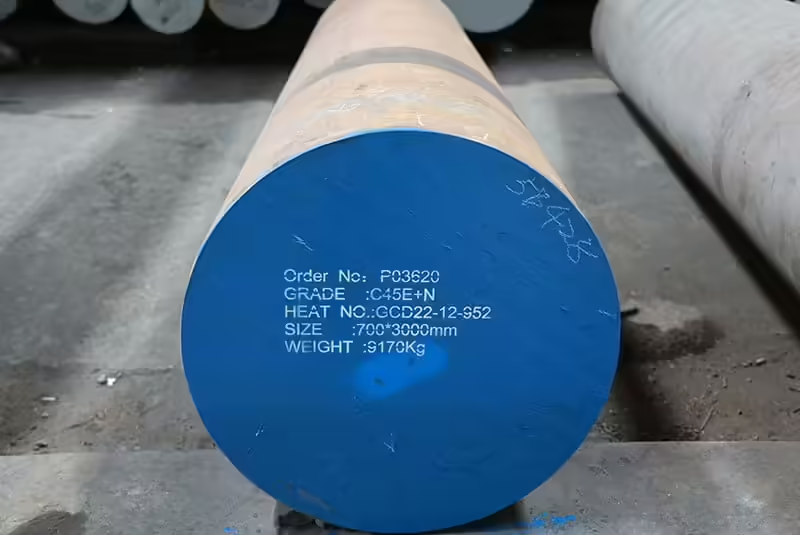
Carbon steel is one of the most widely used materials in construction, manufacturing, and heavy machinery due to its strength, durability, and cost-effectiveness. However, beyond its mechanical performance, carbon steel appearance plays a critical role in both the aesthetics and functionality of the finished product. Whether it’s used in visible structural frameworks, automotive parts, or precision tools, the surface look and finish of carbon steel can directly influence corrosion resistance, compatibility with coatings, and overall visual appeal.
Understanding the appearance of carbon steel involves examining how different manufacturing and treatment processes affect its surface characteristics. From the rough texture of hot-rolled steel to the smoothness of cold-rolled products, each variation serves specific purposes. For professionals involved in procurement, fabrication, or engineering, being knowledgeable about the surface finish and visual qualities of carbon steel is essential to making informed decisions.
What Influences Carbon Steel Appearance?
The appearance of carbon steel is not uniform. It varies based on several factors including chemical composition, production methods, post-processing techniques, and environmental exposure. Unlike stainless steel, which contains chromium to resist oxidation and maintain luster, carbon steel is more reactive and typically darker or duller in finish.
Carbon content directly affects grain size and surface color. Steels with higher carbon levels generally exhibit darker shades and more prominent grain patterns. The manufacturing process—whether the steel is hot-rolled or cold-rolled—also creates distinct textures. Hot-rolled steel often retains scale and surface irregularities from its production, giving it a coarse and bluish appearance. Cold-rolled steel, on the other hand, has a cleaner, more refined finish.
Post-processing techniques such as pickling, blasting, or oiling further modify the surface condition. Additionally, the way carbon steel is stored—indoors versus outdoors—can lead to oxidation, rust, or discoloration, further impacting its look. These variables are crucial when choosing carbon steel for applications where the surface is either visible or functionally significant.
Types of Carbon Steel Finishes and Their Visual Characteristics
Carbon steel is available in a variety of finishes, each with specific visual and performance characteristics. Selecting the appropriate finish depends on the intended application, desired durability, and aesthetic expectations.
Hot-Rolled Finish
Hot-rolled carbon steel is processed at high temperatures and allowed to cool naturally. The surface usually features a rough texture with visible scale and a bluish-gray coloration. It is often used in construction and industrial applications where precision and appearance are not critical. The finish is rugged and can hide minor surface imperfections, but it is not suitable for parts requiring smooth or decorative surfaces.
Cold-Rolled Finish
Cold-rolled carbon steel is processed at or near room temperature, resulting in tighter tolerances and a smoother surface. The finish is more refined, with a light gray or satin appearance. This makes it ideal for applications such as automotive body panels, electrical enclosures, and precision components. Its enhanced appearance also improves the base for coatings and painting.
Pickled and Oiled Finish
Pickling removes surface scale through acid treatment, producing a clean and uniform matte gray surface. It is often followed by oiling to prevent immediate oxidation. This finish is preferred when the steel will be stored before further processing or painting, as it improves paint adhesion and resists rust temporarily.
Galvanized Finish
Galvanizing adds a layer of zinc to carbon steel, usually through hot-dip or electroplating. The appearance ranges from a matte gray to a shiny spangled finish, depending on the method used. This treatment enhances corrosion resistance and is ideal for outdoor or marine environments. The zinc coating may develop a patina over time, which further protects the steel.
Powder-Coated Finish
Powder coating involves applying a dry powder to the surface and curing it under heat to form a durable finish. The result is a smooth, colored surface that can range from matte to high-gloss. Powder coating not only enhances the appearance but also provides excellent protection against wear, chemicals, and moisture.
Comparison Table: Carbon Steel Finishes and Their Appearance Traits
The following table compares common carbon steel finishes based on surface texture, reflectivity, corrosion resistance, and typical applications. This comparison helps in selecting the right finish for specific functional or visual requirements.
| Finish Type | Surface Texture | Reflectivity | Corrosion Resistance | Typical Applications |
|---|---|---|---|---|
| Hot-Rolled | Coarse, scaly | Low | Low | Beams, frames, structural supports |
| Cold-Rolled | Smooth, refined | Medium | Moderate | Panels, tubes, enclosures |
| Pickled and Oiled | Matte, uniform | Low | Temporary resistance | Fabrication, pre-paint applications |
| Galvanized | Spangled or matte | Medium | High | Roofing, fencing, HVAC systems |
| Powder-Coated | Colored, smooth | Variable | Very High | Machinery casings, interior fixtures |
| Blued or Blackened | Dark, oil-coated | Low | Moderate | Tools, firearms, decorative parts |
Enhancing Carbon Steel Appearance Through Surface Treatments
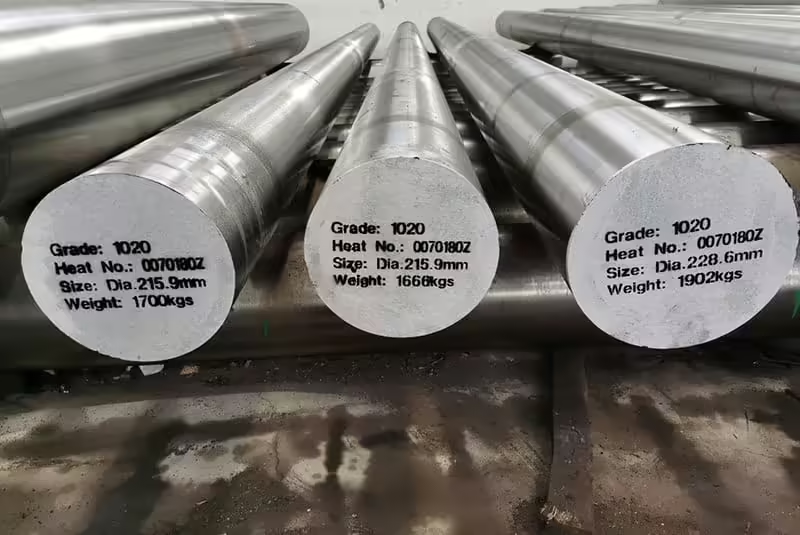
Beyond basic rolling and coating processes, various surface treatments can be applied to improve both the performance and appearance of carbon steel. These treatments are particularly useful in environments with exposure to moisture, chemicals, or wear.
Sandblasting and Shot Blasting
These abrasive treatments remove mill scale and create a uniform surface texture. Sandblasting is ideal for preparing steel for paint or powder coating. The treated surface is dull gray and offers excellent adhesion for further coatings.
Phosphate Coating
Phosphate layers provide a corrosion-resistant base that improves the bonding of paints and lubricants. The finish appears matte and gray, often used in automotive parts and industrial tools.
Oil Coating
A light oil application prevents oxidation during transport and storage. This treatment gives the steel a dark, slightly shiny appearance. It’s not a permanent solution but is commonly used on pickled steel.
Black Oxide (Bluing)
This chemical treatment creates a black or dark blue finish that reduces glare and increases corrosion resistance. Common in tools and firearms, it also adds an element of aesthetic sophistication.
Painting and Powder Coating
Painting allows for decorative customization and corrosion protection. Powder coating is more durable and environmentally friendly. Both techniques enable a range of colors and finishes, transforming plain steel into visually appealing products suited for architecture, machinery, and more.
Industrial Applications Where Appearance Plays a Key Role
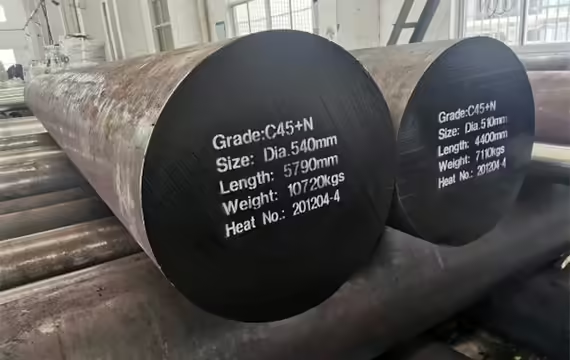
In many industrial sectors, the appearance of carbon steel is more than cosmetic—it’s integral to product performance and perception. Construction components such as exposed beams or columns often require a clean or painted finish for visual uniformity. In the automotive industry, carbon steel parts must meet strict appearance standards to align with vehicle aesthetics.
In agricultural machinery like skid steer loaders, carbon steel components are frequently powder-coated to resist mud, abrasion, and corrosion while maintaining a sleek look. Similarly, heavy equipment frames and enclosures often use cold-rolled or coated carbon steel to balance strength with professional finish. These examples highlight how finish selection influences product success and longevity.
Conclusion
Understanding carbon steel appearance and how it relates to finish quality is essential for anyone involved in specifying materials for industrial or commercial projects. The right surface treatment can extend product life, improve performance in harsh environments, and enhance the visual integrity of a finished structure or machine.
From hot-rolled and rugged to polished and powder-coated, the range of carbon steel finishes offers versatility for every application. Choosing wisely means considering both functional needs and aesthetic expectations. With proper knowledge and selection, carbon steel can deliver high performance and visual appeal across sectors like manufacturing, construction, agriculture, and automotive design.
By paying attention to appearance, surface integrity, and finish durability, you ensure that carbon steel not only meets strength requirements but also looks professional and performs reliably over time.
FAQ
What is the natural color of carbon steel?
Carbon steel typically has a dark gray or bluish tone if hot-rolled, and a light gray, clean appearance if cold-rolled. Without any coating, the surface is susceptible to rusting.
How does hot-rolled steel differ in appearance from cold-rolled steel?
Hot-rolled steel appears rough and slightly scaly due to the formation of mill scale during high-temperature processing. Cold-rolled steel, by contrast, has a smoother and more refined finish, suitable for parts requiring a clean look.
Is pickled and oiled steel suitable for painting?
Yes. The pickling process removes scale and impurities, while oiling temporarily protects the steel. This makes the surface ideal for paint adhesion and further finishing steps.
Can carbon steel be used without any finish?
While possible, using untreated carbon steel is not recommended in environments with moisture or corrosive elements. The bare steel will quickly rust unless it’s protected with coatings or treatments.
Why is surface appearance important in structural applications?
Even in structural uses where steel is not always visible, finish quality can affect bonding with coatings or fireproofing materials. Uniform surfaces also help with quality inspections and maintenance.