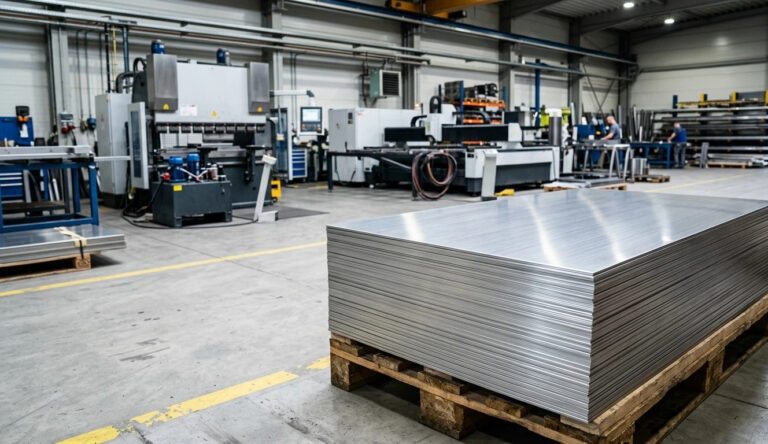
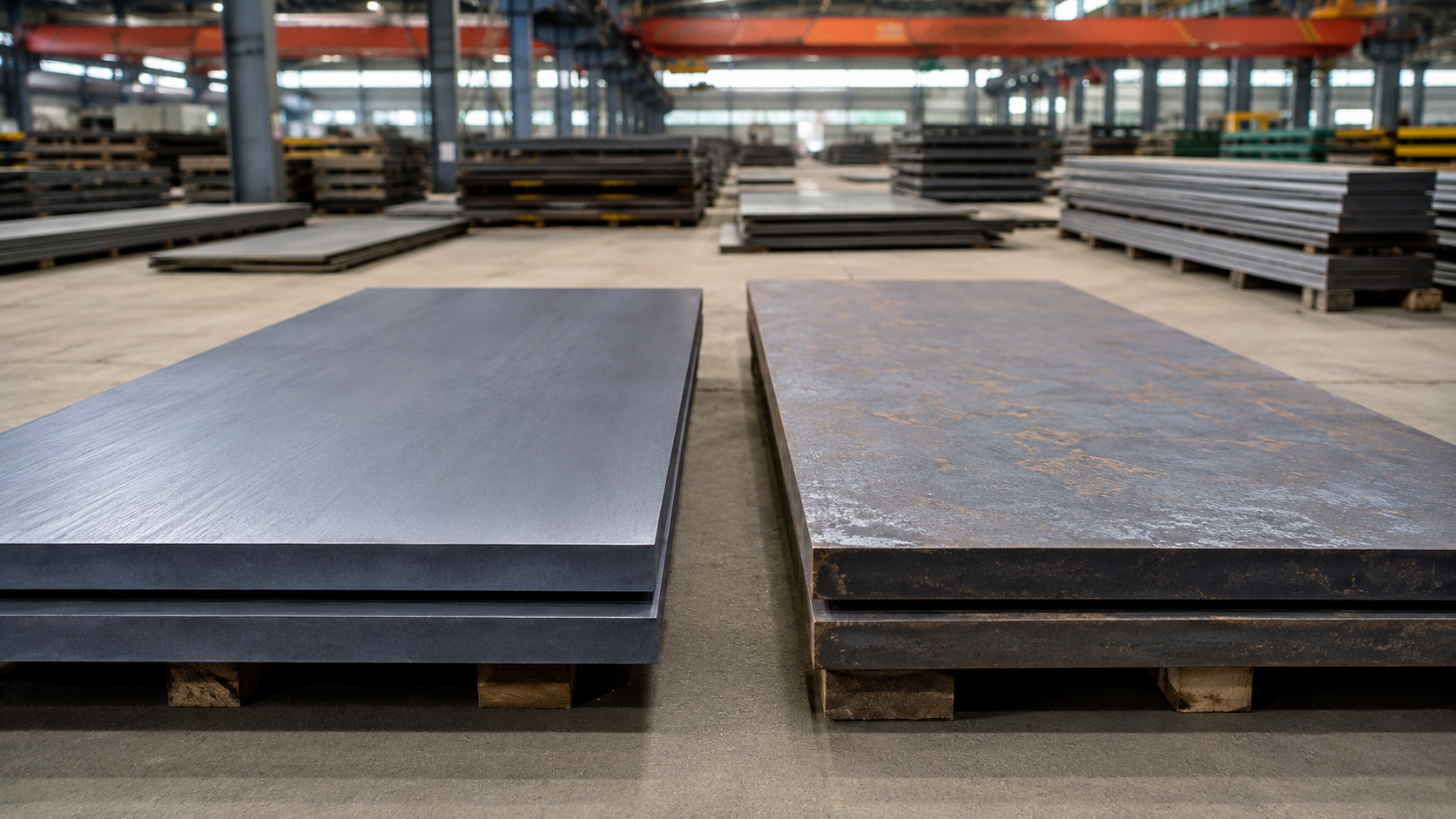
A36 Steel vs Q235B is one of the most practical comparisons in structural steel buying. Both grades are used for general fabrication, both are common in welded construction, and both sit in the low-carbon structural steel family. The catch is that they belong to different standard systems, so they are not automatically interchangeable.
If you want to have a more comprehensive understanding of chemical knowledge, mechanical data and common applications, you can also read this article: “A36 Steel Characteristics Guide“.
Table of Contents
Quick answer: similar family, different standards
Q235B is the Chinese structural steel grade used under GB/T 700. In industry comparison tables, it is usually placed near the 235 MPa yield class, which is close to the 250 MPa minimum yield level commonly associated with A36.
That is why the two grades often appear together in procurement discussions. The same job may accept either one, but only after the standard, thickness, certificate, and approval rules are checked carefully.
What A36 is meant to do in real projects
A36 Steel was created to solve a very specific problem: how to get a dependable structural carbon steel that is easy to buy, easy to fabricate, and easy to weld. Service Steel describes A36 as a standard structural steel grade with low carbon content, and notes that the max carbon content is 0.26%, which helps make it easier to weld, cut, and shape than higher-carbon alternatives.
That low-carbon character is a big reason A36 works so well in fabrication shops. Xometry highlights its weldability, ductility, formability, machinability, and broad structural use in buildings, bridges, heavy machinery, and other general industrial applications.
For engineering buyers, the numbers matter. A36 is commonly described with a minimum yield strength of 36,000 psi, or about 250 MPa, and a tensile strength range around 58,000 to 80,000 psi, depending on product form and reporting conditions.

What Q235B is designed to do
Q235B is also a general structural steel, but it is written inside the Chinese standard system. For many export and domestic sourcing projects, it functions as a close mild-steel structural option for frames, supports, plates, and fabricated parts.
The important point is that Q235B is not just a different label for the same thing. It is a different national specification with its own acceptance language and documentation habits. That matters when a drawing calls for ASTM A36, when a customer demands a specific mill certificate format, or when a project is audited under a local code system.
In practice, Q235B is often compared with other familiar grades such as S235JR and SS400. Industry reference tables place these materials in a very similar strength window, while still warning buyers to follow local code rules.
A36 Steel vs Q235B: where the properties overlap
The biggest overlap is in structural usefulness. Both grades are commonly selected for weldable, moderate-strength applications where cost and fabrication efficiency matter. Both can work well for brackets, supports, frames, base plates, and general structural assemblies.
A36 Steel is usually described as having a minimum yield strength of 250 MPa, while Q235B is commonly listed near 235 MPa. That difference is not dramatic, but it is enough to matter when a design margin is tight or a specification is strict.
The chemistry also points in the same direction. A36 uses low carbon to support weldability and forming, while comparison articles for Q235B describe it as a carbon structural steel with a similar general-purpose role. That is why the two grades often land in the same comparison bucket for procurement teams.
The practical reading is simple: A36 Steel and Q235B are close enough for many routine structural jobs, but not close enough to skip due diligence.

Although A36 Steel and Q235B belong to similar low-carbon structural steel categories, differences in standards, certification systems, and mechanical requirements can affect material selection in real projects.
omposition and fabrication:why the shop likes one and the buyer likes the other
Fabricators usually care about how the material behaves on the shop floor. A36 Steel is popular because it is easy to cut, drill, bend, and weld. Service Steel and Xometry both emphasize that low carbon content supports this kind of work, which is why A36 remains a staple in construction and fabrication.
That is also why many buyers search for A36 Steel vs Q235B when they need a material that is straightforward to process. If the job does not require a special high-strength grade, either option may be sufficient, provided the engineering team approves the substitution.
The buying side is different. A contractor, distributor, or overseas customer may care more about the standard number than the physical feel of the plate. For many international buyers, A36 Steel is easier to specify on paper, while Q235B is easier to source in domestic Chinese supply chains. That is why the specification language matters: ASTM A36 on one side, GB/T 700 Q235B on the other. The name on the certificate often decides whether the material passes procurement review.
A36 Steel vs Q235B for welding and general fabrication
Weldability is one of the strongest reasons buyers choose A36. Xometry describes it as high-weldability steel with good ductility, making it suitable for many standard joining processes. Service Steel also links the low carbon level to easier welding and shaping.
That same general logic applies when comparing A36 Steel vs Q235B. For ordinary fabrication, both grades are friendly to shop welding and normal structural assembly. The real question is not whether they can be welded, but whether the project needs a specific standard, thickness-based rule, or impact requirement.
In other words, welding usually does not separate the two grades as much as documentation does.
A36 Steel vs Q235B in procurement and quality control
This is where many buying mistakes happen. The grade name alone is not enough. ASTM A36 is a structural specification with testing requirements for tensile strength, yield strength, and elongation. The standard is written for real structural service, not just nominal chemistry.
Q235B should be checked with the same discipline. Buyers need to confirm the test report, thickness range, delivery condition, and project approval rules. Industry comparison sources note that the grade sits in a similar family to A36, but that still does not make it a universal drop-in replacement.
If the project is critical, ask for the mill test certificate and compare the actual mechanical values, not just the grade name. That is the safest way to prevent material substitution problems.
When A36 Steel is the better choice
A36 Steel is usually the better choice when the drawing, customer order, or project specification already uses ASTM language. It is also a strong fit when the end customer expects a familiar North American structural grade with broad market recognition.
A36 Steel is also a good fit when the buyer needs a dependable low-carbon grade for general fabrication, especially if weldability and availability matter more than pushing strength to the limit. For many builders, that balance is exactly what makes A36 so useful.
This is also why the material has remained popular for so long: it is not exotic, but it is dependable.
When Q235B is the smarter option
Q235B is often the smarter option when the supply chain, certification, and customer acceptance all revolve around GB/T 700. In those cases, using the Chinese grade can simplify procurement and reduce confusion in local fabrication.
Q235B also makes sense when the project accepts a close mild-steel equivalent and the team is already comfortable with domestic mill documentation. In comparison tables, Q235B sits close to A36, S235JR, and SS400, which makes it a practical structural option for many routine uses.
If the project is export-facing, the team should confirm whether the buyer wants ASTM naming or GB naming. That single decision can save a lot of rework later.
A36 Steel vs Q235B: the decision rule that keeps projects safe
Use A36 Steel when ASTM specification control matters most. Use Q235B when the project is built around GB/T 700 sourcing and acceptance. Treat them as close cousins, not automatic twins.
That rule works because both grades are useful, but they answer slightly different commercial and technical questions. One is not universally “better.” The right choice depends on the project standard, the paperwork, and the performance target.
Final takeaway
A36 Steel and Q235B solve very similar structural problems, but they do it inside different standards. A36 is the clearer answer when ASTM language is required. Q235B is the practical answer when the project is built around GB/T 700. The safest buying decision always comes from the specification, not the assumption.
FAQ
Is A36 Steel the same as Q235B?
No. They are similar structural grades, but they belong to different standards and should not be treated as identical without checking the project requirements.
Is A36 Steel stronger than Q235B?
In common comparison references, A36 is usually listed at about 250 MPa minimum yield strength, while Q235B is often shown near 235 MPa. The gap is small, but it exists.
Can A36 Steel be welded easily?
Yes. Its low-carbon design supports strong weldability and general fabrication use.
Is Q235B a mild steel?
Yes. It is commonly grouped with mild structural steels in industry comparison tables.
Should I replace A36 Steel with Q235B?
Only after checking the drawing, certificate, thickness range, and acceptance rules. For non-critical projects it may work, but code and customer requirements come first.
Which one is better for fabrication?
For general fabrication, both are workable. The better choice is the one that matches the required standard and supply chain.