
Welcome to My Blog!
Before we dive into the content, I’d love for you to join me on my social media platforms where I share more insights, engage with the community, and post updates. Here’s how you can connect with me:
Facebook:https://www.facebook.com/profile.php?id=100087990137347
LinkedIn:https://www.linkedin.com/company/89825762/admin/dashboard/
YouTube:www.youtube.com/@carbonsteelsupply-kj9lw
TikTok:www.tiktok.com/@carbonsteelsupply
Now, let’s get started on our journey together. I hope you find the content here insightful, engaging, and valuable.
Table of Contents
مقدمة


1.2842 steel
European standard cold-work tool steel material is favored fro its high hardness and wear resistance. This kind of steel is easy to process, has good toughness and hardenability, and is suitable for manufacturing stamping dies and paper cutting tools. The hardness is about 220-230HBW in the supply condition. The chemical composition includes C, SI, Mn, S, P, Cr, V. the hardness can reach to 63HRCafter heat treatment.
1.2510 steel
German standard cold-work alloy tool steel, containing W element, therefore it has higher wear resistance and resistance to tempering. This kind of steel is suitable for manufacturing high load and high wear resistance tools and molds. It has low hardness in the supply condition, which is 121HBW, the chemical composition include C, Si, Mn, P, S, Cr etc. The heat treatment has a wide temperature range, suitable for high temperature application.
Chemical composition
1.2842 steel
(C): 0.85-0.95%
(Si): 0.10-0.40%
(Mn): 1.80-2.20%
(P): ≤0.030%
(S): ≤0.030%
(Cr): 0.20-0.50%
(V): 0.05-0.20%
1.2510 steel
(C): 0.90-1.05%
(Si): 0.15-0.35%
(Mn): 1.00-1.20%
(P): ≤0.035%
(S): ≤0.035%
(Cr): 0.50-0.70%
(V): 0.05-0.15%
(W): 0.50-0.70%
Commons and differences
-
 1018/1.0401 فولاذ كربوني 1018/1.0401
 -
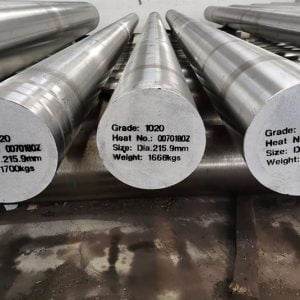 1020/1.0402/1.0402 فولاذ كربوني
 -
 فولاذ الأدوات H10/1.2365/1.2365
 -
 فولاذ الأدوات H11/1.2343/1.2343
 -
 فولاذ الأدوات O1/1.2510/1.2510
 -
 1.2842 فولاذ الأدوات 1.2842
 -
 فولاذ D3/1.2080 أدوات وقوالب D3/1.2080
 -
 H13/1.2344 H13/1.2344 فولاذ الأدوات والصلب
 -
 D2/1.2379 D2/1.2379 فولاذ الأدوات والقالب
Commons
Both steel materials have good mechanical properties and wear resistance, suitable for manufacturing various tools and molds.
Both of them could increase hardness and wear resistance through heat treatment.
Difference
1.2510 steel has W element, which makes it obtain higher wear resistance and resistance to tempering.
1.2842 steel has higher Mn element, which increases the hardenability and toughness of the steel.
Application scenario


1.2842 steel
Suitable for cutting and punching tools, small shear blades, tangling rings and jaws, reamers, measuring tools, sliders, plastics and rubber molds.
1.2510 steel
Due to its high wear resistance and resistance to tempering, 1.2510 steel is more suitable for use in high load and high wear resistance requirements tools and molds.
How to choose?
When choosing between 1.2842 steel and 1.2510 steel, the following factors should be considered:
Wear resistance requirements: 1.2510 steel might be a better choice if wear resistance is required.
Cost consideration: The cost of 1.2510 steel might be higher since its has W element.
Heat treatment requirement: Choose suitable material according to the required hardness and toughness.
الخاتمة
1.2842 steel and 1.2510 steel are both excellent cold-work tool steel material, when we choosing the steel we should choose according to specific requirements of the application and budget. 1.2510 steel obtain higher wear resistance and resistance to tempering due to the W element, while 1.2842 steel obtain good hardenability and toughness due to its high Mn content.
الأسئلة الشائعة
What is the heat treatment hardness of 1.2842 and 1.2510 steel?
1.2842 steel heat treatment hardness is about 60HRC, 1.2510 steel heat treatment is above 62HRC.
What delivery status are these two steel materials?
1.2842 steel delivery status hardness is 220-230HBS, 1.2510 steel delivery status hardness is ≤230HBS.
Can 1.2510 steel be nitrided?
1.2510 steel can be nitrided. Nitriding can improve the surface hardness and wear resistance of steel, is suitable for applications where surface properties need to be improved. However, the specific nitriding treatment needs to be determined according to the specific application needs and the chemical composition of the steel.