Welcome to My Blog!
Before we dive into the content, I’d love for you to join me on my social media platforms where I share more insights, engage with the community, and post updates. Here’s how you can connect with me:
Facebook:https://www.facebook.com/profile.php?id=100087990137347
LinkedIn:https://www.linkedin.com/company/89825762/admin/dashboard/
YouTube:www.youtube.com/@carbonsteelsupply-kj9lw
TikTok:www.tiktok.com/@carbonsteelsupply
Now, let’s get started on our journey together. I hope you find the content here insightful, engaging, and valuable.
مقدمة
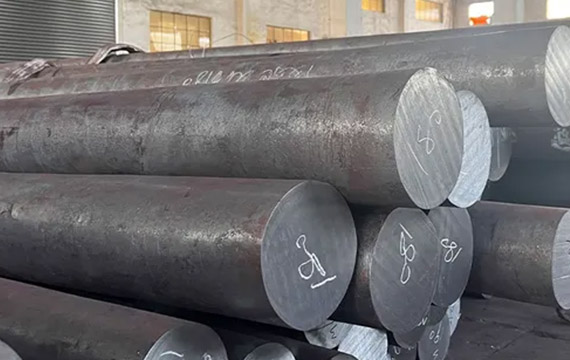
316 stainless steel is a molybdenum-containing austenitic stainless steel, which is considered the standard molybdenum-containing austenitic stainless steel and the second most important grade after 304 stainless steel. Due to its excellent performance, 316 stainless steel pipe is widely used in medical device manufacturing, pharmaceutical and food industry, chemical industry and other fields. It has good corrosion resistance, high strength, heat resistance, weldability, beauty and durability as well as environmental protection.
316L stainless steel is a lower carbon version of 316 stainless steel, which does not precipitate due to carbides at grain boundaries, i.e., it is not subject to sensitization.316L stainless steel is widely used in heat exchangers for equipment used in pulp and paper, dyeing equipment, film processing equipment, piping, materials used for the exteriors of buildings in coastal zones, and in high-grade watches.
Chemical composition
316
Carbon (C): ≤ 0.08%
Chromium (Cr): 16.00-18.00%
Nickel (Ni): 10.00-14.00%
Molybdenum (Mo): 2.00-3.00%
Manganese (Mn): ≤ 2.00%
Silicon (Si): ≤1.00
Phosphorus (P): ≤0.045
Sulphur (S): ≤0.03%
316L
Carbon (C): ≤0.030%
Chromium (Cr): 16.00-18.00%
Nickel (Ni): 12.00-15.00
Molybdenum (Mo): 2.00-3.00%
Manganese (Mn): ≤ 2.00%
Silicon (Si): ≤1.00
Phosphorus (P): ≤0.045
Sulfur (S): ≤0.03%
Comparison of 316 and 316L stainless steel
-
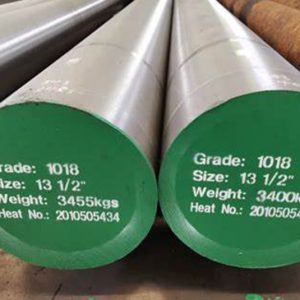 1018/1.0401 فولاذ كربوني 1018/1.0401
 -
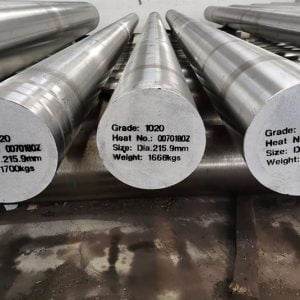 1020/1.0402/1.0402 فولاذ كربوني
 -
 فولاذ الأدوات H10/1.2365/1.2365
 -
 فولاذ الأدوات H11/1.2343/1.2343
 -
 فولاذ الأدوات O1/1.2510/1.2510
 -
 1.2842 فولاذ الأدوات 1.2842
 -
 فولاذ D3/1.2080 أدوات وقوالب D3/1.2080
 -
 H13/1.2344 H13/1.2344 فولاذ الأدوات والصلب
 -
 D2/1.2379 D2/1.2379 فولاذ الأدوات والقالب
Common Points
Corrosion Resistance: Both 316 and 316L stainless steels offer excellent corrosion resistance, especially in chloride-containing environments such as coastal areas or where snowmelt salts are used.
Machinability: Both stainless steels offer excellent machinability and formability typical of austenitic stainless steels.
Strength Properties: Both 316 and 316L stainless steels exhibit high creep, fracture stress and tensile strength at elevated temperatures.
WELDABILITY: Both materials have good welding properties and can be welded using all standard welding methods.
Difference
-Carbon Content: 316L has a much lower carbon content (0.03% maximum), while 316 has up to 0.08%. This eliminates the need to anneal 316L after welding and makes it more suitable for applications requiring maximum corrosion resistance.
-Corrosion Resistance: Due to its low carbon content, 316L has excellent resistance to intergranular corrosion in the welded condition and slightly better corrosion resistance than 316 stainless steel.
-Strength: 316 stainless steel typically exhibits higher strength and hardness than 316L. 316’s tensile strength ranges from 515 to 690 MPa, while 316L’s range is 485 to 630 MPa.
-Yield Strength: 316 has a yield strength of about 205 MPa, while 316L has a slightly lower yield strength of about 170 MPa.
-Machinability: Due to the higher carbon content of 316, its machinability is slightly better than that of 316L. However, 316L can also be machined efficiently by optimizing cutting tools and machining parameters.
Application Scenarios
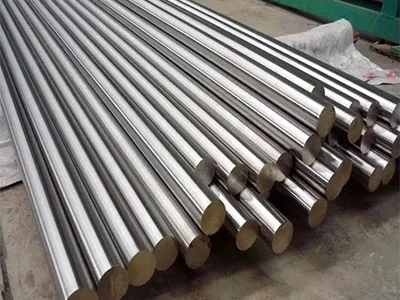
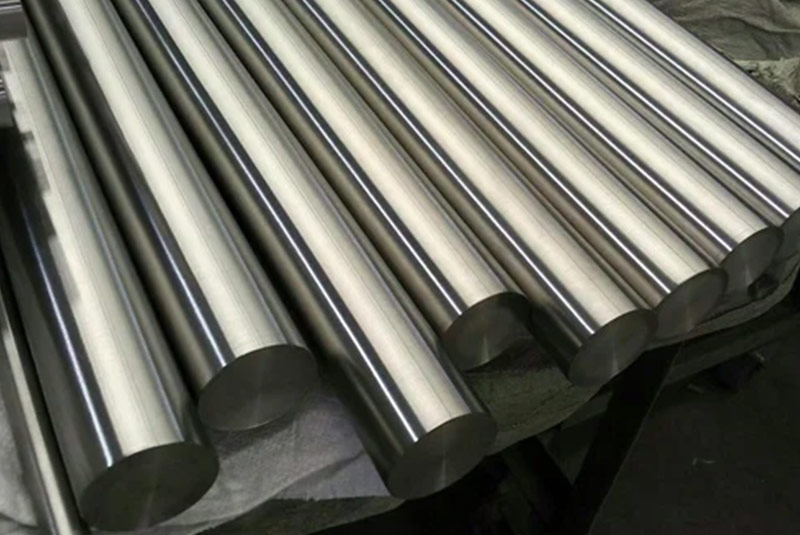
316 Stainless Steel: Used in marine environments, chemical processing, food processing equipment, medical implants and more.
316L Stainless Steel: More suitable for welding applications due to its low carbon content, commonly used in marine environments, chemical equipment, paper industry, etc.
How do I make a choice between the two steel grades?
The following factors should be considered when choosing between 316 and 316L stainless steel:
-Corrosion Resistance Requirements: 316L is the better choice if the application environment requires very high corrosion resistance.
-Welding requirements: 316L is more suitable for applications where welding is required and subsequent annealing is not possible.
-Cost considerations: 316L can be slightly more expensive due to its lower carbon content, and needs to be selected based on budget.
الخاتمة
316 and 316L stainless steels each have their advantages, and selection should be based on specific application needs, corrosion resistance requirements, and cost budgets. 316L performs better in some specific environments due to its low carbon content, while 316 is more advantageous for cost and general applications.
Frequently Asked Questions
-Which is more corrosion resistant, 316 or 316L?
316L has better corrosion resistance after welding due to its low carbon content.
-Can 316 and 316L be used interchangeably?
In most cases, but given the low carbon content of 316L, there are specific environments where 316L may be more suitable.
-Is there a big price difference between 316 and 316L?
Due to the low carbon content of 316L, the price may be slightly higher, but it is still subject to market conditions and supplier quotes.