Willkommen auf Mein Blog!
Bevor wir uns mit den Inhalten befassen, würde ich mich freuen, wenn Sie mich auf meinen Social-Media-Plattformen begleiten, wo ich weitere Erkenntnisse teile, mich mit der Community auseinandersetze und Updates poste. So können Sie mit mir in Kontakt treten:
Facebook:https://www.facebook.com/profile.php?id=100087990137347
LinkedIn:https://www.linkedin.com/company/89825762/admin/dashboard/
YouTube:www.youtube.com/@carbonsteelsupply-kj9lw
TikTok:www.tiktok.com/@carbonsteelsupply
Jetzt geht es los auf unsere gemeinsame Reise Ich hoffe, dass Sie die Inhalte hier aufschlussreich, ansprechend und wertvoll finden.
Inhaltsverzeichnis
Einführung

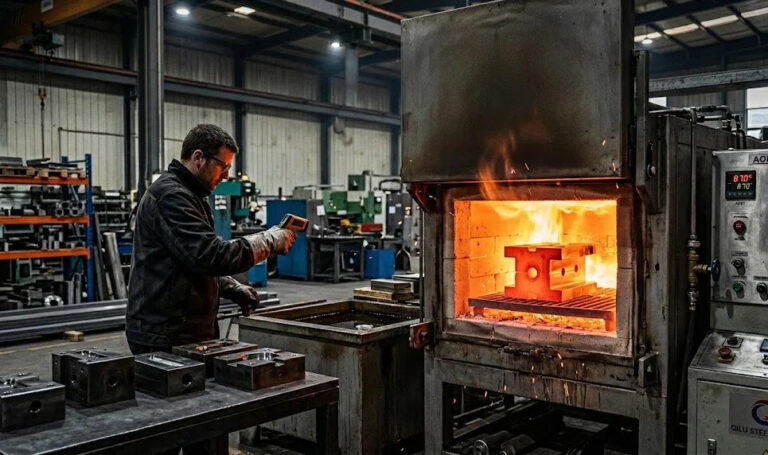
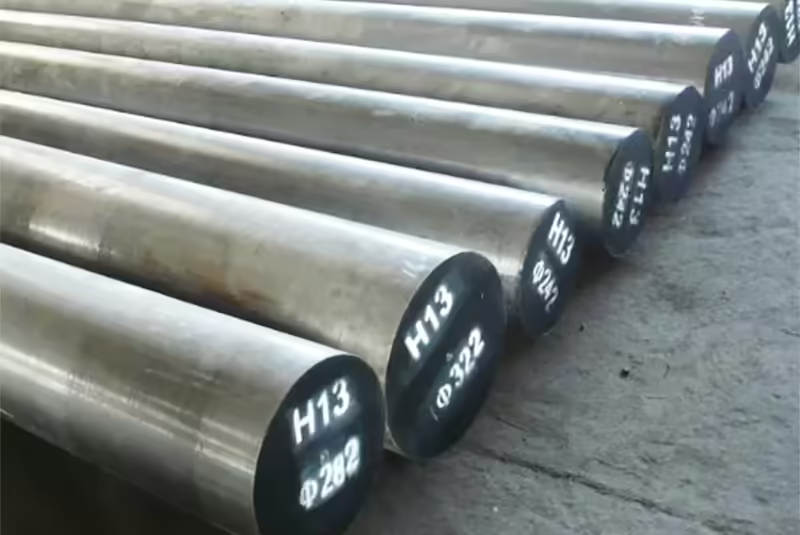
H13 tool steel composition plays a crucial role in determining its strength, durability, and wide range of industrial applications. As a hot-work tool steel, H13 is widely used in manufacturing processes that involve high temperatures, such as die-casting, forging, and plastic molding. Its unique composition, which includes elements like chromium, molybdenum, and vanadium, gives it exceptional hardness, heat resistance, and wear resistance.
In this comprehensive guide, we will explore the chemical makeup, properties, benefits, and various industrial applications of H13 tool steel, helping you understand why it is one of the most preferred materials in high-temperature tooling.
H13 Tool Steel Composition
What Makes Up H13 Tool Steel?
H13 tool steel is a hot-work steel known for its excellent hardness, wear resistance, and toughness. It has a unique composition that provides these properties, making it suitable for high-temperature applications. The typical composition of H13 tool steel includes:
- Carbon (C): 0.32–0.45%
- Chromium (Cr): 4.75–5.50%
- Molybdenum (Mo): 1.10–1.75%
- Vanadium (V): 0.80–1.20%
- Silicon (Si): 0.80–1.10%
- Manganese (Mn): 0.30–0.60%
- Phosphorus (P): ≤0.030%
- Sulfur (S): ≤0.030%
The combination of carbon, chromium, molybdenum, and vanadium makes H13 tool steel resistant to thermal fatigue, providing strength and durability in high-temperature environments.
Key Elements in H13 Tool Steel
- Chromium (Cr): Improves hardness and provides resistance to wear and corrosion.
- Molybdenum (Mo): Enhances strength at elevated temperatures and helps in improving hardness.
- Vanadium (V): Increases wear resistance and promotes fine grain structure.
- Carbon (C): Imparts hardness and wear resistance, crucial for tool steels.
The combination of these elements enables H13 tool steel to perform well under extreme conditions, providing both thermal stability and resistance to cracking.
Strength and Properties of H13 Tool Steel
High Heat Resistance
H13 tool steel composition is specifically designed to endure extreme temperatures while maintaining its mechanical properties. This makes it an ideal material for industries that involve prolonged exposure to heat, such as die-casting, forging, and extrusion. Unlike some tool steels that lose their hardness under high heat, H13 tool steel composition remains stable and resistant to thermal fatigue.
Its high heat resistance is attributed to key alloying elements such as chromium, molybdenum, and vanadium. These elements help H13 tool steel composition retain its toughness and strength even under intense heating and cooling cycles. This property is particularly beneficial for hot-working applications, where tools and dies are frequently exposed to high temperatures and mechanical stress.
Toughness and Durability
One of the most important characteristics of H13 tool steel composition is its outstanding toughness and durability. This tool steel is specifically engineered to withstand high mechanical loads, impact forces, and repeated stress without breaking or deforming. This makes it highly suitable for heavy-duty applications such as forging dies, stamping tools, and plastic molds.
The balanced composition of molybdenum and vanadium in H13 tool steel enhances its grain structure, providing excellent shock resistance. Furthermore, when properly heat-treated, H13 tool steel composition achieves a perfect balance between hardness and impact resistance, extending its service life and reducing the need for frequent replacements.
Wear and Corrosion Resistance
H13 tool steel composition is also known for its impressive wear and corrosion resistance, making it ideal for industrial tools and molds that experience constant friction and exposure to high temperatures. The presence of chromium and vanadium improves its resistance to wear and oxidation, ensuring a longer lifespan for components made from this material.
Although H13 tool steel composition is not classified as stainless steel, it still offers a reasonable level of corrosion resistance, particularly in high-temperature applications. Its ability to resist rust and oxidation makes it a reliable choice for die-casting molds, hot-work tools, and extrusion dies, which require prolonged exposure to harsh operating conditions.
Applications of H13 Tool Steel Composition


Die-Casting Molds
One of the most common applications of H13 tool steel composition is in the production of die-casting molds. These molds are used in metal casting processes where molten metals such as aluminum, zinc, and magnesium are injected under high pressure. Since die-casting molds are subjected to extreme heat and cooling cycles, they must be made from a material that resists thermal fatigue.
H13 tool steel composition is an excellent choice for die-casting molds because of its ability to maintain its structural integrity under high temperatures. Its wear resistance also prevents surface degradation, ensuring that the molds last longer and produce high-quality castings without defects.
Plastic Molding
The plastic molding industry relies on H13 tool steel composition for manufacturing injection molds. These molds must withstand high temperatures and repetitive cycles of material injection and cooling.
H13 tool steel composition offers the necessary thermal stability, ensuring that molds do not deform or degrade over time. Additionally, its wear resistance helps maintain the precision of the molds, leading to consistent production of high-quality plastic parts.
Forging Dies
Forging dies made from H13 tool steel composition provide outstanding performance in metal forming applications, where materials are subjected to extreme heat and pressure. The superior toughness and high-temperature strength of H13 tool steel make it an excellent choice for forging dies, as it resists cracking and deformation.
Due to its composition, H13 tool steel forging dies retain their structural integrity over long periods, reducing downtime and maintenance costs in forging operations. This is particularly important when working with high-strength metals like titanium, steel, and aluminum alloys.
Hot-Work Tools
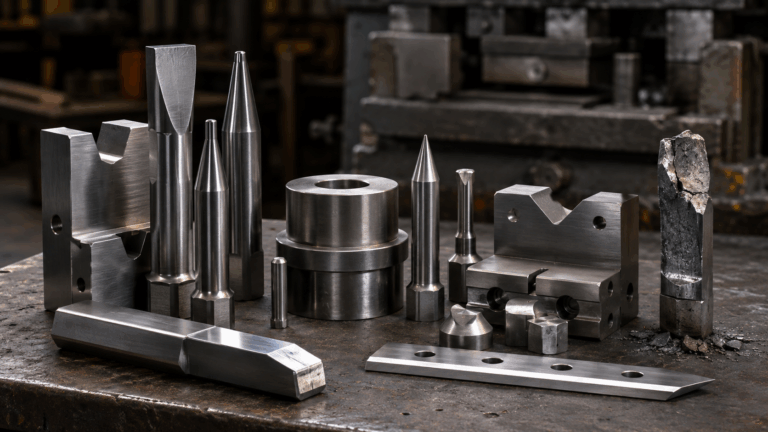
H13 tool steel composition is widely used in the manufacturing of hot-work tools such as punches, hot shear blades, and extrusion dies. These tools require excellent heat resistance and mechanical strength to function efficiently in high-temperature environments.
For example, extrusion dies made from H13 tool steel composition are commonly used in both metal and plastic extrusion processes. These dies must endure extreme heat and pressure while maintaining precision. The high wear resistance and thermal stability of H13 tool steel composition ensure long-lasting performance and reduced maintenance costs.
Applications of H13 Tool Steel
Die-Casting Molds
H13 tool steel is extensively used in die-casting molds because of its ability to withstand the extreme conditions of molten metal injection. In die-casting processes, molten metals such as aluminum, zinc, and magnesium are injected under high pressure into steel molds. These molds must endure rapid heating and cooling cycles while maintaining their shape and mechanical properties.
H13 tool steel is preferred for die-casting molds because it resists cracking caused by thermal fatigue, ensuring that the molds last longer and produce high-quality castings. Its wear resistance also minimizes surface degradation, reducing the need for frequent maintenance and replacement.
Plastic Molding
In the plastic molding industry, H13 tool steel is a popular material for manufacturing injection molds. These molds must maintain precision and durability while being exposed to high temperatures and constant cycles of material injection and cooling.
The combination of wear resistance, heat resistance, and toughness makes H13 tool steel an excellent choice for injection molds. It ensures that molds retain their shape over time, leading to consistent product quality and fewer defects in molded plastic parts. Additionally, its corrosion resistance helps protect the molds from degradation caused by chemical additives and high moisture levels often found in plastic processing environments.
Forging Dies
Forging dies made from H13 tool steel deliver outstanding performance in metal forming applications, where extreme heat and mechanical stress are present. Forging involves shaping metal by applying compressive forces, often at elevated temperatures, to achieve the desired form.
H13 tool steel is ideal for forging dies because it can withstand the repeated high-temperature cycles and pressure without significant deformation or wear. Its impact resistance ensures that the dies maintain their structural integrity, reducing the risk of cracking or failure during forging operations. Additionally, its toughness allows it to handle high loads, making it suitable for shaping metals such as steel, titanium, and aluminum alloys.
Hot-Work Tools
H13 tool steel is widely used in the manufacturing of various hot-work tools that operate in high-temperature environments. These tools include punches, extrusion dies, and hot shear blades, which require superior heat resistance and mechanical strength.
For example, extrusion dies made from H13 tool steel are used in metal and plastic extrusion processes, where materials are forced through a shaped opening to create continuous profiles. These dies must endure high friction, heat, and pressure while maintaining precision. H13 tool steel provides the necessary durability and resistance to thermal fatigue, ensuring consistent performance in demanding extrusion applications.
Applications of H13 Tool Steel
Die-Casting Molds
H13 tool steel is a popular choice for die-casting molds due to its resistance to thermal fatigue and wear. It can withstand the high temperatures and stresses of molten metal without losing its strength or performance.
Plastic Molding
In the plastic molding industry, H13 tool steel is used for injection molds, as it offers good machinability and resistance to heat. Its resistance to deformation and wear helps in producing high-quality molded parts.
Forging Dies
Forging dies made from H13 tool steel are known for their excellent wear resistance and thermal stability, making them ideal for high-impact, high-temperature applications in metal forming processes.
Hot-Work Tools
Hot-work tools, such as punches, dies, and extrusions, require materials that can withstand high temperatures without cracking or losing strength. H13 tool steel is the go-to material for these applications, as it offers high thermal stability and toughness.
Benefits of H13 Tool Steel

Superior Hardness at Elevated Temperatures
H13 tool steel remains hard even at high temperatures, making it ideal for industries like die-casting and forging where high temperatures are a constant concern. Its hardness ensures the longevity and reliability of tools used in extreme conditions.
Reduced Maintenance Costs
Thanks to its durability and resistance to wear, tools made from H13 tool steel have a longer lifespan compared to other materials. This reduces maintenance and replacement costs, providing better long-term value.
Versatile Performance
With its excellent combination of toughness, hardness, and resistance to heat, H13 tool steel is versatile and suitable for a wide range of applications across industries like automotive, aerospace, and manufacturing.
H13 Tool Steel vs. Other Tool Steels
| Eigentum | H13 Tool Steel | Other Tool Steels |
|---|---|---|
| Heat Resistance | Excellent | Varies (Generally lower) |
| Toughness | Hoch | Varies (Generally lower) |
| Wear Resistance | Excellent | Varies |
| Machinability | Good | Varies |
| Common Uses | Die-casting, forging, plastic molding | Varies by type of steel |
| Cost | Mäßig | Varies |
As shown in the table above, H13 tool steel stands out for its excellent heat resistance, toughness, and wear resistance, making it a preferred choice for demanding applications like die-casting molds and forging dies.
Schlussfolgerung
H13 tool steel is an outstanding material that offers high heat resistance, wear resistance, and toughness, making it an essential component in various industries such as die-casting, plastic molding, and forging. With its unique composition and ability to perform in high-temperature environments, H13 tool steel proves to be a reliable choice for tools and dies that need to endure extreme conditions. By understanding its composition and properties, you can make informed decisions when selecting the right material for your next project.
FAQ
What makes H13 tool steel ideal for die-casting molds?
H13 tool steel is known for its excellent heat resistance, toughness, and wear resistance, which are essential properties for die-casting molds that are exposed to high temperatures and molten metals.
Is H13 tool steel suitable for plastic molding?
Yes, H13 tool steel is highly suitable for plastic molding due to its resistance to heat and wear, making it ideal for creating high-quality injection molds that withstand the pressure and heat of plastic processing.
How does H13 tool steel compare to other hot-work steels?
H13 tool steel has superior heat resistance and toughness compared to other hot-work steels. It offers enhanced durability and wear resistance, making it the go-to choice for high-temperature applications like die-casting and forging.
Can H13 tool steel be machined easily?
Yes, H13 tool steel has good machinability, making it relatively easy to machine into the desired shapes for tooling and dies, although proper cutting tools and techniques should be used to maintain the material’s properties.
What are the main industries that use H13 tool steel?
H13 tool steel is widely used in industries such as automotive manufacturing, aerospace, die-casting, plastic molding, and forging, due to its high strength, toughness, and resistance to heat and wear.