Willkommen auf Mein Blog!
Bevor wir uns mit den Inhalten befassen, würde ich mich freuen, wenn Sie mich auf meinen Social-Media-Plattformen begleiten, wo ich weitere Erkenntnisse teile, mich mit der Community auseinandersetze und Updates poste. So können Sie mit mir in Kontakt treten:
Facebook:https://www.facebook.com/profile.php?id=100087990137347
LinkedIn:https://www.linkedin.com/company/89825762/admin/dashboard/
YouTube:www.youtube.com/@carbonsteelsupply-kj9lw
TikTok:www.tiktok.com/@carbonsteelsupply
Jetzt geht es los auf unsere gemeinsame Reise Ich hoffe, dass Sie die Inhalte hier aufschlussreich, ansprechend und wertvoll finden.
Inhaltsverzeichnis
Einführung
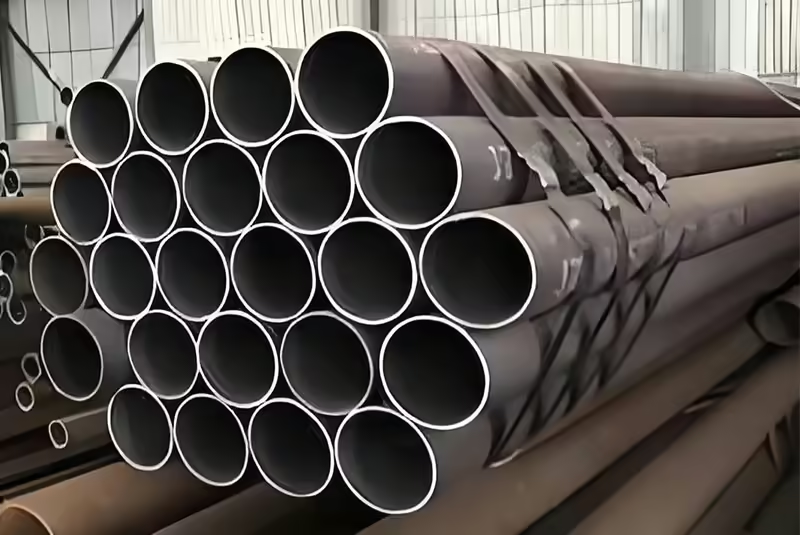
Alloy forged components are integral to numerous industries, from aerospace and automotive to oil and gas. They offer superior strength, durability, and reliability compared to components manufactured through other processes like casting or machining. This blog post delves into the numerous benefits of using alloy forged parts, exploring their manufacturing process, advantages, applications, and frequently asked questions. We aim to provide a comprehensive understanding of why alloy forging is often the preferred choice for critical applications. The process of alloy forging involves shaping metal using compressive forces, typically applied by a hammer or press. This process refines the grain structure of the metal, resulting in enhanced mechanical properties.
What is Alloy Forging? The Alloy Forged Process Explained
Alloy forging is a manufacturing process where metal is shaped through compressive forces. Unlike casting, which involves pouring molten metal into a mold, forging works with solid metal. The process usually involves heating the alloy to a high temperature to increase its plasticity, making it easier to deform under pressure. The metal is then shaped using a hammer, press, or other forging machinery. This process can be done at various temperatures, including hot forging, warm forging, and cold forging, depending on the specific alloy and desired properties. The result is a component with improved grain flow and structural integrity. This refined grain structure is a key factor in the superior mechanical properties of alloy forged parts.
Superior Mechanical Properties of Alloy Forged Teile
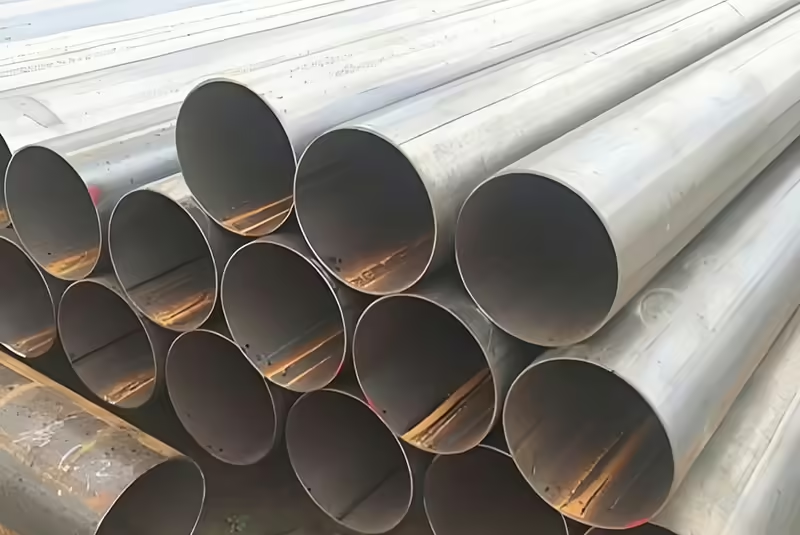
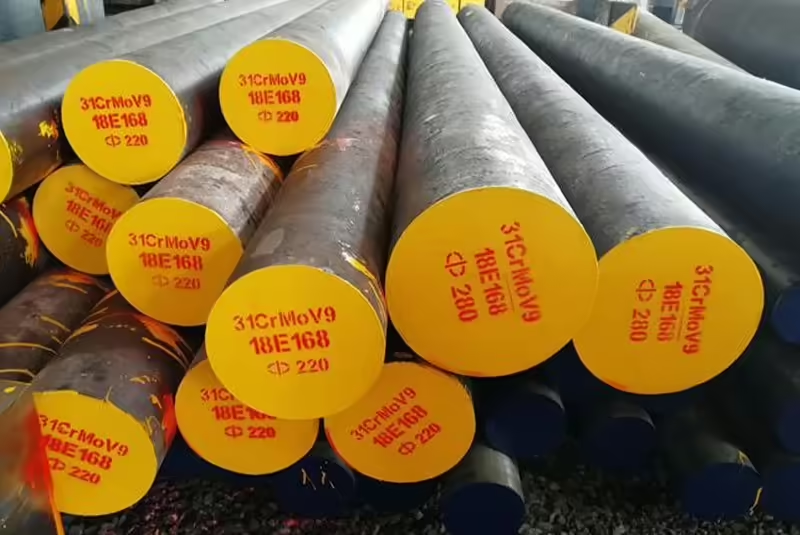
One of the most significant benefits of alloy forged components is their superior mechanical properties. The forging process refines the grain structure of the metal, eliminating internal voids and porosity often found in castings. This results in:
- Increased Strength: Alloy forged parts exhibit higher tensile and yield strength compared to cast or machined parts.
- Improved Ductility and Toughness: The refined grain structure enhances the metal’s ability to deform without fracturing, making it more resistant to impact and fatigue.
- Enhanced Fatigue Resistance: The continuous grain flow achieved through forging improves the component’s ability to withstand repeated stress cycles.
- Greater Reliability: The consistent and predictable mechanical properties of alloy forged components contribute to their overall reliability in demanding applications.
Cost-Effectiveness and Efficiency of Alloy Forging
While the initial tooling costs for forging can be higher than other manufacturing processes, alloy forging offers long-term cost-effectiveness and efficiency. This is due to several factors:
- Reduced Material Waste: Forging utilizes the material more efficiently compared to machining, which can generate significant scrap.
- Near-Net Shape Forming: Forging can produce components close to their final shape, minimizing the need for extensive machining.
- Longer Service Life: The superior durability and reliability of alloy forged parts translate to a longer service life, reducing replacement costs.
- High Volume Production: Forging is well-suited for high-volume production, leading to economies of scale.
Applications of Alloy Forged Components Across Industries
Alloy forged components find widespread application in various industries due to their exceptional properties:
- Aerospace: Landing gear, engine components, structural parts. High strength-to-weight ratio and fatigue resistance are crucial.
- Automotive: Connecting rods, crankshafts, gears. Strength and durability are essential for engine and drivetrain components.
- Oil and Gas: Valves, fittings, pipelines. Resistance to high pressure, temperature, and corrosive environments is necessary.
- Construction and Mining: Heavy machinery components, tools. Strength and toughness are critical for withstanding heavy loads and harsh conditions.
- Industrial Equipment: Gears, shafts, bearings. Reliability and long service life are essential for continuous operation.
Alloy Forged Materials and Their Specific Advantages
The selection of the appropriate alloy is crucial for achieving the desired performance characteristics. Some common alloy forged materials include:
- Steel Alloys: Offer high strength, toughness, and wear resistance. Widely used in automotive and industrial applications.
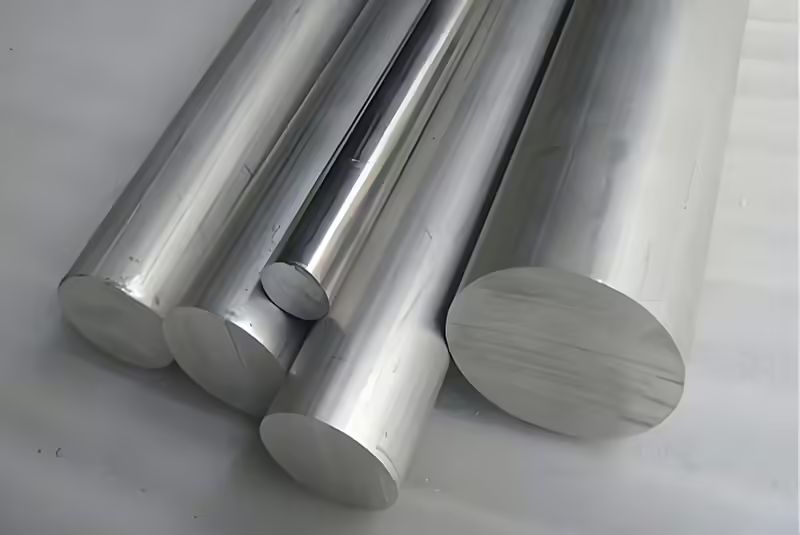
- Aluminum Alloys: Provide a high strength-to-weight ratio, making them suitable for aerospace and transportation applications.
- Titanium Alloys: Offer excellent strength, corrosion resistance, and biocompatibility. Used in aerospace, medical, and other high-performance applications.
- Nickel Alloys: Exhibit exceptional corrosion and heat resistance. Used in demanding environments like aerospace and chemical processing.
The following table presents a comparison of common alloy forged materials based on key properties:
| Alloy Forged Material | Strength | Toughness | Korrosionsbeständigkeit | Typische Anwendungen |
|---|---|---|---|---|
| Steel Alloys (e.g., 4140, 4340) | Hoch | Hoch | Mäßig | Automotive components, gears, shafts |
| Aluminum Alloys (e.g., 6061, 7075) | Moderate to High | Mäßig | Good | Aerospace components, automotive parts, structural components |
| Titanium Alloys (e.g., Ti-6Al-4V) | Very High | Hoch | Excellent | Aerospace components, medical implants, sporting goods |
| Nickel Alloys (e.g., Inconel, Hastelloy) | Hoch | Hoch | Excellent | Aerospace components, chemical processing equipment, high-temperature applications |
Design Considerations for Alloy Forged Components
Proper design is crucial for maximizing the benefits of alloy forging. Key design considerations include:
- Grain Flow: Designing the component to align the grain flow with the direction of principal stress enhances its strength and fatigue resistance.
- Draft Angles: Incorporating draft angles in the design facilitates the removal of the forged part from the die.
- Fillets and Radii: Sharp corners should be avoided as they can create stress concentrations. Fillets and radii should be used to distribute stress more evenly.
- Tolerances: Specifying appropriate tolerances ensures proper fit and function of the forged component.
Quality Control and Inspection of Alloy Forged Products
Rigorous quality control and inspection procedures are essential for ensuring the integrity and reliability of alloy forged products. Common inspection methods include:
- Visual Inspection: Checking for surface defects such as cracks, laps, and scale.
- Dimensional Inspection: Verifying that the forged part meets the specified dimensions and tolerances.
- Non-Destructive Testing (NDT): Techniques such as ultrasonic testing, magnetic particle inspection, and dye penetrant inspection are used to detect internal flaws without damaging the part.
- Mechanical Testing: Testing the mechanical properties of the forged material, such as tensile strength, yield strength, and impact toughness.
Maintaining and Extending the Life of Alloy Forged Components
Proper maintenance can significantly extend the service life of alloy forged components. This includes:
- Regular Inspection: Periodic inspection for signs of wear, corrosion, or damage.
- Lubrication: Proper lubrication to reduce friction and wear.
- Corrosion Protection: Applying protective coatings or treatments to prevent corrosion.
- Proper Handling and Storage: Handling and storing forged components carefully to avoid damage.
Schlussfolgerung
In conclusion, alloy forging offers numerous advantages over other manufacturing processes, making it the preferred choice for critical applications across various industries. The superior mechanical properties, cost-effectiveness, and versatility of alloy forged components contribute to their widespread use in demanding environments. From aerospace and automotive to oil and gas, alloy forging plays a crucial role in ensuring the performance, reliability, and safety of countless products and systems. The refined grain structure created through the alloy forged process provides tangible benefits that contribute to the overall quality and lifespan of the components.
FAQ
What is the difference between forging and casting?
Forging involves shaping solid metal using compressive forces, while casting involves pouring molten metal into a mold.
What are some common applications of alloy forged components?
Alloy forged components are used in aerospace, automotive, oil and gas, construction, and industrial equipment.
Is alloy forging more expensive than other manufacturing processes?
While the initial tooling costs can be higher, alloy forging can be more cost-effective in the long run due to reduced material waste, longer service life, and high-volume production capabilities.
How does the alloy forged process improve material properties?
The alloy forged process refines the grain structure of the metal, eliminating internal voids and porosity, resulting in improved mechanical properties.