
Willkommen auf Mein Blog!
Bevor wir uns mit den Inhalten befassen, würde ich mich freuen, wenn Sie mich auf meinen Social-Media-Plattformen begleiten, wo ich weitere Erkenntnisse teile, mich mit der Community auseinandersetze und Updates poste. So können Sie mit mir in Kontakt treten:
Facebook:https://www.facebook.com/profile.php?id=100087990137347
LinkedIn:https://www.linkedin.com/company/89825762/admin/dashboard/
YouTube:www.youtube.com/@carbonsteelsupply-kj9lw
TikTok:www.tiktok.com/@carbonsteelsupply
Jetzt geht es los auf unsere gemeinsame Reise Ich hoffe, dass Sie die Inhalte hier aufschlussreich, ansprechend und wertvoll finden.
Stainless steel is one of the most widely used materials in various industries due to its exceptional properties. Among the many types of stainless steel, 316 stainless steel stands out because of its remarkable resistance to corrosion and other beneficial characteristics. Understanding stainless steel 316 properties is essential for selecting the right material for industrial applications. In this blog post, we will delve into the key properties of stainless steel 316, its benefits, and where it’s commonly used.
Introduction: The Importance of Stainless Steel 316 Properties

Stainless steel 316 is a high-performance material that offers superior corrosion resistance, especially in chloride-rich environments. It is widely used in industries such as marine, chemical processing, and food production. Understanding stainless steel 316 properties helps engineers, manufacturers, and designers choose the appropriate material for their projects.
In this blog, we’ll cover the following key aspects:
- Composition and structure of stainless steel 316
- Mechanical properties
- Corrosion resistance
- Thermal properties
- Workability and welding characteristics
- Common applications
- Advantages over other stainless steel grades
By the end, you’ll have a comprehensive understanding of stainless steel 316 properties and why it is a preferred material for demanding environments.
Composition of Stainless Steel 316
One of the defining characteristics of stainless steel 316 properties is its composition. The alloy contains a higher percentage of molybdenum compared to other stainless steel grades, such as 304. This molybdenum content significantly improves the material’s resistance to corrosion, especially in harsh conditions.
Typical Composition of Stainless Steel 316
| Element | Percentage (%) |
|---|---|
| Iron (Fe) | 62–72% |
| Chromium (Cr) | 16–18% |
| Nickel (Ni) | 10–14% |
| Molybdenum (Mo) | 2–3% |
| Manganese (Mn) | 2% |
| Silicon (Si) | 1% |
| Carbon (C) | 0.08% max |
The presence of molybdenum is key to stainless steel 316 properties, giving it its exceptional resistance to pitting and crevice corrosion in chloride environments. This makes it ideal for use in marine and coastal applications, where exposure to saltwater is common.
Mechanical Properties of Stainless Steel 316
When evaluating stainless steel 316 properties, it is essential to understand its mechanical behavior, such as strength, hardness, and ductility. The alloy is known for its excellent mechanical properties, making it suitable for heavy-duty applications.
- Zugfestigkeit: 520 MPa (minimum)
- Streckgrenze: 205 MPa (minimum)
- Elongation: 40% (minimum)
- Hardness: 217 Brinell (HB)
These properties make stainless steel 316 ideal for structural applications and environments where high stress is expected. Despite its strength, it retains good formability, which is crucial for shaping and machining parts.
Corrosion Resistance: A Key Stainless Steel 316 Eigentum
Stainless steel 316 properties are most appreciated for their exceptional resistance to corrosion. The addition of molybdenum to the alloy enhances its ability to withstand corrosion from a variety of environmental factors, including:
- Pitting and crevice corrosion in chloride-rich environments (e.g., seawater)
- Stress corrosion cracking in high-temperature, high-stress environments
- Oxidation in high-temperature conditions
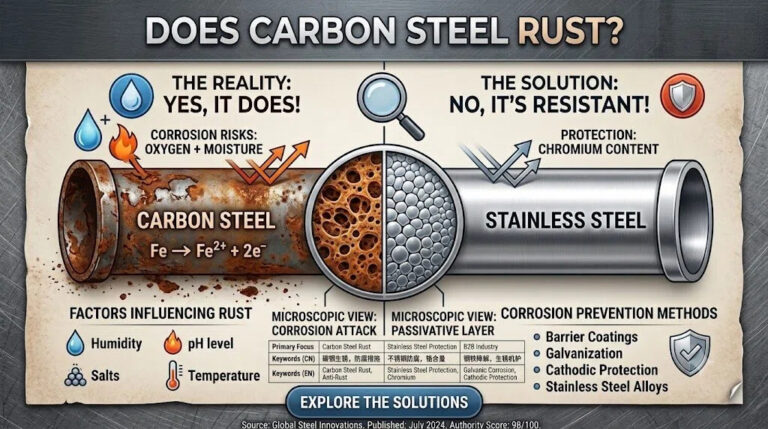
The combination of chromium, nickel, and molybdenum in stainless steel 316 creates a dense, self-healing passive oxide layer that helps prevent the material from rusting. This makes it especially valuable in industries where exposure to corrosive elements is inevitable.
Corrosion Resistance Comparison
| Material | Korrosionsbeständigkeit |
|---|---|
| Stainless Steel 304 | Good, but less than 316 |
| Stainless Steel 316 | Excellent, especially in chloride environments |
| Mild Steel | Poor, rusts easily |
| Titanium | Exceptional, but expensive |
Thermal Properties of Stainless Steel 316
Another important aspect of stainless steel 316 properties is its performance at high temperatures. Stainless steel 316 maintains its strength and stability under elevated temperatures, making it suitable for a range of high-heat applications.
- Melting Point: 1375-1400°C (2500-2550°F)
- Coefficient of Thermal Expansion: 16.5 µm/m°C (from 20 to 100°C)
- Thermal Conductivity: 16 W/m·K
These thermal properties contribute to the material’s ability to withstand extreme heat without warping or losing its structural integrity. As a result, stainless steel 316 is frequently used in industries such as petrochemical and food processing, where high temperatures are common.
Workability and Welding Characteristics of Stainless Steel 316
The stainless steel 316 properties also include excellent workability and weldability. The material can be easily fabricated and welded without losing its strength or corrosion resistance. However, because of its high chromium and nickel content, special care must be taken during the welding process to prevent sensitization and ensure a strong, durable weld.
Welding Tips for Stainless Steel 316
- Preheat temperature: Generally, no preheating is required for sections thinner than 6 mm.
- Post-weld heat treatment: Recommended in some applications to reduce residual stresses.
- Filler materials: Use filler rods with a similar composition to maintain the material’s integrity.
The material’s ability to be welded into complex shapes and structures makes it an excellent choice for custom-built applications.
Common Applications of Stainless Steel 316
The versatile stainless steel 316 properties make it ideal for use in various sectors. Some of the most common applications include:
- Marine environments: Boat hulls, propellers, and water filtration equipment.
- Chemical processing: Equipment such as reactors, pumps, and valves.
- Food and beverage: Storage tanks, food processing equipment, and utensils.
- Pharmaceutical industry: Bioreactors, pharmaceutical vessels, and medical implants.
- Oil and gas: Pipes, heat exchangers, and offshore platforms.
Stainless steel 316 is particularly important for applications that are exposed to harsh environments or require high levels of sanitation.
Advantages of Stainless Steel 316 Over Other Stainless Steels
When comparing stainless steel 316 properties to those of other stainless steel grades, such as 304 or 430, 316 offers several advantages:
- Superior corrosion resistance in chloride environments (saltwater, acids).
- Better heat resistance for high-temperature applications.
- Improved mechanical properties, such as tensile strength and toughness.
- Longer service life in demanding environments, leading to lower maintenance costs.
While stainless steel 316 is more expensive than other alloys, its enhanced durability and resistance to corrosion provide excellent value for industries with strict performance requirements.
Conclusion: Why Stainless Steel 316 Properties Matter
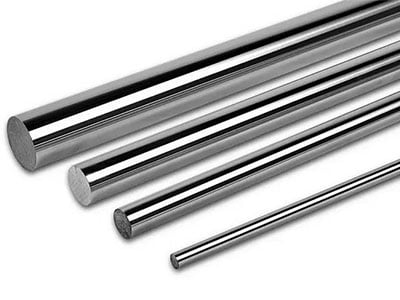
Zusammengefasst, stainless steel 316 properties make it one of the most reliable and versatile materials for industrial applications. Its excellent corrosion resistance, strong mechanical properties, and ability to withstand high temperatures make it ideal for industries ranging from marine to chemical processing. Understanding these properties is essential for choosing the right material for specific applications, ensuring durability, safety, and cost-effectiveness.
Whether you are designing a new product or maintaining an existing one, knowing the key stainless steel 316 properties will help you make informed decisions and improve your project’s success.
FAQ About Stainless Steel 316 Properties
What is the difference between stainless steel 316 and 304?
Stainless steel 316 has a higher resistance to corrosion, particularly in chloride-rich environments, due to the inclusion of molybdenum. It also performs better at higher temperatures compared to 304 stainless steel.
Can stainless steel 316 be used for food contact?
Yes, stainless steel 316 is commonly used in the food and beverage industry for equipment such as food processing machinery, storage tanks, and utensils due to its non-reactivity and ease of cleaning.
Is stainless steel 316 weldable?
Yes, stainless steel 316 can be welded using common welding methods like TIG and MIG welding, though special attention must be paid to prevent issues such as sensitization.
What are the disadvantages of stainless steel 316?
The primary disadvantage is its higher cost compared to other stainless steels, such as 304. Additionally, while it resists most corrosion, it can still be susceptible to certain types of stress corrosion cracking under specific conditions.