Willkommen auf Mein Blog!
Bevor wir uns mit den Inhalten befassen, würde ich mich freuen, wenn Sie mich auf meinen Social-Media-Plattformen begleiten, wo ich weitere Erkenntnisse teile, mich mit der Community auseinandersetze und Updates poste. So können Sie mit mir in Kontakt treten:
Facebook:https://www.facebook.com/profile.php?id=100087990137347
LinkedIn:https://www.linkedin.com/company/89825762/admin/dashboard/
YouTube:www.youtube.com/@carbonsteelsupply-kj9lw
TikTok:www.tiktok.com/@carbonsteelsupply
Jetzt geht es los auf unsere gemeinsame Reise Ich hoffe, dass Sie die Inhalte hier aufschlussreich, ansprechend und wertvoll finden.
When it comes to strength, durability, and versatility, few materials can compete with 4140 alloy steel tube. This high-performance steel alloy is widely used in a variety of industries, ranging from manufacturing to automotive, aerospace, and heavy equipment. The unique combination of chromium and molybdenum in the 4140 steel gives it superior hardness, tensile strength, and wear resistance, making it ideal for demanding applications.
In this blog, we will explore the benefits of 4140 alloy steel tube, its properties, applications, and how to maximize its strength. Whether you are considering it for structural components, machinery parts, or tools, understanding how to fully leverage the advantages of this material is essential to getting the best results.
Inhaltsverzeichnis
- Introduction: What is 4140 Alloy Steel Tube?
- Properties of 4140 Alloy Steel Tube
- Mechanical Properties
- Chemische Zusammensetzung
- Applications of 4140 Alloy Steel Tube
- Autoindustrie
- Aerospace and Aviation
- How to Maximize the Strength of 4140 Alloy Steel Tube
- Wärmebehandlung
- Processing Techniques
- Comparison with Other Alloy Steel Tubes
- 4140 vs. 4130 Steel Tube
- 4140 vs. 4340 Steel Tube
- Conclusion: Maximizing the Utility of 4140 Alloy Steel Tube
- FAQ: Common Questions About 4140 Alloy Steel Tube
Introduction: What is 4140 Alloy Steel Tube?
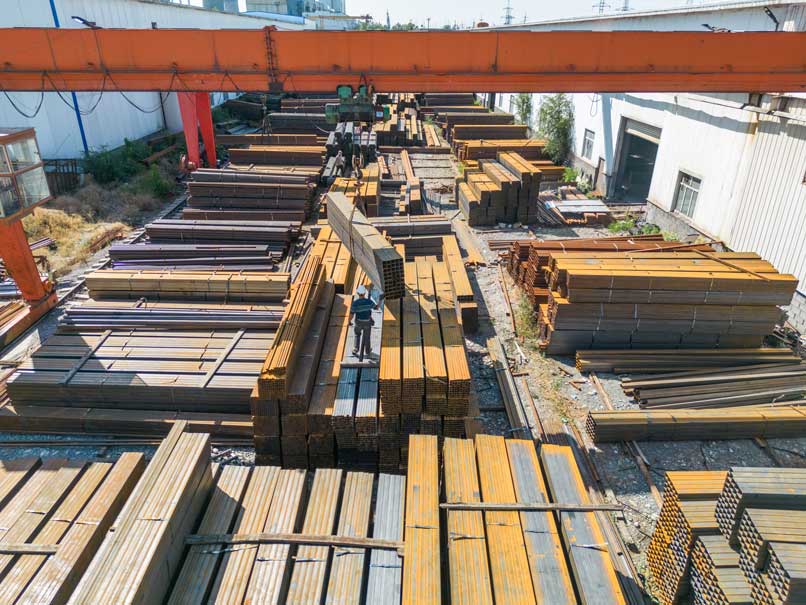
4140 alloy steel tube is a medium-carbon, chromium-molybdenum steel known for its excellent combination of strength, hardness, and toughness. This alloy steel is commonly used in industries that require high-strength, durable components capable of withstanding heavy stress and wear. It is typically used in the form of tubes or pipes for manufacturing machine parts, structural components, and tools.
The alloy’s primary components, chromium (Cr) and molybdenum (Mo), enhance its overall performance by improving its hardenability, corrosion resistance, and ability to withstand high temperatures.
In this section, we’ll explore what makes 4140 alloy steel tube such a popular material choice in industrial applications.
Properties of 4140 Alloy Steel Tube
Understanding the unique properties of 4140 alloy steel tube is essential when considering its application. Let’s dive into the key mechanical and chemical properties that make this material so powerful.
Mechanical Properties
One of the standout features of 4140 alloy steel is its mechanical properties. These properties give it the strength and durability required for demanding applications. Here are the primary mechanical properties of 4140 alloy steel tube:
| Eigentum | Value |
|---|---|
| Zugfestigkeit | 655 – 725 MPa |
| Streckgrenze | 415 – 485 MPa |
| Hardness (Rockwell C) | 28 – 32 HRC |
| Elongation (in 8 inches) | 16 – 18% |
| Modulus of Elasticity | 210 GPa |
| Fatigue Strength | 345 MPa |
The combination of high tensile strength, yield strength, and hardness allows 4140 alloy steel tube to perform well under extreme loads and conditions. This is why it is often used in heavy machinery, automotive components, and structural applications.
Chemische Zusammensetzung
The chemical composition of 4140 alloy steel tube significantly contributes to its mechanical properties. Here is the typical composition:
- Carbon (C): 0.38% – 0.43%
- Chromium (Cr): 0.80% – 1.10%
- Molybdenum (Mo): 0.15% – 0.25%
- Manganese (Mn): 0.60% – 0.90%
- Silicon (Si): 0.20% – 0.35%
- Sulfur (S): 0.040% max
- Phosphorus (P): 0.035% max
The high percentage of chromium and molybdenum gives the material its toughness, while the moderate carbon content ensures that the steel is still tough yet malleable enough for machining.
Anwendungen von 4140 Alloy Steel Tube
The versatility of 4140 alloy steel tube makes it suitable for a wide range of industries. Let’s look at some of the most common applications.
Autoindustrie
In the automotive industry, 4140 alloy steel tubes are used in the manufacturing of parts that require a combination of high strength and durability. These include:
- Axles and shafts: These components must withstand high torque and stress, which 4140 steel can handle.
- Suspension components: The alloy’s toughness ensures that suspension systems can absorb impacts and vibrations without breaking down.
- Komponenten des Motors: Crankshafts and other engine parts are often made from 4140 steel because of its resistance to wear and high heat.
Aerospace and Aviation
4140 alloy steel tubes also play a significant role in aerospace and aviation. Components in these industries must be both lightweight and strong to ensure performance and safety. 4140 alloy steel tube is used in:
- Landing gears and structural supports: The material’s high strength-to-weight ratio makes it ideal for critical aerospace applications.
- Engine mounts: These parts need to withstand vibrations, heavy loads, and extreme temperatures, which 4140 steel can endure.
How to Maximize the Strength of 4140 Alloy Steel Tube
Maximizing the strength of 4140 alloy steel tube involves a combination of processing techniques and heat treatments that enhance its properties even further. Let’s discuss how to maximize its strength.
Wärmebehandlung
Heat treatment is one of the most effective ways to increase the strength of 4140 alloy steel. The material can be hardened and tempered to achieve a range of mechanical properties, from high hardness to improved toughness. Common heat treatments include:
- Annealing: Heating the steel to a specific temperature and then cooling it slowly to reduce hardness and improve machinability.
- Quenching and Tempering: Rapidly cooling the steel after heating and then reheating it to a lower temperature to improve strength and toughness.
- Normalizing: Heating the steel to a higher temperature and air cooling to refine its grain structure, improving overall toughness and strength.
Processing Techniques
In addition to heat treatment, various processing techniques can further enhance the properties of 4140 alloy steel tube. These techniques include:
- Cold working: Cold working processes such as rolling or drawing can increase the material’s strength through strain hardening.
- Surface hardening: Processes like carburizing or nitriding can increase the surface hardness of 4140 steel without affecting its core properties.
Comparison with Other Alloy Steel Tubes

While 4140 alloy steel tube is a popular choice for many applications, it’s worth comparing it to other alloy steels to understand its unique advantages.
4140 vs. 4130 Steel Tube
4140 steel offers higher tensile strength and better wear resistance compared to 4130 steel, making it suitable for more demanding applications. However, 4130 steel is more malleable, which may be beneficial for certain manufacturing processes.
4140 vs. 4340 Steel Tube
4340 steel has higher nickel content, giving it better toughness and fatigue resistance compared to 4140. However, 4140 is generally less expensive and easier to machine, making it a more cost-effective choice for many applications.
Conclusion: Maximizing the Utility of 4140 Alloy Steel Tube
4140 alloy steel tube is an exceptional material known for its high strength, durability, and versatility. Its unique combination of chromium and molybdenum gives it outstanding toughness, wear resistance, and the ability to withstand high stress. By understanding its properties and applying the right processing techniques, you can maximize the utility of 4140 alloy steel tube in a wide range of applications.
Whether you’re in the automotive, aerospace, or manufacturing industries, choosing 4140 alloy steel tube for your critical components ensures reliability and longevity.
FAQ: Common Questions About 4140 Alloy Steel Tube
What is the main advantage of 4140 alloy steel tube over other materials?
The main advantage of 4140 alloy steel tube is its excellent combination of high strength, wear resistance, and toughness. It is ideal for high-stress applications that require durable, long-lasting materials.
Can 4140 alloy steel tube be used in the automotive industry?
Yes, 4140 alloy steel tube is widely used in the automotive industry, particularly for parts that need high strength and durability, such as axles, suspension components, and engine parts.
What are the best heat treatment methods for 4140 alloy steel tube?
Quenching and tempering are two of the best heat treatment methods for 4140 alloy steel tube, as they enhance its hardness and toughness. Normalizing is also effective for improving its overall strength.
How does 4140 alloy steel compare to 4130 or 4340 steel?
While 4130 is more malleable and 4340 offers superior toughness, 4140 is a more cost-effective option with better wear resistance and tensile strength for many applications.
Is 4140 alloy steel tube suitable for aerospace applications?
Yes, 4140 alloy steel tube is often used in aerospace applications, particularly for components like landing gears and engine mounts, due to its high strength-to-weight ratio and durability.