For procurement managers and structural engineers in the global construction market, the Q235B steel lifespan is a decisive factor in project budgeting and long-term asset safety. As the most widely used carbon structural steel in China’s export market, Q235B offers a unique balance of cost and weldability. However, its longevity is not a static number; it is a variable influenced by atmospheric conditions, surface treatments, and mechanical stress.
Generally, the Q235B steel lifespan can range from 1 year in harsh marine environments to over 50 years in dry, indoor settings. To maximize your investment, you must understand the science behind its degradation and the protection methods that defy the natural rust cycle.
Inhaltsverzeichnis
Understanding the Baseline Q235B Steel Lifespan
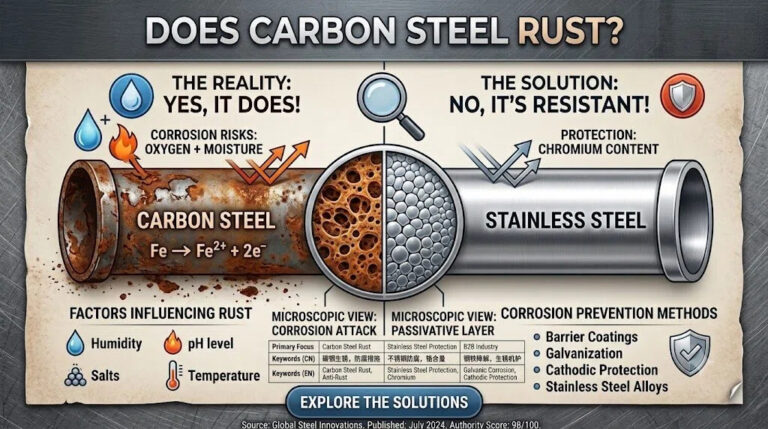
At its core, Q235B is a low-carbon steel. Without protective coatings, the Q235B steel lifespan is dictated by its rate of oxidation. According to the World Steel Association, carbon steel lacks the passive chromium layer found in stainless steel, making it susceptible to uniform corrosion when exposed to moisture and oxygen.
In a controlled, low-humidity indoor environment (classified as C1 by ISO 9223), the Q235B steel lifespan is virtually indefinite, often exceeding half a century without structural compromise. However, industrial reality is rarely “controlled.” Once placed outdoors, the clock starts ticking based on the localized corrosion rate.
Environmental Factors: Marine vs. Industrial Settings
One of the most frequent questions we receive is: How long does Q235B steel last outdoors? The answer depends heavily on the “Corrosivity Category.”
The Q235B steel service life in marine environments (C5-M category) is notoriously short if the steel is left bare. High salt concentrations in the air act as an electrolyte, accelerating the electrochemical reaction that turns iron into iron oxide (rust). In these coastal zones, untreated Q235B can show signs of pitting and structural thinning in less than 24 months.
In contrast, in standard urban or industrial areas (C3 category), the Q235B steel lifespan for bare steel might stretch to 5–10 years before significant section loss occurs. For a deeper look at the specific physical and chemical data of this grade, you can refer to our detailed analysis of Q235B Steel Properties & Applications.
The Science of Q235B Corrosion Resistance
Technically speaking, the Q235B corrosion resistance is relatively low compared to weathering steels like Corten or alloyed grades. Because Q235B contains minimal amounts of alloying elements like Copper or Nickel, it cannot form a dense, protective “patina.”
Instead, the rust layer on Q235B is porous. This allows moisture to penetrate deeper into the metal, continuing the degradation process until the structural integrity is lost. This is why engineers rarely use “raw” Q235B for permanent outdoor structures. Instead, they focus on surface barriers to artificially extend the Q235B steel lifespan.
Galvanized Q235B Durability: Extending Life by Decades
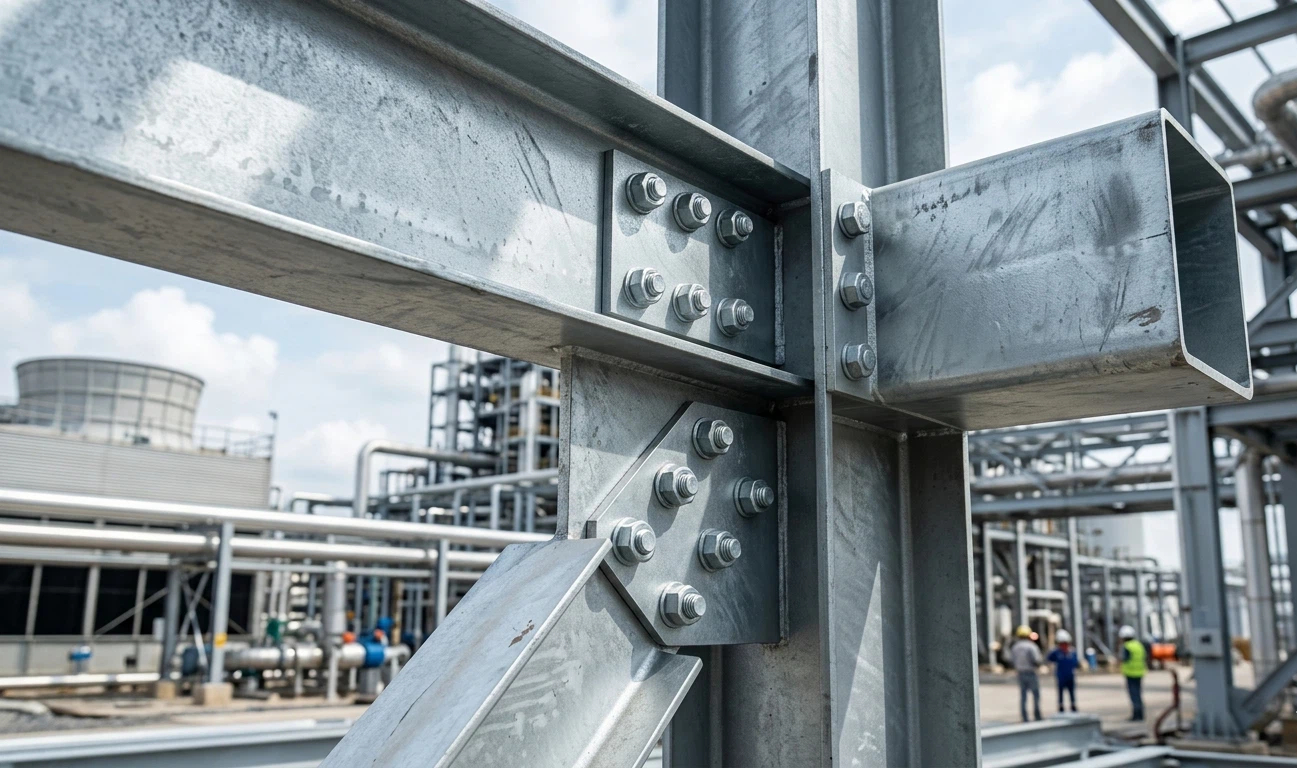
To combat the limitations of the material, Hot-Dip Galvanizing (HDG) is the industry standard. Galvanized Q235B durability is significantly higher because the zinc coating provides both a physical barrier and cathodic protection.
According to ASTM A123 standards (Source: American Galvanizers Association), a standard zinc coating can protect carbon steel for:
- 50+ years in rural environments.
- 20-30 years in moderate industrial settings.
By applying HDG, the Q235B steel lifespan is no longer a concern for at least two decades, making it a highly cost-effective choice for solar mounting systems, bridge components, and warehouse frames.
Technical Constraints and Q235B Limitations
While this grade is versatile, it is not a “magic bullet” for every engineering challenge. It is crucial to recognize the Q235B Limitations and Technical Constraints
before finalizing your design. For example, its lower yield strength compared to Q355B means it requires thicker sections for high-load applications, which can indirectly affect the Q235B steel lifespan if excessive weight leads to fatigue over time.
Furthermore, Q235B is not suitable for extremely low-temperature environments where “cold brittleness” becomes a risk. If your project is in an Arctic region, the functional Q235B steel lifespan might be cut short by sudden fracture rather than gradual corrosion.
Maintenance Frequency and ROI Analysis
Predicting the Q235B steel lifespan also requires a look at maintenance. A proactive approach—such as annual inspections and localized touch-ups of paint or zinc coatings—can extend the service life by another 10-15%.
For B2B buyers, the Return on Investment (ROI) of Q235B is highest when the material is matched with the correct environment. Buying cheap, untreated steel for a coastal project will lead to replacement costs that far outweigh the initial savings. Always factor in the maintenance frequency and local climate when calculating the projected Q235B steel lifespan.
Schlussfolgerung
The Q235B steel lifespan is a manageable variable. By acknowledging that raw Q235B corrosion resistance is a baseline, you can use modern coatings and smart design to ensure your structures last for generations. Whether you are building solar arrays or industrial sheds, understanding these technical nuances ensures your project stays on budget and stands the test of time.
FAQ
What is the average Q235B steel lifespan in a typical city?
With proper painting or galvanizing, you can expect a Q235B steel lifespan of 20 to 30 years in standard urban environments.
Can I use Q235B for underground foundations?
Yes, but only with heavy-duty bitumen coatings or cathodic protection. Soil pH levels significantly impact the Q235B steel lifespan underground.
How does Q235B compare to Q345 in terms of rust?
Their Q235B corrosion resistance is almost identical as both are carbon steels. The difference lies in strength, not rust-proof capabilities.
Is the Q235B steel lifespan affected by welding?
Yes. The heat-affected zone (HAZ) near a weld can be more prone to rust. Re-protecting these areas is vital to maintaining the overall Q235B steel lifespan.