Willkommen auf Mein Blog!
Bevor wir uns mit den Inhalten befassen, würde ich mich freuen, wenn Sie mich auf meinen Social-Media-Plattformen begleiten, wo ich weitere Erkenntnisse teile, mich mit der Community auseinandersetze und Updates poste. So können Sie mit mir in Kontakt treten:
Facebook:https://www.facebook.com/profile.php?id=100087990137347
LinkedIn:https://www.linkedin.com/company/89825762/admin/dashboard/
YouTube:www.youtube.com/@carbonsteelsupply-kj9lw
TikTok:www.tiktok.com/@carbonsteelsupply
Jetzt geht es los auf unsere gemeinsame Reise Ich hoffe, dass Sie die Inhalte hier aufschlussreich, ansprechend und wertvoll finden.
Inhaltsverzeichnis
Einführung
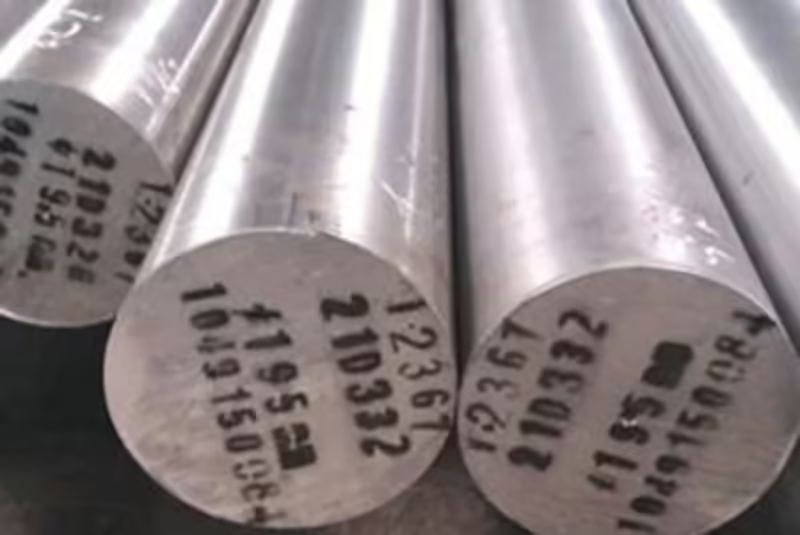
In the realm of materials science and industrial manufacturing, special tool steel stands as a cornerstone for producing high-precision, durable tools and components. This category of steel is engineered to withstand extreme conditions, including high temperatures, heavy loads, and abrasive wear, making it indispensable for a wide range of applications. This comprehensive guide delves into the essential properties, diverse applications, and critical considerations surrounding special tool steel, providing valuable insights for engineers, manufacturers, and material enthusiasts.
The importance of special tool steel cannot be overstated. Its unique characteristics enable the creation of tools that maintain their integrity and performance under the most demanding circumstances. From intricate molds used in plastic injection to robust cutting tools employed in heavy machinery, special tool steel plays a vital role in ensuring efficiency, precision, and longevity in industrial processes. This blog aims to illuminate the key aspects of this material, offering a detailed exploration of its properties and applications.
Key Properties of Special Tool Steel
The exceptional performance of special tool steel is attributed to its unique combination of properties, carefully tailored through alloying and heat treatment processes. Understanding these properties is crucial for selecting the right type of steel for specific applications.
High Hardness and Wear Resistance
One of the defining characteristics of special tool steel is its high hardness, which enables it to resist deformation and wear under heavy loads and abrasive conditions. This property is achieved through the addition of alloying elements such as chromium, vanadium, and molybdenum, which form hard carbides within the steel matrix. The high hardness translates directly into excellent wear resistance, making tool steel ideal for applications involving cutting, forming, and molding.
Excellent Toughness and Impact Resistance
While hardness is essential, special tool steel also requires adequate toughness to withstand impact and shock loads. This balance between hardness and toughness is achieved through careful control of the steel’s microstructure and heat treatment. Elements like nickel and manganese contribute to improved toughness, preventing brittle fracture and ensuring the tool’s longevity in demanding environments.
High Temperature Resistance and Red Hardness
Many industrial applications involve elevated temperatures, making high temperature resistance a critical property for tool steel. Red hardness, the ability to maintain hardness at high temperatures, is particularly important for cutting tools that generate significant heat during operation. Alloying elements such as tungsten and molybdenum enhance red hardness, allowing the steel to retain its cutting edge even at high temperatures.
Dimensional Stability and Machinability
Dimensional stability is crucial for precision tooling, ensuring that the tool maintains its shape and size during heat treatment and operation. Special tool steel is designed to minimize dimensional changes, providing consistent performance over its lifespan. Machinability, the ease with which the steel can be shaped and finished, is also a significant consideration. While high hardness can make machining challenging, certain types of tool steel are designed to offer a balance between hardness and machinability.
Types of Special Tool Steel and Their Applications
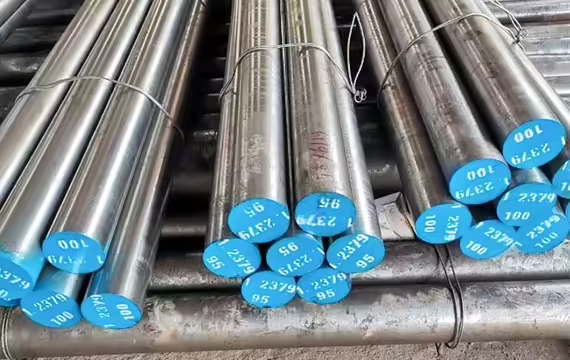
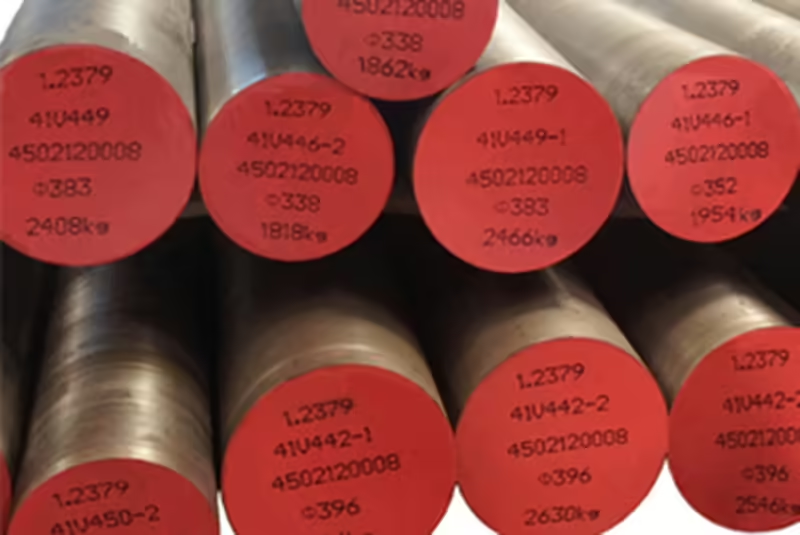
The diverse requirements of industrial applications have led to the development of various types of special tool steel, each with its unique composition and properties.
High-Speed Steel (HSS)
High-speed steel is renowned for its exceptional hardness and red hardness, making it ideal for high-speed cutting applications. It contains alloying elements such as tungsten, molybdenum, and vanadium, which enhance its high temperature performance. HSS is widely used in drills, milling cutters, and other cutting tools.
Cold Work Tool Steel
Cold work tool steel is designed for applications involving forming and cutting at room temperature. It offers a combination of high hardness, wear resistance, and toughness. Types of cold work tool steel include oil-hardening, air-hardening, and high-carbon high-chromium steels, each suited for specific applications such as stamping dies, forming tools, and shear blades.
Hot Work Tool Steel
Hot work tool steel is engineered to withstand the high temperatures and thermal cycling encountered in hot working processes. It exhibits excellent red hardness, toughness, and thermal fatigue resistance. Applications include die casting dies, forging dies, and extrusion tools.
Plastic Mold Steel
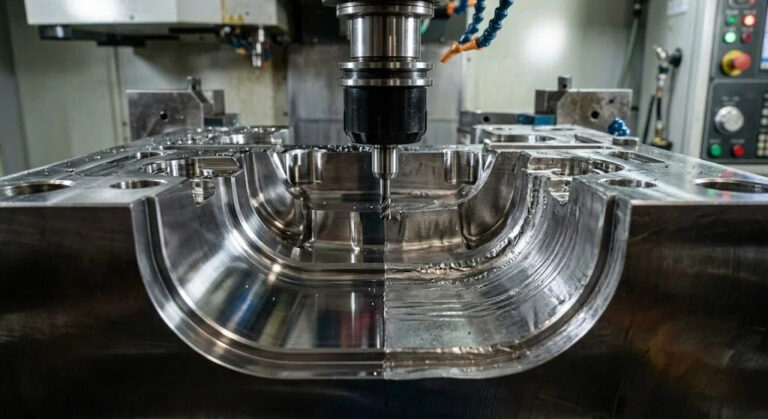
Plastic mold steel is specifically designed for injection molding and other plastic forming processes. It offers a balance of hardness, toughness, and corrosion resistance, ensuring the production of high-quality plastic parts. Types of plastic mold steel include pre-hardened and through-hardened steels, each tailored for different mold sizes and complexities.
Shock-Resisting Tool Steel
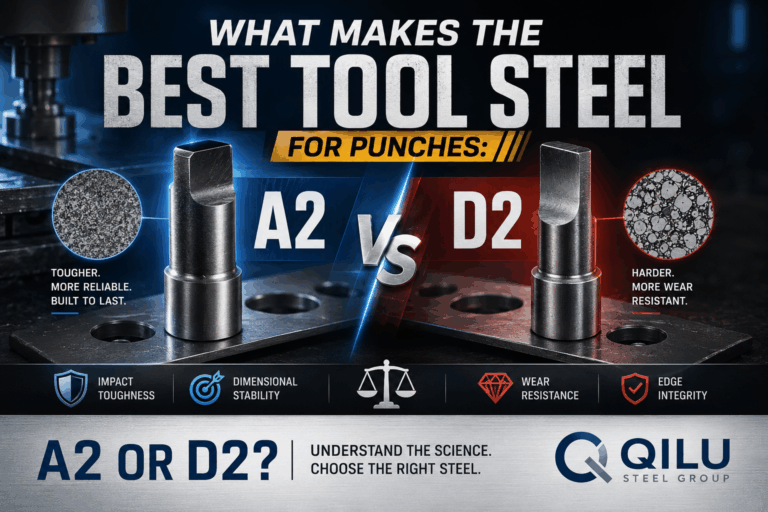
Shock-resisting tool steel is engineered to withstand impact and shock loads, making it suitable for applications such as chisels, punches, and hammers. It offers high toughness and impact resistance, ensuring the tool’s durability in demanding environments.
Heat Treatment of Special Tool Steel
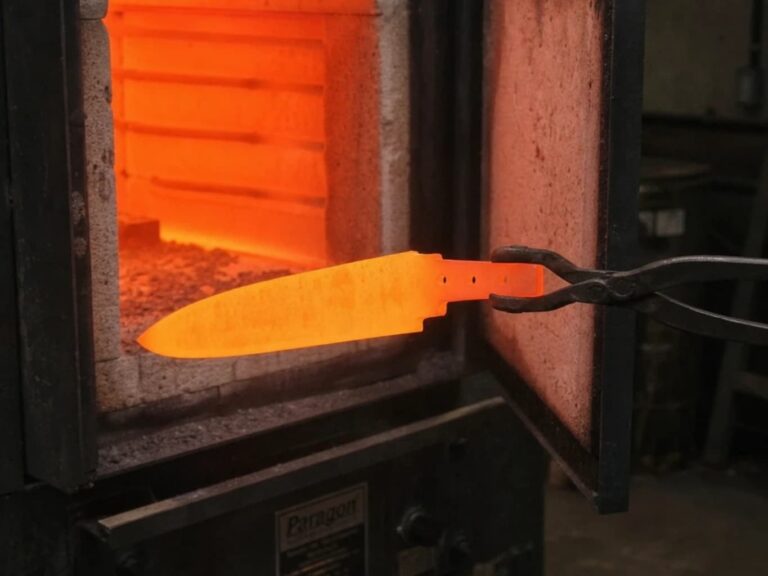
Heat treatment is a critical process that significantly influences the properties and performance of tool steel. It involves controlled heating and cooling cycles to achieve the desired microstructure and hardness.
Annealing
Annealing is a heat treatment process used to soften the steel, relieve internal stresses, and improve machinability. It involves heating the steel to a specific temperature, holding it for a certain period, and then slowly cooling it.
Hardening
Hardening is a process that increases the hardness and strength of special tool steel. It involves heating the steel to a high temperature, holding it for a specific time, and then rapidly cooling it, typically by quenching in oil or air.
Anlassen
Tempering is a heat treatment process that reduces the brittleness of hardened tool steel while maintaining its hardness. It involves heating the hardened steel to a lower temperature, holding it for a specific time, and then cooling it.
Kryogenische Behandlung
Cryogenic treatment involves cooling the hardened special tool steel to extremely low temperatures, typically below -190°C. This process can enhance the steel’s hardness, wear resistance, and dimensional stability by transforming retained austenite into martensite.
Table of Special Tool Steel Properties
| Steel Type | Härte (HRC) | Toughness | Wear Resistance | High Temperature Resistance | Anwendungen |
|---|---|---|---|---|---|
| High-Speed Steel (HSS) | 62-67 | Medium | Hoch | Hoch | Drills, milling cutters, taps |
| Cold Work Tool Steel | 58-64 | Medium to High | Hoch | Medium | Stamping dies, forming tools, shear blades |
| Hot Work Tool Steel | 45-55 | Hoch | Medium | Hoch | Die casting dies, forging dies, extrusion tools |
| Plastic Mold Steel | 30-55 | Medium to High | Medium | Medium | Injection molds, compression molds |
| Shock-Resisting Tool Steel | 55-60 | Very High | Medium | Niedrig | Chisels, punches, hammers |
Selection Criteria for Special Tool Steel
Choosing the right type of special tool steel for a specific application involves considering several factors to ensure optimal performance and longevity.
Application Requirements
The specific requirements of the application, such as the type of material being processed, the operating temperature, and the expected loads, should be carefully evaluated.
Material Properties
The desired properties of the special tool steel, such as hardness, toughness, wear resistance, and high temperature resistance, should be matched to the application requirements.
Cost and Availability
The cost and availability of different types of special tool steel should also be considered. While higher-grade steels may offer superior performance, they may also be more expensive and difficult to obtain.
Machinability and Heat Treatment
The machinability and heat treatment requirements of the special tool steel should be evaluated to ensure that the material can be processed and finished to the desired specifications.
Future Trends in Special Tool Steel
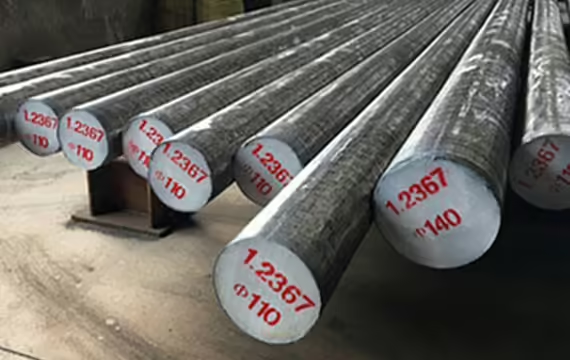
The field of special tool steel is continually evolving, with ongoing research and development focused on improving material properties and expanding applications.
Advanced Alloying and Processing Techniques
Advanced alloying and processing techniques, such as powder metallurgy and additive manufacturing, are enabling the development of special tool steel with enhanced properties and complex geometries.
Nanotechnology and Surface Engineering
Nanotechnology and surface engineering are being used to improve the wear resistance and corrosion resistance of special tool steel through the creation of nanoscale coatings and surface modifications.
Sustainable Tool Steel Development
There is a growing emphasis on sustainable tool steel development, with research focused on reducing the environmental impact of material production and processing.
Schlussfolgerung
Special tool steel is an indispensable material for a wide range of industrial applications, offering a unique combination of hardness, toughness, wear resistance, and high temperature resistance. By understanding the key properties, types, and applications of special tool steel, engineers and manufacturers can make informed decisions to optimize tool performance and longevity. The ongoing advancements in alloying, processing, and surface engineering promise to further enhance the capabilities of special tool steel, ensuring its continued importance in the future of manufacturing.
FAQ
What is the difference between tool steel and special tool steel?
Tool steel is a broad category of steel used for making tools. Special tool steel refers to specific types of tool steel that are engineered for demanding applications requiring exceptional properties, such as high hardness, wear resistance, and high temperature resistance.
How do I choose the right type of special tool steel?
Choosing the right type of special tool steel involves considering the application requirements, material properties, cost, availability,and machinability. It is essential to match the steel’s properties to the specific demands of the application.
What are the common heat treatment processes for special tool steel?
Common heat treatment processes include annealing, hardening, tempering, and cryogenic treatment. These processes are used to modify the steel’s microstructure and achieve the desired properties.
Can special tool steel be welded?
Yes, certain types of special tool steel can be welded, but it requires careful control of the welding process and heat treatment to avoid cracking and maintain the material’s properties.