Welcome to My Blog!
Before we dive into the content, I’d love for you to join me on my social media platforms where I share more insights, engage with the community, and post updates. Here’s how you can connect with me:
Facebook:https://www.facebook.com/profile.php?id=100087990137347
LinkedIn:https://www.linkedin.com/company/89825762/admin/dashboard/
YouTube:www.youtube.com/@carbonsteelsupply-kj9lw
TikTok:www.tiktok.com/@carbonsteelsupply
Now, let’s get started on our journey together. I hope you find the content here insightful, engaging, and valuable.
Table of Contents
Introducción
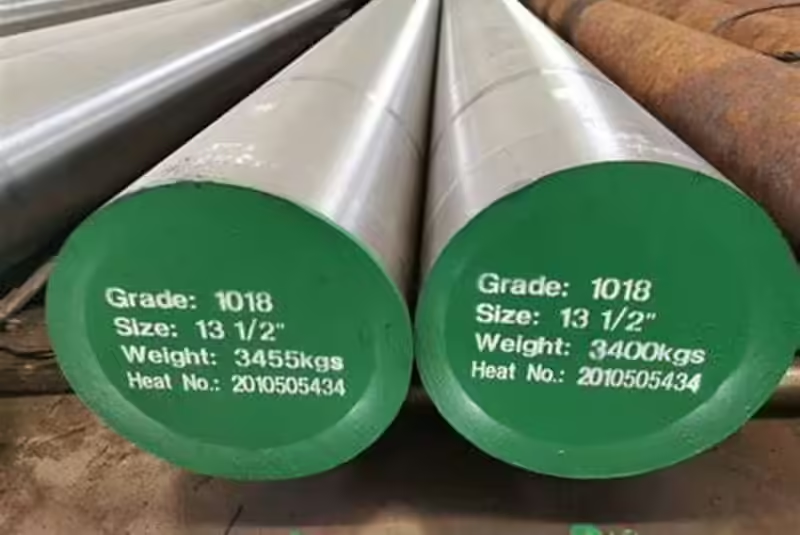
Low carbon steel, often referred to as mild steel, is a ubiquitous material in construction, manufacturing, and numerous other industries. Its affordability, workability, and versatility make it a popular choice for a wide range of applications. However, one critical property that often goes overlooked is its density. Understanding the implications of low carbon steel density can significantly impact the success of your project, influencing everything from structural integrity to cost-effectiveness. This blog post delves into the intricacies of low carbon steel density, exploring its characteristics, applications, and the crucial role it plays in project planning and execution. Recognizing the material’s weight is not merely academic; it translates directly into practical considerations that affect the entire lifecycle of a project, from initial design to long-term maintenance.
Understanding Low Carbon Steel Density
Low carbon steel is defined by its low carbon content, typically ranging from 0.05% to 0.25% by weight. This composition gives it a relatively low density compared to other steels. The typical density of low carbon steel is approximately 7.85 g/cm³ (grams per cubic centimeter) or 490 lbs/ft³ (pounds per cubic foot). This density, while seemingly constant, can vary slightly based on the specific manufacturing process and any added alloying elements. These variations, though often subtle, can accumulate and become significant in large-scale projects, necessitating precise measurement and consideration. Furthermore, the standardized density value serves as a baseline, but real-world applications often encounter materials with slight deviations due to production inconsistencies.
The Significance of Low Carbon Steel Density in Structural Applications
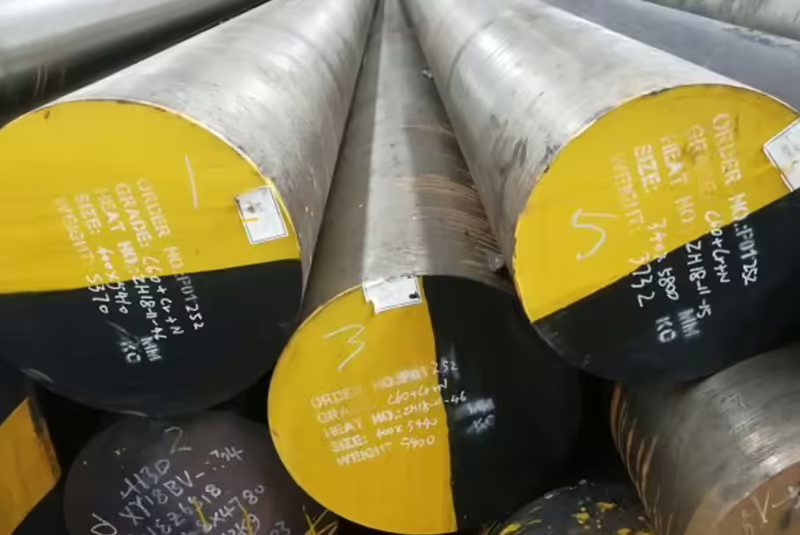
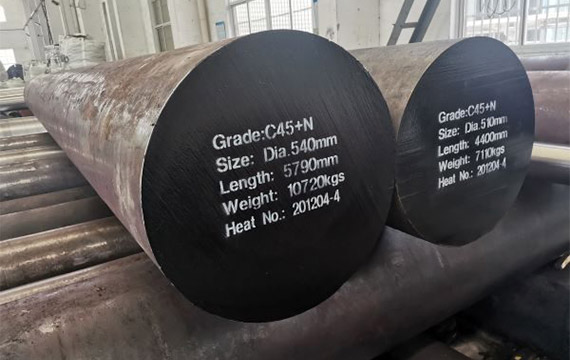
In structural engineering, density is a key consideration. A higher density generally correlates with greater strength and load-bearing capacity. However, it also means increased weight, which can have significant implications for transportation, handling, and the overall structural design. This balance between strength and weight is a fundamental principle in structural engineering, requiring careful optimization to achieve both safety and efficiency.
- Impact on Load Calculations: Accurate density values are essential for precise load calculations. Overestimating or underestimating the density of low carbon steel can lead to structural failures or unnecessary material costs. By using precise values, engineers can ensure that the structure is designed to withstand all anticipated loads, preventing potential catastrophic failures.
- Influence on Structural Design: The density of low carbon steel affects the design of structural members, such as beams and columns. Engineers must account for the material’s weight to ensure the structure can withstand the intended loads. This includes calculating the bending moments, shear forces, and deflections that the structure will experience under various loading conditions.
- Considerations for Seismic Design: In areas prone to earthquakes, the density of low carbon steel plays a crucial role in seismic design. Lighter structures tend to experience less seismic force, which can reduce the risk of damage. Reducing the overall mass of a structure can significantly mitigate the impact of seismic events, protecting both lives and property.
Low Carbon Steel Density and Manufacturing Processes
The density of low carbon steel can be influenced by various manufacturing processes, including:
- Rolling: Hot rolling and cold rolling can affect the grain structure and density of the steel. For example, cold rolling can increase the density by compacting the grains, leading to a denser and stronger material.
- Forging: Forging processes can increase the density of low carbon steel by compacting the material. This process involves applying high pressure to the steel, closing up any internal voids and increasing its overall density.
- Welding: Welding can introduce localized changes in density due to heat-affected zones. The intense heat used in welding can cause changes in the microstructure of the steel, potentially affecting its density in the surrounding area.
- Machining: Machining processes, such as cutting and drilling, can remove material and alter the overall density of a component. While machining itself does not alter the density of the remaining material, it reduces the overall mass of the component, which can be a critical factor in applications where weight is a concern.
Density and Cost Considerations
The density of low carbon steel directly impacts the cost of a project. Higher density means more material is required for a given volume, leading to increased material costs. However, it can also translate to greater strength and durability, potentially reducing maintenance and replacement costs. Therefore, a careful cost-benefit analysis is crucial. This analysis should consider the initial material costs, the long-term maintenance expenses, and the potential costs associated with premature failure.
Comparative Density Values of Common Materials
To further illustrate the significance of low carbon steel density, consider the following table comparing the densities of common materials:
| Material | Density (g/cm³) |
|---|---|
| Low Carbon Steel | 7.85 |
| Aluminum | 2.70 |
| Acero inoxidable | 8.00 |
| Concrete | 2.40 |
| Wood (Average) | 0.50 |
Factors Affecting Low Carbon Steel Density
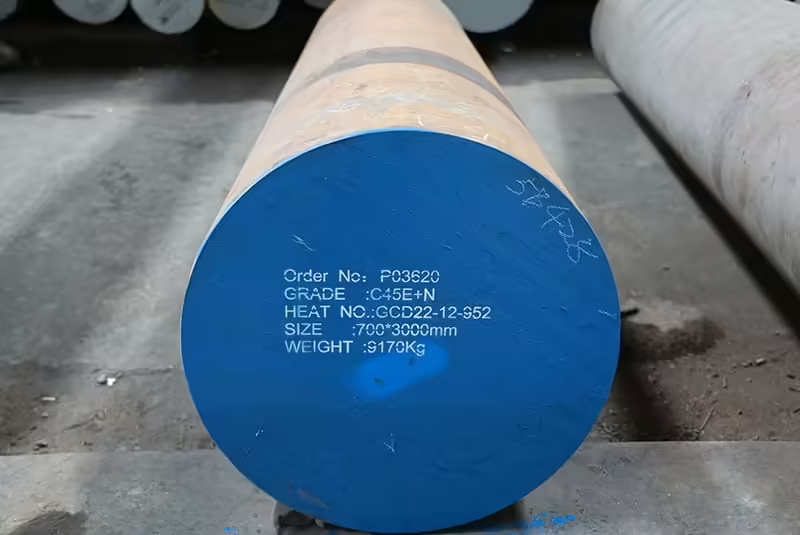
While the nominal density of low carbon steel is 7.85 g/cm³, several factors can cause variations:
- Carbon Content: Although low carbon steel has a low carbon content, even slight variations within the range can influence density. Higher carbon content tends to slightly increase the density of the steel.
- Alloying Elements: The addition of other elements, such as manganese or silicon, can alter the density of the steel. Each alloying element has its own density, and adding them to the steel will change the overall density of the alloy.
- Temperature: Temperature fluctuations can cause expansion or contraction, affecting the density of low carbon steel. As temperature increases, the steel expands, decreasing its density, and vice versa.
- Porosity: The presence of pores or voids within the steel can reduce its overall density. These pores can be introduced during the manufacturing process, and their presence can significantly affect the mechanical properties of the steel.
Conclusión
Understanding the impact of low carbon steel density is crucial for project success. By considering its implications for structural integrity, cost-effectiveness, and manufacturing processes, you can make informed decisions that optimize your project’s performance. Whether you are designing a building, manufacturing a product, or undertaking any other project involving low carbon steel, a thorough understanding of its density will contribute to a successful outcome. This knowledge ensures that the material is used effectively, leading to safer, more efficient, and cost-effective projects.
PREGUNTAS FRECUENTES
Q: How does low carbon steel density affect welding?
A: Welding can introduce localized changes in density due to heat-affected zones. Careful welding techniques are necessary to minimize these variations and maintain structural integrity.
Q: Can low carbon steel density be measured?
A: Yes, various methods can measure low carbon steel density, including Archimedes’ principle and density measurement instruments.
Q: What are the benefits of using low carbon steel?
A: Low carbon steel is affordable, workable, and versatile, making it suitable for a wide range of applications.
Q: What are the drawbacks of using low carbon steel?
A: Low carbon steel is susceptible to corrosion and may not be suitable for high-strength applications.
Q: How does temperature affect low carbon steel density?
A: Temperature fluctuations can cause expansion or contraction, which can affect the density of low carbon steel.