Over 6mm thick. That’s the cutoff. Beyond that, you’re in Stainless Steel Heavy Plate territory—where the material actually matters for structural loads, not just surface finish.
Corrosion resistance is table stakes. The real value of a high-quality Stainless Steel Heavy Plate? It handles pressure, heavy loads, chemical attack, and high temperatures without falling apart. Buy it once, run it for decades, stop worrying about replacement schedules.
Where does a Stainless Steel Heavy Plate actually show up? Chemical storage tanks that can’t leak. Nuclear plant structural supports that can’t fail. Bridge main girders exposed to salt spray. Chemical tanker hulls. Mining equipment wear parts. Anywhere that strength, corrosion resistance, and service life aren’t negotiable.
Table of Contents
The Five Families (And Where Each Actually Makes Sense)
Austenitic—The workhorse
Non-magnetic. Tough. Welds without drama. Broad corrosion resistance. 304L, 316L, 321—these are the names you see everywhere. Chemical plants, buildings, food processing, high-temp equipment. When in doubt, this is the type of Stainless Steel Heavy Plate where most people start.
Ferritic—The budget option
Lower cost. Handles atmospheric corrosion fine. 430, 444. Low-stress structural pieces, hot water tanks, architectural trim. Don’t ask this Stainless Steel Heavy Plate to do heavy lifting or survive aggressive chemicals.
Martensitic—When wear is the problem
Hard. Heat-treatable. Wear-resistant. 410/420, 440C. Mining machinery liners. Bearing surfaces. Anywhere something grinds against something else repeatedly, a martensitic Stainless Steel Heavy Plate is the answer.
Duplex—The specialist
Austenitic plus ferritic structure. Roughly double the strength of 304. Chloride resistance is exceptional. 2205, 2507. Marine environments. Aggressive chemical processing. When a standard 316L Stainless Steel Heavy Plate starts pitting, this keeps going.
Precipitation hardening—The extreme case
Heat treat it and strength goes through the roof. Keeps corrosion resistance. 17-4PH, 15-5PH. Defense applications. Aerospace. Precision machinery running in nasty conditions.
How to Choose Without Overthinking (Or Overspending)
Match the steel to the job. Sounds obvious. Plenty of people get it wrong when sourcing their Stainless Steel Heavy Plate.
- Indoor, dry atmosphere? 304 handles stair supports and decorative framing just fine. Nothing exotic needed.
- Coastal humidity or chemical mist in the air? Step up to 316L. Ship fittings, seaside structures, anything seeing salt spray regularly. The molybdenum matters here.
- Strong acids, alkalis, or actual seawater immersion? Now you’re in duplex territory. 2205 or 2507 for chemical reactors, sub-sea pipelines, the serious stuff.
- High-temperature oxidation environments? Boilers, furnace components, exhaust stacks? 310S or 321. High chrome and nickel content resists scaling and oxidation where others degrade.
- Heavy abrasion from mining crushers, wear plates, material handling equipment? Martensitic grades. 410, 420. Heat treat for hardness, let it take the beating.
- Extreme pressure, defense applications, deep-sea systems? Running at the edge of what’s possible? Precipitation hardening 17-4PH or super duplex 2507. Costly. Capable. Worth the investment for a Stainless Steel Heavy Plate when failure isn’t an option.
PREGUNTAS FRECUENTES
What is the most common mistake in selecting Stainless Steel Heavy Plate?
Miscalculating the environment. Using 304 in coastal areas causes rapid pitting, while using expensive Duplex 2205 in dry indoors is a waste of budget. Always match the alloy grade to the specific atmospheric or chemical exposure.
Is cutting and drilling Stainless Steel Heavy Plate difficult?
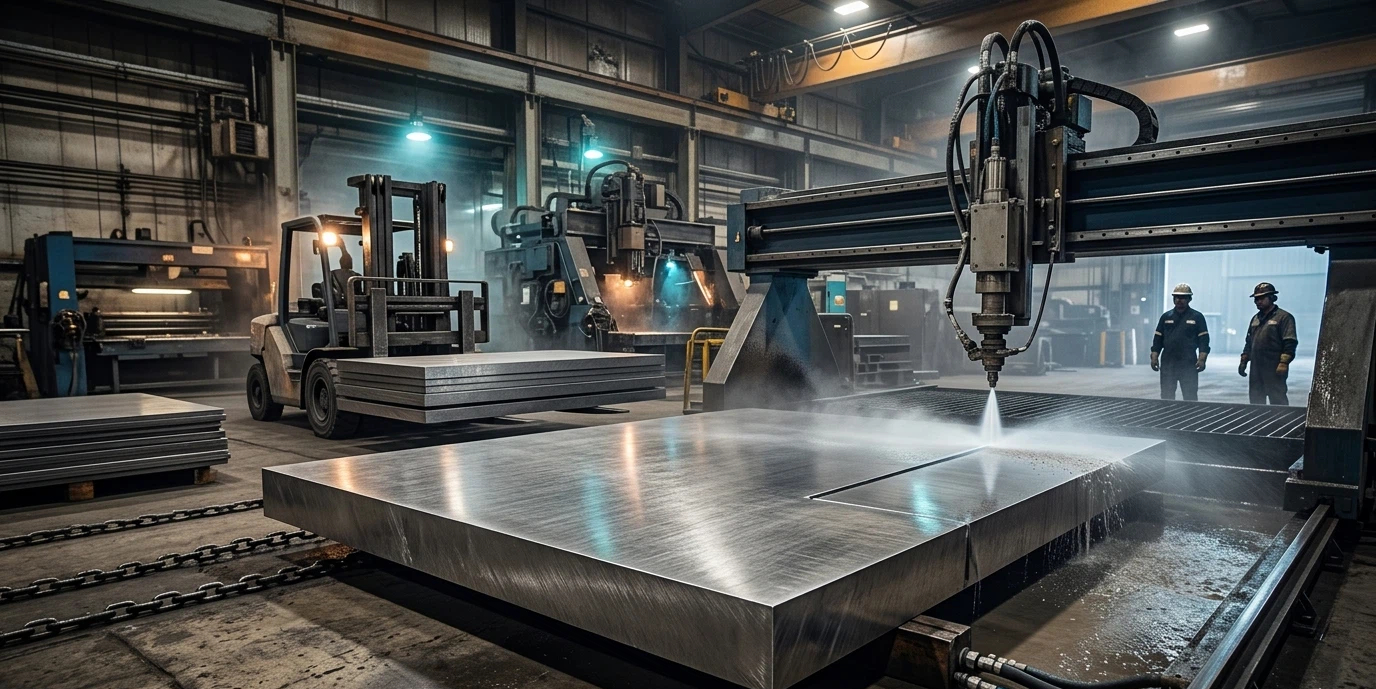
Not with the right equipment. Use water jet or laser cutting to prevent heat-affected zone (HAZ) distortion. For drilling, utilize carbide bits and constant flood coolant to prevent work hardening and tool failure.
Does Stainless Steel Heavy Plate require post-installation maintenance?
Minimal, but critical. In aggressive environments, periodically rinse off salt, chemical residues, or dust buildup. Maintaining surface cleanliness is the simplest way to ensure the material’s multi-decade service life.