Welcome to My Blog!
Before we dive into the content, I’d love for you to join me on my social media platforms where I share more insights, engage with the community, and post updates. Here’s how you can connect with me:
Facebook:https://www.facebook.com/profile.php?id=100087990137347
LinkedIn:https://www.linkedin.com/company/89825762/admin/dashboard/
YouTube:www.youtube.com/@carbonsteelsupply-kj9lw
TikTok:www.tiktok.com/@carbonsteelsupply
Now, let’s get started on our journey together. I hope you find the content here insightful, engaging, and valuable.
Table of Contents
Введение
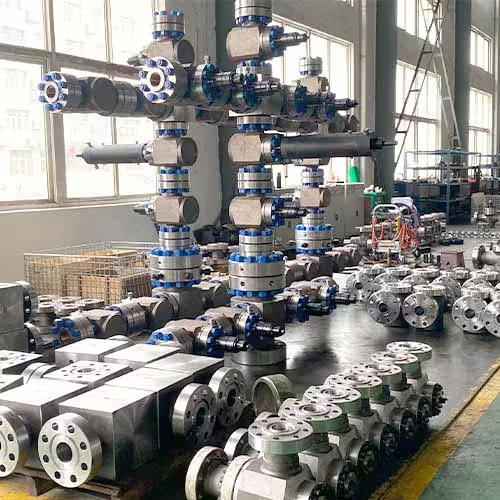
In the oil and gas industry, the wellhead Xmas tree assembly is a critical component that plays a vital role in the safe and efficient operation of wells. This assembly is responsible for controlling the flow of hydrocarbons, managing pressures, and providing access for maintenance and intervention activities. Understanding the components, functions, and maintenance requirements of the wellhead Xmas tree assembly is essential for professionals involved in drilling, production, and well management.
In this comprehensive blog, we will delve into the intricacies of wellhead Xmas tree assemblies, covering their key components, functions, types, installation, maintenance, and safety considerations.
Key Components of Wellhead Xmas Tree Assembly
Wellhead Components
The wellhead forms the foundation of the Xmas tree assembly and consists of several critical components:
- Casing Head: This is the uppermost part of the wellhead assembly. It provides a means to suspend the casing and seal the annular space between the casing and the wellbore.
- Casing Hanger: Installed inside the casing head, the casing hanger supports the casing strings and allows for their suspension and retrieval.
- Casing Spool: Used to connect and seal multiple casing strings, casing spools provide a transition between different sizes of casing and enable the installation of the Xmas tree.
Xmas Tree Components
The Xmas tree is mounted on the wellhead and comprises a series of valves, spools, and other components designed to control and monitor the flow of fluids:
- Master Valve: This is the primary shut-off valve, used to completely close the well in case of emergencies or during maintenance operations. It is typically located at the bottom of the Xmas tree assembly.
- Wing Valves: These valves control the flow of oil or gas into the flow lines and are typically located on the sides of the wellhead assembly.
- Swab Valve: This valve is used for wireline operations, allowing access to the wellbore for various interventions, such as well testing or logging.
- Choke Valve: The choke is a flow restriction device used to control the rate of production from the well. It can be adjustable or fixed.
- Pressure and Temperature Gauges: These instruments monitor the pressure and temperature within the wellhead assembly and transmit data to control systems.
Functions of Wellhead Xmas Tree Assembly
The wellhead Xmas tree assembly performs several crucial functions in oil and gas production:
- Well Control: It provides a safe and reliable means of controlling the flow of hydrocarbons from the well.
- Pressure Control: The assembly manages the pressure within the well and prevents uncontrolled releases.
- Flow Measurement: It allows for the measurement of production rates, ensuring efficient extraction.
- Well Intervention: The Xmas tree provides access to the wellbore for various operations, such as maintenance, testing, and workovers.
- Safety: It incorporates safety features to protect personnel and the environment.
Types of Wellhead Xmas Tree Assemblies
Conventional Xmas Tree Assembly
This is the most common type, used for onshore and offshore wells. It is designed to handle standard production requirements and is relatively simple in design.
Subsea Xmas Tree Assembly
Designed for underwater wells, subsea Xmas tree assemblies are engineered to withstand high pressures and corrosive environments. They are equipped with advanced materials and sealing technologies to ensure reliability.
Horizontal Xmas Tree Assembly
Used for horizontal wells, this type of assembly is designed to manage the unique challenges associated with horizontal drilling, such as directional control and fluid flow management.
Dual Xmas Tree Assembly
This type is used for wells producing from two different zones. It allows for simultaneous and independent exploitation of multiple reservoirs, enhancing production efficiency.
Wellhead Xmas Tree Assembly Design Considerations
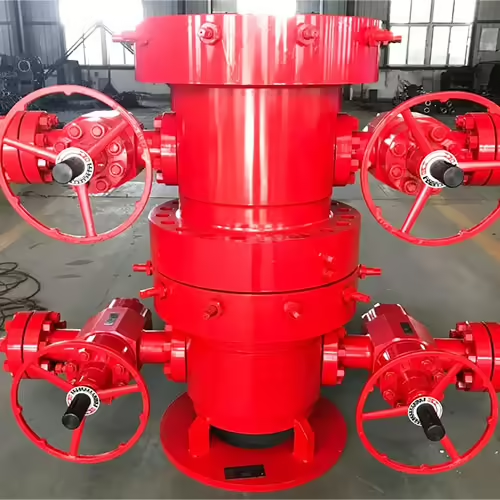
Designing a wellhead Xmas tree assembly involves several critical factors:
- Well Depth and Pressure: The depth and pressure of the well influence the pressure rating and design of the assembly.
- Production Rate: The expected production rate determines the size of the flow lines and other components.
- Fluid Properties: The properties of the produced fluids, such as corrosivity and viscosity, affect the material selection.
- Environmental Conditions: The operating environment, such as temperature and weather conditions, must be considered.
- Safety Requirements: Strict safety standards and regulations must be adhered to.
Installation of Wellhead Xmas Tree Assembly
The installation process for wellhead Xmas tree assemblies is intricate and requires precision. Key steps include:
- Site Preparation: Ensure the location is accessible and safe for assembly.
- Component Alignment: Properly align the wellhead components to avoid stress and misalignment.
- Sealing and Testing: Use appropriate seals to prevent leaks and perform pressure tests to ensure integrity.
- Final Assembly: Attach the Xmas tree assembly to the wellhead and connect all necessary valves and controls.
Maintenance of Wellhead Xmas Tree Assembly
Regular maintenance is essential to ensure the safe and reliable operation of the wellhead Xmas tree assembly. Key maintenance practices include:
- Visual Inspections: Regular visual checks for leaks, damage, and corrosion.
- Valve Testing: Periodic testing of valves to ensure they are functioning correctly.
- Pressure Testing: Pressure testing to verify the integrity of the assembly.
- Lubrication: Lubrication of moving parts to prevent wear and corrosion.
- Component Replacement: Replacement of worn or damaged components.
Comparison of Xmas Tree Wellhead Assembly Configurations
| Feature | Single Completion Xmas Tree Wellhead Assembly | Dual Completion Xmas Tree Wellhead Assembly |
|---|---|---|
| Number of Tubing Strings | One | Two |
| Production Zones | One | Two |
| Complexity | Simpler | More Complex |
| Cost | Lower | Higher |
| Application | Single zone production | Two zone production |
| Control | Single set of valves and chokes | Separate sets of valves and chokes |
| Well Intervention | Simpler | More complex |
Safety Considerations
Safety is paramount in all oil and gas operations, and the wellhead Xmas tree assembly is no exception. Several safety measures are implemented to prevent accidents and protect personnel:
- Pressure Relief Valves: These valves automatically relieve excess pressure to prevent overpressure situations.
- Emergency Shutdown Systems (ESD): These systems automatically shut down the well in case of emergencies.
- Safety Training: Personnel working with wellhead Xmas tree assemblies receive comprehensive safety training.
- Regular Inspections and Maintenance: Regular inspections and maintenance help identify and address potential safety hazards.
Standards and Regulations
The design, manufacturing, and operation of wellhead Xmas tree assemblies are governed by various industry standards and regulations, such as:
- API Spec 6A: This standard specifies the requirements for wellhead and Xmas tree equipment.
- NACE MR0175/ISO 15156: This standard addresses materials for use in H2S-containing environments.
- Various National and Local Regulations: These regulations may vary depending on the location of the well.
Future Trends in Wellhead Xmas Tree Assembly Technology
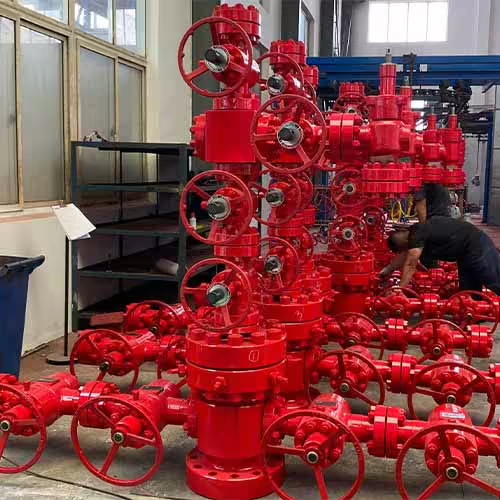
The wellhead Xmas tree assembly technology continues to evolve, driven by the need for increased efficiency, safety, and environmental protection. Some future trends include:
- Smart Xmas Tree Assemblies: Incorporating sensors and data analytics to optimize production and maintenance.
- Advanced Materials: Using new materials to improve corrosion resistance and durability.
- Digitalization: Implementing digital technologies for remote monitoring and control.
- Subsea Advancements: Continued development of subsea Xmas tree assembly technology to support deepwater production.
Заключение
Understanding the wellhead Xmas tree assembly is essential for anyone involved in the oil and gas industry. These assemblies play a vital role in controlling and monitoring well production, ensuring safety, and facilitating efficient operations. By familiarizing yourself with the key components, functions, types, installation, maintenance, and safety considerations of wellhead Xmas tree assemblies, you can make informed decisions and contribute to safer, more efficient, and environmentally responsible production practices.
As technology continues to advance, staying updated on the latest trends and innovations will be crucial for maximizing the effectiveness and longevity of these critical components.
ЧАСТО ЗАДАВАЕМЫЕ ВОПРОСЫ
What is the purpose of the wellhead Xmas tree assembly?
The wellhead Xmas tree assembly controls and monitors the flow of oil or gas from a well, provides access for well intervention, and ensures safe operation.
What are the main components of a wellhead Xmas tree assembly?
Key components include the master valve, wing valves, swab valve, choke, pressure gauges, and tubing head.
Why is maintenance important for wellhead Xmas tree assemblies?
Regular maintenance ensures safe and reliable operation, prevents failures, and extends the lifespan of the equipment.
What safety measures are in place for wellhead Xmas tree assemblies?
Safety measures include pressure relief valves, emergency shutdown systems, regular inspections, and personnel training.
How do I choose the right wellhead Xmas tree assembly for my well?
Consider factors such as well depth, pressure, production rate, fluid properties, environmental conditions, and safety requirements.