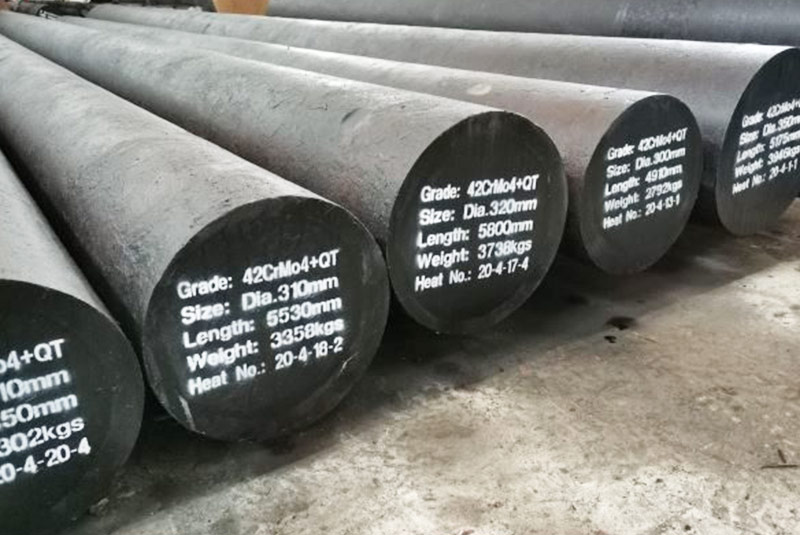
42CrMo4 vs 4140 steel is a common comparison for buyers sourcing chromium-molybdenum alloy steel bars, forgings, shafts, gears, and machinery components. The short answer is that 42CrMo4 is often treated as a European counterpart to AISI/SAE 4140, but the final purchase decision should still be based on the required standard, heat treatment condition, dimensions, testing, and end-use risk.
Quick Answer for Buyers
42CrMo4 and 4140 are both chromium-molybdenum alloy steels used where higher hardenability, strength, and toughness are needed than plain carbon steel can usually provide. In many sourcing conversations, 42CrMo4 can be proposed when the drawing calls for 4140, or 4140 can be proposed when the buyer asks for 42CrMo4. That substitution should not be approved by name alone.
The practical procurement rule is simple: confirm the controlling standard, chemical composition window, delivery condition, heat treatment, mechanical property target, ultrasonic testing requirement, and size tolerance before placing the order. For critical parts, the buyer should request the mill test certificate and clarify whether the material is supplied annealed, normalized, quenched and tempered, peeled, turned, or ground.
42CrMo4 vs 4140 Steel Comparison Table
| Buyer Checkpoint | 42CrMo4 | 4140 Steel | Procurement Note |
|---|---|---|---|
| Common standard system | European / DIN / EN grade family, often associated with 1.7225 | AISI / SAE alloy steel grade family | Quote the required standard instead of only the grade name. |
| Grade relationship | Commonly used as a close equivalent to 4140 | Commonly used as a close equivalent to 42CrMo4 | Equivalent does not always mean identical acceptance criteria. |
| Alloy concept | Cr-Mo alloy steel for hardenability and toughness | Cr-Mo alloy steel for hardenability and toughness | Confirm chemistry with the mill test certificate. |
| Delivery condition | Can be supplied in annealed, normalized, or quenched and tempered condition depending on order | Can be supplied in annealed, normalized, or quenched and tempered condition depending on order | The condition has a major influence on hardness, machining, and final performance. |
| Typical use direction | Shafts, gears, bolts, connecting rods, forgings, machinery parts | Shafts, gears, bolts, connecting rods, forgings, machinery parts | Match the grade to the load, size, heat treatment route, and inspection level. |
Standard and Naming Differences
The largest difference between 42CrMo4 and 4140 is usually not the broad alloy concept; it is the purchasing language. 42CrMo4 appears in European grade systems, while 4140 is widely used in North American AISI/SAE-style procurement. When drawings, RFQs, and purchase orders cross regions, the same part may be discussed with different grade names.
Why the standard matters
A grade name can describe the general material family, but the standard controls the detailed acceptance rules. Buyers should make clear whether the order follows EN, ASTM, SAE, or another agreed specification. For reference, buyers often review official sources such as ASTM A29/A29M and SAE J404 when discussing alloy steel procurement language.
Heat Treatment and Delivery Condition
For 42CrMo4 vs 4140 steel, heat treatment condition is often more important than the name on the quote. A quenched and tempered bar will not behave like an annealed bar during machining, hardness inspection, or final service. If the buyer only writes “42CrMo4” or “4140” without a condition, the supplier may need to clarify the expected hardness, mechanical properties, and processing route before quoting.
Information to include in the RFQ
A practical RFQ should include grade, standard, diameter or section size, length, quantity, surface condition, heat treatment condition, hardness or mechanical property requirement, ultrasonic testing level, and any special cutting or machining needs. Qilu Steel lists alloy steel supply directions on its alloy steel product page, which is the recommended internal reference for this comparison.
Applications and Material Selection
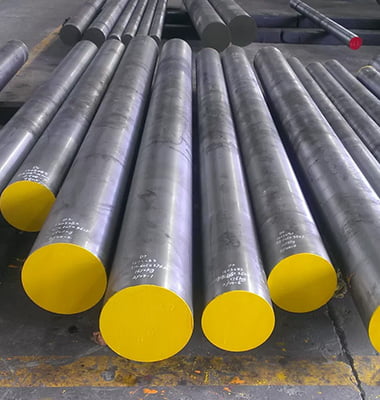
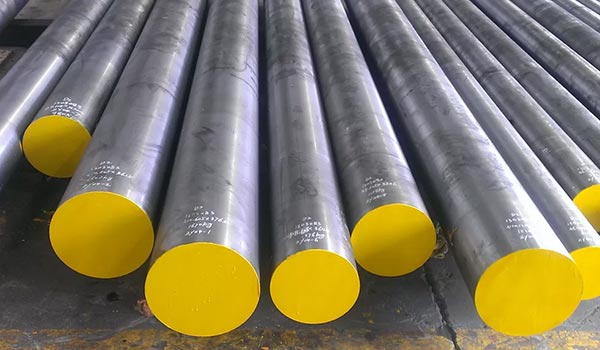
Both grades are frequently considered for parts that need a balance of strength, toughness, and wear resistance after suitable heat treatment. Common buying scenarios include shafts, gears, pinions, connecting rods, high-strength bolts, sleeves, rolls, and forged machinery components.
When to choose 42CrMo4
Choose 42CrMo4 when the drawing, customer specification, or local procurement standard clearly points to the European grade system. It can also be practical when the buyer needs EN-style documentation and inspection alignment.
When to choose 4140
Choose 4140 when the drawing, repair specification, or end customer requires AISI/SAE-style material naming. It is also common in projects where ASTM or SAE references are already used by the engineering team.
For buyers comparing grade replacement options, Qilu Steel’s related article on 4140 steel equivalent grades is a useful next internal reading path.
Procurement Checklist Before Substitution
- Confirm whether the drawing requires 42CrMo4, 4140, or only a performance-based equivalent.
- State the required standard and delivery condition on the purchase order.
- Ask for chemical composition and heat number traceability on the mill test certificate.
- Clarify hardness, mechanical properties, and ultrasonic testing requirements before production.
- Check whether the parts will be machined before or after heat treatment.
- Confirm size tolerance, surface condition, cutting method, packing, and shipping requirements.
ЧАСТО ЗАДАВАЕМЫЕ ВОПРОСЫ
Is 42CrMo4 the same as 4140 steel?
They are close Cr-Mo alloy steel counterparts, but buyers should not treat them as automatically identical. The final approval should be based on the applicable standard, chemistry, heat treatment, mechanical properties, and inspection requirements.
Can 42CrMo4 replace 4140 in a drawing?
It may be possible in many industrial applications, but the engineering owner or buyer should approve the substitution after reviewing the standard, condition, dimensions, testing, and service risk.
Which grade is better for shafts and gears?
Neither grade is universally better. The better choice depends on the standard required by the drawing, the final heat treatment, the part size, load condition, machining route, and inspection level.
What should I send to request a quote?
Send the grade, standard, size, quantity, heat treatment condition, surface condition, testing requirements, destination, and any drawing or machining notes. For alloy steel inquiries, you can contact Qilu Steel through the contact page.
Need Help Choosing 42CrMo4 or 4140 Steel?
Qilu Steel can review your drawing, grade requirement, delivery condition, and inspection needs, then recommend a practical alloy steel supply route. Send your RFQ through the Qilu Steel contact page with grade, size, quantity, and standard details.