Carbon steel is a popular material known for its strength and versatility. However, it has a common issue: rust. Rust can compromise the integrity of carbon steel, leading to potential failures.
Understanding why carbon steel rusts is crucial for anyone using it. This knowledge helps in selecting the right material for specific applications. It also aids in implementing effective rust prevention strategies.
Preventing rust involves several techniques. These include keeping carbon steel dry and applying protective coatings. Regular maintenance is also key to extending the lifespan of carbon steel products.
Table of Contents
What Is Carbon Steel?
The carbon content in steel directly influences its strength and hardness. This makes it ideal for many construction and manufacturing applications. Despite its robustness, carbon steel lacks certain elements like chromium that prevent rusting.
Carbon steel comes in several types:
- Low Carbon Steel: Contains up to 0.3% carbon. It’s easy to shape.
- Medium Carbon Steel: Includes 0.3%-0.6% carbon. Offers a balance of strength and ductility.
- High Carbon Steel: Has 0.6%-2% carbon. Very strong but less ductile.
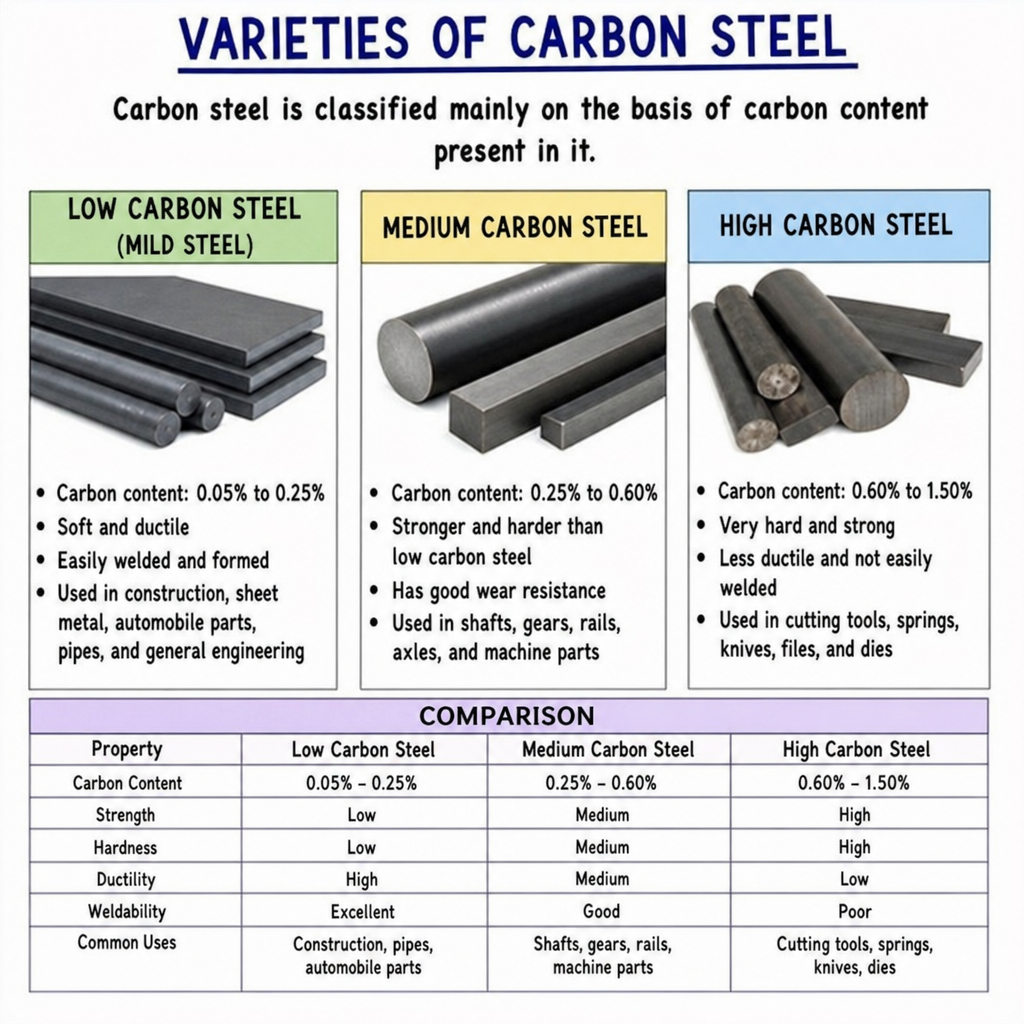
Each type of carbon steel has unique properties that make it suitable for specific tasks. Understanding these differences helps in selecting the right type for your needs. While it’s strong and cost-effective, carbon steel’s susceptibility to rust can be a limitation. This issue necessitates an understanding of rust formation and effective prevention techniques.
Why Does Carbon Steel Rust?
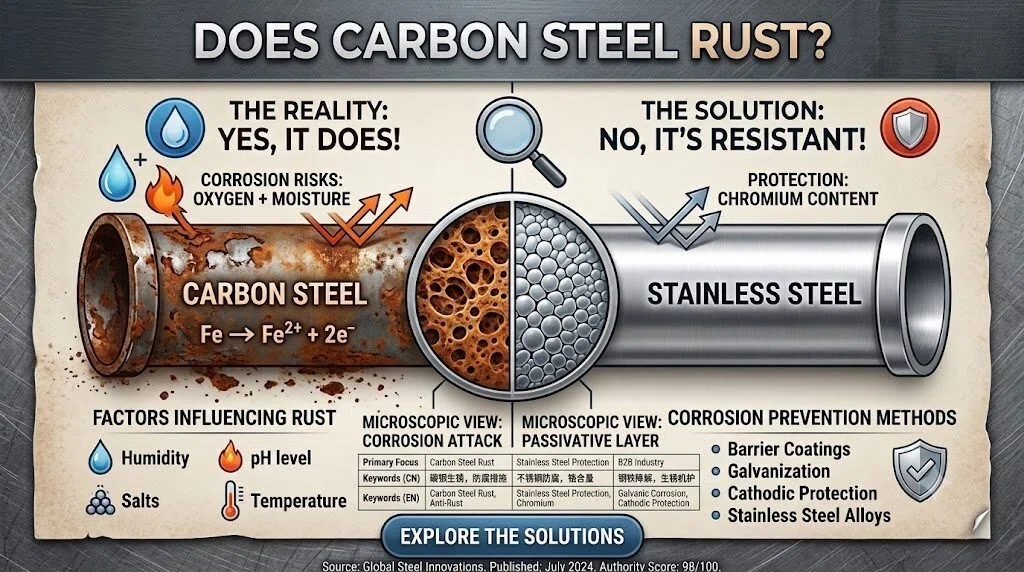
Carbon steel rusts because it contains iron, a metal that readily reacts with oxygen and moisture. When iron meets water and air, it oxidizes, forming iron oxide, commonly known as rust. This electrochemical reaction is natural but unwelcome due to its effects on the metal’s integrity.
Several factors accelerate rust formation in carbon steel. For instance, salty or humid environments speed up the oxidation process. Exposure to pollutants and certain chemicals can also contribute to quicker rusting. These factors are especially concerning in coastal or industrial areas.
Carbon steel is particularly prone to rusting because it lacks the chromium found in stainless steel. Chromium forms a protective layer that prevents rust. Without this element, carbon steel remains vulnerable. Therefore, understanding these factors is crucial to addressing rust issues effectively.
Here’s why carbon steel rusts more than other metals:
- Iron Content: Reacts with oxygen and moisture.
- Lack of Chromium: No protective layer forms.
- Environmental Factors: Humidity and salt accelerate rust.
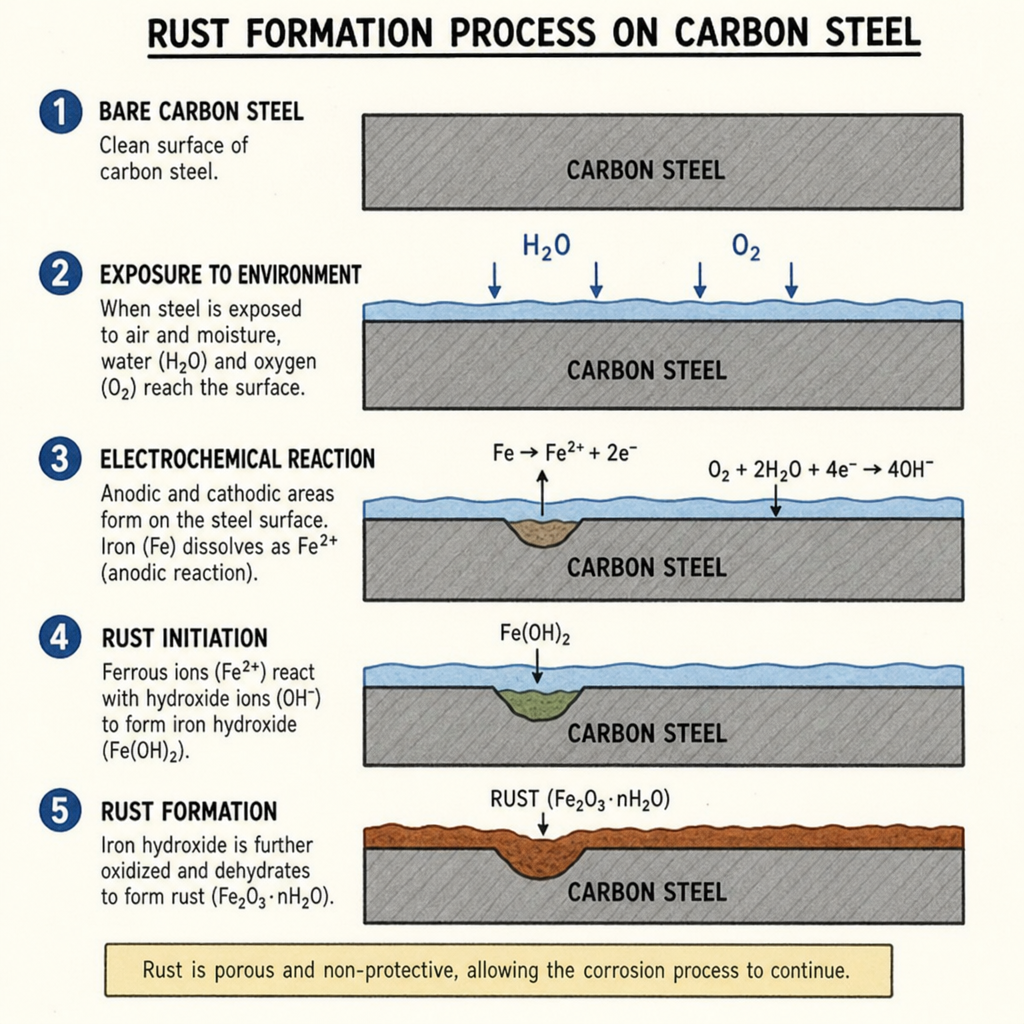
Addressing the causes of rust on carbon steel is vital for maintaining its structure and longevity. By understanding why rust forms, we can take proactive steps to minimize its impact.
How Easily Does Carbon Steel Rust?
Carbon steel rusts quite easily compared to other steel types. Its composition lacks chromium, which protects against oxidation. As a result, carbon steel needs more attention to prevent rust formation.
High carbon content can exacerbate rusting issues. More carbon means higher hardness, but also greater susceptibility to rust. This trade-off can lead to significant maintenance challenges.
Carbon steel’s rusting speed depends on the environment. Dry conditions slow down rust formation, while humid or salty surroundings accelerate it. Therefore, exposure to harsh conditions is a key consideration in its application.
Despite its tendency to rust easily, carbon steel remains popular for its cost-effectiveness. Rust can be controlled with proper maintenance and protective measures. Being informed about potential risks helps in reducing rust-related damage.
Here are factors affecting how easily carbon steel rusts:
- Carbon Content: Higher content increases rust potential.
- Environmental Exposure: Humidity and salt speed up rusting.
- Protection Measures: Coatings and treatments reduce susceptibility.
Understanding these factors can guide in choosing the right steel type and implementing effective rust prevention strategies.
High Carbon Steel vs Stainless Steel: Rust Resistance Compared
High carbon steel and stainless steel both have unique properties. High carbon steel, with its increased carbon content, offers excellent hardness. However, it is more prone to rust without added protection.
Stainless steel contains chromium, which forms a passive layer, preventing rust. This makes stainless steel more suitable for environments with high moisture levels. The chromium oxide layer is self-repairing, enhancing longevity and durability.
High carbon steel excels in applications requiring strength and sharpness. Yet, its lack of intrinsic rust protection requires frequent maintenance. Stainless steel may lack the sheer strength of high carbon steel but resists corrosion better, making it ideal for kitchen and medical tools.
Choosing between the two involves weighing strength against rust resistance. For projects with less exposure to corrosive elements, high carbon steel is a cost-effective choice. In harsh conditions, stainless steel offers peace of mind with its anti-rust properties.
Here’s a comparison of both types:
- High Carbon Steel: Strong, less rust-resistant, needs maintenance.
- Нержавеющая сталь: More rust-resistant, less maintenance, slightly less strong.
- Приложения: High carbon for tools, stainless for humid environments.
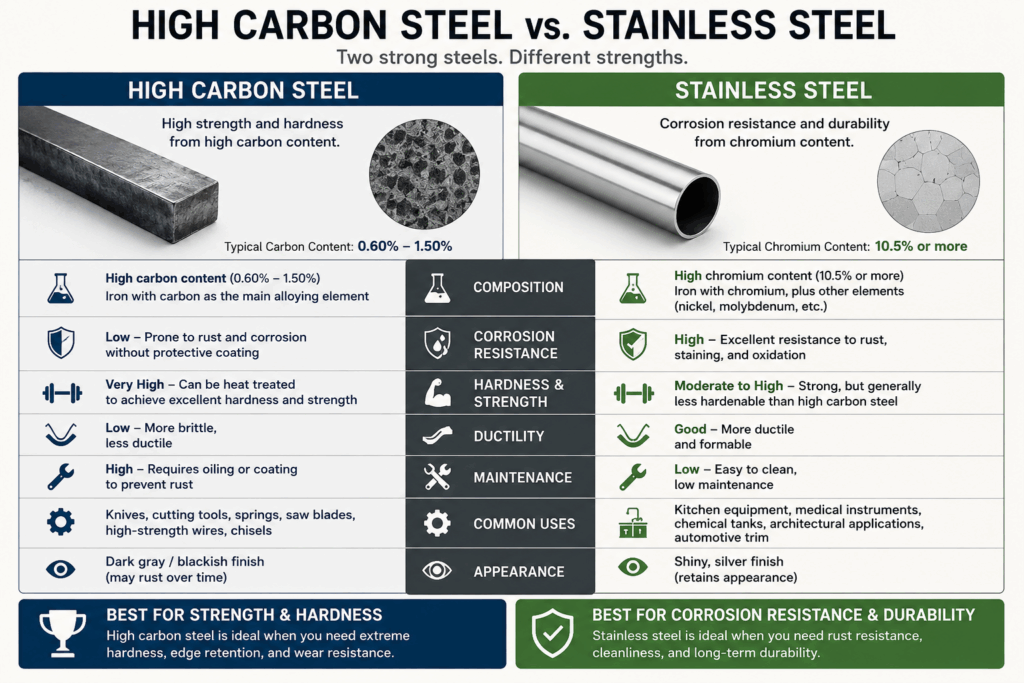
The choice ultimately depends on specific needs and environmental exposure. Understanding these differences helps in selecting the right material for the intended use.
Factors That Accelerate Rusting in Carbon Steel
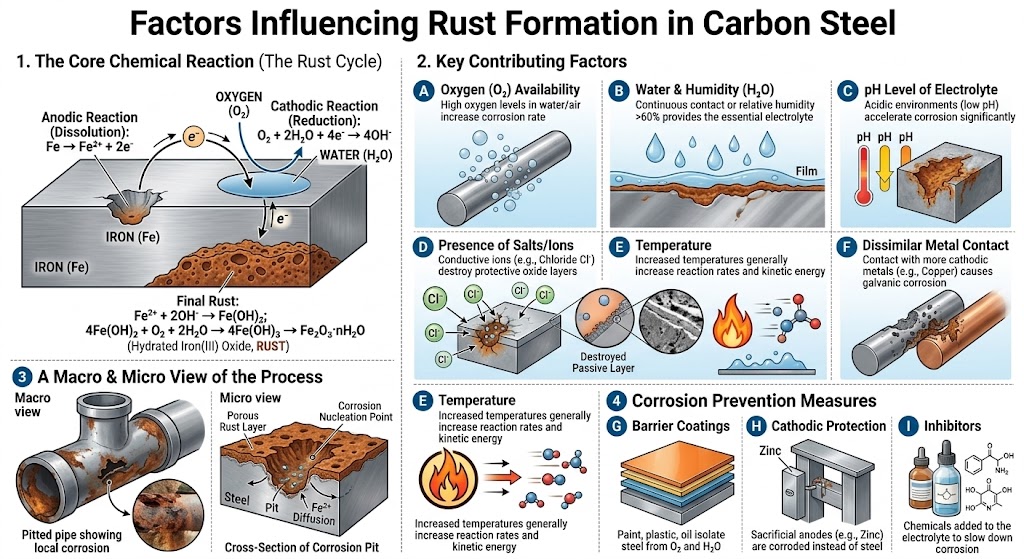
Several factors can speed up the rusting process in carbon steel. Moisture is a primary culprit. When water interacts with iron, it catalyzes the oxidation process. Therefore, humid environments can significantly increase rust formation.
Apart from moisture, salt is a notorious accelerator of rust. This is why carbon steel structures near coastal areas rust faster. Salt acts as an electrolyte, enhancing the electrochemical reactions that lead to rust.
Temperature also plays a role in rust formation. Higher temperatures can increase the speed of chemical reactions, including oxidation. However, extreme cold can slow down these processes.
Furthermore, mechanical stress and surface damage can expose fresh iron to the environment. This exposure provides more opportunities for rust to develop. Protecting carbon steel involves minimizing these factors through proper treatment and handling.
Key factors include:
- Moisture: Humidity and water exposure.
- Salt: Particularly in coastal regions.
- Temperature: High heat accelerates rust.
- Mechanical Stress: Surface damage increases risk.
Methods for Preventing Rust on Carbon Steel
Preventing rust on carbon steel involves a mix of techniques, all aiming to block exposure to moisture and oxygen. These methods enhance carbon steel’s durability and maintain its integrity.
One popular method is applying protective coatings. Paints, oils, and varnishes create a barrier that prevents moisture from reaching the steel surface. Regular application is key to maintaining their effectiveness over time.
Galvanization is another powerful rust-prevention technique. By coating carbon steel with zinc, galvanization provides a sacrificial layer that oxidizes first, protecting the underlying metal. This process is especially beneficial for outdoor applications.
Another option is to store carbon steel in controlled environments. Keeping the metal dry and away from corrosive substances slows down rust formation significantly. Proper storage is both simple and effective.
Innovative rust inhibitors have also entered the market. These chemicals can be applied to steel surfaces, slowing down oxidation. They offer an added layer of protection, especially in challenging environments.
Key rust prevention methods include:
- Protective Coatings: Paints and oils.
- Galvanization: Zinc coating.
- Controlled Storage: Dry environments.
- Rust Inhibitors: Chemical applications.
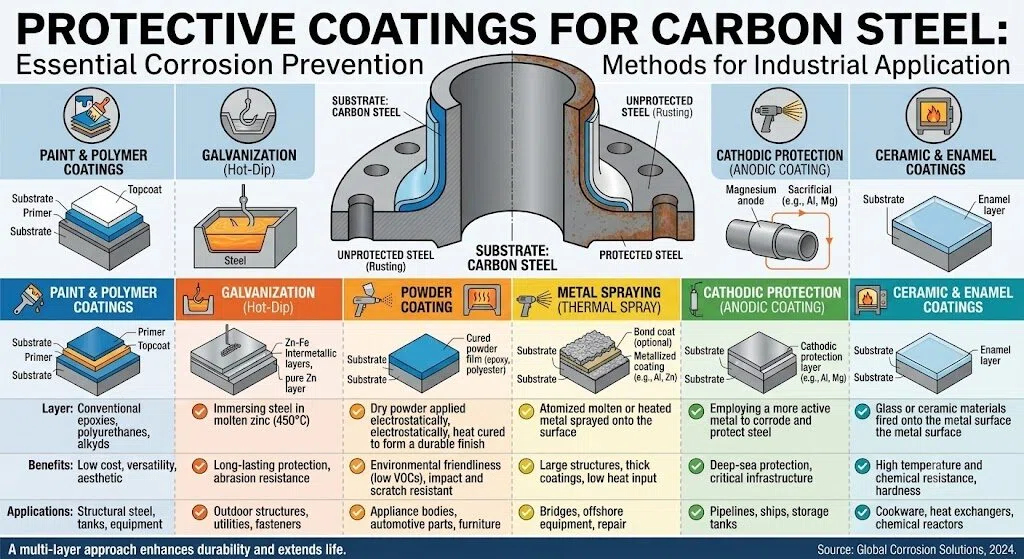
By utilizing these strategies, the lifespan of carbon steel products can be effectively extended, ensuring safety and reliability in their applications.
Maintenance and Care Tips for Carbon Steel
Proper maintenance is crucial for preserving carbon steel items. Regular care prevents rust and prolongs the material’s lifespan. It involves simple yet effective actions.
Regular cleaning is vital. Removing dirt and debris helps in minimizing moisture accumulation. A clean, dry cloth or mild detergent works well for routine maintenance.
Inspect the steel periodically for signs of rust. Early detection allows for swift action, preventing extensive damage. If rust spots appear, treat them immediately to halt further spread.
Applying a light layer of oil can protect carbon steel from moisture. This practice is especially beneficial for tools and cookware, providing an additional shield against rust.
Maintenance routines can include:
- Cleaning: Using a cloth or detergent.
- Inspection: Checking for rust.
- Oiling: Applying a protective layer.
Following these tips helps in maintaining the aesthetic and functional qualities of carbon steel.
Common Applications and Why Rust Matters
Carbon steel is used in various industries due to its strength and versatility. It’s prevalent in construction, automotive, and manufacturing sectors. Despite its benefits, rust can significantly impact these applications.
In construction, rust affects the durability of structural components. It can lead to structural weaknesses, compromising safety and longevity. Regular inspection and maintenance are essential to mitigate these risks.
In the automotive industry, rust can reduce a vehicle’s lifespan. It’s especially problematic in areas with high moisture or salt exposure. Knowing where carbon steel is used helps prioritize rust prevention measures.
Key applications where rust prevention matters include:
- Construction: Ensuring structural integrity.
- Automotive: Protecting against environmental factors.
- Manufacturing: Maintaining product quality and longevity.
Understanding the importance of rust prevention can save costs and extend the life of carbon steel products.
Frequently Asked Questions About Carbon Steel Rust
Many people wonder, “Does carbon steel rust easily?” Yes, it does. The presence of iron makes it prone to oxidizing. Yet, with proper care, the rusting process can be delayed significantly.
Curiosity also arises about the comparison with stainless steel. Unlike carbon steel, stainless steel has a protective chromium layer which significantly enhances its rust resistance. However, if this layer is damaged, rust can still occur.
Here are some common inquiries:
- Does high carbon steel rust? Yes, it does, often faster than low carbon.
- What are signs of rust? Discoloration and flakiness.
- Can rust be removed? Yes, through mechanical or chemical methods.
Choosing and Caring for Carbon Steel
Choosing carbon steel involves weighing its strengths and weaknesses. It offers unmatched strength and cost-effectiveness. However, its tendency to rust cannot be ignored.
Proper care and maintenance extend the life of carbon steel items. Regular inspections and protective measures are key. Coatings and dry storage can minimize rust risks.
Understanding its rusting nature helps make informed decisions. Whether for industry or home use, the right approach ensures durability and performance. Keep these insights in mind when selecting and maintaining your carbon steel products. It’s all about balancing strength and care.
ЧАСТО ЗАДАВАЕМЫЕ ВОПРОСЫ
Does carbon steel rust more or faster than stainless steel?
Yes, absolutely. Carbon steel contains iron as its main element and lacks a significant amount of chromium. Stainless steel, on the other hand, contains at least 10.5% chromium, which reacts with oxygen to form an invisible, self-healing chromium oxide passivation layer that blocks rust. Without a protective coating, carbon steel will oxidize and rust significantly faster and more severely than stainless steel when exposed to the elements.
How fast does carbon steel rust in water and saltwater?
Carbon steel can begin to oxidize and show signs of rust within hours or even minutes when exposed to moisture and oxygen. In plain water, the process is steady. However, in saltwater, rust forms exponentially quicker. Salt acts as an electrolyte, accelerating the electrochemical reaction (corrosion kinetic rate), meaning carbon steel screws, pipes, or marine parts will degrade rapidly without specialized anti-corrosion treatments.
Does carbon steel rust easily outside, and how long does it take?
Yes, bare carbon steel rusts very easily outdoors. The exact timeline depends heavily on relative humidity (rates spike when humidity exceeds 60%) and environmental pollutants. In a dry climate, it may take a few weeks to spot rust; in coastal, rainy, or high-industrial areas, a visible rust layer can form overnight.
Will painted carbon steel, carbon steel pans, or knives rust?
Painted Carbon Steel: Paint acts as a barrier coating. It will not rust as long as the paint layer remains intact. However, if the paint scratches or chips, moisture will seep in and corrosion will spread underneath.
Carbon Steel Knives & Pans: Yes, they will rust if left wet or unseasoned. This is why carbon steel cookware requires “seasoning” (coating with oil) and must be wiped completely dry immediately after washing to prevent rusting.
What are the main disadvantages of carbon steel regarding corrosion?
he primary disadvantage of carbon steel is its high vulnerability to atmospheric and chemical corrosion. Because the rust that forms on its surface is porous and flaking, it does not protect the underlying metal. Instead, it traps moisture, allowing the corrosion process to continuously eat deeper into the material until the structural integrity of the steel is compromised.
What type of steel does not rust?
No steel is completely “rust-proof” under extreme chemical or acid conditions, but Stainless Steel (especially marine grades like 316 Stainless Steel with added molybdenum) is highly resistant and practically does not rust in standard environments. For heavy carbon steel applications, galvanization (hot-dip zinc coating) or specialized alloy plating is required to achieve similar rust-free longevity.