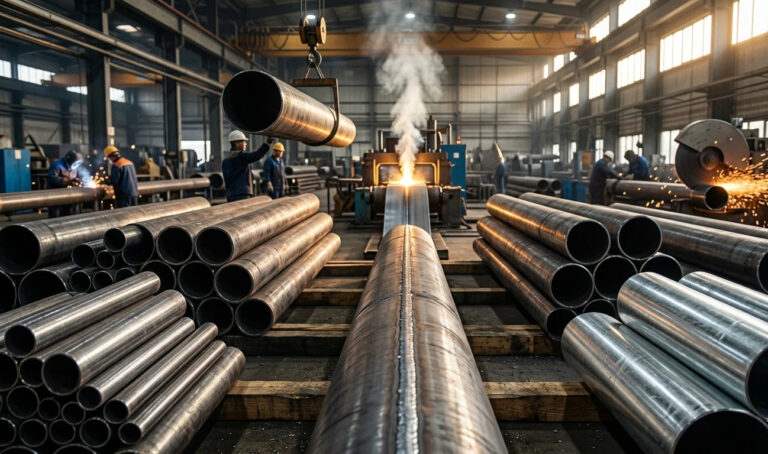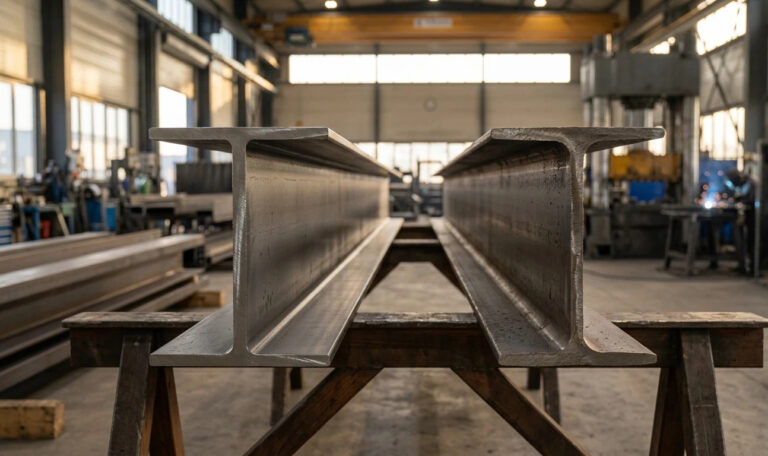
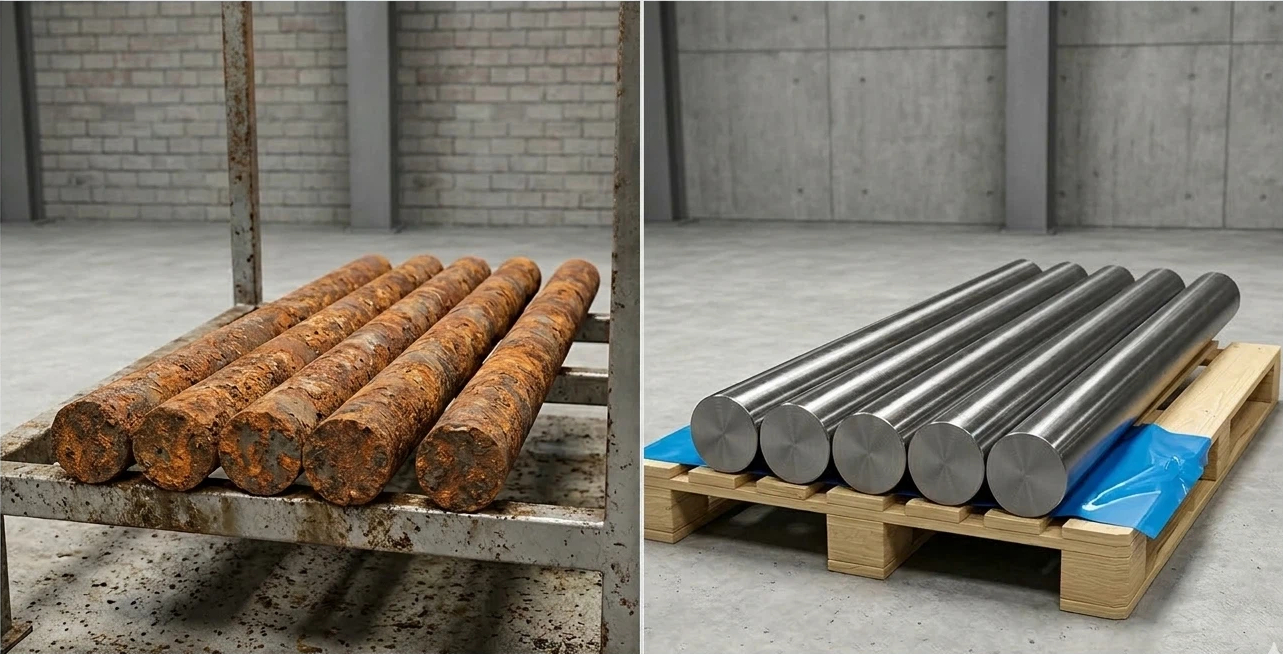
AISI 1045 is the workhorse of the machinery industry. Its balance of 0.45% carbon and 0.60-0.90% manganese provides the strength required for gears, shafts, and axles. However, this chemistry makes it highly susceptible to oxidation. In an industrial warehouse, “flash rust” can appear within hours if environmental conditions fluctuate.
For B2B manufacturers and distributors, a failure in protection leads to more than just surface staining; it results in dimensional inaccuracies, rejected batches, and compromised brand reputation. Effective AISI 1045 steel storage & rust prevention is not merely a maintenance task—it is a critical component of quality control and supply chain reliability.
Table of Contents
The Science Behind AISI 1045 Steel Storage & Rust Prevention
To protect this grade, one must understand its vulnerability. Unlike stainless steel, 1045 lacks a passive chromium oxide layer. When moisture and oxygen contact the iron atoms on the surface, an electrochemical reaction occurs, creating iron oxide ($Fe_2O_3$).
In a professional setting, AISI 1045 steel storage & rust prevention relies on interrupting this circuit. This is achieved by either controlling the ambient atmosphere or by applying a physical barrier that prevents electrolytes (moisture) from reaching the metal substrate.
1.Controlling the Warehouse Environment
The first line of defense is the facility itself. Steel is a high-thermal-mass material; it retains cold temperatures longer than the surrounding air. When warm, humid air enters a cold warehouse, the “Dew Point” is reached on the steel’s surface, leading to condensation.
- Humidity Thresholds: Research indicates that the corrosion rate of carbon steel accelerates exponentially when relative humidity (RH) exceeds 60%. For optimal AISI 1045 steel storage & rust prevention, warehouse managers should maintain an RH below 40% using industrial dehumidifiers.
- Off-Floor Storage: Never store 1045 billets or bars directly on concrete. Concrete is porous and “breathes” moisture. Use wooden dunnage or plastic pallets to create an air gap of at least 150mm from the floor.
2.VCI Technology vs. Traditional Anti-Rust Oils
Choosing the right barrier is essential for long-term AISI 1045 steel storage & rust prevention.
- VCI Packaging (Volatile Corrosion Inhibitors): This is the gold standard for overseas shipping. VCI papers and films release specialized molecules that form a molecular-thin layer on the steel. It is invisible, dry, and requires no degreasing before machining.
- Anti-Rust Oil for Machined Parts: For precision-ground 1045 shafts, a high-quality solvent-based rust preventative (RP) is preferred. These oils are designed to displace water. However, they must be checked periodically, as light oils can migrate or evaporate over 6-12 months.
3.Preventing “Flash Rust” on 1045 Machined Surfaces
Machining removes the mill scale, exposing highly reactive “virgin” metal. This is where AISI 1045 steel storage & rust prevention often fails.
- The Fingerprint Factor: Human sweat contains chlorides and lactic acid. A bare-handed touch can etch a 1045 surface permanently. Professional protocols require nitrile gloves for all handling post-machining.
- Post-Process Cleaning: Residual cutting fluids can be acidic. Parts must be cleaned with an alkaline wash and dried immediately before applying any rust preventative.
4.How to Prevent Rust on 1045 Steel During Sea Freight
International transit is the most aggressive environment for steel. The “Salt Spray” effect and extreme temperature swings inside shipping containers create a “sweat box.”
For successful AISI 1045 steel storage & rust prevention during export, the “Layering Method” is recommended:
1.Apply a heavy-duty, wax-based anti-rust coating.
2.Wrap the bundle in VCI-fortified crepe paper.
3.Seal the entire pallet in a 4-mil VCI shrink wrap.
4.Place desiccant bags (silica gel) inside the wrap to absorb any residual moisture trapped during packing.
Evaluating the Long-Term Cost of Corrosion
Investing in AISI 1045 steel storage & rust prevention typically costs less than 2% of the total material value. Conversely, the cost of “reclaiming” rusted steel—through acid pickling or mechanical grinding—can exceed 20% of the material cost, not including the loss of dimensional tolerance.
Consistency in AISI 1045 steel storage & rust prevention ensures that the material arrives at the CNC machine in the same condition it left the mill. This stability is what defines a top-tier industrial supplier in the global B2B market.
ЧАСТО ЗАДАВАЕМЫЕ ВОПРОСЫ
What are the best humidity levels for storing AISI 1045 steel billets?
Ideally, keep relative humidity below 40%. Corrosion rates remain negligible at this level. Once RH crosses 60%, the risk of atmospheric pitting increases significantly.
VCI paper vs anti-rust oil for 1045 steel protection—which is better?
VCI is better for clean, dry storage and shipping because it leaves no residue. Anti-rust oil is superior for parts with complex geometries where vapors might not reach every internal surface easily.
How to remove fingerprints from 1045 steel before storage?
Use a solvent cleaner like Isopropyl Alcohol (IPA) or a specialized “fingerprint neutralizer” oil. Do not use water-based cleaners unless they contain an immediate-acting corrosion inhibitor.
Can I use 1045 steel storage & rust prevention methods for other grades?
Yes, these methods are effective for all medium-carbon and alloy steels (like 4140). However, 1045 requires more vigilance than low-carbon grades due to its higher sensitivity to pitting.