A2 tool steel is often chosen when a tooling project needs more balance than extremes. It is not the highest-wear grade like D2, not the toughest shock grade like S7, and not a hot-work grade like H13. Its value is the practical middle ground: wear resistance, good toughness, dimensional stability after heat treatment, and reliable performance in cold work tooling.
This guide explains what A2 tool steel is, how its composition affects performance, what hardness to expect before and after heat treatment, where it works best, when it should not be used, and how it compares with D2, O1, S7, 4140, and H13.
Table of Contents
What Is A2 Tool Steel?
A2 tool steel is an air-hardening cold work tool steel. It belongs to the AISI A-series group, which means it is designed to harden in air rather than requiring a more severe oil quench. That air-hardening behavior helps reduce distortion compared with some oil-hardening grades.
For buyers, the main point is simple: A2 tool steel is usually selected when a cold work tool needs a stable, balanced grade rather than maximum wear resistance or maximum impact toughness.
A2 Tool Steel Composition and Material Characteristics
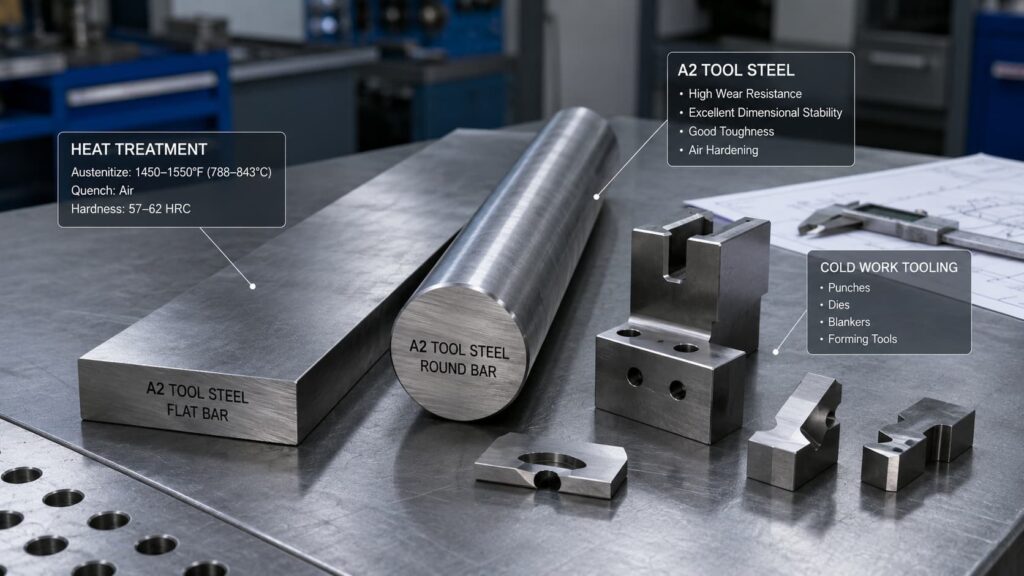
The performance of A2 tool steel comes from its alloy balance. Carbon supports hardness and wear resistance. Chromium improves hardenability and wear performance. Molybdenum helps strength and heat-treatment response. Vanadium supports grain refinement and wear behavior.
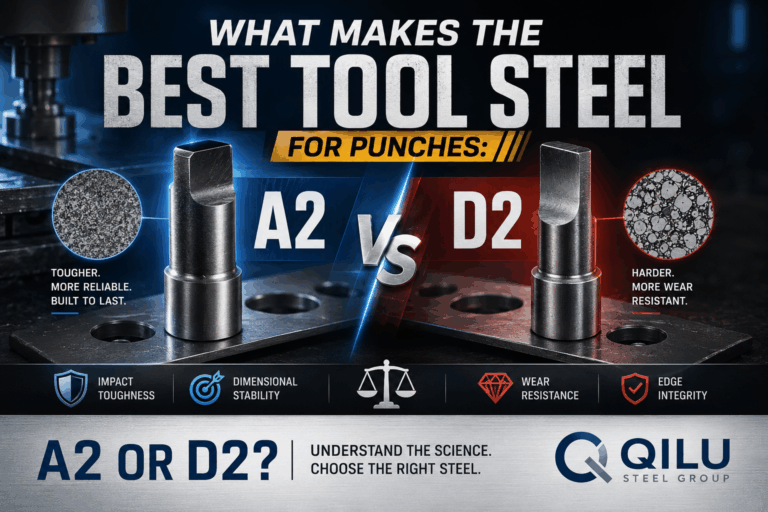
Compared with D2, A2 has lower carbon and chromium, so it usually gives up some extreme abrasion resistance. In return, it often offers a better balance of toughness, machinability, and heat-treatment stability. Paulo’s comparison of S7, D2, and A2 explains that A2 is valued for dimensional stability and balanced cold work performance, while D2 leans more heavily toward wear resistance.
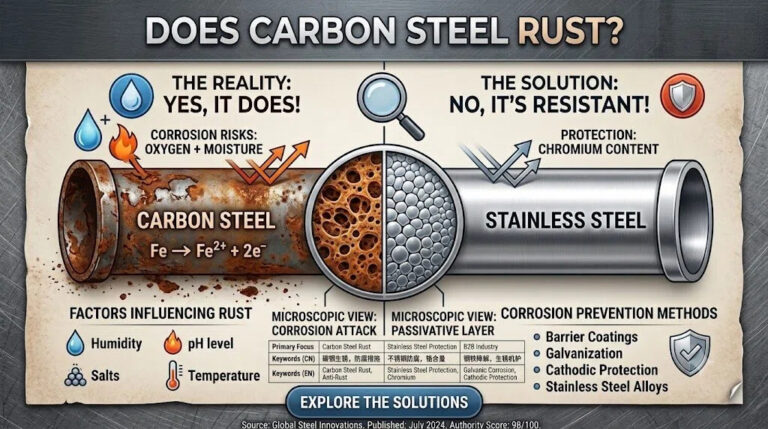
A2 tool steel is not a stainless steel, even though it contains chromium. It can still rust in wet or corrosive environments if not protected.
A2 Tool Steel Properties That Matter in Real Tooling
The most searched A2 tool steel properties include hardness, wear resistance, toughness, machinability, and dimensional stability. These are useful, but they should be understood as working properties, not isolated numbers.
Hardness helps edge retention and wear life. Wear resistance matters in punches, dies, slitters, and blades. Toughness helps reduce chipping under moderate impact. Dimensional stability matters when a tool must keep accurate size after heat treatment.
That is why A2 tool steel is often used when the tool must hold shape, resist wear, and avoid excessive distortion after hardening.
A2 Tool Steel Hardness Before and After Heat Treatment
Many users search for A2 tool steel hardness before heat treat because they want to know whether it can be machined before hardening. In annealed condition, A2 is much easier to machine than after heat treatment.
After hardening and tempering, A2 tool steel commonly reaches around 57–62 HRC, depending on the austenitizing temperature, quenching method, tempering temperature, and section size. AZoM’s A2 data shows that hardness changes with tempering temperature, with lower tempering temperatures generally giving higher Rockwell C hardness and higher tempering temperatures reducing hardness while improving toughness.
This matters because the hardest setting is not always the best setting. A punch, die, or blade that is too hard may chip earlier if toughness is sacrificed.
Machining, Grinding, and Heat Treatment Considerations
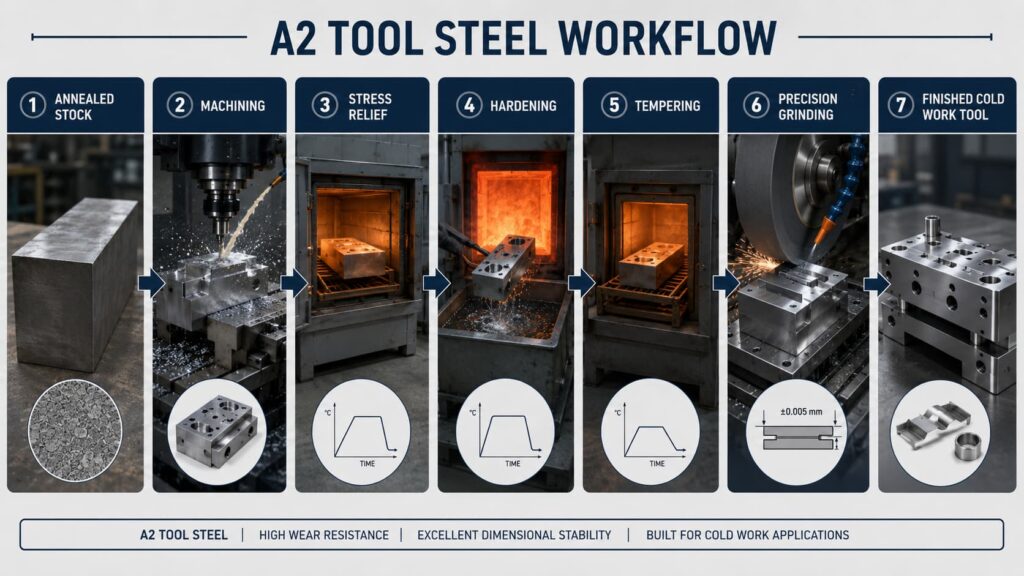
A2 tool steel is normally machined in the annealed condition and then heat treated. After hardening, finishing is usually done by grinding rather than conventional machining.
For precision tooling, stress relief is worth considering after heavy machining. Industrial Metal Supply’s A2 data sheet notes that when heavy machining cuts are used, stresses may be relieved by heating and cooling in still air before finish machining.
Grinding also needs care. Overheating during grinding may reduce surface quality, cause grinding burn, or increase cracking risk. For precision tools, the machining route should be planned together with heat treatment rather than treated as two separate steps.
Yield Strength and Tensile Strength: Useful, but Not Enough
Some buyers search for A2 tool steel yield strength or tensile strength. These numbers can be useful, but they are not the first values to check for tooling decisions.
Tool steels are commonly selected by hardness, wear resistance, toughness, dimensional stability, heat-treatment response, and failure mode. Tensile and yield values depend heavily on heat-treatment condition, so a number without condition can be misleading.
If the tool fails by wear, look at hardness and wear resistance. If it fails by cracking or chipping, toughness and heat treatment are more important. If it fails by distortion, dimensional stability and stress relief may matter more than tensile strength.
What Is A2 Tool Steel Used For?
A2 tool steel is used in cold work tooling where balanced wear resistance and dimensional stability are important.
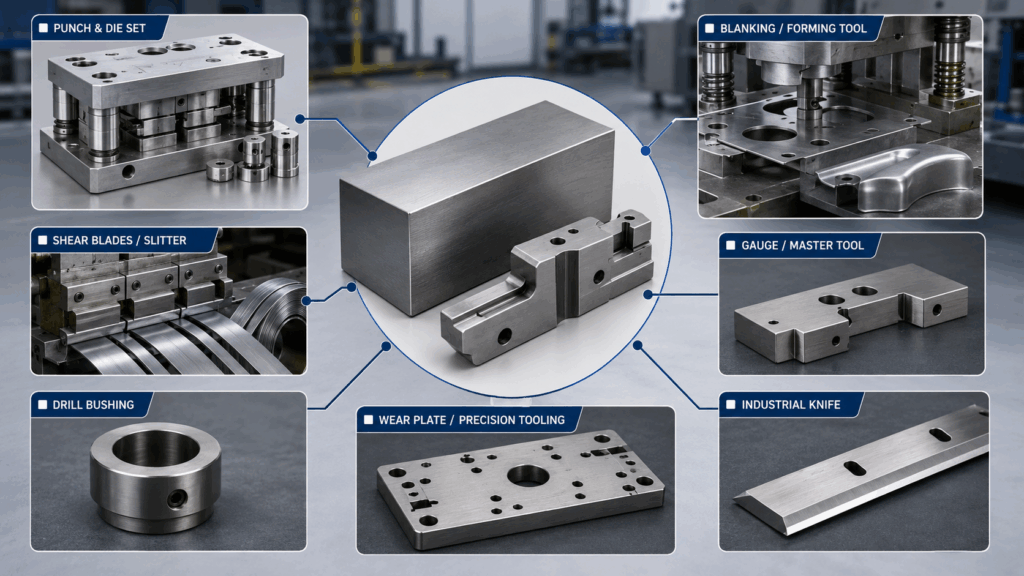
Common applications include:
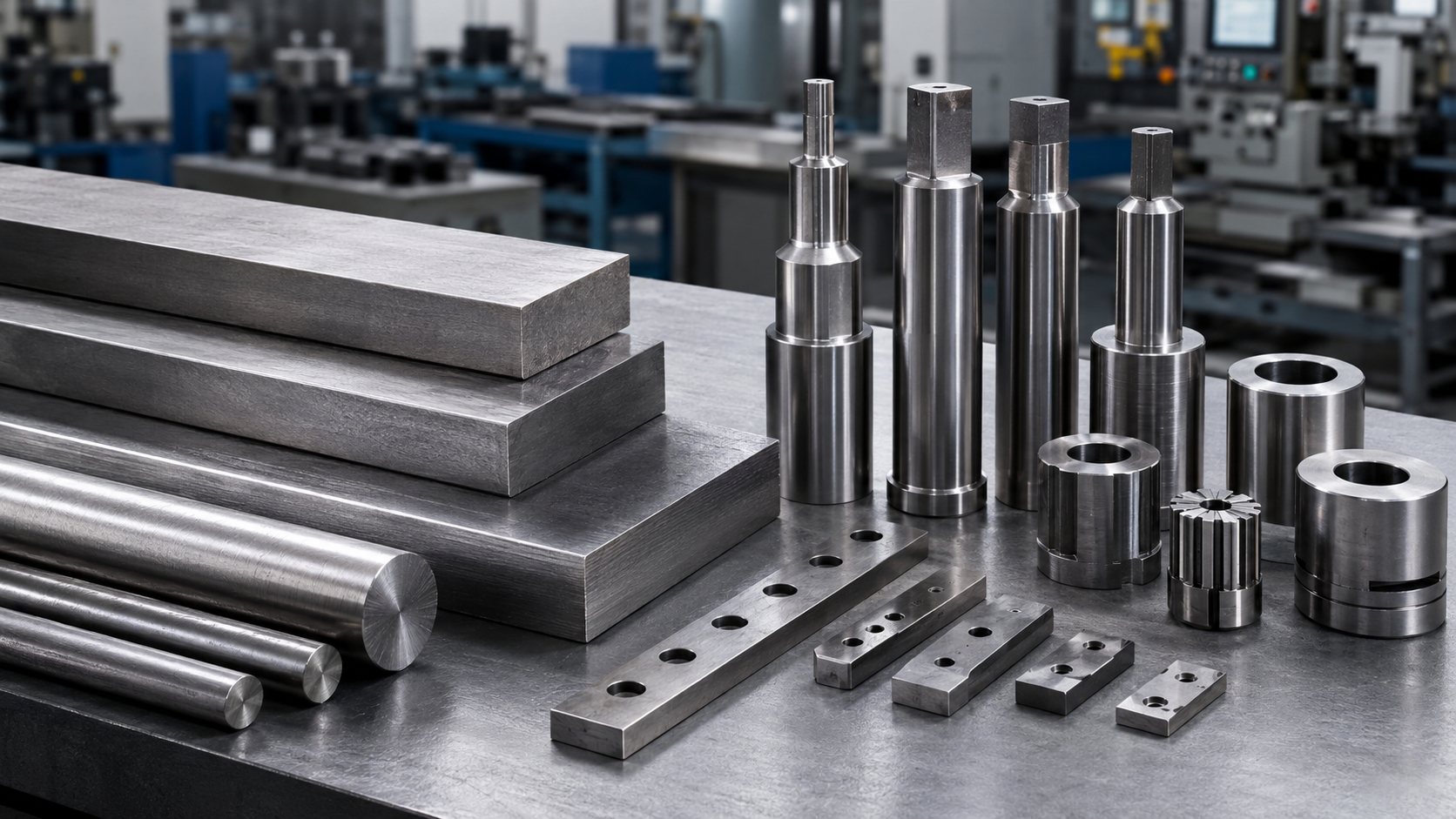
- punches and dies;
- blanking and forming tools;
- shear blades and slitters;
- gauges and master tools;
- drill bushings;
- industrial knives;
- wear plates and precision tooling components.
A2 tool steel is especially useful when a tool must be accurate after heat treatment, but the job is not severe enough to require a more specialized grade.
Advantages and Limitations of A2 Tool Steel
The main advantages are:
- good wear resistance;
- better toughness than many high-wear cold work grades;
- strong dimensional stability;
- air-hardening behavior;
- useful machinability before hardening;
- broad cold work tooling application range.
The limitations are just as important. A2 tool steel is not as wear-resistant as D2. It is not as shock-resistant as S7. It is not designed for hot-work thermal cycling like H13. It is also not stainless.
A good way to think about it: A2 is a balanced cold work tool steel, not a universal solution.
When to Use A2 Tool Steel—and When Not To
Use A2 tool steel when the job involves moderate wear, moderate impact, and a need for dimensional stability. It is a strong candidate for punches, dies, blanking tools, forming tools, gauges, slitters, and precision cold work tooling.
Do not use it blindly.
If the tool breaks suddenly under repeated shock, S7 may be more suitable. If the tool wears too fast under severe abrasion, D2 may be better. If the job involves hot forging, die casting, or thermal cycling, H13 is usually a more logical option. If the part is only a shaft, fixture, or general mechanical support, 4140 may be more cost-effective than A2 tool steel.
A2 Steel Equivalent and International Grade Cross-Reference
However, “equivalent” does not always mean perfect replacement. Buyers should still confirm chemical composition, heat-treatment requirements, hardness range, supply condition, and final performance.
A2 Tool Steel vs D2, O1, S7, 4140, and H13
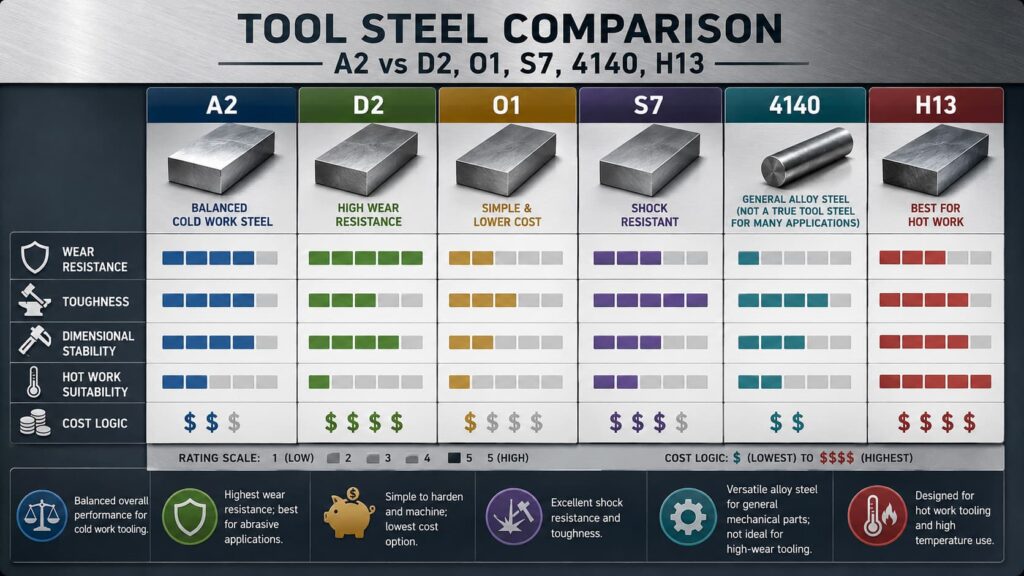
A2 vs D2: choose A2 when you need better toughness, machinability, and dimensional stability. Choose D2 when higher wear resistance matters more.
A2 vs O1: choose A2 when heat-treatment distortion control is important. Choose O1 when lower cost and easier machining matter more.
A2 vs S7: choose A2 for wear and stability. Choose S7 for severe impact, chisels, breaker tools, and shock-loaded stamps.
A2 vs 4140: A2 is a tool steel for wear tooling. 4140 is an alloy structural steel, better suited for shafts, fixtures, supports, and mechanical parts.
H13 vs A2: H13 is a hot work tool steel. A2 is a cold work tool steel. If heat cycling is the problem, A2 is usually not the right direction.
How to Choose an A2 Tool Steel Supplier
When buying A2 tool steel, ask for more than size and price.
Check whether the supplier can provide material certification, chemical composition, supply condition, hardness condition, available forms, tolerance, and heat-treatment guidance. Common forms include flat bar, round bar, plate, ground stock, and pre-machined blanks.
A supplier who understands tooling applications can help you avoid choosing A2 for the wrong failure mode.
A supplier who understands tooling applications can help you avoid choosing A2 for the wrong failure mode.
Sonuç
A2 tool steel is valuable because it balances wear resistance, toughness, machinability, and heat-treatment stability. It is often a smart choice for cold work tools that need reliable performance without the extreme wear focus of D2 or the shock focus of S7.
The best results come from matching the grade to the failure mode. If the tool mainly wears, A2 may work well. If it breaks under severe shock, consider S7. If it faces hot-work thermal cycling, consider H13. Used in the right place, A2 tool steel can be a dependable foundation for punches, dies, blades, gauges, and precision tooling.
SSS
What is A2 tool steel?
A2 tool steel is an air-hardening cold work tool steel known for wear resistance, moderate toughness, and dimensional stability after heat treatment.
What is A2 tool steel used for?
It is used for punches, dies, blanking tools, forming tools, shear blades, slitters, gauges, and precision tooling.
What is A2 tool steel hardness before heat treat?
Before heat treatment, A2 is usually supplied annealed, making it much easier to machine than hardened A2.
How hard can A2 tool steel get?
A2 commonly reaches about 57–62 HRC after proper heat treatment, depending on tempering conditions.
Is A2 better than D2?
Not always. A2 is usually tougher and easier to machine, while D2 usually offers higher wear resistance.
Does A2 tool steel rust?
Yes. A2 contains chromium but is not stainless steel, so it can rust without protection.