Table of Contents
What is C-Shaped Steel?
C-Shaped Steel is a type of thin-walled, open-section steel profile formed through a cold-bending process. It is manufactured by pressing and bending hot-rolled or cold-rolled steel strips into a distinctive “C” shape, often with curled edges for added stability.
The key characteristics are:
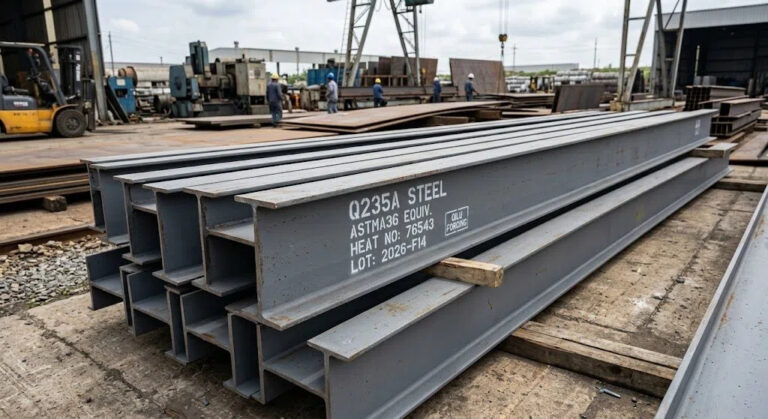
- Material: Made from steel strips, commonly carbon steel (e.g., Q235 grade).
- Process: The primary forming method is cold-bending, which shapes the steel at room temperature using a series of rollers.
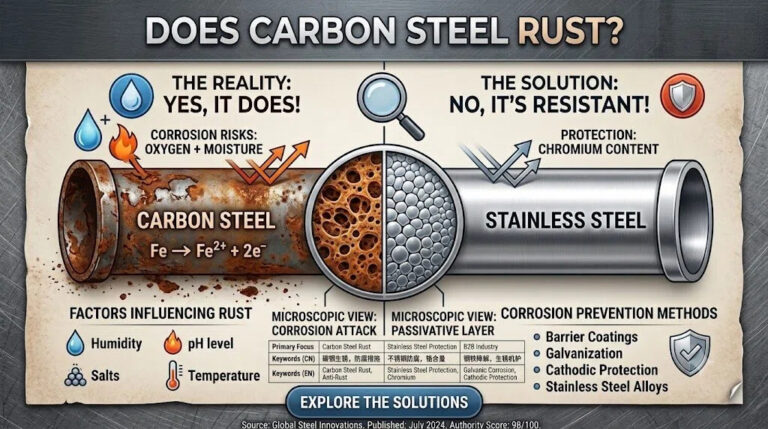
- Surface: It can be supplied with various coatings, such as a zinc coating (galvanized) or paint, for corrosion resistance.
- Category: It falls under the broader category of cold-formed steel sections.
Essentially, it’s a lightweight yet strong steel section widely used as a structural component.

Types of C-Shaped Steel
C-Shaped Steel can be categorized in several ways to suit different project requirements.
By Surface Treatment
- Galvanized C-Shaped Steel: Features a zinc coating, offering excellent rust resistance. This is the most common type.
- Painted C-Shaped Steel: Coated with paint for additional color or environmental protection.
- Uncoated C-Shaped Steel: Has no surface treatment and is suitable only for dry, indoor environments.
By Base Material
- Regular Carbon Steel C-Shaped Steel: (e.g., Q235). Offers great value and is sufficient for most applications.
- Stainless Steel C-Shaped Steel: Provides superior corrosion resistance for harsh or special environments.
By Primary Use
- C-Shaped Steel for Building Purlins
- C-Shaped Steel for Solar Panel Mounts
- C-Shaped Steel for Storage Racks
- C-Shaped Steel for Curtain Wall Frames
By Design Details
- C-Shaped Steel with Curled Edges: The curled lips enhance stability and strength.
- C-Shaped Steel without Curled Edges: A simpler design for less demanding applications.
- C-Shaped Steel with Extra Ribs: Includes additional stiffening ribs for increased load-bearing capacity.
Why Choose C-Shaped Steel? Key Advantages
Choosing C-Shaped Steel brings numerous benefits to a project:
- High Strength-to-Weight Ratio: The “C” shape provides excellent resistance to bending and buckling, offering reliable support while being lightweight.
- Cost-Effective: The cold-bending manufacturing process is efficient and generates less material waste. Its light weight also reduces transportation and installation costs.
- Design Flexibility & Easy Installation: It can be custom-ordered in specific lengths and thicknesses. It is easy to cut, handle, and install, often without the need for heavy machinery, which speeds up construction time.
- Versatile Applications: With appropriate surface treatments, it can be used indoors, outdoors, and in damp conditions, making it suitable for a wide range of projects.
- Eco-Friendly: It uses less raw material and is fully recyclable, contributing to sustainable building practices.
Limitations of C-Shaped Steel
It’s important to understand its limitations for proper application:
- Lower Torsional Resistance: The open “C” shape is not as effective as closed sections (like rectangular tubes) in resisting twisting forces.
- Susceptible to Local Buckling: Under heavy loads, the thin walls (flanges or web) can buckle. Careful consideration of span length or the addition of stiffeners is required.
- Requires Corrosion Protection: The open design can trap moisture and dirt. A high-quality surface coating is essential to prevent rust, especially in corrosive environments.
- Limited Load Capacity: It is not suitable as the primary load-bearing member for very long spans or extremely heavy loads; it is best used for secondary structures.
- Handling Care: The thin walls can be easily damaged during transport and installation if not handled carefully.

Common Applications of C-Shaped Steel
This versatile material is used across numerous industries:
- Building Construction: As purlins and wall girts in factories, warehouses, and steel-frame houses. Also used for curtain wall frames and door/window lintels.
- Solar Power Generation: The primary component for support structures in both rooftop and ground-mounted solar panel installations.
- Storage and Logistics: As beams and posts for storage rack systems, and for supports in warehouse roofs and canopies.
- Agricultural Buildings: For the framework and purlins of greenhouses and livestock sheds, where its durability is well-suited.
- Public and Miscellaneous Facilities: Used for signboard supports, road guardrails, frames for temporary structures, and as supports for ventilation ducts and cable trays.
Sonuç
C-Shaped Steel is a thin-walled, cold-formed steel section known for being lightweight, strong, and cost-effective. Its key advantages include design flexibility, ease of installation, and adaptability to various environments. It is predominantly used in construction, solar energy, and storage as secondary structural components like purlins, solar mounts, and rack parts. Its main drawbacks are a lower resistance to twisting and buckling and a reliance on good surface protection against corrosion. It is not ideal for primary, heavy-load-bearing structures over long spans.
SSS
What is C-Shaped Steel mainly made from?
It is primarily made from regular carbon steel (such as Q235). For corrosive environments, stainless steel is an option. Most pieces are galvanized or painted for rust prevention.
What is the main advantage of using C-Shaped Steel?
Its primary advantage is its excellent strength-to-weight ratio, providing robust support while being lightweight. This, combined with its cost-effectiveness, ease of installation, and versatility, makes it a popular choice.
Where is C-Shaped Steel mainly used?
It is extensively used as secondary structural elements in building frames (purlins), solar panel mounting systems, components for storage racks, and frames for agricultural buildings like greenhouses.