Welcome to My Blog!
Before we dive into the content, I’d love for you to join me on my social media platforms where I share more insights, engage with the community, and post updates. Here’s how you can connect with me:
Facebook:https://www.facebook.com/profile.php?id=100087990137347
LinkedIn:https://www.linkedin.com/company/89825762/admin/dashboard/
YouTube:www.youtube.com/@carbonsteelsupply-kj9lw
TikTok:www.tiktok.com/@carbonsteelsupply
Now, let’s get started on our journey together. I hope you find the content here insightful, engaging, and valuable.
Table of Contents
What Is an H-Beam?
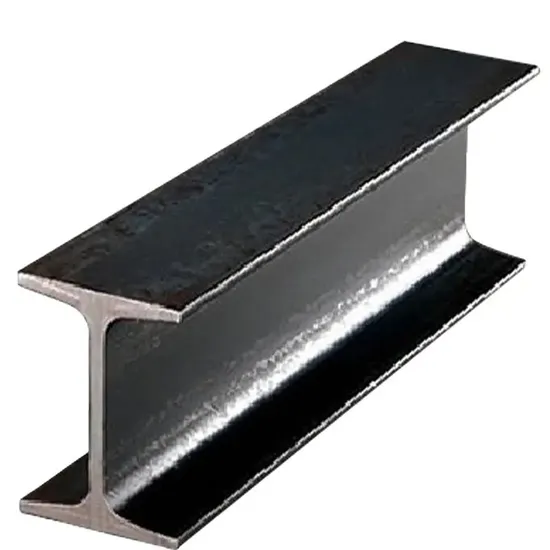
An H-beam is a structural steel member shaped like the capital letter “H.” It consists of two parallel flanges connected by a vertical web, which evenly distributes stress and improves load-bearing capacity. Compared to traditional I-beams, H-beams provide greater strength, stability, and versatility, making them a preferred choice for modern construction and engineering projects.
Classification of H-Beams
H-beams are categorized according to flange width, production process, application, and material type. The table below summarizes the main classifications and their characteristics.
| Classification Type | Subcategory | Description |
|---|---|---|
| By Flange Width | HW (Wide Flange) | Suitable for heavy-duty columns and load-bearing structures |
| HM (Medium Flange) | Used for general construction and framework projects | |
| HN (Narrow Flange) | Ideal for beams and components with space limitations | |
| By Production Process | Hot-Rolled H-Beam | High production efficiency and lower cost |
| Welded H-Beam | Better precision and surface quality | |
| By Application | Building, Bridge, Machinery, Shipbuilding | Different grades are designed for diverse structural needs |
| By Material | Carbon Steel, Alloy Steel, Weathering Steel, Stainless Steel | Selected based on strength, corrosion resistance, and environment |
This classification helps engineers select the right H-beam steel type based on project requirements and environmental factors.
Advantages of H-Beams
- High strength and stability – Offers exceptional load-bearing capacity for vertical and horizontal stresses.
- Excellent workability – Easy to cut, drill, and weld, meeting the needs of complex designs.
- Lightweight efficiency – Provides the same strength with less material weight, reducing transportation and installation costs.
- Good weldability – Welding is straightforward and less prone to defects.
- High cost-performance – Efficient material use and simplified installation lower overall project costs.
- Sustainability – Fully recyclable, supporting green and sustainable construction practices.
Limitations of H-Beams
While H-beams have numerous benefits, some limitations should be considered:
- Poor corrosion resistance: Standard steel H-beams may rust in humid or marine environments, requiring protective coatings.
- Weak local stability: Thin flanges may buckle under extreme load if not properly reinforced.
- High precision manufacturing: Dimensional accuracy directly affects structural safety.
- Strict welding quality: Welding must meet engineering standards to maintain strength.
- Transportation challenges: Longer beams require specialized transport and installation equipment.

Common Applications of H-Beams
Building Structures
H-beams are widely used in high-rise buildings, industrial workshops, and roof trusses. Their ability to bear heavy loads makes them ideal for columns, beams, and supports in large-scale construction.
Bridge Engineering
In bridge projects, H-beams are used as main girders and support columns, resisting both static and dynamic vehicle loads.
Machinery Manufacturing
H-beams serve as frames, bases, and support structures in heavy machinery and industrial equipment.
Shipbuilding
In ship construction, H-beams reinforce keels, ribs, and deck beams, ensuring durability and strength in harsh marine environments.
Energy and Communication Infrastructure
They are essential for power transmission towers and communication towers, providing reliable support and safety for equipment.
Sonuç
The H-beam is an indispensable structural steel product characterized by high strength, excellent processability, and efficient load distribution. It is widely used in construction, bridges, machinery manufacturing, shipbuilding, power systems, and communication structures. Although it has certain limitations such as corrosion susceptibility and high precision requirements, its overall performance and cost-effectiveness make it one of the most widely used materials in modern infrastructure and industrial applications.
SSS
What is the difference between an H-beam and an I-beam?
The H-beam has wider, parallel flanges and a thinner web, which offers greater strength and stability compared to the standard I-beam.
Why is the cross-section shaped like an “H”?
The “H” design allows for optimal bending resistance, torsional stiffness, and load distribution, reducing the need for additional supports or welding.
What are the main production processes for H-beams?
There are two primary methods:
Hot-rolled H-beams: Efficient production, lower cost, suitable for large-scale projects.
Welded H-beams: High precision and excellent surface quality, used in specialized applications.
Where can H-beams be purchased?
H-beams can be sourced from steel manufacturers, construction material suppliers, or industrial distributors offering hot-rolled and welded H-beam steel in various grades and dimensions.
What industries use H-beams the most?
They are commonly used in civil engineering, mechanical manufacturing, shipbuilding, bridge construction, and energy infrastructure.