Table of Contents
What Is 410 Stainless Steel Coil?
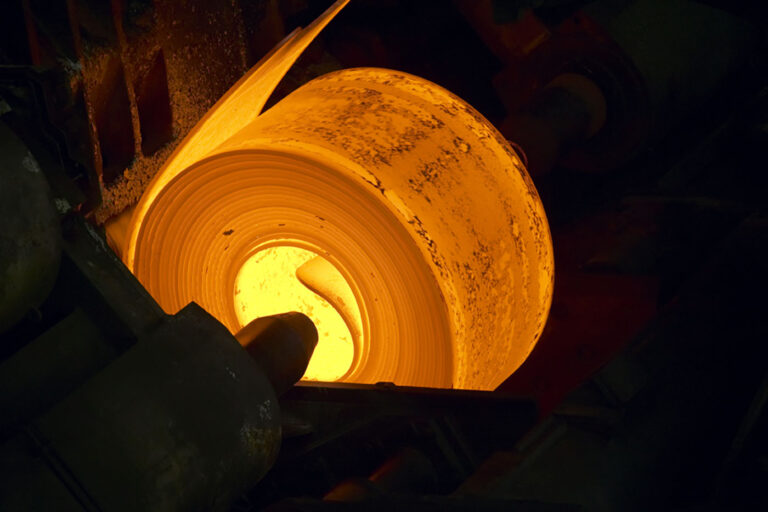
A 410 coil is an industrial steel product. It’s made from 410 martensitic stainless steel. It gets hot-rolled or cold-rolled, then wound into a coil. It’s a basic stainless coil known for good value.
For material: Its base is iron. It has 11.5%-13.5% chromium (gives basic rust resistance) and 0.08%-0.15% carbon (makes it stronger). It has little or no nickel. This makes it cheaper than 304 austenitic stainless steel. But it doesn’t resist corrosion as well. It’s only good for dry or mildly corrosive places.
For performance: It’s good for machining. You can stamp it, bend it. You can also change its hardness with heat treatment (quenching and tempering). The coil shape is easy to store and move. It fits well into continuous factory production.
For uses: It’s often used where corrosion needs are medium, but cost and strength matter. Examples are kitchen knives, pot stands, support parts inside washing machines, hardware hinges, and valve parts for machinery. Sometimes it gets polished or painted to look better or resist rust a bit more.

Types and Benefits of 410 Stainless Steel Coil
410 stainless coils are usually sorted by how they’re rolled and their surface finish. This matches what factories need for their next processing steps.
By Rolling Process:
Cold-Rolled 410 Coil: Rolled at room temperature. Has high thickness accuracy (usually 0.3-3mm). The surface is smooth and flat. You can use it directly for parts where looks and size matter (like appliance covers, cookware parts). No need for extra grinding.
Hot-Rolled 410 Coil: Rolled at high temperature. Comes in a wider thickness range (3-16mm). The surface has a scale (oxide layer). It’s less hard but more bendable. Often used as material for later cold rolling. Or used directly for machine parts where surface finish isn’t important (like rough valve blanks).
By Surface Finish:
Brushed Finish Coil: Surface has uniform lines. Resists slipping and minor scratches. Good for hardware items (like hinges, handles).
Polished Finish Coil: Surface is shiny like a mirror. Makes it look nicer. Used a lot for cookware (like knife blades) or decorative parts.
Pickled Finish Coil: The hot-rolled scale is removed. Surface looks dull, grey-white. Mainly used as an intermediate material, easy for later painting or coating.
Main Benefits

Good Value for Money: Has no or very little nickel. Material cost is much lower than 304 or 316 austenitic stainless steels. Good for cost-sensitive jobs where corrosion resistance doesn’t need to be top-level (like common hardware, support parts in appliances).
Excellent for Processing: Easy to work with cold processes like stamping, bending, and cutting. After heat treatment (quenching + tempering), its hardness and strength can increase a lot. (For example, a knife edge needs high hardness – heat treatment can do that). This makes it fit for making many complex parts.
Basic Corrosion Resistance is Enough: Contains 11.5%-13.5% chromium. This forms a protective chromium oxide layer on the surface. It resists dry conditions and mild oil/corrosion better than regular carbon steel. Good enough for non-harsh places like kitchens or inside appliances.
Coil Shape Helps Efficient Production: The coil form is easy to store in bulk and ship long distances (less damage than separate sheets). It also works well with continuous factory lines (e.g., a hardware factory can uncoil and stamp parts non-stop). This boosts production speed.
FAQ
Is 410 stainless steel’s corrosion resistance better than 304’s?
No, it’s worse. It only handles dry or slightly oily conditions. Damp or salty environments cause it to rust easily. Much worse than 304.
What are the main elements in 410 stainless steel?
Base is iron. Chromium 11.5%-13.5% (fights corrosion). Carbon 0.08%-0.15% (increases strength).
What is 410 stainless steel coil good for? What is it bad for?
Good for: Knives, appliance support parts, hardware items.
Bad for: Outdoor parts, parts touching food for a long time, chemical equipment.
Can you heat treat 410 stainless steel coil?
Yes. Quenching (makes it harder) + Tempering (balances toughness). Used for parts needing high hardness, like knives.
What if a 410 stainless steel coil part rusts?
If light rust: Use sandpaper to rub it off, then apply anti-rust oil.
If bad rust: Replace the part.
To prevent rust: Keep it dry. Do surface polishing or painting.