
Welcome to My Blog!
Before we dive into the content, I’d love for you to join me on my social media platforms where I share more insights, engage with the community, and post updates. Here’s how you can connect with me:
Facebook:https://www.facebook.com/profile.php?id=100087990137347
LinkedIn:https://www.linkedin.com/company/89825762/admin/dashboard/
YouTube:www.youtube.com/@carbonsteelsupply-kj9lw
TikTok:www.tiktok.com/@carbonsteelsupply
Now, let’s get started on our journey together. I hope you find the content here insightful, engaging, and valuable.
Table of Contents
Introduction
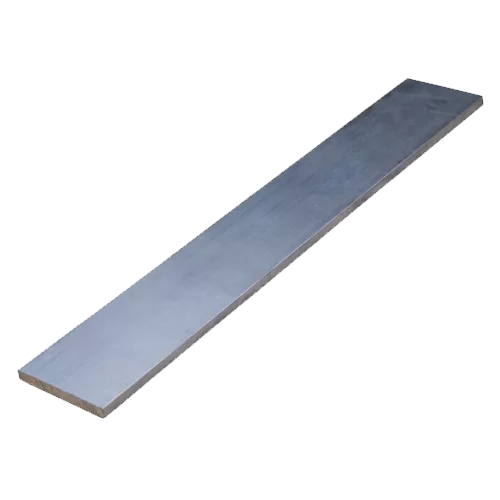
M3 steel is a molybdenum-based high-speed tool steel with high hardness, high wear resistance and good hot hardness. It is widely used in machining, mold manufacturing, aerospace and automobile manufacturing. The carbon content and vanadium content of M3 high speed tool steel is between M2 and M4. This gives the steel a good balance between wear resistance and grind-ability, and provides excellent wear resistance and edge breaking properties.
Why Choose M3 Steel?
Advantages
High wear resistance
The carbide particles in M3 steel are small and evenly distributed, which makes its wear resistance significantly better than ordinary steel. M3 steel can maintain a along service life under high load and high stress cutting conditions. The hardness can reach 62-66HRC after quenching and tempering, even at a higher hardness at high temperature, which is suitable for high precision cutting tools.
High Thermal Hardness
M3 steel can still maintain higher hardness and cutting performance at high temperature, making it suitable for high-speed cuttings. This feature makes it perform well in processing high-strength materials. The addition of alloying elements such as molybdenum (Mo) and tungsten (W) further improves the hot hardness of steel, enabling it to maintain its performance for a long time under high temperature conditions.
High Toughness
M3 steel has higher toughness, and can withstand a certain impact force, making it suitable for manufacturing tools and molds with complex shapes. The uniform distribution of carbides not only improves its wear resistance, but also enhance its toughness, making it less likely to break under high loads.
Good processability
M3 steel has good grindability and is easy to process with high precision. During the cutting process, M3 steel shows good cutting performance and can effectively reduce abrasion of tools.
Excellent heat treatment performance
M3 steel has good hardenability, and can obtain uniform hardness distribution after quenching. After tempering,the hardness is stable and can be maintained between 62-66HRC.
Limitation
Thermal processing and heat treatment sensitivity
M3 steel is easy to decarburization during hot working and heat treatment, which can cause a decrease in surface hardness and affect the service life of the tool.
M3 steel is very sensitive to overheating. Once the heating temperature is too high,it will easily lead to coarse grains and reduce the toughness and wear resistance of the steel. The heat treatment process of M3 steel has strict requirements, and the quenching and tempering temperature range is narrow. Importer operation can easily lead to substandard performance.
Processing difficulty
Although M3 steel has good grindability, due to its high hardness and high wear resistance,it is easy to occur with heat during grinding process, and grinding parameters need to be strictly controlled. M3 steel has high hardness, and will require high performance tools during cutting process, and need to adjust the cutting parameters, otherwise it is easy to cause tool abrasion.
High Cost
Since M3 steel has various expensive alloy elements, such as molybdenum, tungsten, vanadium, etc., its material cost is relatively high.
Strict heat treatment process and processing requirements also increase the processing cost of M3 steel.
Limited Application Range
Although M3 steel has good hardness, its performance under extremely high temperature conditions is still not as good as some high-performance powder metallurgy steels or cemented carbides.
Although M3 steel has some corrosion resistance, its performance is not as good as stainless steel or corrosion-resistant alloys in strong corrosive environments.
Environmental Adaptability
M3 steel has limited oxidation resistance at high temperature and easy to oxidation when exposed to high temperature environment for a long time.
Application of M3 Steel
Tool Manufacturing
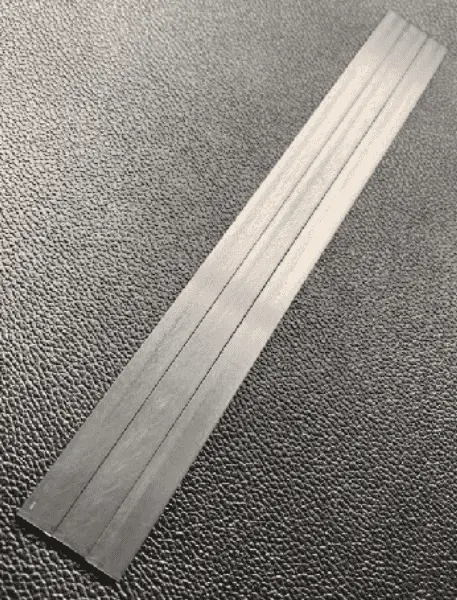
M3 steel is widely used in the manufacture of various cutting tools, including milling cutters, turning tools, planers, drill bits, etc. Its high hardness and wear resistance can effectively improve cutting efficiency and tool life while maintaining high machining accuracy and surface quality. For example, in machining,the tools mad of M3 steel can be used to process various materials such as cast iron, alloy steel, stainless steel and high-temperature alloys.
Mold Manufacturing
M3 steel is also widely used in the field of mold manufacturing, suitable for manufacturing stamping molds,cold heading molds, plastic molds, etc. It’s good wear resistance and thermal stability enable it to maintain the accuracy and performance of the mold under high load and high temperature environment, extending the service life of the mold under high load and high temperature environment, extending the service life of the mold.
Aerospace
In the aerospace field, M3 steel is widely used in manufacture high temperature parts and turbine blades, etc. Its high hot hardness and good deformation resistance enable it to maintain stable performance in high temperature and high stress environment, meeting the strict requirement of the aerospace industry for materials.
Automotive
M3 steel also has important applications in automobile manufacturing,such as in the manufacturing of engine parts and transmission components. Its high strength and reliability of automobile parts, while helping to improve the fuel economy and safety of automobiles.
Conclusion
M3 steel has demonstrated excellent application value in multiple industrial fields due to its high hardness, high wear resistance, good thermal stability and cutting performance. It is widely used in the manufacture of cutting tools, stamping dies, cold heading dies, plastic dies, etc. especially in critical fields such as mechanical processing, aerospace,and automobile manufacturing, and can significantly improve the service life and reliability of tools and parts.
In addition, M3 steel also has important applications in industries such as shipbuilding and electric manufacturing. Although there’s some limitations, such as heat treatment and processing difficulty, its high performance makes it indispensable in industrial production and an ideal material for efficient and high-precision processing and manufacturing.
FAQ
What is the difference between M3 steel and other high speed steel(for example M2,M4)?
M3 steel: Carbon and vanadium content is between M2 and M4, providing excellent wear resistance and grindability.
M2 steel: It is a commonly used tungsten-molybdenum high speed steel with high toughness and good cutting performance.
M4 steel: It contains more alloy elements, has higher hardness and wear resistance, but is also more difficult to process.
How is the processing difficultly of M3 steel?
Difficult to grind: Due to its high hardness and wear resistance, heat is easily generated during the grinding process, and the grinding parameters need to be strictly controlled.
What is the limitation of M3 steel?
Thermal processing and heat treatment sensitivity: Decarburization and overheating are easy to happen, and the heat treatment range is narrow.
Composition segregation problem: Composition segregation is easy to occur in large-scale production, affecting the uniformaity and performance stability of the material.
High cost: Due to the presence of multiple precious alloy elements, the material cost and processing cost are relatively high.