In the competitive landscape of modern manufacturing, the difference between a mediocre product and a high-end masterpiece often lies in the choice of raw materials. For industries where aesthetic perfection meets mechanical rigor—such as automotive body stamping or precision electronics—Cold-rolled Steel Coil (CRC) is the undisputed gold standard.
While hot-rolled steel provides the structural backbone for heavy industry, cold-rolling is where precision truly begins. By processing steel at room temperature, manufacturers can achieve dimensional tolerances and surface qualities that were once thought impossible. Whether you are aiming to reduce scrap in automated production lines or seeking a flawless substrate for premium coatings, understanding the nuances of CRC is essential.
Below is a comprehensive technical breakdown of what makes Cold-rolled Steel Coil an indispensable asset for high-end industrial applications.
Table of Contents
What is CRC/Cold-rolled steel coil?
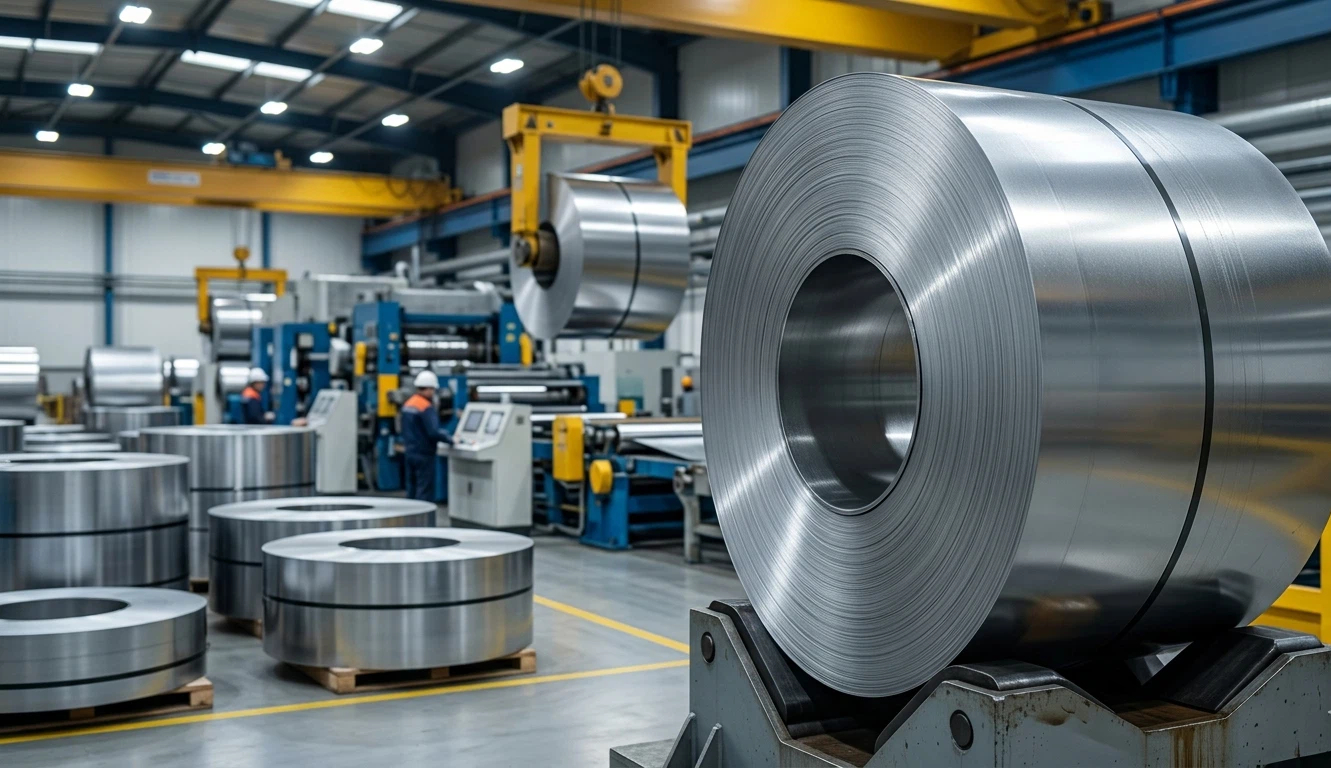
It is produced by further rolling and reducing the thickness of hot-rolled steel coil at room temperature after pickling to remove the oxide scale. It features a mirror-smooth surface, high dimensional accuracy, and superior mechanical properties. It is a high-end steel product that can be used directly in end products or with only simple surface treatment.
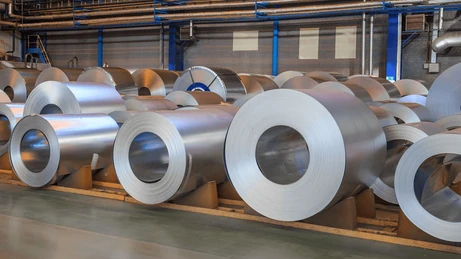
Cold-rolled steel coil Advantages
1.Excellent surface quality: The surface are smooth and flat, free of oxide scale, with strong adhesion for painting, electroplating, and lamination. The finished product has a refined appearance and is presentable enough for use as an exposed surface.
2.High precision: Tight thickness tolerance and straight shape result in less scrap during downstream processing, longer service life for precision stamping molds, and suitability for automated mass production.
3.Superior mechanical: Through controlled annealing and rolling processes, hardness, strength, and ductility can be tailored to specific needs–no cracking during deep drawing, no springback after bending, and no deformation in spring applications.
4.Thin specifications: Can be rolled to below 0.1mm, enabling extreme light-weighing. It is indispensable for thin-walled products such as beverage cans, battery cases, and electronic foil materials.
Cold-rolled steel coil Applications
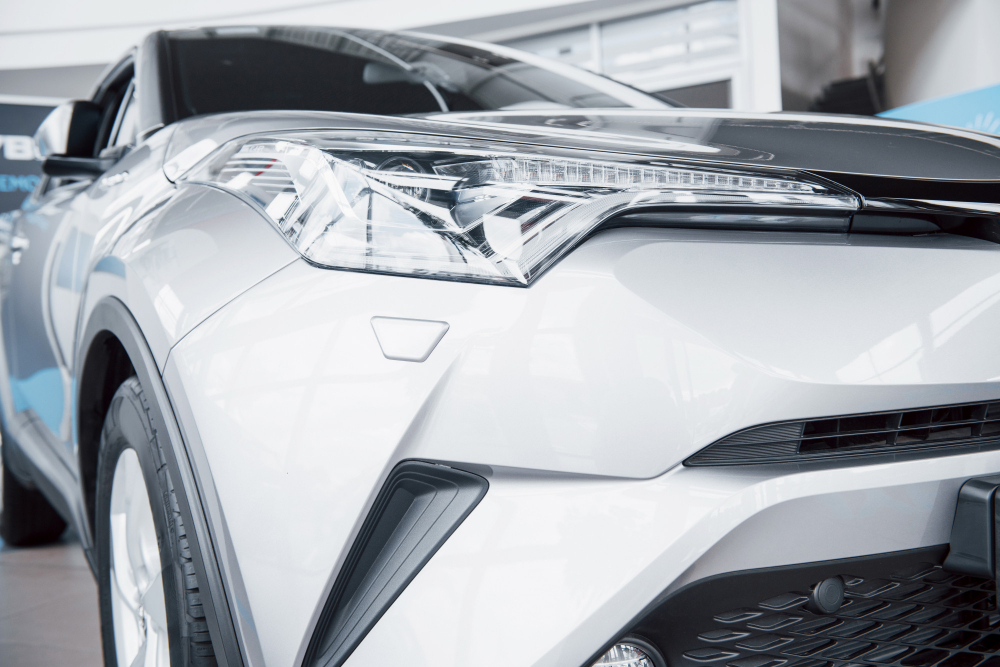
1.Automotive body: Door panels, hoods, roofs, and side panels. Deep-drawing steel offers excellent ductility, enabling complex curved surfaces to be formed in a single operation. High-strength steel enhances safety while reducing vehicle weight and improving fuel economy.
2.Home appliances: Refrigerator panels, washing machine casings, air conditioner compressor covers, microwave oven cavities. Th smooth surface allows for direct spaying or lamination, delivering a refined appearance, precise dimensions ensure tight assembly fit.
3.Precision electronics: Computer cases, metal mid-frames for mobile phones, transformer cores, motor housings. Electrical steel offers low core loss and high magnetic permeability, while electronic housings provide excellent shielding, meeting the stringent tolerances required for precision components.
4.High-end building materials: Elevator car panels, curtain wall decorative panels, kitchen countertops. The surface texture is outstanding, allowing direct use as an exposed surface, enhancing the product grade.
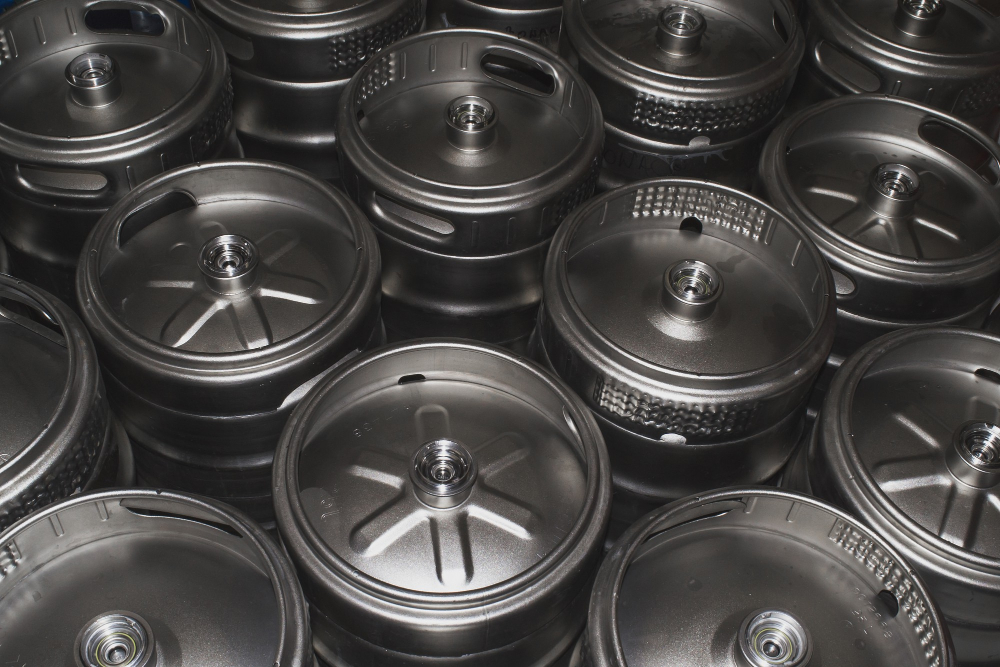
5.Metal products: Beverage cans, battery steel shells, chains, springs, saw blades. Ultra-thin gauges can reach below 0.1 mm with controllable hardness, meeting the dual the dual requirements of light-weighting and high strength.



Cold-rolled Steel Coil vs. Hot Rolled Steel Coil: Key Differences
1.Processing Temperature: Hot rolling occurs at temperatures above the steel’secrystallization point (typically over 1, 700° F), making it easier to shape. In contrast,Cold-rolled Steel Coil is processed at room temperature, which induces “worknardening” and significantly increases the material’s strength.
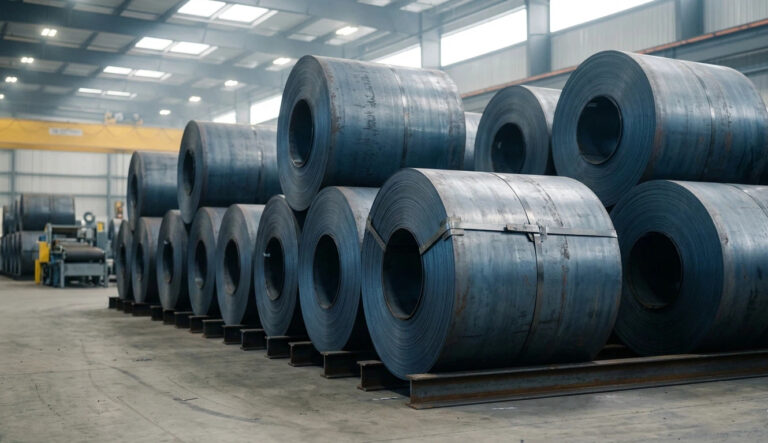
2.Surface Finish: Hot rolled steel often carries a rough, bluish-grey scale (oxide scale). CRC undergoes a pickling process to remove this scale, resulting in a mirror-like, oily, and smooth finish that is ready for immediate painting or plating.
3.Dimensional Integrity: Because steel shrinks as it cools, hot rolled coils have less predictable shapes and looser tolerances. Cold-rolled Steel Coil avoids this cooling-shrinkage issue, offering precise thickness, straight edges, and perfect flatness—essential for high-speed automated stamping lines.
4.Physical Properties: Cold rolling increases the yield strength and hardness of the metal. If your application requires deep drawing or complex bending without cracking, the tailored mechanical properties of CRC are superior to the more generic characteristics of hot rolled steel.
| Feature | Hot Rolled Steel (HRC) | Cold-rolled Steel (CRC) |
| Production Temp | Above Recrystallization | Room Temperature |
| Surface Texture | Rough, Scaled, Matte | Smooth, Oily, Luminous |
| Thickness Tolerance | Loose | Extremely Tight (+/- 0.01mm) |
| Primary Use | Structural, Rail, Construction | Automotive, Appliances, Electronics |
| Cost | Lower | Higher (Value-Added) |
When to Choose Cold-rolled Steel Coil?
Selecting the right steel grade is a balance between performance requirements and budget constraints. While hot rolled steel is suitable for structural frames where aesthetics and precise dimensions are secondary, Cold-rolled Steel Coil is the mandatory choice when your project demands the following:
- When Surface Aesthetics are Critical: If the final product will be visible to the end consumer—such as refrigerator doors, luxury elevator panels, or high-end furniture—the mirror-smooth surface of CRC ensures a flawless finish after painting or powder coating.
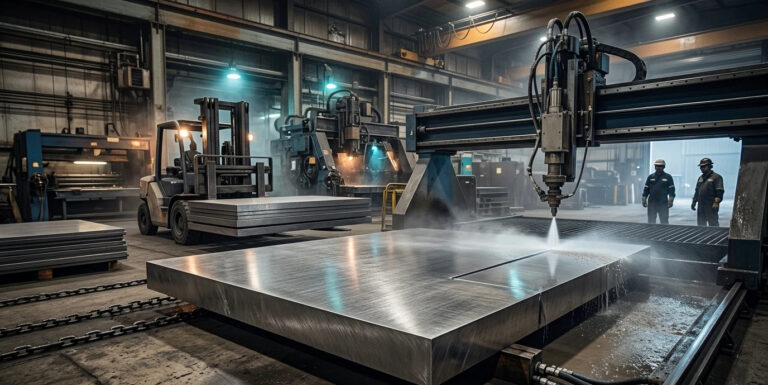
- When Using Automated Stamping or Laser Cutting: Automated production lines require extreme consistency. The tight thickness tolerances of Cold-rolled Steel Coil prevent equipment jamming and reduce tool wear, significantly lowering your long-term maintenance costs.
- When Weight Reduction is a Goal: For industries like automotive and portable electronics, CRC allows for much thinner gauges (down to 0.1mm) without sacrificing structural integrity. This enables “light-weighing” designs that save on shipping costs and improve fuel efficiency.
- When Complex Forming is Required: If your manufacturing involves deep drawing or intricate bending, the controlled mechanical properties of CRC prevent material cracking and “springback,” ensuring each part meets exact engineering specifications.
Maintenance and Storage of Cold-rolled Steel Coil
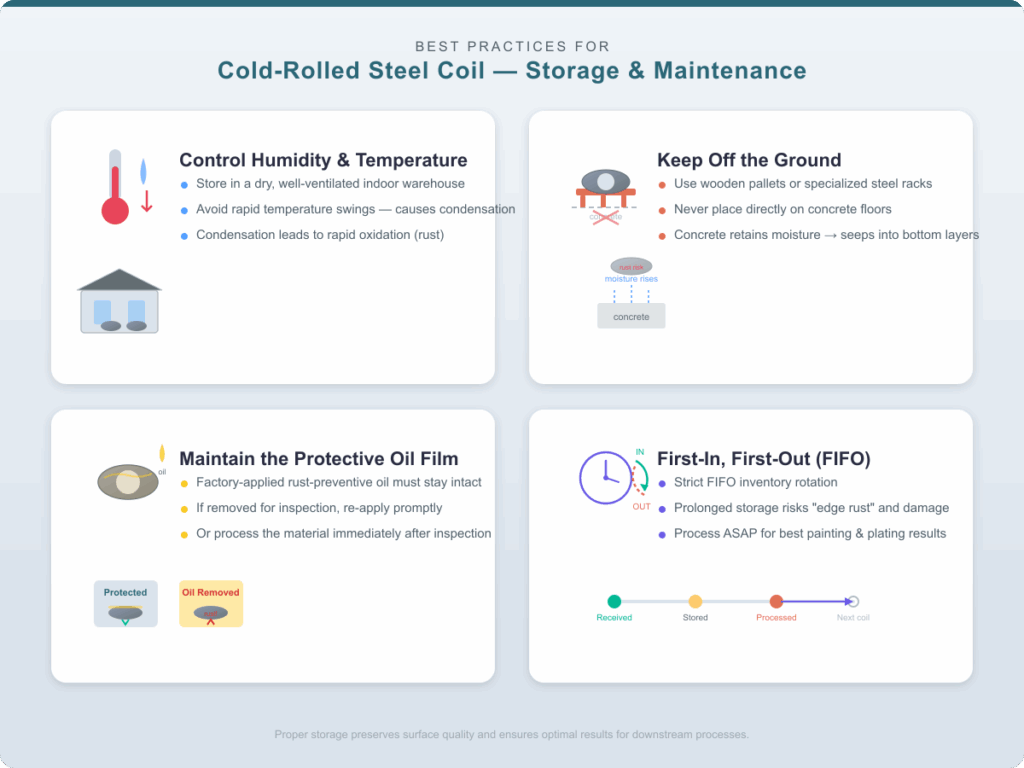
To maintain the premium surface quality of Cold-rolled Steel Coil, proper storage and handling are non-negotiable. Because CRC lacks a protective oxide scale, it is highly sensitive to moisture and temperature fluctuations. Following these maintenance protocols will prevent rust and surface degradation:
- Control Humidity and Temperature: Store Cold-rolled Steel Coil in a dry, well-ventilated indoor warehouse. Rapid temperature changes can cause condensation (sweating) on the metal surface, leading to rapid oxidation. Maintaining a stable, low-humidity environment is the most effective defense against rust.
- Keep Off the Ground: Always store coils on wooden pallets or specialized steel racks. Never place Cold-rolled Steel Coil directly on a concrete floor, as concrete can hold moisture that will seep into the bottom layers of the coil.
- Maintain the Oil Film: Most CRC comes from the factory with a thin layer of rust-preventive oil. Ensure this film remains intact during handling. If the oil is removed for inspection, it should be re-applied or the material should be processed immediately.
- First-In, First-Out (FIFO): Implement a strict FIFO inventory system. Even in optimal conditions, prolonged storage increases the risk of “edge rust” or physical damage. Processing the material as soon as possible ensures the best results for painting and plating.
In summary, the decision to utilize Cold-rolled Steel Coil is a decision to prioritize quality, efficiency, and aesthetic value. From the intricate components of a smartphone to the structural safety of a modern vehicle, CRC provides the high-precision foundation that allows engineering innovation to flourish.
As global manufacturing standards shift toward lighter and more durable materials, the role of premium cold-rolled products will only grow. By choosing the right specifications and ensuring proper anti-corrosion treatments, your business can significantly reduce processing waste and enhance the marketability of your final products.
FAQ
Why is cold rolling more expensive than hot rolling?
The cost lies in the processes and precision. Cold rolling requires additional steps such as pickling, rolling annealing, and tempering, with stricter control over surface quality and dimensional accuracy. It is suitable for applications requiring exposed surface quality or precision assembly. It further processing is needed, hot rolling is more cost-effective, but id you pursue high-quality finished products, cold rolling is worth the investment.
Will cold-rolled material steel coil rust?
Yes, it will. But more slowly than hot-rolled steel. Because its smoot surface lacks the protective oxide scale, it is actually more prone to rusting in humid environments. Storage must be moisture-proof. Most downstream users immediately apply galvanizing, color coating, or oiling, or simply opt for pre-protected products such as galvanized coils or color-coated coils.
Why is there oil on CRC/coil-rolled coils?
That is rust-preventive oil, standard from the factory. It can be left for short-term storage. For long-term storage or applications with high surface requirements, it must be removed with a cleaning agent before use. Some production lines have upgraded to electrostatic oiling or dry rust preventives, making post-treatment more convenient.
What is the thinnest thickness achievable?
Conventional cold rolling starts at 0.3mm, while ultra-thin gauges can reach 0.1mm or even 0.05mm. However, the thinner the gauge, the higher the requirements and the greater the cost. Extreme thin gauges are only used in applications such as battery steel shells, electronic foil materials, and precision shims. For general home appliances and automotive uses, 0.5-1.5mm is sufficient.