Welcome to My Blog!
Before we dive into the content, I’d love for you to join me on my social media platforms where I share more insights, engage with the community, and post updates. Here’s how you can connect with me:
Facebook:https://www.facebook.com/profile.php?id=100087990137347
LinkedIn:https://www.linkedin.com/company/89825762/admin/dashboard/
YouTube:www.youtube.com/@carbonsteelsupply-kj9lw
TikTok:www.tiktok.com/@carbonsteelsupply
Now, let’s get started on our journey together. I hope you find the content here insightful, engaging, and valuable.
Table of Contents
Introduction
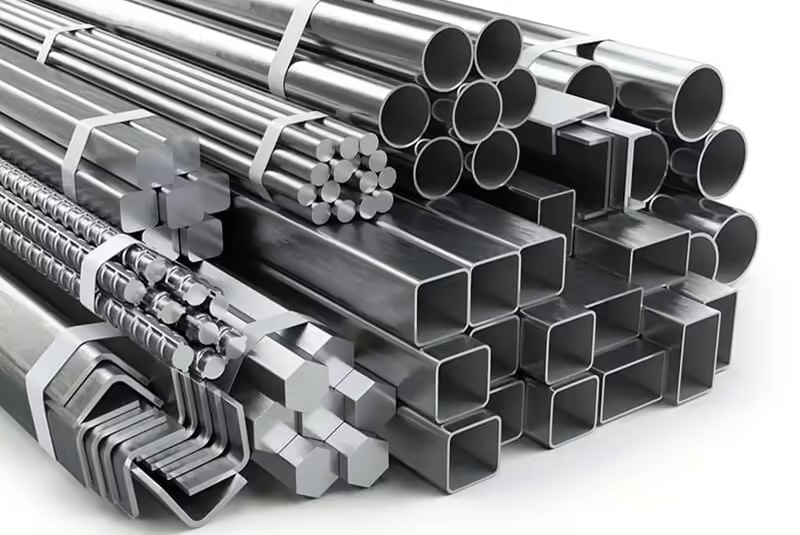
316L stainless steel is a remarkable material that has earned its place as a cornerstone in various industrial sectors. As a low carbon Austenitic stainless steel, it boasts exceptional corrosion resistance, high-temperature resilience, and robust mechanical properties. These attributes make it an ideal choice for applications ranging from marine engineering to medical devices. In this blog, we will delve into the unique advantages of 316L stainless steel, explore its wide-ranging applications, and address some common concerns.
Why Choose 316L Stainless Steel?
Strong Corrosion Resistance
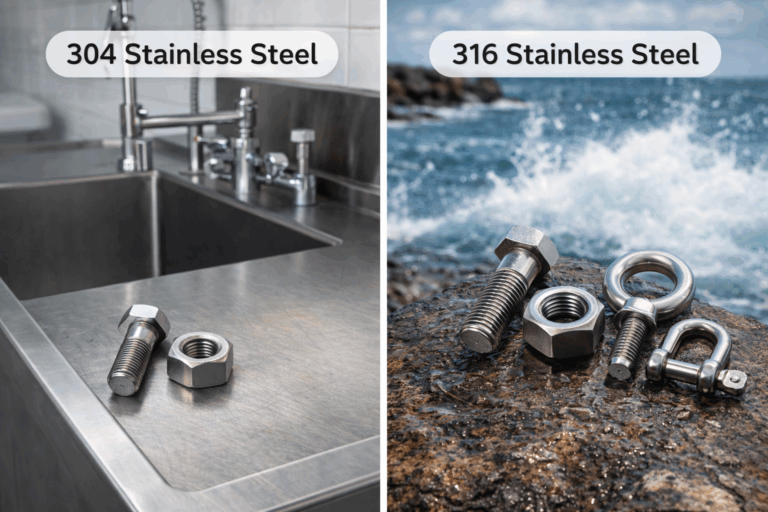
One of the standout features of 316L stainless steel is its superior corrosion resistance. The inclusion of molybdenum enhances its performance in chloride-rich environments, such as seawater and salt spray. This makes it highly resistant to pitting and crevice corrosion, ensuring long-term durability in harsh conditions.
Excellent Weldability
The low carbon content (≤0.030%) of 316L stainless steel significantly reduces the risk of intergranular corrosion during welding. This means that the material maintains excellent corrosion resistance even after welding, making it a preferred choice for complex fabrication processes.
High Strength and Toughness
316L stainless steel offers high tensile strength (≥485 MPa) and yield strength (≥170 MPa), while also retaining good toughness. This combination of strength and flexibility makes it suitable for applications that require robustness and reliability.
Good High-Temperature Resistance
This material maintains stable performance at elevated temperatures, with heat resistance up to around 800°C. This makes it ideal for high-temperature applications, such as in chemical reactors and industrial furnaces.
Excellent Workability
316L stainless steel is known for its good cold and hot workability. It can be easily formed and processed into various shapes, making it versatile for a wide range of manufacturing needs.
Good Biocompatibility
Non-toxic and odorless, 316L stainless steel meets the stringent hygiene standards required for medical devices and food processing equipment. This makes it a safe and reliable material for applications where human health is a priority.
Durable and Cost-Effective
While the initial cost of 316L stainless steel may be higher than some other materials, its long service life and low maintenance requirements make it highly cost-effective in the long run.
Applications of 316L Stainless Steel
Chemical Industry
- Reactors, Storage Tanks, and Pipelines: Resistant to strong acid and alkali corrosion.
- Chemical Equipment Components: Such as pumps, valves, and agitators.
Medical Equipment
- Implantable Devices: Such as artificial joints and dental implants.
- Surgical Instruments: Such as scalpels, scissors, and forceps.
- Medical Device Housings: Resistant to disinfectant corrosion.
Food Processing
- Food Processing Equipment: Such as mixers and cutting equipment.
- Food Storage Containers: Such as stainless steel sinks and storage tanks.
- Kitchen Utensils: Such as cookware, tableware, and sinks.
Disadvantages of 316L Stainless Steel
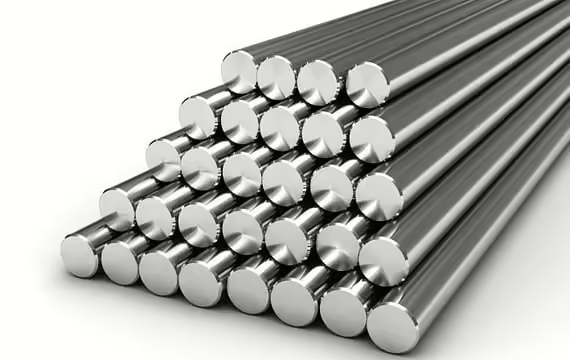
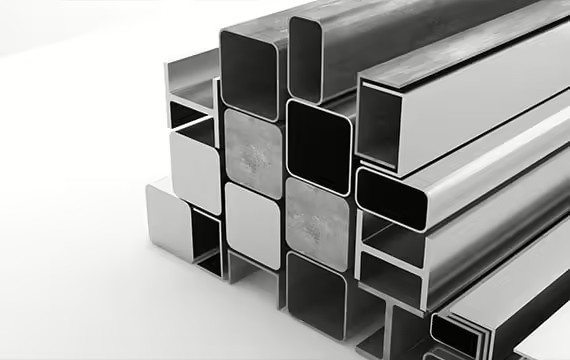
Despite its many advantages, 316L stainless steel also has some drawbacks that need to be considered:
High Cost
The presence of valuable alloying elements like nickel and molybdenum increases both material and processing costs.
Processing Challenges
Cold working can lead to work hardening, and hot working requires strict temperature control to avoid defects.
Limited Corrosion Resistance
In strong acid or high-temperature corrosive environments, the performance of 316L stainless steel may decline, making it susceptible to stress corrosion.
Performance Changes After Welding
The heat-affected zone may experience intergranular corrosion or embrittlement, and welding can lead to significant deformation.
Mechanical Limitations
Relatively low yield strength and hardness make it unsuitable for applications requiring high strength or wear resistance.
Heavier Weight
The high density of 316L stainless steel makes it less suitable for lightweight design applications.
Environmental and Health Concerns
High nickel content may cause allergic reactions, and nickel is a limited resource with significant price fluctuations.
High Surface Treatment Requirements
Passivation is required after machining or welding to maintain corrosion resistance; otherwise, performance may degrade.
Magnetic Issues
Cold working or welding may induce weak magnetism, which can be problematic for magnetically sensitive applications.
Strict Installation Requirements
Special equipment and proper procedures are needed during installation to ensure optimal performance and service life.
Conclusion
316L stainless steel is a versatile and high-performance material that is widely used across various industries, including chemical, marine, medical, food processing, and construction. Its excellent corrosion resistance, high strength, good processing ability, and biocompatibility make it a preferred material for applications where durability and safety are paramount. Despite its relatively high cost and processing challenges, the long-term benefits and reliability of 316L stainless steel make it an invaluable asset in many industrial and consumer applications.
FAQ
What is the difference between 316L stainless steel and regular stainless steel?
316L stainless steel is a low carbon variant of 316 stainless steel, with a carbon content of less than 0.03%. It offers better corrosion resistance than regular stainless steel, especially in chlorine-rich environments, and has superior weldability, resisting intergranular corrosion.
How does 316L perform in the marine environment?
316L stainless steel excels in marine environments, providing outstanding resistance to seawater corrosion. It is widely used in offshore platforms, ship components, and seawater desalination equipment.
How strong is 316L stainless steel?
316L stainless steel has a high tensile strength (≥485 MPa) and yield strength (≥170 MPa), while maintaining good toughness. This makes it suitable for applications requiring robustness and reliability.