In the world of industrial manufacturing, choosing the right alloy is a balance between performance and budget. The most frequent debate in material procurement is undoubtedly Stainless 304 vs 316. While they may look identical to the naked eye, their internal chemistry dictates their survival in harsh environments.
Selecting the wrong material can lead to premature structural failure, while over-specifying can unnecessarily inflate your budget. This guide breaks down the metallurgical truth of Stainless 304 vs 316 to help you make a data-driven decision for your next project.
Table of Contents
The Metallurgical Secret: The Role of Molybdenum
The primary difference in the Stainless 304 vs 316 debate lies in a single element: Molybdenum. While both are austenitic steels, 316 contains 2–3% molybdenum. This addition is not just a minor tweak; it fundamentally alters the protective oxide layer of the metal.
For engineers, understanding 316 stainless steel properties means recognizing its superior resistance to pitting and crevice corrosion. This makes Stainless 304 vs 316 a critical choice for systems exposed to high-chloride environments.
Decoding the Corrosion Resistance of 304 vs 316
When evaluating the corrosion resistance of 304 vs 316, we must look at the Pitting Resistance Equivalent Number (PREN). Grade 304 typically has a PREN of around 18, whereas 316 reaches 23–26.
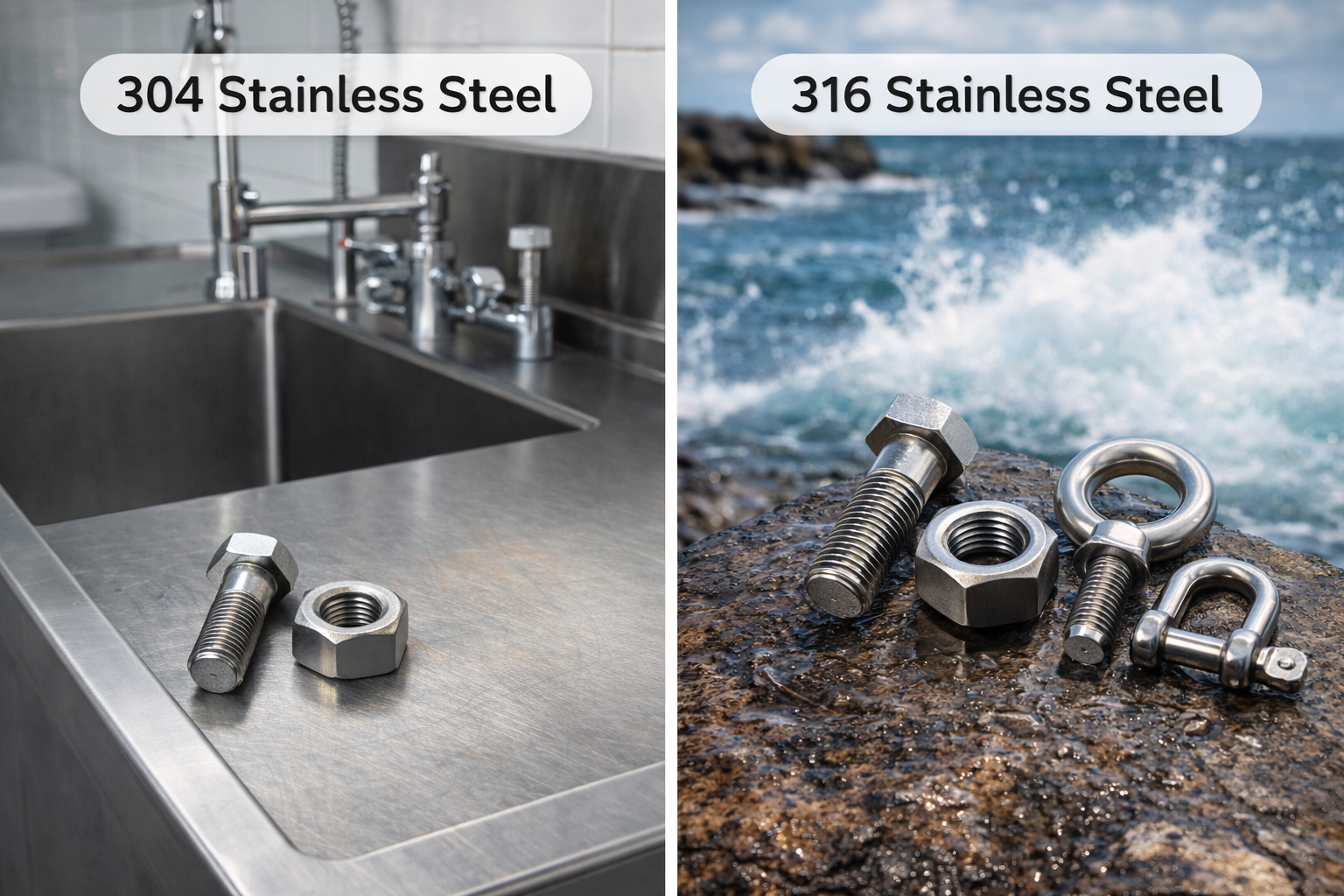
This gap explains why Stainless 304 vs 316 outcomes differ so drastically in coastal areas. Grade 304 is highly susceptible to “tea staining” or surface rust when exposed to salt spray. Conversely, 316 maintains its integrity, making it the industry standard for marine hardware and coastal infrastructure.
Technical Composition Comparison
| Element | Grade 304 (UNS S30400) | Grade 316 (UNS S31600) |
| Chromium | 18% – 20% | 16% – 18% |
| Nickel | 8% – 10.5% | 10% – 14% |
| Molybdenum | 0% | 2.0% – 3.0% |
| Carbon | 0.08% max | 0.08% max |
Assessing the SS304 vs SS316 Price Difference
Is the 316 upgrade worth the premium? Generally, the SS304 vs SS316 price difference ranges from 20% to 40%, depending on the current global cost of molybdenum and nickel.
For indoor applications, such as kitchen appliances or decorative trim, the Stainless 304 vs 316 cost gap is rarely justified. However, for industrial processing, the initial investment in 316 prevents expensive downtime and replacement costs.
Industry Standards: Food Grade Stainless Steel Standards
Both grades meet common food grade stainless steel standards. However, the choice in Stainless 304 vs 316 often depends on the specific cleaning agents used.
If your facility uses heavy chlorides or sanitizers, 316 is the safer bet to prevent microscopic pitting where bacteria can hide. In general food processing, 304 remains the most cost-effective “food grade” solution globally.
Environmental Suitability: Is 316 Stainless Steel Worth the Extra Cost for Marine Environments?
The short answer is: Yes. When clients ask, “Is 316 stainless steel worth the extra cost for marine environments?” the answer is supported by decades of field data. Grade 304 will begin to pit within months of exposure to maritime air.
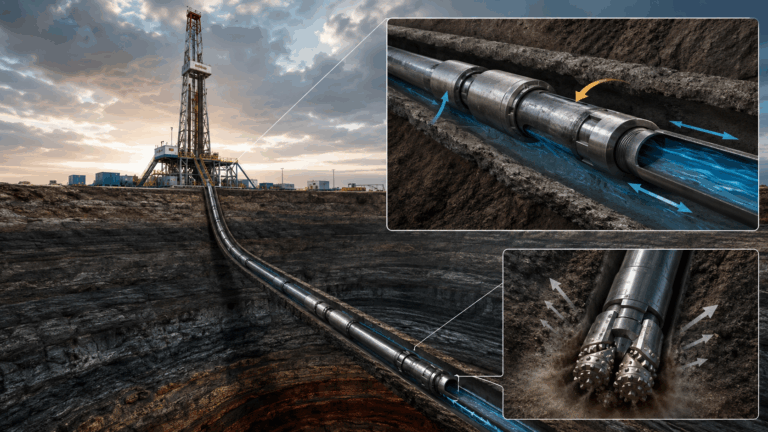
In the Stainless 304 vs 316 battle for offshore oil rigs, boat fittings, and coastal bridges, 316 is the only viable long-term material.
Chemical Compatibility of 304 vs 316 in Pharmaceutical Processing
Precision is paramount in medicine. The chemical compatibility of 304 vs 316 in pharmaceutical processing favors 316 due to its non-reactive nature with a wider range of acids and solvents.
Using Stainless 304 vs 316 in this sector isn’t just about rust; it’s about preventing contamination. Even trace amounts of metallic ions from corroded 304 can ruin a batch of sensitive chemicals.
Can 304 Stainless Steel Be Used for Outdoor Railing Near the Ocean?
A common question for architects is: Can 304 stainless steel be used for outdoor railing near the ocean? While possible, it requires a high-frequency maintenance schedule and protective coatings. Without them, the Stainless 304 vs 316 gap becomes visible as the 304 railing turns brown and loses its structural appeal within a single season.
Technical Considerations: 304 vs 316 Stainless Steel Welding Procedures
Weldability is a major factor in the Stainless 304 vs 316 selection. Both are easily welded, but you must use the correct filler metal. Following 304 vs 316 stainless steel welding procedures ensures that the weld area maintains the same corrosion resistance as the base metal. For 316, using a 316L (low carbon) filler is essential to prevent carbide precipitation.
Conclusion: Making the Final Selection
The Stainless 304 vs 316 choice comes down to your environment. If you are operating in a low-chloride, controlled environment, 304 offers the best value. If your project involves seawater, chemicals, or extreme industrial sanitization, the technical superiority of 316 is a mandatory requirement.
Investing time in the Stainless 304 vs 316 analysis during the design phase is the most effective way to ensure long-term ROI and project safety.
Frequently Asked Questions
How can I distinguish between Stainless 304 vs 316 on-site?
They look identical. The most reliable way is a “Moly-Test” chemical kit, which turns a specific color in the presence of molybdenum
Is Stainless 304 vs 316 a factor in magnetic properties?
Both are generally non-magnetic in their annealed state. However, 304 may become slightly magnetic after cold working.
Which is better for high-temperature applications?
Both perform well, but 316 offers slightly better creep resistance at elevated temperatures due to its alloy composition.