Willkommen auf Mein Blog!
Bevor wir uns mit den Inhalten befassen, würde ich mich freuen, wenn Sie mich auf meinen Social-Media-Plattformen begleiten, wo ich weitere Erkenntnisse teile, mich mit der Community auseinandersetze und Updates poste. So können Sie mit mir in Kontakt treten:
Facebook:https://www.facebook.com/profile.php?id=100087990137347
LinkedIn:https://www.linkedin.com/company/89825762/admin/dashboard/
YouTube:www.youtube.com/@carbonsteelsupply-kj9lw
TikTok:www.tiktok.com/@carbonsteelsupply
Jetzt geht es los auf unsere gemeinsame Reise Ich hoffe, dass Sie die Inhalte hier aufschlussreich, ansprechend und wertvoll finden.
Inhaltsverzeichnis
Einführung
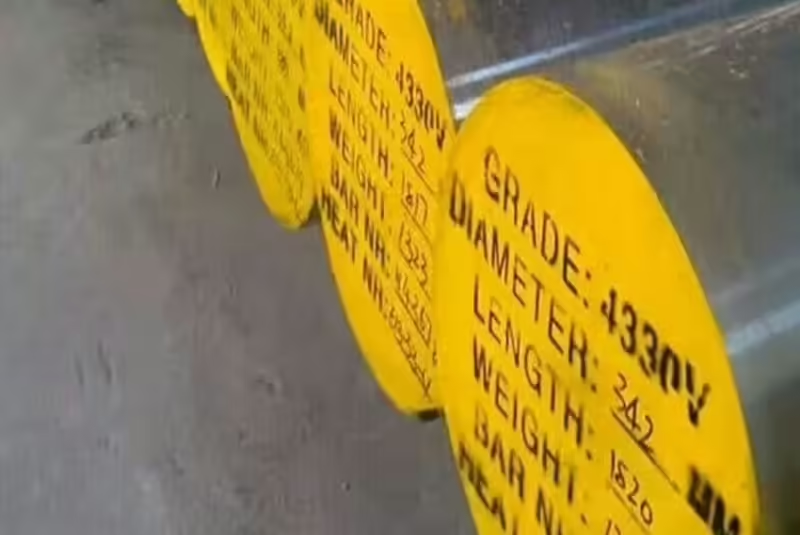
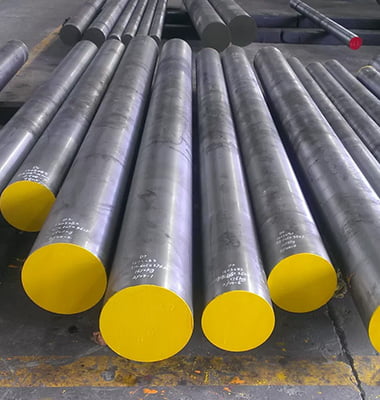
4340 alloy steel bar is a versatile and high-strength material widely used in various industries. It is a low-alloy steel containing chromium, nickel, and molybdenum, offering an excellent combination of toughness, strength, and fatigue resistance. This introduction will explore the key characteristics of 4340 alloy steel bar and its significance in demanding applications.
4340 alloy steel is classified under the AISI (American Iron and Steel Institute) and SAE (Society of Automotive Engineers) standards. Its chemical composition contributes to its superior mechanical properties. The presence of chromium enhances hardenability and wear resistance, while nickel improves toughness and impact strength. Molybdenum further increases hardenability and high-temperature strength.
This unique combination of alloying elements makes 4340 alloy steel bar an ideal choice for critical components subjected to high stress, impact, and fatigue loading. Its applications range from aerospace and automotive to oil and gas and general engineering.
Key Properties of 4340 Steel Bar
Understanding the key properties of 4340 steel bar is crucial for selecting the right material for specific applications. These properties include:
- High Strength: 4340 steel bar exhibits exceptional tensile and yield strength, making it suitable for load-bearing components.
- Excellent Toughness: It possesses high impact strength and resistance to crack propagation, ensuring reliability under dynamic loading conditions.
- Good Fatigue Resistance: 4340 steel bar can withstand repeated stress cycles without failure, making it ideal for components subjected to fatigue loading.
- Hardenability: It can be heat treated to achieve a wide range of hardness levels, tailoring its properties to specific requirements.
- Weldability: Although pre-heating and post-weld heat treatment are recommended, 4340 steel bar can be welded using conventional techniques.
These properties make 4340 steel bar a preferred choice for applications requiring high performance and reliability.
Anwendungen von 4340 Alloy Steel Bar Across Industries
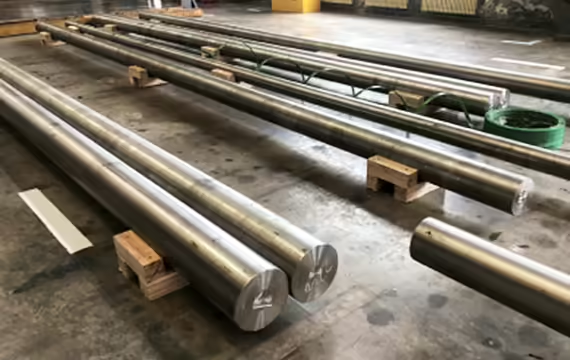
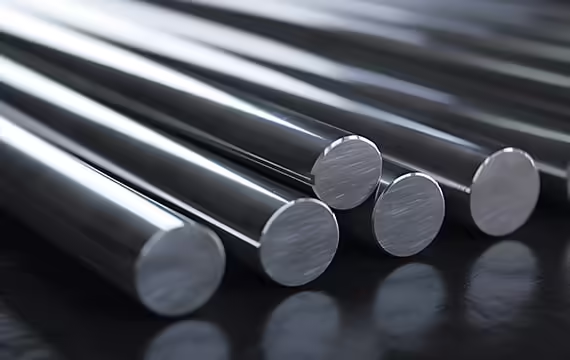
The versatile properties of 4340 alloy steel bar have led to its widespread use in numerous industries:
- Aerospace: Landing gear components, aircraft structural parts, and engine components.
- Automotive: Axles, gears, crankshafts, and connecting rods.
- Oil and Gas: Downhole tools, drilling equipment, and high-pressure vessels.
- General Engineering: Heavy-duty machinery, forging dies, and structural components.
The ability of 4340 alloy steel bar to perform under extreme conditions makes it a critical material in these demanding sectors.
Heat Treatment of 4340 Steel Bar
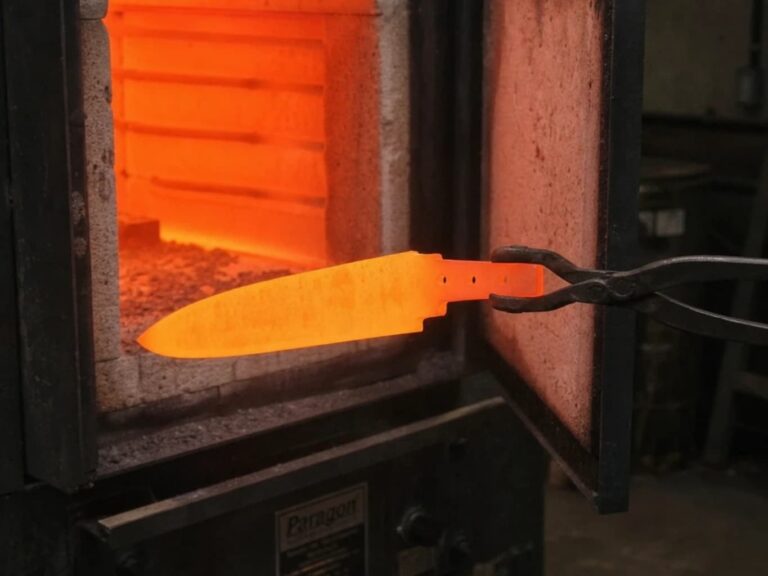
Heat treatment is essential for optimizing the mechanical properties of 4340 steel bar. Common heat treatment processes include:
- Annealing: Used to soften the material and improve machinability.
- Normalizing: Refines the grain structure and improves toughness.
- Quenching: Hardens the material by rapid cooling.
- Tempering: Reduces brittleness and improves toughness after quenching.
Proper heat treatment is crucial for achieving the desired combination of strength, toughness, and hardness in 4340 steel bar.
Machining and Fabrication of 4340 Alloy Steel Bar
-
 31CrMoV9/1.8519 Legierter Stahl
 -
 17CrNiMo6/1.6587 Legierter Stahl
 -
 25CrMo4/1.7218/SCM430 Legierter Stahl
 -
 8620/1.6523/20CrNiMoA/SNCM220 Legierter Stahl
 -
 18CrNiMo7-6/17CrNiMo6/1.6587 Legierter Stahl
 -
 18CrMo4/1.7243 Legierter Stahl
 -
 30CrNiMo8/1.6580 Legierter Stahl
 -
 36CrNiMo4/1.6511/SNCM439/EN24 Legierter Stahl
 -
 34CrNiMo6/1.6582 Legierter Stahl
4340 alloy steel bar can be machined using conventional methods, although its high strength and hardness require appropriate tooling and cutting parameters. Techniques like turning, milling, drilling, and grinding can be employed.
Welding of 4340 steel bar is possible, but pre-heating and post-weld heat treatment are generally recommended to prevent cracking and ensure optimal weld integrity.
Careful consideration of machining and fabrication processes is essential for achieving the desired final product dimensions and properties.
Comparison of 4340 Alloy Steel Bar with Other Alloys
While 4340 alloy steel bar offers excellent properties, it’s important to understand how it compares to other alloys. The following table provides a comparison of key properties between 4340 and other commonly used alloy steels:
| Eigentum | 4340 Alloy Steel Bar | 4140 Legierter Stahl | 4130 Legierter Stahl |
|---|---|---|---|
| Tensile Strength (ksi) | 125-260 | 110-170 | 95-130 |
| Yield Strength (ksi) | 105-220 | 85-140 | 70-100 |
| Elongation (%) | 12-20 | 15-25 | 20-30 |
| Härte (HRC) | 28-55 | 22-32 | 18-25 |
| Toughness | Excellent | Good | Good |
Advantages and Disadvantages of 4340 Steel Bar
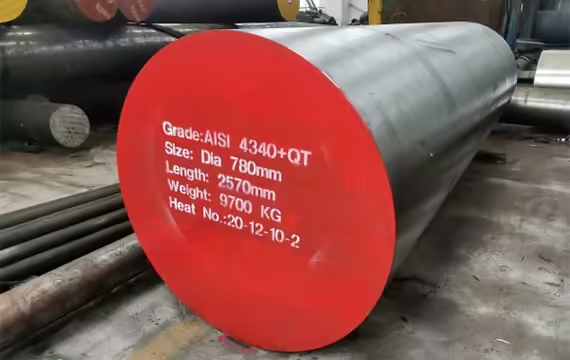
Advantages of 4340 Steel Bar
- High strength and toughness: It can withstand high stress and impact.
- Excellent fatigue resistance: Suitable for dynamic loading conditions.
- Good hardenability: Can be heat treated to achieve desired properties.
- Versatility: Applicable in various industries and applications.
Disadvantages of 4340 Steel Bar
- Higher cost compared to some other alloys.
- Requires careful heat treatment and welding procedures.
- Susceptible to hydrogen embrittlement under certain conditions.
Despite these disadvantages, the superior performance and reliability of 4340 alloy steel bar often justify its use in critical applications.
Schlussfolgerung
4340 alloy steel bar is a high-performance material offering an exceptional combination of strength, toughness, and fatigue resistance. Its versatility and reliability have made it a critical component in various industries, from aerospace and automotive to oil and gas and general engineering.
While careful consideration of heat treatment, machining, and welding is essential, the advantages of 4340 alloy steel bar often outweigh its disadvantages, especially in demanding applications where performance and reliability are paramount.
FAQ
What is 4340 alloy steel bar used for?
4340 alloy steel bar is used for various applications requiring high strength, toughness, and fatigue resistance, such as aircraft landing gear, automotive axles, and oil and gas drilling equipment.
Is 4340 steel bar weldable?
Yes, 4340 steel bar can be welded, but pre-heating and post-weld heat treatment are recommended to prevent cracking and ensure optimal weld integrity.
How is 4340 alloy steel bar heat treated?
Common heat treatment processes for 4340 alloy steel bar include annealing, normalizing, quenching, and tempering, depending on the desired properties.
What are the advantages of using 4340 steel bar?
The main advantages include high strength and toughness, excellent fatigue resistance, good hardenability, and versatility.