
Welcome to My Blog!
Before we dive into the content, I’d love for you to join me on my social media platforms where I share more insights, engage with the community, and post updates. Here’s how you can connect with me:
Facebook:https://www.facebook.com/profile.php?id=100087990137347
LinkedIn:https://www.linkedin.com/company/89825762/admin/dashboard/
YouTube:www.youtube.com/@carbonsteelsupply-kj9lw
TikTok:www.tiktok.com/@carbonsteelsupply
Now, let’s get started on our journey together. I hope you find the content here insightful, engaging, and valuable.
Table of Contents
Introducción

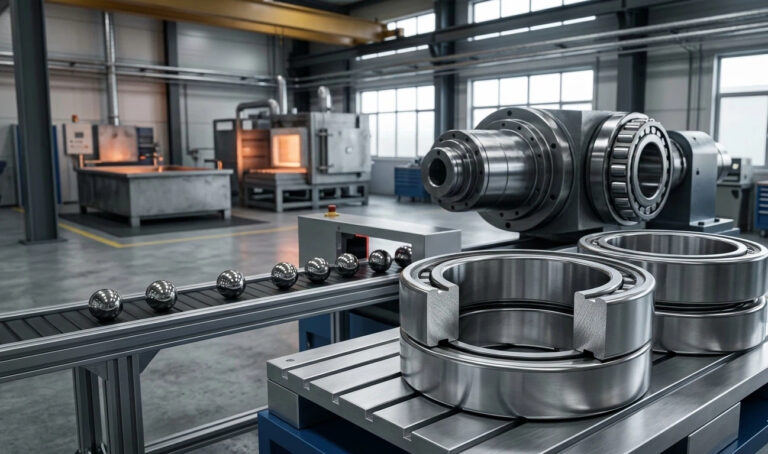
52100 bearing steels, also known as 100Cr6 (European standard) or SUJ2 (Japanese standard), are high-carbon chromium alloy steels widely used in the manufacturing of bearings. These steels offer an exceptional combination of hardness, wear resistance, fatigue strength, and toughness, making them ideal for demanding applications involving rolling contact. Their widespread use in various industries underscores their reliability and performance. This comprehensive guide delves into the properties, applications, heat treatment, and other essential aspects of 52100 bearing steels.
Chemical Composition of 52100 Bearing Steels
The specific chemical makeup of 52100 steels is crucial to its performance characteristics. The typical chemical composition is as follows:
- Carbon (C): 0.95 – 1.10% (Provides hardness and wear resistance)
- Chromium (Cr): 1.30 – 1.60% (Enhances hardenability, toughness, and corrosion resistance)
- Manganese (Mn): 0.25 – 0.45% (Improves hardenability and strength)
- Silicon (Si): 0.15 – 0.35% (Acts as a deoxidizer during steelmaking)
- Phosphorus (P): ≤ 0.025% (Impurity, kept to a minimum)
- Sulfur (S): ≤ 0.025% (Impurity, kept to a minimum)
This carefully balanced composition gives 52100 steels their desirable properties.
Microstructure of 52100 Bearing Steels


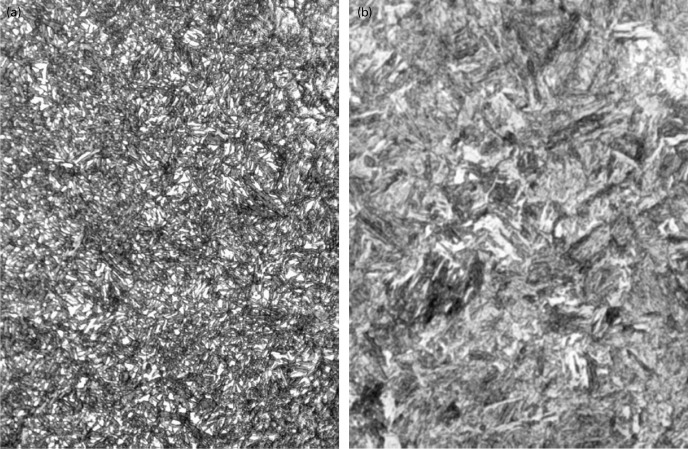
The microstructure of 52100 steels, particularly after heat treatment, plays a key role in its performance. Typically, the microstructure consists of:
- Martensite: The primary constituent after hardening, providing high hardness.
- Carbides: Chromium carbides and iron carbides contribute to wear resistance.
- Retained Austenite: Small amounts may be present after hardening, which can be further reduced by cryogenic treatment.
The control of these microstructural constituents through heat treatment is essential for optimizing the properties of 52100 bearing steel.
Key Properties of 52100 Bearing Steels
52100 bearing steels possess a unique combination of properties that make them suitable for bearing applications.
Hardness and Wear Resistance of 52100 Steels
52100 steels achieve high hardness levels (typically 60-66 HRC) after heat treatment. This high hardness translates to excellent wear resistance, allowing bearings made from this material to withstand prolonged use under demanding conditions.
Fatigue Strength of 52100 Steels
Fatigue strength is a critical property for bearing steels. 52100 bearing steels exhibit high fatigue strength, enabling them to endure repeated stress cycles without failure. This is essential for applications involving rotating or oscillating motion.
Toughness and Impact Resistance of 52100 Steels
While hardness and wear resistance are crucial, toughness is equally important. 52100 bearing steels offer a good balance of hardness and toughness, providing resistance to cracking and chipping under impact loads.
Dimensional Stability of 52100 Steels
Dimensional stability is essential for precision components like bearings. 52100 steels, when properly heat treated, exhibit excellent dimensional stability, maintaining their shape and size even under varying temperatures and loads.
Tratamiento térmico de 52100 Bearing Steels
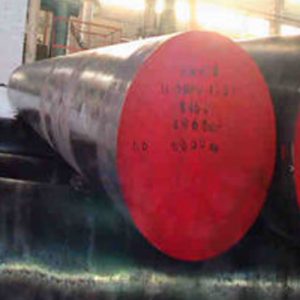
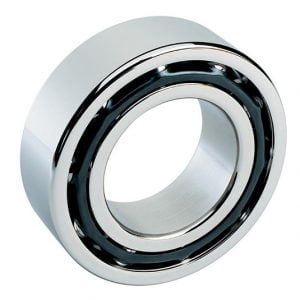
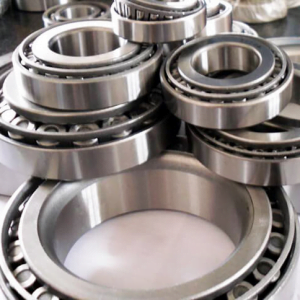
Heat treatment is crucial for developing the desired properties in 52100 bearing steels. The typical heat treatment process involves:
Annealing of 52100 Steels
Annealing is performed to soften the steel for machining. This involves heating the steel to a specific temperature, holding it for a period, and then slowly cooling it.
Hardening of 52100 Steels
Hardening involves austenitizing the steel (heating it to a temperature where it transforms to austenite), followed by quenching in oil or another suitable medium. This transforms the austenite into martensite, resulting in high hardness.
Tempering of 52100 Steels
Tempering is performed after hardening to reduce brittleness and improve toughness. This involves heating the hardened steel to a lower temperature and holding it for a period.
Cryogenic Treatment of 52100 Steels
Cryogenic treatment, involving cooling the hardened steel to sub-zero temperatures, can further enhance its properties by reducing retained austenite and increasing wear resistance.
Aplicaciones de 52100 Bearing Steels
52100 steels are used in a wide range of applications due to their excellent properties.
Aerospace Applications of 52100 Bearing Steels
In the aerospace industry, 52100 steels are used in critical components such as aircraft engines, landing gear, and control systems, where reliability and performance are paramount.
Automotive Applications of 52100 Bearing Steels
In the automotive sector, 52100 steels are used in transmissions, wheel bearings, and other components requiring high performance and durability.
Industrial Applications of 52100 Bearing Steels
52100 steels also find extensive use in various industrial applications, including machine tools, pumps, motors, and other machinery.
The following table summarizes typical applications based on bearing type and associated industries:
| Bearing Type | Aplicaciones típicas | Industries |
|---|---|---|
| Ball Bearings | Electric Motors, Precision Instruments, Medical Devices | Manufacturing, Medical, Electronics |
| Roller Bearings | Heavy Machinery, Gearboxes, Rolling Mills | Heavy Industry, Mining, Construction |
| Tapered Roller Bearings | Automotive Wheel Bearings, Agricultural Equipment | Automotive, Agriculture |
| Thrust Bearings | Rotating Platforms, Heavy Load Applications | Industrial Machinery |
| Miniature Bearings | Gyroscopes, Small Motors, Dental Drills | Aerospace, Medical, Dental |
Advantages and Limitations of 52100 Bearing Steels

Advantages of 52100 Steels
- High hardness and wear resistance
- Excellent fatigue strength
- Good toughness
- Dimensional stability
- Cost-effectiveness
Limitations of 52100 Steels
- Limited corrosion resistance (requires surface protection in corrosive environments)
- Lower operating temperature compared to some high-speed steels
Conclusión
52100 bearing steels remain a widely used and reliable material for bearing applications due to their excellent combination of properties and cost-effectiveness. Understanding their properties, heat treatment, and applications is crucial for selecting the right material for specific needs. While they have limitations, particularly in corrosion resistance, their advantages make them a valuable material in numerous industries. This comprehensive guide provides a detailed overview of 52100 bearing steels, assisting engineers and professionals in making informed decisions. Continuous advancements in steelmaking and heat treatment techniques further enhance the performance and applicability of 52100 steels in demanding applications. This detailed information will help in boosting the SEO of this article for the keyword “52100 bearing steels”.
PREGUNTAS FRECUENTES
What is the difference between 52100 and other bearing steels?
52100 offers a good balance of properties for general-purpose bearing applications. Other bearing steels, such as M50 or 440C, may offer improved high-temperature performance or corrosion resistance, but often at a higher cost.
How do you heat treat 52100 bearing steels?
The typical heat treatment involves annealing, hardening (austenitizing and quenching), and tempering. Cryogenic treatment can further enhance properties. Specific temperatures and holding times depend on the desired properties.
What are the common applications of 52100 steels?
Common applications include ball bearings, roller bearings, tapered roller bearings, and thrust bearings used in various industries like aerospace, automotive, and industrial machinery.
How to distinguish between different types of 52100 bearing steels?
While the core chemical composition is similar, variations can exist based on manufacturing processes (e.g., vacuum arc remelting) and specific requirements. Material certifications and testing are crucial for confirming material properties.