Welcome to My Blog!
Before we dive into the content, I’d love for you to join me on my social media platforms where I share more insights, engage with the community, and post updates. Here’s how you can connect with me:
Facebook:https://www.facebook.com/profile.php?id=100087990137347
LinkedIn:https://www.linkedin.com/company/89825762/admin/dashboard/
YouTube:www.youtube.com/@carbonsteelsupply-kj9lw
TikTok:www.tiktok.com/@carbonsteelsupply
Now, let’s get started on our journey together. I hope you find the content here insightful, engaging, and valuable.
Table of Contents
Introducción
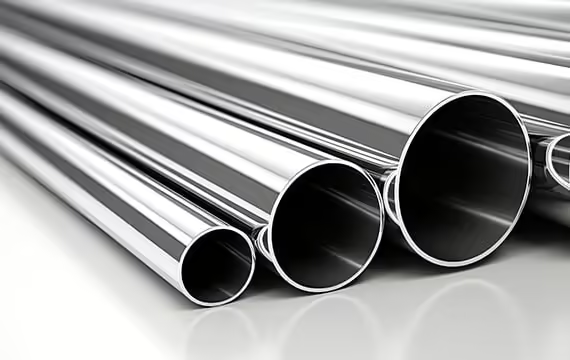
If you’re working on a manufacturing project, designing structural components, or choosing materials for industrial equipment, you’ve likely run into the choice of alloy steel vs stainless steel. At first, they might look similar. But dig a little deeper, and you’ll realize that these two types of steel perform quite differently depending on where and how they’re used.
In this blog, we’ll take a deep dive into the real differences between alloy steel and stainless steel, from their manufacturing processes, benefits, to durability. Whether you’re building pipes, surgical instruments, or heavy machinery, this guide will help you make a more informed decision if you’re considering which material is better suited to your needs.
Composition and Material Properties: Acero aleado vs Acero inoxidable
Alloy steel is carbon steel with additional alloying elements like chromium, molybdenum, vanadium, or manganese added to enhance properties such as strength, hardness, and wear resistance. The exact combination of elements varies based on the intended use, giving manufacturers a lot of flexibility.
Stainless steel, in contrast, contains at least 10.5% chromium, which is essential for creating a passive layer on the surface that resists corrosion. Additional elements like nickel and molybdenum are often added to improve durability, temperature resistance, and formability.
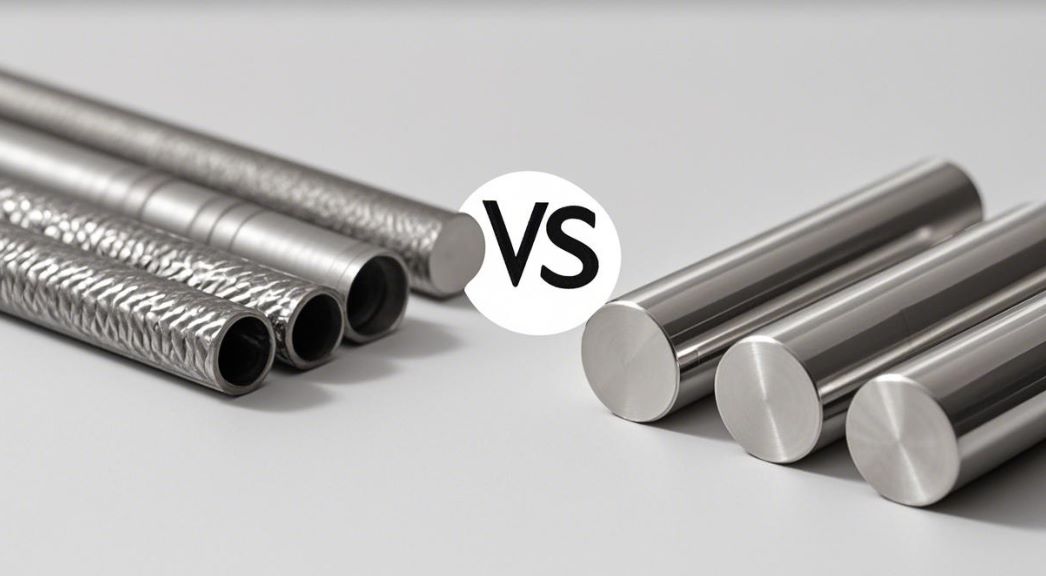
So in the alloy steel vs stainless steel comparison, alloy steel is built for strength and flexibility in mechanical applications, while stainless steel is optimized for corrosion resistance and longevity in harsh environments.
According to data from the World Steel Association in 2023, stainless steel accounts for just 4% of total steel production, while alloy steels—including low-alloy and high-alloy varieties—make up about 15%, showing how differently they’re applied across industries.
Use Cases and Industry Applications: Alloy Steel vs Stainless Steel
It’s not just about what the steel is made of—it’s about how it performs in real-world situations.
Alloy steel is commonly used in:
- Gears, crankshafts, and automotive drivetrain parts
- High-strength structural components
- Drilling rigs and oil pipelines
- Aerospace and heavy-duty industrial tools
Stainless steel, on the other hand, is ideal for:
- Food and beverage processing systems
- Medical instruments and operating tools
- Architectural railings and fixtures
- Marine and coastal structures
Imagine you’re building a high-pressure valve system in a chemical plant. Alloy steel may offer the toughness and heat tolerance you need. But if the same component is going into a clean room or seawater-exposed system, stainless steel’s resistance to rust and oxidation becomes critical.
Performance Comparison: Alloy Steel vs Stainless Steel at a Glance
Here’s a side-by-side breakdown of how these materials compare across key factors.
| Category | Acero aleado | Acero inoxidable |
|---|---|---|
| Main Alloying Elements | Chromium, molybdenum, vanadium, manganese | Chromium (min 10.5%), nickel, molybdenum |
| Resistencia a la corrosión | Moderate (depends on alloy composition) | Excellent (forms protective chromium oxide layer) |
| Strength and Hardness | High tensile strength, impact resistance | Good strength, less brittle in most grades |
| Temperature Resistance | Good at high temperatures | Very good, especially in austenitic grades |
| Surface Finish Options | Usually matte or dark finish | Bright, polished, and decorative options available |
| Machinability | Depends on alloy content | Often requires specialized tooling |
| Maintenance Requirements | May need surface treatments or coatings | Low maintenance, even in challenging environments |
| Suitability for Welding | Variable—preheat/post-heat often needed | Generally good, varies by grade |
| Aplicaciones | Industrial machinery, tools, pipelines | Kitchens, hospitals, marine and chemical sectors |
Understanding these differences helps you pick the right steel for each task. You don’t want to over-engineer with stainless when alloy steel is more than sufficient—or under-prepare with alloy steel in a corrosive environment where stainless is a must.
Maintenance and Use: Alloy Steel vs Stainless Steel
When evaluating alloy steel vs stainless steel, you’ve got to look beyond the initial specs and think about long-term performance.
Stainless steel is known for its excellent durability, especially in environments exposed to moisture, chemicals, or extreme heat. The chromium content allows it to resist pitting, oxidation, and rust. As a result, it often lasts longer with minimal upkeep.
Alloy steel offers higher strength and fatigue resistance, particularly in high-stress applications. But it tends to corrode faster if not protected. That means coatings, galvanizing, or frequent maintenance may be required—especially in outdoor or humid environments.
In a 2022 report from Materials Performance Journal, alloy steel showed signs of degradation after five years in coastal construction, while a comparable stainless steel component remained structurally intact after a decade in similar conditions.
So, it comes down to this: do you need a material that stays clean and corrosion-free, or one that handles high pressure and shock loads better?
Environmental Impact and Sustainability Considerations
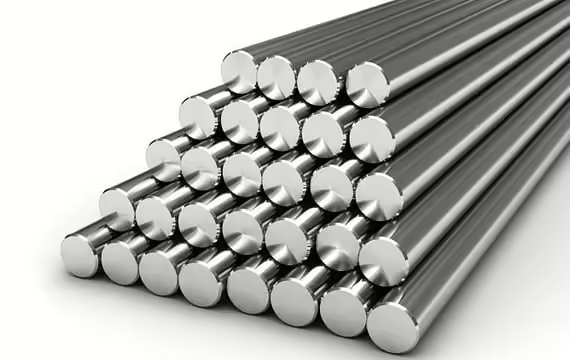
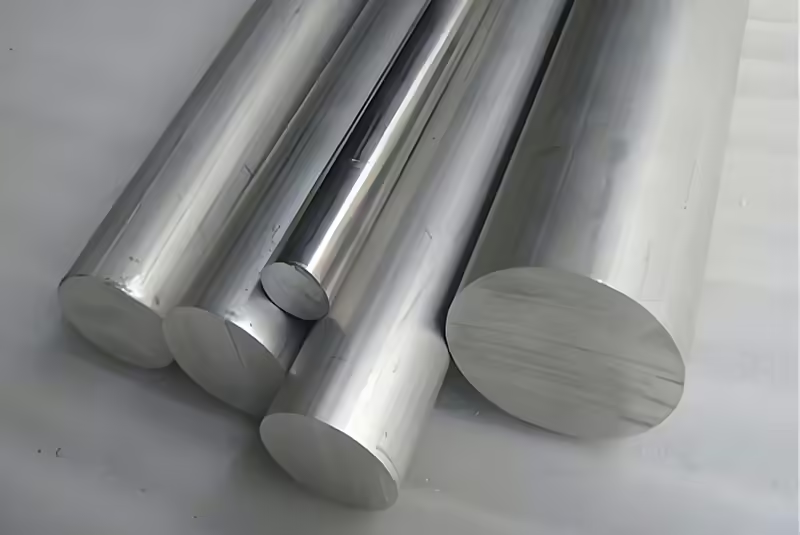
Both alloy steel and stainless steel are recyclable, but how they’re used can affect their environmental impact.
Stainless steel stands out for its long service life and recyclability. According to the International Stainless Steel Forum, more than 80% of stainless steel used in new projects today is recycled material. That means less waste, lower emissions, and fewer raw resources consumed.
Alloy steel also contributes to the circular economy but may require more energy to produce—especially when heat treatment or high-alloy compositions are involved.
If you’re designing a product with sustainability in mind, the longer lifespan and lower maintenance of stainless steel often make it the more eco-friendly choice. But for temporary or high-stress applications, alloy steel might still offer the better performance-to-impact ratio.
Conclusión
So, where do we land in the alloy steel vs stainless steel decision?
If your priority is corrosion resistance, longevity in wet or chemically aggressive environments, or minimal maintenance, stainless steel is likely the best pick. Think food processing lines, medical tools, or exterior architectural features.
If you’re after high strength, hardness, or cost-effectiveness in structural and mechanical systems, alloy steel is often the superior choice. It’s strong, adaptable, and performs well under heavy loads or repeated stress.
The bottom line is this: there’s no one-size-fits-all. The right steel for the job depends on your environment, load requirements, maintenance constraints, and design goals. Take the time to match material properties with the realities of your project, and you’ll get better performance—and better value—over time.
PREGUNTAS FRECUENTES
Can I use alloy steel in a humid environment?
You can, but you’ll likely need a protective coating or galvanization to prevent rust. Stainless steel is usually a better fit for those conditions.
Is stainless steel harder than alloy steel?
Not always. Many alloy steels are designed for superior hardness and wear resistance. Stainless steel is more about corrosion resistance and overall durability.
Which is better for welding?
Stainless steel is generally easier to weld, especially in austenitic grades. Some alloy steels may require preheating or post-weld heat treatment.
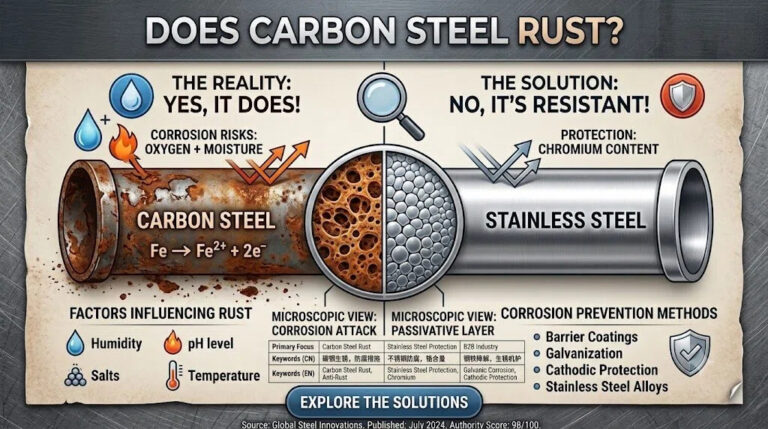
Does stainless steel rust at all?
In most environments, no. But in certain aggressive conditions—like saltwater or acid exposure—lower grades of stainless steel may corrode if not properly selected.
Which material is more sustainable in the long run?
Stainless steel usually wins here due to its longevity and high recyclability. It’s often a better choice when total lifecycle cost and environmental impact are considered.