Welcome to My Blog!
Before we dive into the content, I’d love for you to join me on my social media platforms where I share more insights, engage with the community, and post updates. Here’s how you can connect with me:
Facebook:https://www.facebook.com/profile.php?id=100087990137347
LinkedIn:https://www.linkedin.com/company/89825762/admin/dashboard/
YouTube:www.youtube.com/@carbonsteelsupply-kj9lw
TikTok:www.tiktok.com/@carbonsteelsupply
Now, let’s get started on our journey together. I hope you find the content here insightful, engaging, and valuable.
Table of Contents
Introducción
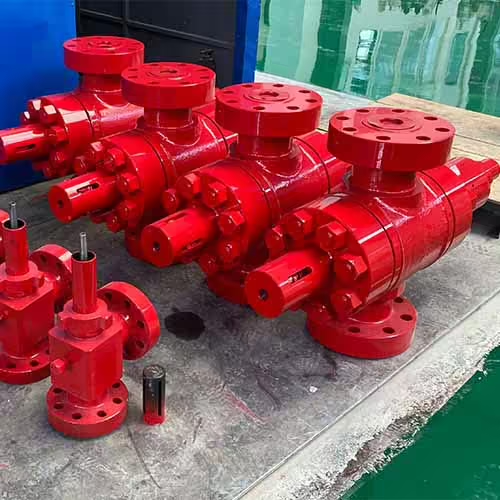
The oil and gas industry relies heavily on efficient and safe extraction methods to meet global energy demands. Among the critical components facilitating this process is the oil well Christmas tree. This assembly of valves, spools, and fittings is installed at the wellhead to regulate and monitor the flow of hydrocarbons. Understanding the various types and applications of oil well Christmas trees is essential for optimizing production and ensuring operational safety. This blog post delves into the intricacies of oil well Christmas tree systems, exploring their diverse configurations and their roles in different operational scenarios.
What is an Oil Well Tree?
An oil well Christmas tree, also known as a production tree, is a vital piece of equipment used to control and monitor the flow of oil and gas from a well. It is installed on top of the wellhead and serves as the primary interface between the well and the production facilities. The name “Christmas tree” comes from its resemblance to a decorated tree, with numerous valves and fittings branching out from the main body.
Key Components of an Oil Well Christmas Tree
- Valves: These control the flow of fluids and gases, allowing operators to regulate production and shut down the well if necessary.
- Spools: These provide connections for various components and allow for the integration of additional equipment.
- Fittings: These ensure secure connections between different parts of the Christmas tree.
- Pressure Gauges: These monitor the pressure within the well, providing critical information for safe and efficient operation.
- Chokes: These restrict the flow of fluids, controlling the production rate and preventing damage to the well.
Types of Oil Well Christmas Trees
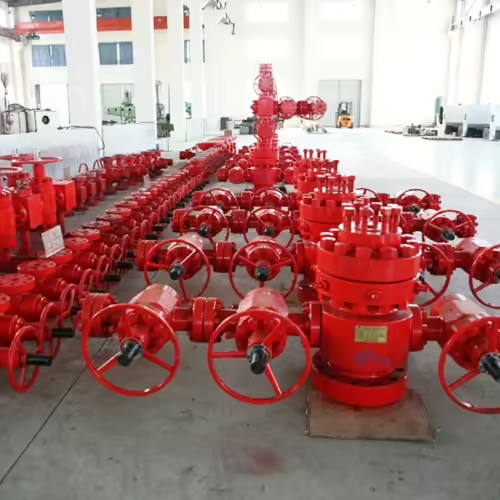
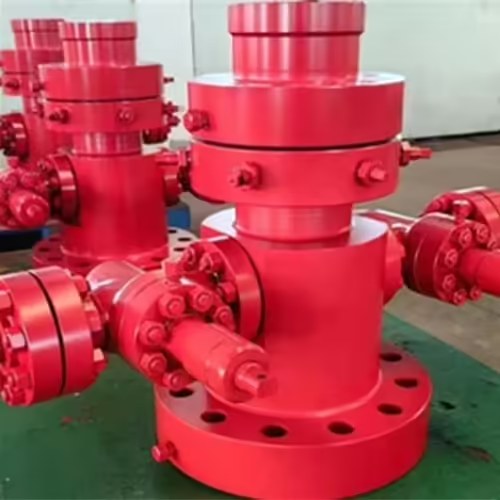
The design and configuration of an oil well tree vary depending on the specific application and well conditions. Here are some of the most common types:
Conventional Oil Well Trees
These are the most basic type of Christmas tree, typically used for onshore wells with moderate pressure and temperature conditions. They are relatively simple in design and cost-effective.
High-Pressure High-Temperature (HPHT) Oil Well Trees
These are designed for wells with extreme pressure and temperature conditions, often found in deep-water or ultra-deep-water environments. They are constructed from high-strength materials and incorporate advanced sealing technologies to ensure safe and reliable operation.
Subsea Oil Well Trees
These are used for offshore wells located on the seabed. They are designed to withstand the harsh marine environment and are often remotely operated.
Horizontal Oil Well Trees
These are designed for horizontal wells, which are drilled at an angle to maximize production from a reservoir. They allow for the efficient flow of fluids from horizontal wellbores.
Dual Oil Well Trees
These are used for wells that produce from two separate zones. They allow for the independent control and monitoring of production from each zone.
Applications of Oil Well Christmas Trees
Onshore Oil and Gas Production
Oil well Christmas trees are essential for onshore oil and gas production, providing a safe and efficient means of controlling and monitoring well production. They are used in a variety of applications, including conventional oil and gas wells, shale gas wells, and coalbed methane wells.
Offshore Oil and Gas Production
Offshore oil and gas production often involves challenging conditions, such as deep water, high pressure, and extreme temperatures. Oil well trees play a crucial role in ensuring the safe and reliable operation of offshore wells. Subsea Christmas trees are specifically designed for these environments.
Enhanced Oil Recovery (EOR)
EOR techniques are used to increase the amount of oil recovered from a reservoir. Oil well trees are used in EOR operations to inject fluids, such as water or gas, into the reservoir to enhance oil production.
Gas Lift Operations
Gas lift is a method of artificial lift used to increase the production of oil wells. Oil well trees are used in gas lift operations to inject gas into the wellbore, reducing the hydrostatic pressure and allowing oil to flow to the surface.
Oil Well Christmas Tree Operational Considerations
When working with oil well Christmas trees, several operational considerations must be taken into account:
- Pressure Control: Maintaining proper pressure control is crucial for safe and efficient operation.
- Flow Regulation: Regulating the flow of fluids and gases is essential for optimizing production and preventing damage to the well.
- Maintenance: Regular maintenance is necessary to ensure the integrity and reliability of the Christmas tree.
- Safety: Safety is paramount when working with high-pressure equipment. Operators must adhere to strict safety protocols to prevent accidents.
Oil Well Christmas Tree Component Specifications
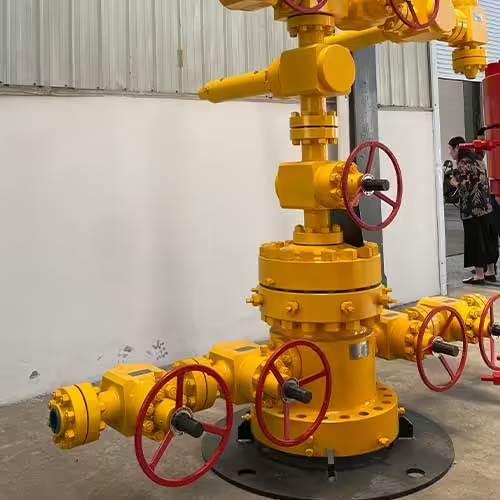
Here is a general overview of some typical specifications for oil well tree components:
| Component | Specification |
|---|---|
| Working Pressure | 2,000 psi to 20,000 psi+ |
| Temperature Rating | -50°F to 350°F+ |
| Material | Carbon steel, alloy steel, stainless steel |
| Valve Type | Gate valve, ball valve, check valve |
| Connection Type | Flanged, threaded, welded |
| Size | Varies based on wellbore size |
Conclusión
Oil well Christmas trees are indispensable components in the oil and gas industry, playing a critical role in the safe and efficient production of hydrocarbons. Understanding the different types and applications of oil well Christmas trees is essential for optimizing well performance and ensuring operational safety. As technology advances, oil well Christmas tree designs will continue to evolve, meeting the ever-changing demands of the industry.
PREGUNTAS FRECUENTES
Q: What is the primary function of an oil well Christmas tree?
A: The primary function of an oil well Christmas tree is to control and monitor the flow of oil and gas from a well.
Q: What are the different types of oil well Christmas trees?
A: Some common types include conventional, HPHT, subsea, horizontal, and dual Christmas trees.
Q: Where are subsea oil well Christmas trees used?
A: Subsea oil well Christmas trees are used for offshore wells located on the seabed.
Q: What safety precautions should be taken when working with oil well Christmas trees?
A: Operators must adhere to strict safety protocols, including proper pressure control, flow regulation, and regular maintenance.
Q: What materials are oil well trees made of?
A: Oil well trees are typically made of carbon steel, alloy steel, or stainless steel.