Welcome to My Blog!
Before we dive into the content, I’d love for you to join me on my social media platforms where I share more insights, engage with the community, and post updates. Here’s how you can connect with me:
Facebook:https://www.facebook.com/profile.php?id=100087990137347
LinkedIn:https://www.linkedin.com/company/89825762/admin/dashboard/
YouTube:www.youtube.com/@carbonsteelsupply-kj9lw
TikTok:www.tiktok.com/@carbonsteelsupply
Now, let’s get started on our journey together. I hope you find the content here insightful, engaging, and valuable.
Table of Contents
Introducción
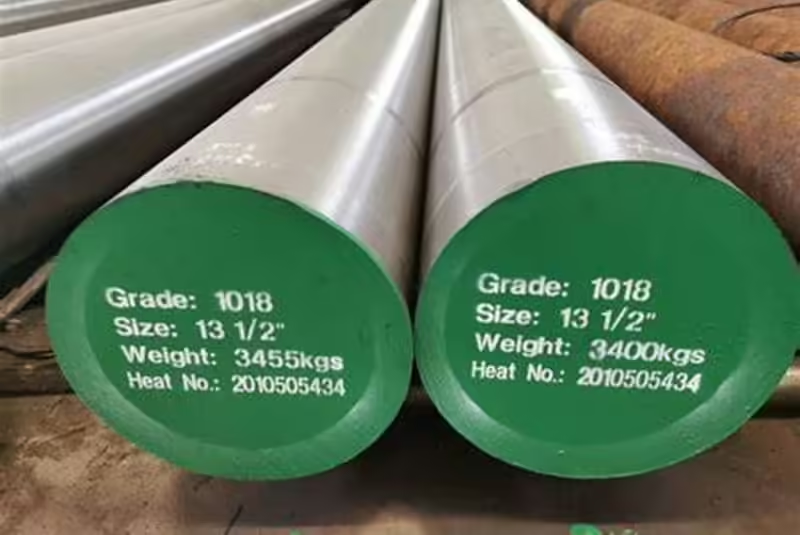
Low carbon steel, also known as mild steel, is a type of steel that contains a low percentage of carbon—typically less than 0.3%. This makes the steel softer, more ductile, and easier to shape than higher-carbon steels. Despite having a lower tensile strength compared to other steel types, low carbon steel is favored for its ability to undergo various processing methods, such as welding, machining, and forming, without losing its structural integrity.
Low carbon steel is essential in a wide range of industries, including automotive, construction, appliances, and general manufacturing. Its properties, including malleability, weldability, and machinability, make it highly adaptable for use in large-scale production processes. But did you know that there are different types of low carbon steel, each with unique properties and applications?
In this article, we will cover the different types of low carbon steel and explain their characteristics, helping you determine which type is suitable for your specific needs.
Understanding the Types of Low Carbon Steel


Low carbon steel can be classified into several types based on its chemical composition, mechanical properties, and intended applications. The primary types include:
Mild Steel (Low Carbon Steel)
Mild steel is the most common form of low carbon steel, containing around 0.05% to 0.25% carbon. It is characterized by its excellent formability and ease of welding, making it ideal for manufacturing structural components, sheets, plates, and various products in industries like construction and automotive manufacturing.
Key Features:
- Carbon content: 0.05% to 0.25%
- Excellent weldability and formability
- Primarily used in structural components, machinery, and equipment
- Common applications: automotive panels, building frameworks, pipes, and bridges
High-Strength Low-Alloy Steel (HSLA)
High-strength low-alloy steel is a category of low carbon steel that contains small amounts of alloying elements, such as chromium, nickel, or vanadium, to enhance its strength and resistance to corrosion. Although its carbon content remains low, the added alloys help improve the steel’s mechanical properties.
Key Features:
- Carbon content: typically below 0.25%
- Enhanced strength and toughness
- Good resistance to corrosion
- Common applications: automotive body panels, pressure vessels, and structural beams
Deep Drawing Steel (DDS)
Deep drawing steel is a specialized type of low carbon steel designed for use in deep drawing processes. It is highly ductile and has excellent formability, which makes it perfect for producing parts that require significant shaping or forming. DDS is often used in applications like making car body parts, cookware, and packaging materials.
Key Features:
- Carbon content: usually less than 0.1%
- Extremely high formability
- Used in the production of deep-drawn components
- Common applications: automobile panels, cookware, and packaging
IF Steel (Interstitial-Free Steel)
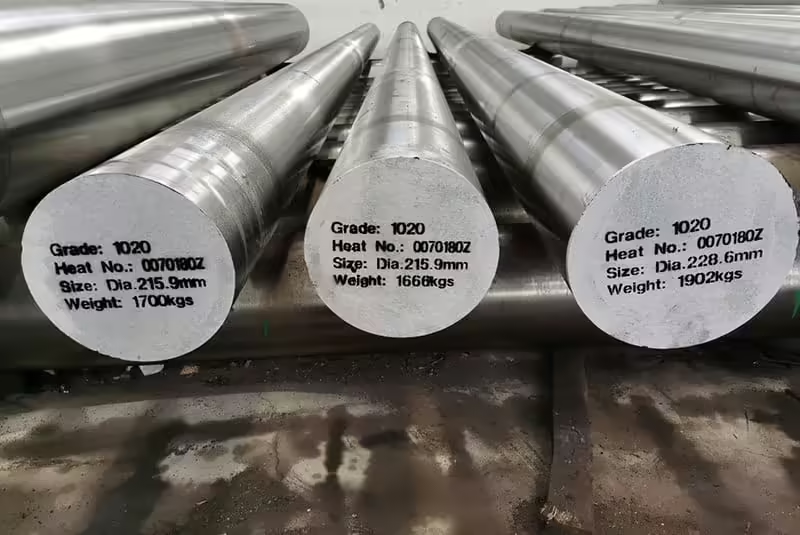
Interstitial-free steel is a low carbon steel variant that is characterized by the absence of carbon and nitrogen in the steel’s interstitial spaces. This makes IF steel highly resistant to aging and enables superior weldability and formability. It is mainly used in applications where excellent surface finish and deep drawing properties are critical.
Key Features:
- Carbon content: less than 0.02%
- Absence of interstitial carbon and nitrogen
- Excellent surface finish and formability
- Common applications: automotive body panels, appliance parts, and high-precision stamping
Free-Cutting Steel
Free-cutting steel, as the name suggests, is designed for enhanced machinability. It contains small amounts of sulfur or lead to reduce friction during the cutting process, allowing for faster production rates and a better surface finish. This type of steel is widely used for manufacturing parts that require precise machining, such as bolts, screws, and other fasteners.
Key Features:
- Carbon content: typically around 0.1% to 0.2%
- Enhanced machinability with reduced friction
- Excellent surface finish
- Common applications: bolts, screws, nuts, and precision machined parts
Key Properties and Benefits of Low Carbon Steel
To understand why low carbon steel is widely used in manufacturing, it’s essential to know its key properties and advantages:
| Propiedad | Benefit |
|---|---|
| Ductility | High ductility allows for easy shaping, bending, and forming. |
| Soldabilidad | Easily weldable, making it ideal for construction and fabrication. |
| Machinability | Easy to machine for producing precision components. |
| Strength | Although not as strong as high-carbon steel, it is strong enough for many applications. |
| Relación coste-eficacia | Affordable and readily available, making it an economical choice for mass production. |
Applications of Low Carbon Steel
Low carbon steel is used in a variety of applications, ranging from general construction to more specialized fields. Some of the most common uses of low carbon steel include:
- Construction: Low carbon steel is used in the construction of buildings, bridges, and infrastructure due to its strength and versatility. It is often used for structural beams, columns, and reinforcement bars.
- Industria del automóvil: In the automotive sector, low carbon steel is used for producing body panels, exhaust systems, and structural components. Its ability to be easily shaped and welded makes it ideal for automotive manufacturing.
- Appliance Manufacturing: Low carbon steel is used in the production of household appliances, such as washing machines, refrigerators, and air conditioning units. Its resistance to corrosion and ease of forming make it suitable for these applications.
- Heavy Machinery and Equipment: Low carbon steel is also found in the construction of machinery and equipment, where its strength and malleability are required for efficient production.
Conclusión
Low carbon steel is a versatile material that plays a crucial role in modern manufacturing processes. From mild steel to specialized alloys, the different types of low carbon steel offer a wide range of mechanical properties and applications, making them ideal for diverse industrial needs. Whether you are in the automotive industry, construction, or appliance manufacturing, understanding the different types of low carbon steel and their benefits will help you make informed decisions when selecting materials for your projects.
PREGUNTAS FRECUENTES
What is the primary difference between low carbon steel and high carbon steel?
The primary difference lies in the carbon content. Low carbon steel contains between 0.05% and 0.25% carbon, while high carbon steel contains between 0.60% and 1.00% carbon. This difference in carbon content significantly affects the material’s properties, with high carbon steel being harder and stronger but less ductile and weldable than low carbon steel.
What are the disadvantages of using low carbon steel?
Compared to higher carbon steels, low carbon steel has lower strength and hardness. It is also more susceptible to corrosion than some other types of steel, unless treated or alloyed.
How is low carbon steel produced?
Low carbon steel is produced through various processes, including basic oxygen steelmaking and electric arc furnace steelmaking. The molten steel is then processed into different forms, such as billets, blooms, or slabs, which are subsequently rolled into sheets, strips, or other shapes.
What are the environmental benefits of using low carbon steel?
Low carbon steel is environmentally friendly because it is highly recyclable and requires less energy to produce than high-carbon steels or alloy steels. Choosing types of low carbon steel for manufacturing can reduce carbon emissions and promote sustainability in industries such as construction and automotive manufacturing.
How does carbon content affect the strength and ductility of the types of low carbon steel?
The carbon content in low carbon steel directly impacts its strength and ductility. For instance, mild steel, with a carbon content of 0.05% to 0.25%, offers high ductility and moderate strength, making it easy to shape and form. High-strength low-alloy (HSLA) steel, though still low in carbon, gains additional strength from alloying elements without losing too much ductility.