Welcome to My Blog!
Before we dive into the content, I’d love for you to join me on my social media platforms where I share more insights, engage with the community, and post updates. Here’s how you can connect with me:
Facebook:https://www.facebook.com/profile.php?id=100087990137347
LinkedIn:https://www.linkedin.com/company/89825762/admin/dashboard/
YouTube:www.youtube.com/@carbonsteelsupply-kj9lw
TikTok:www.tiktok.com/@carbonsteelsupply
Now, let’s get started on our journey together. I hope you find the content here insightful, engaging, and valuable.
Table of Contents
Introducción
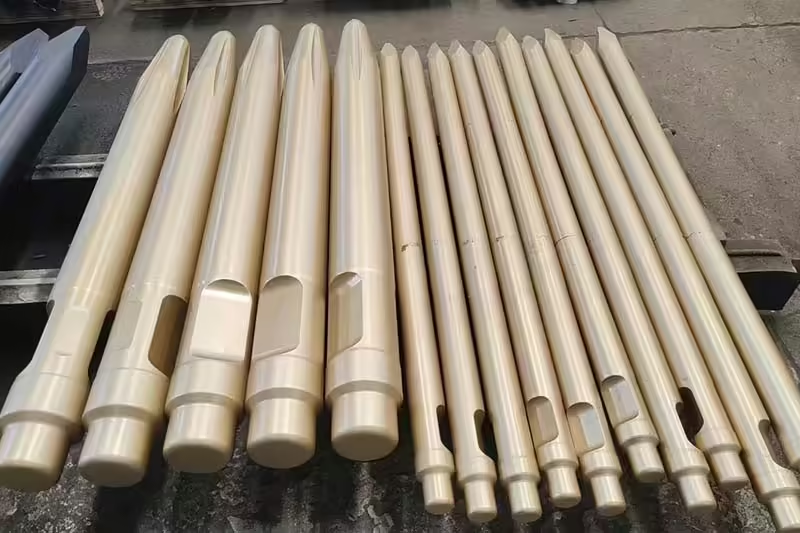
A hydraulic breaker drill rod plays a vital role in demolition, construction, and mining operations. Selecting the right drill rod material ensures efficiency, durability, and cost-effectiveness. With multiple options available in the market, it is essential to consider factors such as material composition, hardness, compatibility, and manufacturing process to make the best choice.
This guide explores the key factors to consider when selecting a hydraulic breaker drill rod and provides insights into different types of rods suited for various applications.
Key Factors to Consider When Choosing a Hydraulic Breaker Drill Rod
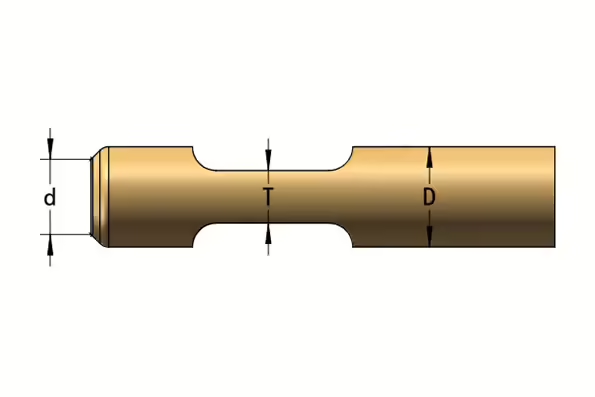
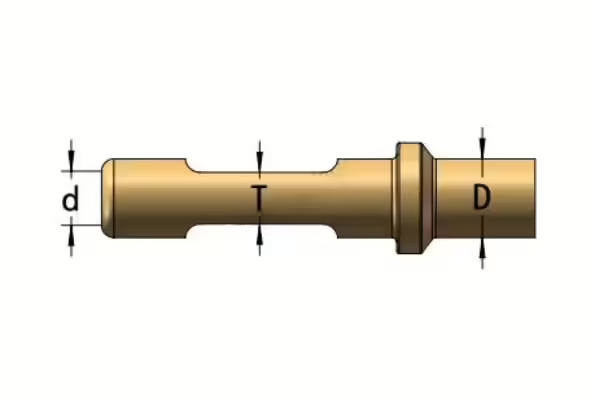
Drill Rod Material
The material of the drill rod determines its durability, strength, and resistance to wear. Common materials used include:
- Acero aleado – Offers excellent impact resistance and is commonly used in high-pressure applications.
- Acero al carbono – Provides good strength at a lower cost but may wear faster in heavy-duty applications.
- Chromium-Molybdenum (Cr-Mo) Steel – Known for its high hardness, heat resistance, and durability.
- Tungsten Carbide-Tipped Rods – Designed for extreme wear resistance and precision, ideal for specialized drilling.
Hardness and Toughness
Balancing hardness and toughness is essential to ensure the drill rod can withstand repeated high-impact forces without cracking.
- Dureza: Typically measured in Rockwell Hardness (HRC), with an ideal range of 50-58 HRC for long-lasting performance.
- Dureza: Affects the drill rod’s ability to absorb impact without breaking, crucial for demanding applications.
Compatibility with the Hydraulic Breaker
Choosing a drill rod that matches the specifications of the hydraulic breaker is critical. Consider the following:
- Length and Diameter – Should fit the breaker model for optimal performance.
- Shank Type – The design should be compatible with the breaker’s chuck system.
- Tip Shape – Different shapes like chisel, moil, and blunt are used for specific breaking applications.
Heat Treatment Process
A high-quality drill rod undergoes specialized heat treatments to improve its wear resistance and structural integrity. Common processes include:
- Induction Hardening – Strengthens the outer layer while maintaining a tough core.
- Templado – Reduces brittleness and enhances toughness.
- Enfriamiento – Increases overall hardness and durability.
Cost vs. Performance
While cost is an important consideration, investing in a high-quality drill rod material ensures better efficiency, lower downtime, and reduced replacement costs.
Types of Hydraulic Breaker Drill Rods and Their Applications
| Drill Rod Type | Material | Best Used For | Key Benefits |
|---|---|---|---|
| Chisel Point | Acero aleado | Concrete breaking, trenching | High impact resistance, precise breaking |
| Moil Point | Acero al carbono | General-purpose breaking | Versatile, suitable for rock and asphalt |
| Blunt Rod | Cr-Mo Steel | Compacting, demolition | Superior wear resistance, long lifespan |
| Cone Rod | Tungsten Carbide | Precision drilling | Extreme hardness, precision-focused |
How to Maintain Your Hydraulic Breaker Drill Rod
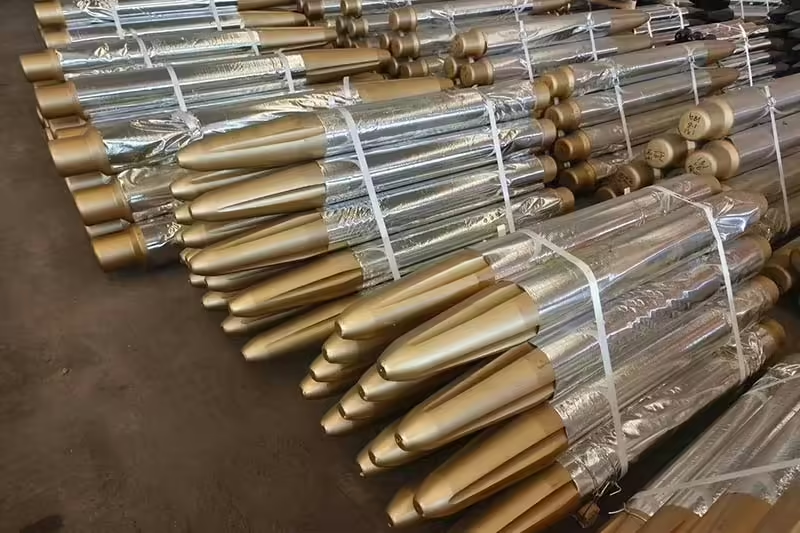
To ensure the longevity and efficiency of the drill rod, follow these maintenance practices:
- Regular Inspections – Check for cracks, wear, and deformation before use.
- Proper Storage – Store in a dry and clean environment to prevent corrosion.
- Lubrication – Apply appropriate grease to minimize friction and heat buildup.
- Correct Usage – Avoid excessive force or improper angles to prevent premature wear.
Conclusión
Selecting the best drill rod material for a hydraulic breaker is essential for achieving maximum efficiency and durability. Consider material composition, hardness, compatibility, and heat treatment when choosing a drill rod.
Investing in a high-quality drill rod not only enhances performance but also reduces maintenance and replacement costs. By following proper maintenance practices, you can extend the lifespan of the drill rod and ensure consistent results in demanding applications.
PREGUNTAS FRECUENTES
What is the best drill rod material for hydraulic breakers?
Alloy steel and chromium-molybdenum steel are among the best materials due to their high impact resistance, hardness, and durability.
How do I choose the right size drill rod for my hydraulic breaker?
Check the manufacturer’s specifications for length, diameter, and shank type to ensure compatibility with your breaker model.
What are the common types of drill rods used in hydraulic breakers?
The most commonly used types include chisel point, moil point, blunt rod, and cone rod, each designed for specific breaking and drilling applications.
How often should a drill rod be replaced?
The lifespan of a drill rod depends on usage, material quality, and maintenance. Regular inspections help identify signs of wear that indicate when a replacement is needed.
What maintenance practices help extend the life of a drill rod?
Proper lubrication, regular inspections, correct storage, and using the rod at the right angle and force all contribute to a longer lifespan.