Welcome to My Blog!
Before we dive into the content, I’d love for you to join me on my social media platforms where I share more insights, engage with the community, and post updates. Here’s how you can connect with me:
Facebook:https://www.facebook.com/profile.php?id=100087990137347
LinkedIn:https://www.linkedin.com/company/89825762/admin/dashboard/
YouTube:www.youtube.com/@carbonsteelsupply-kj9lw
TikTok:www.tiktok.com/@carbonsteelsupply
Now, let’s get started on our journey together. I hope you find the content here insightful, engaging, and valuable.
Introduction

D2 tool steel is a popular choice in industrial applications due to its remarkable combination of hardness, wear resistance, and edge retention. Its durability, however, is heavily influenced by its hardness, which can vary depending on the heat treatment process and intended use. In this blog, we will explore how D2 tool steel hardness directly affects its overall durability and performance, helping you understand the importance of selecting the right hardness for your specific needs.
Understanding D2 Tool Steel Hardness
Before diving into the impact of D2 tool steel hardness on durability, it’s important to define what hardness means in the context of tool steels. Hardness is the ability of a material to resist indentation, scratching, or deformation. In tool steels like D2, hardness is typically measured on the Rockwell C scale (HRC), where higher numbers indicate greater hardness.
D2 tool steel is typically hardened within the range of 55-62 HRC. The hardness level directly affects the steel’s ability to resist wear and maintain its cutting edge over time. This section will discuss how hardness is achieved and why it matters.
What Is Hardness in D2 Tool Steel?
Hardness refers to a material’s ability to withstand wear, indentation, and deformation. For D2 tool steel, hardness is crucial because it influences how well the steel holds up under stress, whether it’s cutting, stamping, or forming materials.
The Impact of Hardness on Wear Resistance
One of the most critical aspects of D2 tool steel’s durability is its wear resistance. Harder D2 steel has better resistance to wear, which means that tools made from harder D2 will last longer, even under abrasive conditions. The high carbon content and chromium in D2 steel contribute to its ability to resist wear.
Harder D2 Steel Equals Better Wear Resistance
As D2 steel hardness increases, so does its ability to resist abrasion. This is essential for tools that experience repetitive stress, like cutting tools or molds, where constant friction with other materials can lead to wear and deterioration.
Hardness and Toughness: Striking the Right Balance
While hardness is important, it is also essential to consider toughness in D2 tool steel. Toughness refers to the material’s ability to absorb energy before breaking, which is just as vital as hardness in ensuring the steel’s longevity and performance. Harder materials, while more wear-resistant, can be more brittle and prone to cracking under stress.
Achieving an Optimal Hardness-Toughness Balance
The challenge is to balance high hardness with sufficient toughness. If D2 tool steel is too hard, it may crack or chip under shock loads, which would significantly affect the durability of tools. By carefully controlling heat treatment processes, manufacturers can achieve a hardness level that provides a balance between hardness and toughness, ensuring that the material can perform under demanding conditions without sacrificing durability.
Heat Treatment and Its Effect on D2 Tool Steel Hardness
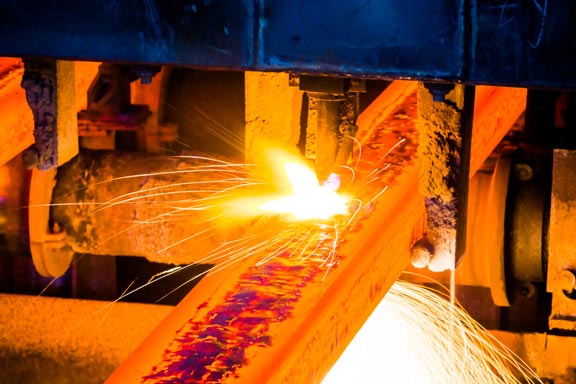
Heat treatment is a critical process in determining the final hardness of D2 tool steel. The steel’s hardness can be altered by adjusting the temperature and cooling process during heat treatment. The key stages of heat treatment include:
- Austenitizing: Heating D2 steel to a temperature where it forms austenite (typically around 1000-1050°C).
- Quenching: Rapidly cooling the material to lock in the desired hardness.
- Tempering: Reheating the quenched steel to a lower temperature to relieve stress and adjust toughness.
By controlling the heat treatment process, manufacturers can adjust the steel’s hardness to meet the specific requirements of the application, influencing its durability.
Table: Hardness and Durability Properties of D2 Tool Steel at Different Temperatures
| Hardness (HRC) | Wear Resistance | Toughness | Typical Applications |
|---|---|---|---|
| 55-57 HRC | Moderate | High | Cold work tools, punches |
| 58-60 HRC | High | Moderate | Dies, cutting tools |
| 61-62 HRC | Very High | Low | High-performance cutting tools, molds |
The table above demonstrates the relationship between hardness, wear resistance, and toughness for D2 tool steel at different hardness levels. As the hardness increases, wear resistance improves, but toughness decreases, which must be considered when selecting the right hardness for a particular application.
D2 Tool Steel Hardness in Different Applications
D2 tool steel’s versatility is reflected in its widespread use in various industries. The specific hardness chosen for an application can greatly influence the tool’s performance and durability. Below, we will explore how hardness affects D2 steel in different applications.
Cutting Tools
For cutting tools like knives and blades, D2 steel is typically hardened to the upper end of the range (60-62 HRC). This hardness provides excellent wear resistance and helps maintain a sharp cutting edge, even with continuous use.
Molds and Dies
In mold-making and die applications, D2 tool steel is often hardened to a moderate range (58-60 HRC). This level of hardness offers a good balance of wear resistance and toughness, which is ideal for tools subjected to repetitive use under moderate stress.
Punches and Dies
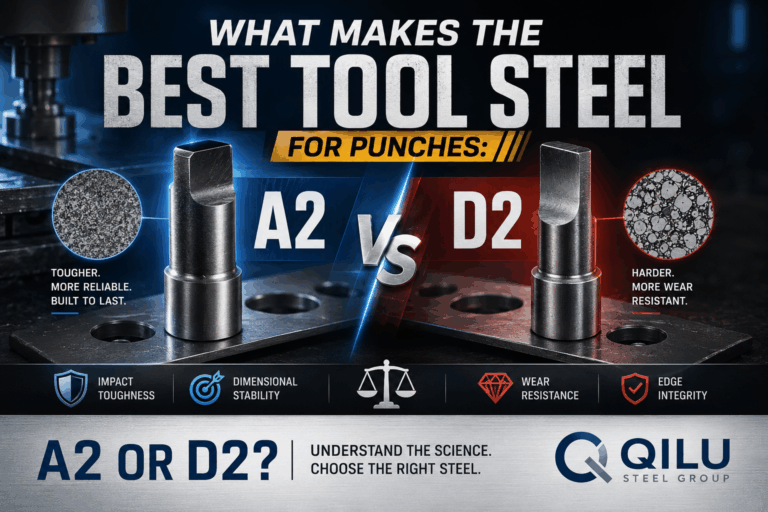
For punching and forming tools, D2 steel is usually hardened to the lower end of the range (55-57 HRC). This provides better toughness, allowing the tool to absorb impact without cracking or chipping.
How Hardness Affects Tool Life and Performance
The hardness of D2 tool steel directly influences the tool’s overall performance and longevity. Tools made from harder D2 steel have a greater ability to resist wear and maintain their edge over time, making them more efficient for high-performance applications.
Advantages of Harder D2 Tool Steel
- Extended Tool Life: Harder D2 steel tools typically last longer because they maintain their sharp edges for extended periods and resist wear better.
- Improved Cutting Efficiency: Harder steel allows cutting tools to slice through tougher materials with greater ease, improving efficiency.
- Better Resistance to Deformation: Higher hardness helps reduce the risk of deformation during use, especially in demanding environments.
However, it’s important to note that overly hard D2 steel can become brittle, leading to potential failure under high-impact conditions. Striking the right balance between hardness and toughness is key to ensuring optimal tool performance and durability.
Common Mistakes When Choosing Hardness for D2 Tool Steel
Choosing the correct hardness for D2 tool steel is critical, and there are several common mistakes that can impact tool durability.
Over-Hardening
One of the most frequent mistakes is over-hardening D2 tool steel. While higher hardness improves wear resistance, it can also make the material too brittle. This increases the risk of cracking or chipping under stress.
Under-Hardening
On the other hand, under-hardened D2 steel lacks sufficient wear resistance, leading to tools that wear out quickly. This is especially problematic for tools that need to maintain a sharp edge, such as knives or cutting blades.
Ignoring Heat Treatment Variables
Improper heat treatment can lead to inconsistent hardness levels, affecting the tool’s durability. For optimal results, manufacturers must follow precise heat treatment protocols to ensure the steel reaches the desired hardness without compromising other properties.
Conclusion

D2 tool steel’s hardness plays a pivotal role in its durability, affecting its wear resistance, edge retention, and overall strength. While harder D2 steel offers superior wear resistance, it must be balanced with toughness to prevent brittleness. Understanding the relationship between hardness and durability will help you select the appropriate D2 steel for your specific applications, ultimately extending tool life and enhancing performance.
FAQ
What is the best hardness for D2 tool steel?
The ideal hardness for D2 tool steel typically ranges from 55 to 62 HRC, depending on the intended application. Higher hardness provides better wear resistance, while lower hardness enhances toughness.
How can I increase the hardness of D2 tool steel?
The hardness of D2 tool steel can be increased through heat treatment, specifically by adjusting the quenching temperature and tempering process.
Does D2 tool steel lose hardness over time?
Yes, D2 tool steel may experience a reduction in hardness over time due to wear, heat exposure, or misuse. Proper heat treatment and maintenance can help maintain its hardness.
Can D2 tool steel be used for high-temperature applications?
While D2 tool steel is highly durable, it may not be the best choice for high-temperature applications, as its performance can decrease at elevated temperatures compared to other high-heat tool steels.