Table of Contents
What is Q345 Steel?
Q345 steel is a fundamental high-strength low-alloy (HSLA) structural steel in China, widely used in construction and machinery manufacturing. This steel grade achieves an optimal balance between mechanical properties, machinability, and cost-effectiveness. When engineering projects require higher strength and lighter weight than standard carbon steels (such as Q235), Q345 becomes the material of choice.
Key Characteristics of Q345 Steel
- High Strength: Minimum yield strength of 345 MPa.
- Good Toughness: Capable of withstanding heavy loads and resisting deformation.
- Excellent Weldability: Low carbon and alloy content minimizes cracking risk.
- Versatile Processing: Easy to cut, bend, and roll into various forms.
- Cost-Effective: Offers superior performance to plain carbon steel at a moderate price point.
Main Types of Q345 Steel
Q345 steel can be categorized based on its delivery condition, specific function, and physical shape.
By Delivery Condition:
- Hot-rolled: The most common form, suitable for general applications.
- TMCP (Thermo-Mechanically Controlled Processing): Provides enhanced mechanical properties through precise temperature and rolling control.
- Normalized: Heat-treated to achieve a uniform microstructure and improved toughness.
By Use and Function:
- Q345NH: Weathering steel infused with anti-corrosion elements, ideal for long-term outdoor structures.
- Q345GJ: High-rise building grade with superior welding performance and seismic resistance.
- Q345R: Pressure vessel grade with strict control over harmful impurities.
- Q345q: Bridge grade designed for excellent aging resistance and weldability.
- Q345X/L360: Pipeline grade offering high toughness and crack resistance for oil and gas applications.
By Shape:
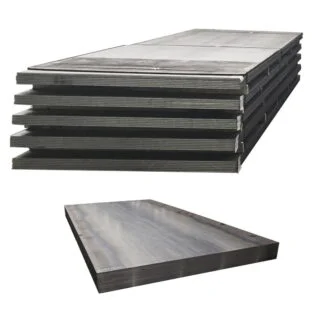
- Plate: Available as medium/thick plate or thin sheet, used for welded components and vessel heads.
- Section: Includes H-beams, angle steel, and other profiles for structural framing.
- Pipe: Seamless or welded pipes for fluid transport and structural columns.
- Bar: Round or square steel bars for machined parts and fasteners.
Advantages and Limitations of Q345 Steel
Advantages:
- Exceptional strength-to-weight ratio
- Excellent weldability using common methods
- Easy to fabricate and shape
- Cost-effective balance of performance and price
- Wide range of applications across industries
- Specialized grades for specific environmental challenges
Limitations:
- Reduced strength at high temperatures (not suitable above 400°C for long-term use)
- Basic grades require additional corrosion protection
- Thick plates demand careful welding procedures
- Lower grades may exhibit brittleness in extreme cold
Applications of Q345 Steel
Q345’s versatility makes it a staple in numerous industries:
- Construction: Beams, columns, and frames for high-rises, stadiums, and industrial plants.
- Bridges: Main girders, decks, and supporting structures for road and railway bridges.
- Machinery: Load-bearing components in cranes, excavators, and machine tools.
- Energy: Pipelines, wind turbine towers, and power transmission structures.
- Transportation: Chassis and frames for heavy trucks and special vehicles.
- Pressure Vessels: Reactors, storage tanks, and other medium/low-pressure equipment.
- Marine: Port cranes, piers, and other coastal structures.
Q345 Steel Grades and Selection Guide
The choice of Q345 grade is critical for ensuring performance under specific environmental conditions. The following table compares the different quality grades:
| Grade | Impact Test Requirement | Minimum Test Temperature | Typical Application Scenario |
|---|---|---|---|
| Q345A | No requirement | N/A | General structural applications where low-temperature toughness is not a concern. |
| Q345B | Required | +20°C | General use in mild climates. |
| Q345C | Required | 0°C | Suitable for applications where occasional exposure to freezing temperatures is expected. |
| Q345D | Required | -20°C | Designed for cold regions and applications requiring good low-temperature performance. |
| Q345E | Required | -40°C | Specified for extremely cold environments and critical structures where toughness at very low temperatures is essential. |
Selection Tips:
- For cold climates, specify Grade D or E to prevent brittle fracture.
- For welded structures, ensure the grade meets the project’s toughness requirements at the service temperature.
- For special applications, select function-specific grades like Q345R (pressure vessels) or Q345NH (weathering).
FAQ
What is the main difference between Q345A and Q345E?
The primary difference is their performance in cold weather. Q345A has no required impact toughness, while Q345E is specifically designed to maintain toughness at -40°C.
Can Q345 steel be used in high-temperature environments?
No, it is not recommended. Q345’s strength degrades significantly at temperatures above 400°C. For high-heat applications, specialized heat-resistant steels should be used.
Does Q345 steel crack easily during welding?
No, it’s low carbon and alloy content make it highly weldable. However, welding thick plates requires proper techniques, including preheating and interpass temperature control, to avoid cracking.